이 페이지의 내용: Adobe Journey Optimizer에서 여정 유형, 디자인 워크플로, 주요 기능 및 개인화된 고객 경험 구축을 위한 모범 사례를 포함하는 여정의 기본 사항을 알아봅니다.
Adobe Journey Optimizer에서는 대상자의 행동 및 요구에 실시간으로 적응하는 여러 단계의 개인화된 고객 여정을 만들 수 있습니다. 직관적인 드래그 앤 드롭 캔버스를 사용하여 여러 채널에서 메시지와 액션을 오케스트레이션하고, 상황별 데이터와 대상자 타기팅을 활용하여 최대의 효과를 얻을 수 있습니다.
이 안내서에서는 여정의 기본을 이해하고 사용 사례에 적합한 여정 유형을 선택하며 의미 있고 시의적절한 고객 경험을 제공하는 여정을 자신 있게 설계하는 데 도움이 되는 명확한 로드맵을 제공합니다.
여정이란 무엇인가요?
여정은 고객 행동, 비즈니스 이벤트 또는 예약된 캠페인에 반응하여 여러 채널에 걸쳐 개인화된 상호 작용을 오케스트레이션하는, 자동화된 여러 단계의 고객 경험입니다.
Journey Optimizer은(는) 다음과 같이 활용할 수 있습니다.
- 이벤트 또는 데이터 소스에 저장된 컨텍스트 데이터를 사용하여 실시간 오케스트레이션 사용 사례 구축
- 고객 행동 및 비즈니스 이벤트에 동적으로 응답하는 여러 단계의 고급 시나리오 디자인
- 이메일, 푸시, 모바일 메시지, 인앱, 웹 등을 통해 규모에 맞게 1:1 개인화된 경험 제공
➡️ 작성을 시작할 준비가 되셨나요? 5분이면 첫 번째 여정 만들기를 완료할 수 있습니다.
여정과 캠페인: 각 접근 방식을 사용해야 하는 경우 journeys-vs-campaigns-intro
Adobe Journey Optimizer에서는 고객에게 다가가기 위한 세 가지 접근 방식인 여정(1:1 실시간 오케스트레이션), 캠페인(단순 배치 또는 API 트리거 게재) 그리고 오케스트레이션 캠페인(다중 엔티티 데이터를 활용한 배치 캔버스 워크플로)을 제공합니다.
빠른 결정:
- 각 고객이 원하는 속도로 진행하며 행동에 따라 결정되는 여러 단계의 경험에는 여정 사용
- 대상자에 대한 단순, 예약 또는 트리거 방식의 메시지 게재에는 액션 및 API 트리거 캠페인 사용
- 다중 엔터티 세분화 및 전송 전에 정확한 카운트 파악이 필요한 복잡한 배치 워크플로에는 오케스트레이션된 캠페인 사용
여정 유형 선택 journey-types
Adobe Journey Optimizer에서는 서로 다른 진입 메커니즘 및 비즈니스 시나리오에 맞추어 디자인된 4가지 여정 유형을 지원합니다.
- 단일 여정: 이벤트에 의해 트리거되는 실시간 경험(장바구니 포기 후 회복 조치, 환영 이메일 등)
- 대상자 읽기 여정: 대상자 세그먼트에 예약된 배치 커뮤니케이션 전송(뉴스레터, 프로모션 캠페인)
- 대상자 선별 여정: 대상자 멤버십 변경(VIP 업그레이드, 재참여)에 대한 실시간 반응
- 비즈니스 이벤트 여정: 여러 고객에게 영향을 주는 비즈니스 조건(재고 알림, 반짝세일)
➡️ 여정 유형: 적절한 유형 선택 - 세부 비교, 의사 결정 안내서 및 기능 호환성 매트릭스
여정 디자이너를 사용한 빌드 journey-designer
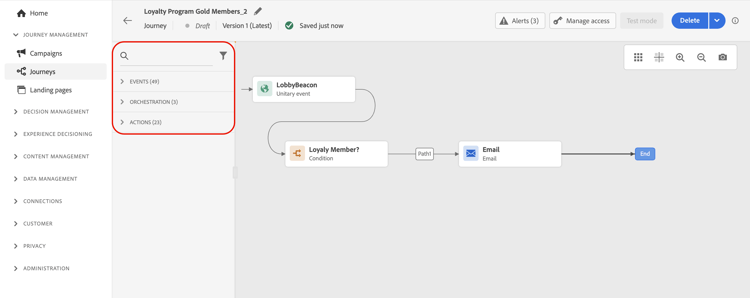
여정 디자이너는 고객 경험을 만들기 위한 시각적 캔버스입니다. 직관적인 드래그 앤 드롭 인터페이스에서 코드를 작성하지 않고도 여정의 모든 단계를 오케스트레이션할 수 있습니다.
디자이너에서 수행할 수 있는 작업:


메시지 보내기
이메일, 푸시, SMS/RCS/MMS, 인앱, 웹 등 기본 제공 채널 액션을 사용합니다. 모두 Journey Optimizer에서 설계되었습니다.




➡️ 실습 학습: 여정 디자이너 비디오 시청 또는 엔드투엔드 사용 사례 살펴보기
여정 만들기 워크플로 workflow
성공적인 여정 구축은 명확하고 반복 가능한 프로세스에 따라오는 결과입니다. 다음은 단계별 워크플로입니다.
1. 계획 → 2. 디자인 → 3. 4→ 의 유효성을 검사하고 테스트하십시오. 게시 → 5. 모니터링 → 6. 최적화
1. 여정 계획 plan
디자이너를 열기 전에 목표를 명확히 설정해야 합니다.
- 목표가 무엇인가요? (예: 신규 고객 온보딩, 비활성 사용자 재참여 유도)
- 대상자는 누구인가요? (특정 세그먼트, 이벤트 기반 개인)
- 어떤 여정 유형이 적합한가요? (위의 여정 유형 참조)
- 어떤 채널을 사용하나요? (이메일, 푸시, 모바일 메시지 등)
2. 캔버스에서 디자인하기 design
여정 디자이너를 사용하여 흐름을 작성합니다.
- 진입 조건 설정 - 프로필이 진입하는 방법(이벤트, 대상자, 선별) 정의
- 오케스트레이션 논리 추가 - 대기 시간, 조건, 결정 지점 포함
- 메시지 구성 - 커뮤니케이션 디자인 또는 기존 템플릿 활용
- 액션 설정 - 실행할 기본 제공 또는 사용자 정의 액션 구성
- 종료 조건 정의 - 프로필이 여정을 완료하는 시점과 방법 지정
3. 시작하기 전에 유효성 검사 및 테스트 test
먼저 여정 헤더에서 유효성 검사를 클릭합니다. 계속하기 전에 경고 패널에서 오류를 해결하고 다시 확인합니다. 여정 유효성 검사에 대해 알아보세요.
유효성 검사 통과 후 고객이 문제를 경험하기 전에 여정을 테스트하여 문제를 catch하십시오.
- 테스트 프로필 없이 가상의 임시 사용자를 활용해 빠르게 반복 작업을 수행하려면 여정 시뮬레이션을 사용하세요.
- 테스트 모드를 사용하여 실제(하지만 테스트용으로 지정된) 프로필로 전체 여정을 단계별로 진행해 보세요.
- 커뮤니케이션을 발송하거나 프로필을 업데이트하지 않고 실제 운영 데이터를 사용하여 여정을 실행하려면 시험 실행을 사용하세요.
- 모든 조건, 메시지, 액션이 예상대로 작동하는지 확인
- 타이밍, 데이터 흐름, 개인화 확인
유효성 검사 방법 선택 → | 여정 테스트 → | 시험 실행 알아보기 →
4. 여정 게시 publish
테스트가 완료되면 게시하여 여정을 라이브 상태로 전환합니다.
- 최종 설정 및 속성 검토
- 유효성 검사가 최신 상태이고 통과되었는지 확인하십시오. 유효성 검사 후 여정을 변경한 경우 유효성 검사를 다시 클릭하고 오류를 해결한 후 계속하십시오
- 게시하여 실제 고객을 대상으로 활성화
- 참고: 라이브 여정은 중지할 수 있지만 편집할 수는 없습니다(신규 버전을 만들어야 함)
5. 성과 모니터링 monitor
실제 환경에서 여정의 성과를 추적합니다.
- 여정 보고서 및 분석 보기
- 진입률, 완료율, 오류율 모니터링
- 중요한 문제에 대한 경고 설정
6. 최적화 및 반복 optimize
인사이트를 활용하여 여정을 개선합니다.
- 참여 지표 및 전환율 분석
- 전송 시간 최적화 테스트
- 개선 사항이 포함된 새 여정 버전 만들기
- AI 기반 추천 활용
➡️ 시작할 준비가 되셨나요? 지금 첫 여정을 만들어 보세요 →
실제 사용 사례 use-cases
일반적인 마케팅 문제를 해결하기 위해 여정 개념을 적용하는 방법을 보여 주는 실용적인 예제를 통해 학습합니다.




여정 기능 살펴보기 capabilities
여정 작성에 익숙해지면 다음과 같은 강력한 기능을 활용하여 정교한 고객 경험을 구축할 수 있습니다.


테스트 모드 및 시험 실행
실제 운영을 시작하기 전에 테스트 프로필로 여정을 검증하고, 커뮤니케이션을 발송하거나 프로필을 업데이트하지 않으면서 실제 운영 데이터를 사용하여 실행 결과를 미리 확인하세요.
시청하여 알아보기 video
여정의 구성 요소를 시각적으로 살펴보고 캔버스에서 여정을 작성할 때의 기본을 알아봅니다.
➡️ 더 많은 비디오를 시청하고 싶으신가요? 여정 비디오 튜토리얼 살펴보기
일반적인 질문 common-questions
Adobe Journey Optimizer에서는 다음 세 가지 방법을 제공합니다.
-
여정: 각 프로필이 각자의 속도에 맞춰 단계를 거쳐 이동하는 1:1 실시간 오케스트레이션. 조건부 논리(예: 온보딩, 장바구니 포기)를 사용하는 행동 기반의 여러 단계 경험에 가장 적합합니다.
-
캠페인(액션 및 API 트리거): 단순히 메시지를 대상자에게 전달하며, 예약한 일정에 따라서나 API 트리거를 통해 모든 프로필에 동시에 실행됩니다. 프로모션 캠페인, 뉴스레터, 트랜잭션 메시지에 적합합니다.
-
오케스트레이션된 캠페인: 관계형 데이터(프로필 + 제품/매장/예약)를 사용한 복잡한 세분화를 포함하는 다단계 배치 워크플로입니다. 모든 프로필이 한꺼번에 처리되며 정확한 사전 전송 수를 파악할 수 있습니다. 여러 엔터티의 데이터가 필요한 시즌 프로모션, 제품 출시, 캠페인에 적합합니다.
주요 차이점: 여정은 실시간 액션을 위해 개별 고객 상태를 유지합니다. 액션 및 API 트리거 캠페인은 간단한 메시지를 일괄적으로 전달합니다. 오케스트레이션된 캠페인은 다중 엔티티 세분화 기능을 갖춘 배치 워크플로 캔버스를 제공합니다.
➡️ 추가 질문 자세한 답변 40개 이상이 포함된 전체 여정 FAQ 보기
도움이 필요하십니까? help
이 링크를 사용하여 지침, 문제 해결, 리소스를 찾을 수 있습니다.
일반적인 작업에 대한 빠른 링크
- 첫 번째 여정 만들기 - 초보자용 단계별 안내서
- 여정 FAQ - 일반적인 질문에 대한 답변
- 문제 해결 - 문제 진단 및 해결
- 오류 코드 참조 - 오류 메시지 이해
- 가드레일 및 제한 사항 - 기술적 경계 및 모범 사례
문제에 대한 알림 받기
여정에 오류 또는 비정상적인 패턴이 발생할 때 실시간 알림을 받으려면 여정 알림을 설정합니다.
추가 리소스
- 여정 관리 허브 - 필터링, 최적화, 프로필 관리를 위한 도구
- 여정 활동 참조 - 모든 활동 유형에 대한 전체 안내서
- 실행 문제 해결 - 여정 실행 문제 디버그
- 인바운드 활동 문제 해결 - 진입 및 선별 문제 해결
첫 번째 여정을 작성할 준비가 되셨나요? 지금 시작 →
This section contains structured knowledge intended to support interpretation, retrieval, and question answering related to this topic.
For complete understanding, this information should be combined with the documentation on this page. Neither source is intended to stand alone; the page describes the feature, while this section provides additional context that helps disambiguate terminology, intent, applicability, and constraints.
- TL;DR: This page is the getting-started hub for Adobe Journey Optimizer journeys, explaining what journeys are, the four journey types, the six-step creation workflow, real-world use cases, and links to advanced capabilities.
Intents:
- Understand what journeys are and how they differ from campaigns and orchestrated campaigns
- Choose the right journey type (Unitary, Read Audience, Audience Qualification, or Business event) for a use case
- Follow the six-step journey creation workflow: Plan, Design, Validate and test, Publish, Monitor, Optimize
- Use Simulation, Test mode, or Dry run to validate a journey before going live
- Publish a journey and monitor performance through reports and alerts
- Explore advanced capabilities such as expressions, timezone management, copy to sandbox, and throughput control
Glossary:
- Journey: An automated, multistep customer experience that orchestrates personalized interactions across channels in response to customer behavior, business events, or scheduled campaigns. (product-specific)
- Journey designer: The visual drag-and-drop canvas in Adobe Journey Optimizer used to build and configure journey flows without writing code. (product-specific)
- Test mode: A way to walk real, designated test profiles through the journey step by step. (product-specific)
- Dry run: A way to execute the journey against real production data without sending communications or updating profiles. (product-specific)
- Journey Simulation: A way to test journeys for fast iteration with temporary simulated users, with no test profiles needed. (product-specific)
- Orchestrated campaigns: Multi-step batch workflows in Adobe Journey Optimizer that use relational data (profiles + products/stores/bookings) and process all profiles together with exact pre-send counts. (product-specific)
Guardrails:
-
Configuration validation must pass before testing. Errors in the Alerts panel must be resolved and validation rerun before continuing. Publication requires current, passed validation; edits after validation require Validate again.
-
Live journeys cannot be structurally edited; changes require creating a new version
-
After validation passes, test before publishing using Journey Simulation, test mode, or dry run
Terminology:
- Canonical name: Journey — variant: customer journey
- Synonyms: “journey designer” = “canvas”
- Do not confuse: “Journey” ≠ “Campaign” — Journeys maintain individual customer state for real-time, multi-step behavior-driven experiences; Campaigns deliver messages in batch to audiences on a schedule or via API trigger
- Do not confuse: “Journey Simulation” uses temporary simulated users; “test mode” uses real, designated test profiles; “dry run” executes against real production data without sending communications or updating profiles
FAQ:
- Q: What is the difference between a journey and a campaign in Journey Optimizer? — Journeys provide 1:1 real-time orchestration where each profile progresses at its own pace through conditional logic; Campaigns deliver messages simultaneously to an audience on a schedule or via API trigger; Orchestrated campaigns are batch canvas workflows for complex multi-entity segmentation.
- Q: Can I edit a live journey? — Limited elements such as name and message content can be edited; structural changes require creating a new version of the journey.
- Q: What are the steps to build a journey? — The six-step workflow is: Plan, Design, Validate and test, Publish, Monitor, and Optimize.
- Q: How do I test a journey without sending communications or updating profiles? — First Validate and resolve any errors, then use dry run to execute the journey against real production data without sending communications or updating profiles.
- Q: What journey type should I use for a welcome email triggered by a subscription? — Use a Unitary journey, which is triggered by a specific individual event such as a subscription sign-up.