이 페이지에서: 이벤트, 오케스트레이션 및 작업 활동을 결합하여 여러 단계로 구성된 크로스 채널 여정을 만드는 방법과 레이블 지정 활동, 매개 변수 관리 및 문제 해결에 대한 모범 사례를 알아봅니다.
이벤트, 오케스트레이션 및 작업 활동을 결합하여 여러 단계로 구성된 크로스 채널 시나리오를 작성할 수 있습니다.
이벤트 활동 event-activities
개인화된 여정은 온라인 구매와 같은 이벤트로 시작됩니다. 프로필이 여정에 들어오면 프로필이 스스로 이동합니다. 각 프로필은 다른 경로와 속도를 취할 수 있습니다. 이벤트를 시작하면 이벤트가 도착하면 여정이 트리거됩니다. 그런 다음 각 프로필은 여정에 정의된 단계를 따릅니다.
기술 사용자가 구성한 이벤트(이 페이지 참조)가 팔레트의 첫 번째 범주에 나타납니다. 이 범주는 화면 왼쪽에 있습니다. 다음 이벤트 활동을 사용할 수 있습니다.
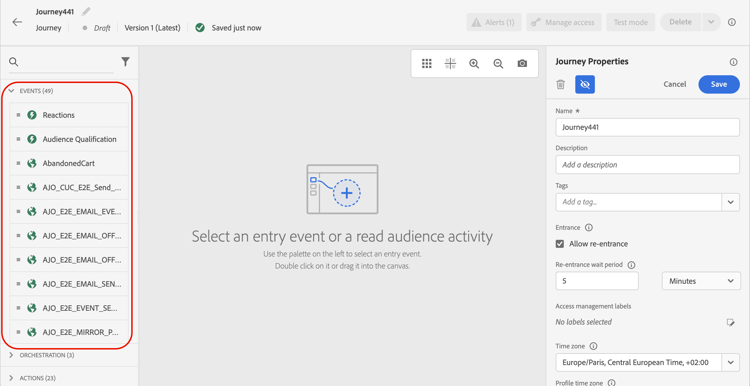
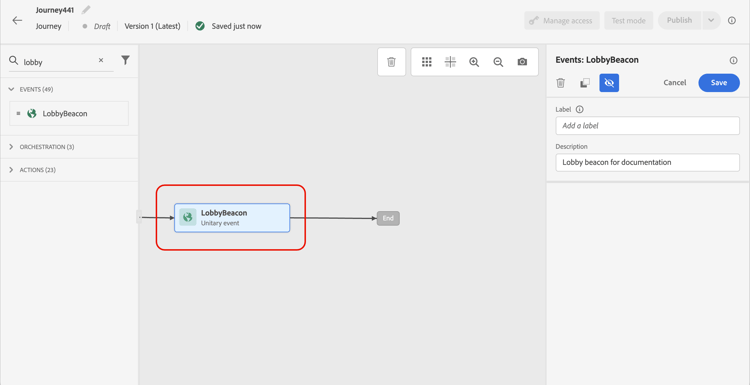
여정을 시작하려면 이벤트 활동을 끌어다 놓습니다. 더블 클릭할 수도 있습니다.
오케스트레이션 활동 orchestration-activities
오케스트레이션 활동은 여정의 다음 단계를 결정하는 데 도움이 되는 조건입니다. 이러한 조건에는 개인이 지원 사례를 공개했는지 또는 구매를 완료했는지 여부가 포함될 수 있습니다. 또한 지역 일기예보나 충성도 포인트 10,000점에 도달했는지 여부도 포함할 수 있습니다.
화면 왼쪽에 있는 팔레트에서 다음 오케스트레이션 활동을 사용할 수 있습니다.

작업 활동 action-activities
작업은 메시지 전송과 같은 일종의 트리거 결과로 발생하고자 하는 작업입니다. 고객이 경험하는 여정 중 일부입니다.
화면 왼쪽의 팔레트에서 이벤트 및 오케스트레이션 아래에 작업 범주가 있습니다. 다음 작업 활동을 사용할 수 있습니다.
- 기본 제공 채널 작업 사용 가능: 작업 활동
- 사용자 정의 액션
- 점프
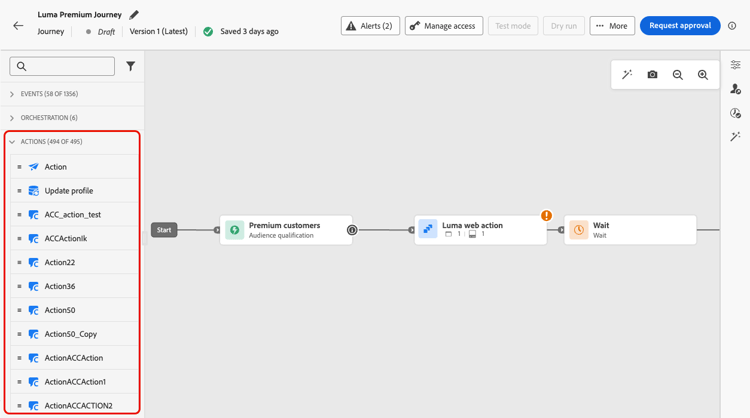
이러한 활동은 사용 가능한 다양한 커뮤니케이션 채널을 나타냅니다. 이러한 세그먼트를 결합하여 크로스채널 시나리오를 만들 수 있습니다.
메시지를 보내기 위한 특정 작업을 설정할 수도 있습니다.
-
서드파티 시스템을 사용하여 메시지를 전송하는 경우 특정 사용자 지정 작업을 만들 수 있습니다. 자세히 알아보기
-
Adobe Campaign 및 Adobe Journey Optimizer(으)로 작업하는 경우 다음 섹션을 참조하십시오.
모범 사례 best-practices
이러한 권장 사항을 사용하여 여정을 읽기 쉽고 일관되고 쉽게 문제를 해결할 수 있습니다.
레이블 추가
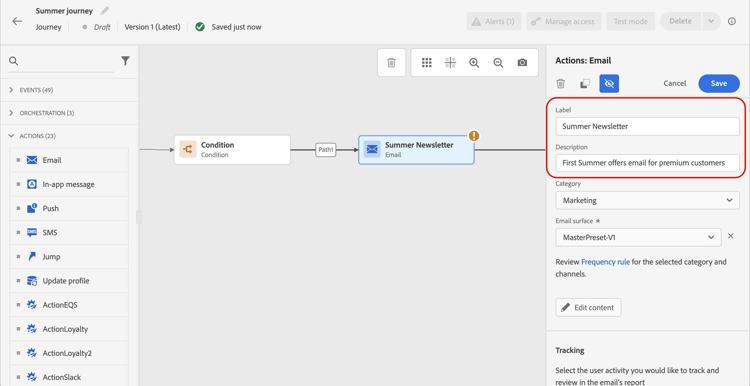
대부분의 활동을 통해 레이블을(를) 정의할 수 있습니다. 캔버스에서 활동 아래에 표시되는 이름에 접미사를 추가합니다. 이 기능은 여정에서 동일한 활동을 여러 번 사용하고 이러한 활동을 보다 쉽게 식별하려는 경우 유용합니다. 또한 오류가 발생한 경우 디버깅을 더 쉽게 하고 보고서를 더 쉽게 읽을 수 있습니다. 선택적 설명을 추가할 수도 있습니다.
고급 매개 변수 관리 advanced-parameters
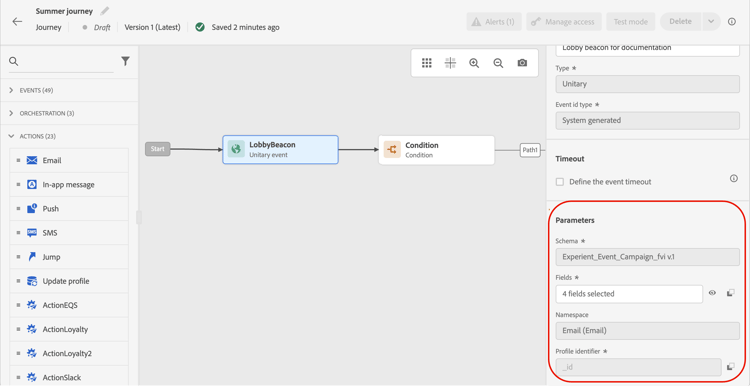
대부분의 활동에는 수정할 수 없는 많은 고급 및/또는 기술 매개 변수가 표시됩니다.
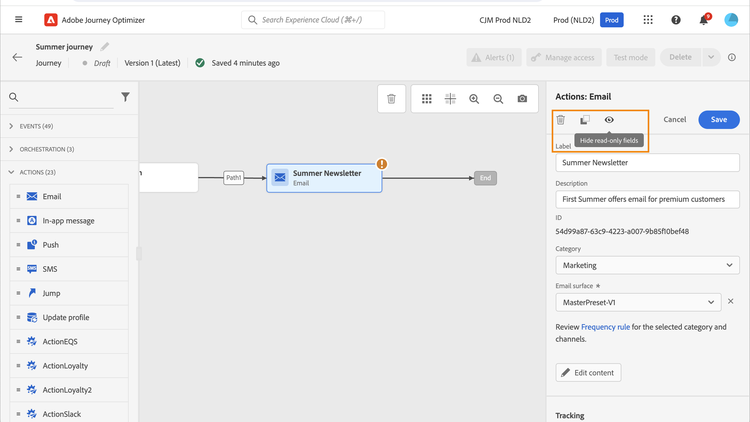
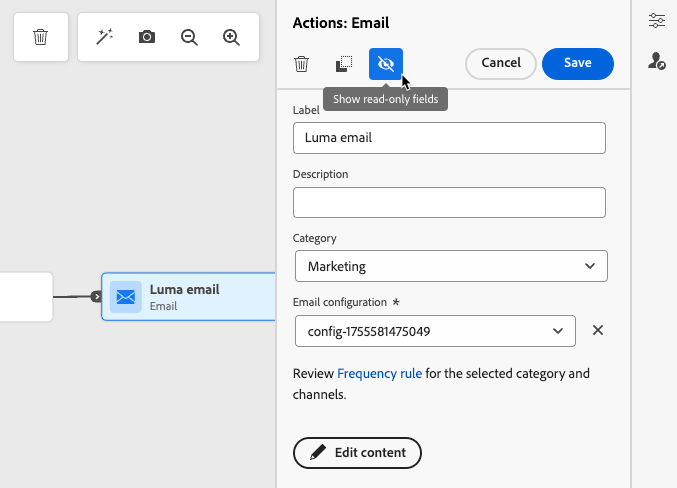
가독성을 높이기 위해 오른쪽 창 상단의 읽기 전용 필드 숨기기 단추를 사용하여 이러한 매개 변수를 숨깁니다.
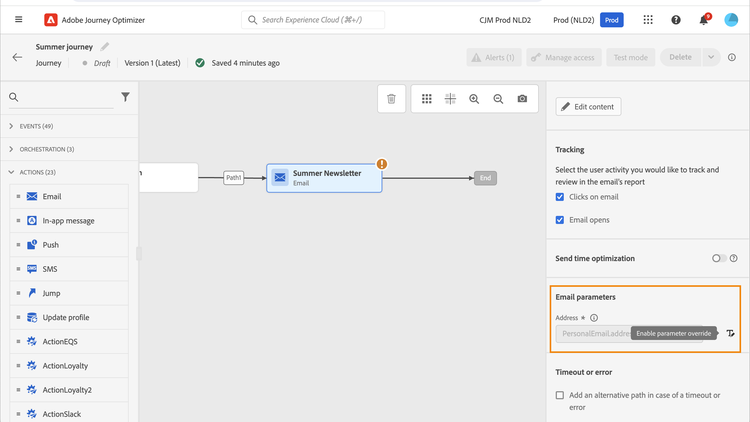
일부 특정 컨텍스트에서는 특정 용도로 이러한 매개 변수의 값을 재정의할 수 있습니다. 값을 강제 적용하려면 필드의 오른쪽에 있는 매개 변수 무시 활성화 아이콘을 클릭합니다. 자세히 알아보기
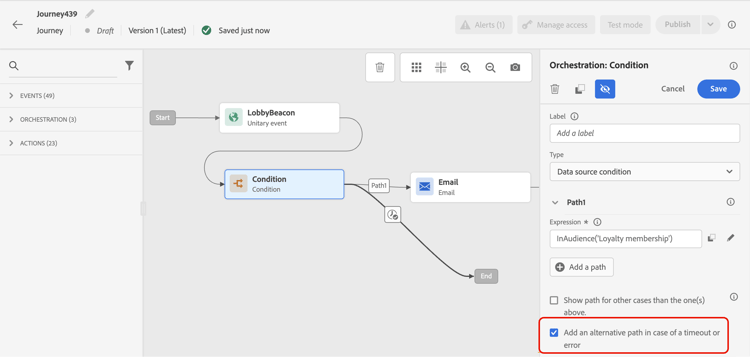
대체 경로 추가
작업 또는 조건에 오류가 발생하면 개별 여정이 중지됩니다. 시간 초과 또는 오류 발생 시 대체 경로를 추가 확인란을 선택하여 계속하는 방법만 있습니다. 이 섹션 보기
문제 해결 troubleshooting
테스트하거나 게시하기 전에 여정 헤더에서 유효성 검사를 클릭하십시오. 계속하기 전에 경고 패널에서 오류를 해결하고 다시 확인합니다. 여정 유효성 검사에 대해 알아보세요.
여정의 활동 및 오류를 해결하는 방법에 대해 알아봅니다.
모니터링 및 문제 해결도 참조하세요.
This section contains structured knowledge intended to support interpretation, retrieval, and question answering related to this topic.
For complete understanding, this information should be combined with the documentation on this page. Neither source is intended to stand alone; the page describes the feature, while this section provides additional context that helps disambiguate terminology, intent, applicability, and constraints.
- TL;DR: This page introduces the three categories of journey activities — events, orchestration, and actions — and explains best practices for labeling, managing parameters, and handling errors in Adobe Journey Optimizer journeys.
Intents:
- Identify and distinguish between event, orchestration, and action activities in a journey
- Add labels and descriptions to journey activities for easier identification and reporting
- Configure an alternative path to handle timeouts or errors in a journey activity
- Override advanced parameters on a specific journey activity
- Combine multiple activity types to build cross-channel journey scenarios
- Troubleshoot activity configuration errors before publishing a journey
Glossary:
- Event activity: An activity used to start a journey; when the event arrives, the journey triggers and each profile follows its defined steps (product-specific)
- Orchestration activity: An activity that helps determine the next step in the journey; examples include Optimize, Read Audience, and Wait (product-specific)
- Action activity: An activity representing what happens as a result of a trigger, such as sending a message (product-specific)
- Custom action: A specific action that can be created when using a third-party system to send messages (product-specific)
- Alternative path: A fallback branch added to an activity so the journey continues even when a timeout or error occurs (product-specific)
Guardrails:
- Before testing or publishing, the journey must be validated. Errors in the Alerts panel must be resolved and validation rerun before continuing.
- Most activities display advanced or technical parameters that cannot be modified; in some particular contexts, their values can be overridden using Enable parameter override.
Terminology:
- Canonical name: journey activities. Categories: Event activities, Orchestration activities, Action activities.
- Do not confuse: “Orchestration activity” ≠ “Action activity” (orchestration helps determine the next step; actions represent what happens as a result of a trigger).
FAQ:
- Q: What is the difference between event, orchestration, and action activities? — Events trigger journey entry; orchestration activities help determine the next step; actions represent what happens as a result of a trigger, such as sending a message.
- Q: What does a label add to an activity? — The Label adds a suffix to the name under the activity in the canvas, helping identify repeated activities and making debugging and reports easier to read.
- Q: What happens when an error occurs in an action or condition activity? — The profile’s journey stops unless you check the “Add an alternative path in case of a timeout or an error” option on that activity.
- Q: How can I send messages using a third-party system? — Create a specific custom action when using a third-party system to send messages.
- Q: When can I override an advanced parameter on an activity? — In some particular contexts, click the Enable parameter override icon to the right of the field to force a value.