在此頁面上:瞭解如何在Adobe Journey Optimizer中將電子郵件動作新增至歷程或行銷活動、定義其主題和內容、檢查警報,以及在傳送前進行預覽。
新增電子郵件動作 email-action
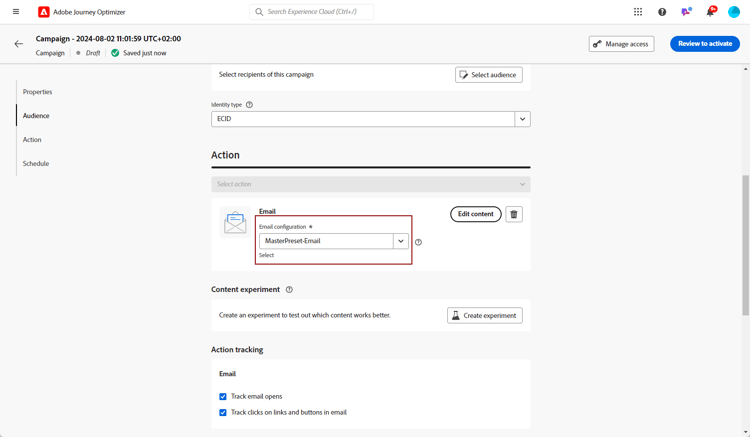
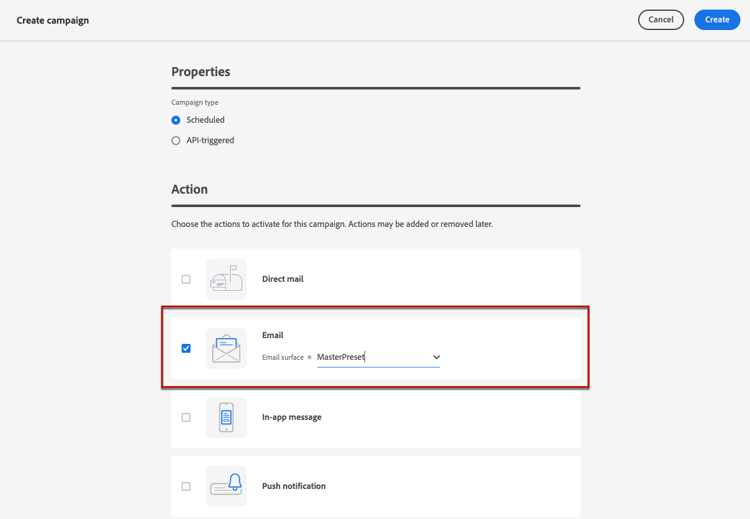
若要在Journey Optimizer中建立電子郵件,請新增 電子郵件 動作至歷程或行銷活動。 然後根據您的情況,遵循下列步驟。
-
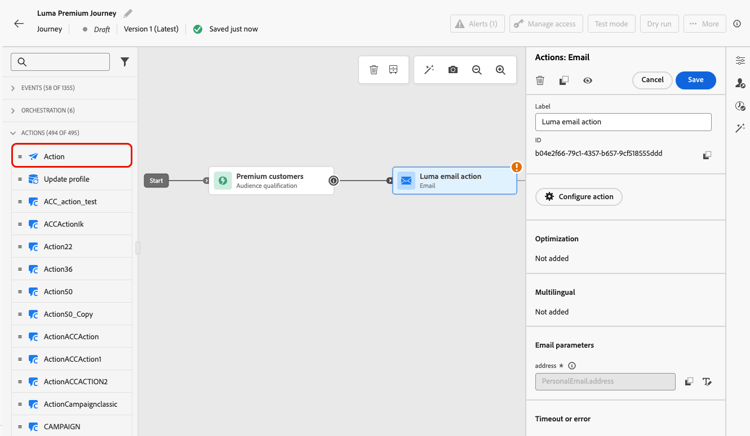
開啟您的歷程,然後從浮動視窗的 動作 區段拖放 動作 活動。 深入瞭解動作活動。
note important IMPORTANT 舊版原生管道活動(電子郵件、推播、簡訊、應用程式內、網頁、程式碼型體驗和內容卡)自2026年3月版本起即已淘汰。 使用這些活動的現有歷程仍可繼續運作,不會有任何變更,無需移轉。 -
選取 電子郵件 作為動作型別。
-
輸入 標籤 以識別您在歷程畫布中的動作。
-
按一下 設定動作 按鈕。
-
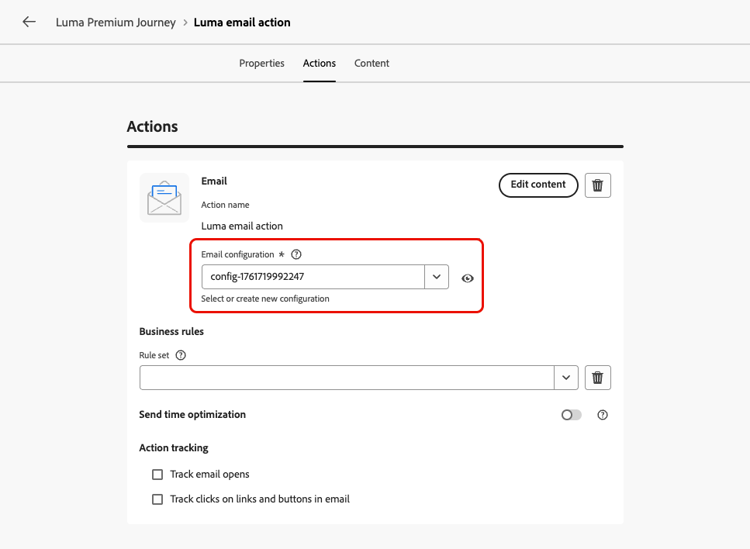
您被導向到 動作 標籤。 從那裡,選取或建立要使用的電子郵件設定。 了解更多
-
此外:
-
選取「編輯內容」按鈕,並視需要使用「電子郵件Designer」建立您的內容。 了解更多
-
返回歷程畫布。 如有必要,請拖放其他動作或事件以完成您的歷程流程。 了解更多
有關如何建立、設定和發佈歷程的詳細資訊,請參閱此頁面。
定義您的電子郵件內容 define-email-content
將電子郵件動作新增至您的歷程或行銷活動後,您需要使用電子郵件Designer定義電子郵件內容,包括主旨行、寄件者資訊和電子郵件內文。 請依照下列步驟操作:
-
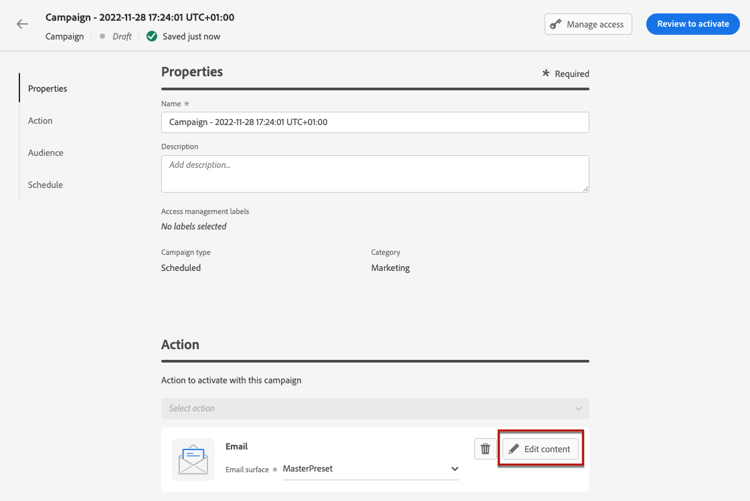
在歷程或行銷活動設定畫面中,按一下 編輯內容 按鈕以設定電子郵件內容。 了解更多
-
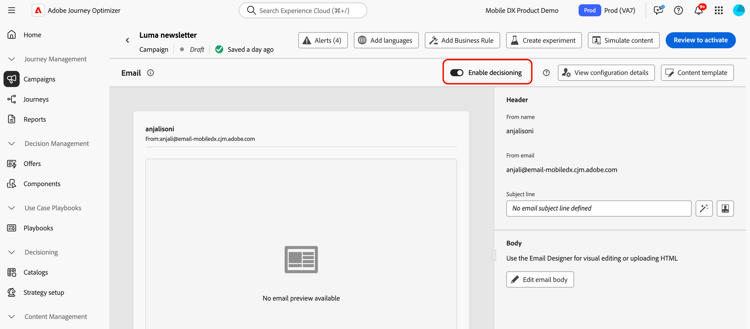
若要在電子郵件中新增決定原則,請切換啟用決定。
決策原則是產品建議的容器,可運用決策引擎以動態方式傳回最佳內容,以傳送給每個客群成員。 瞭解如何在電子郵件中新增決定原則
note availability AVAILABILITY 目前,在「有限可用性」中可取得電子郵件中的決定原則建立。 請聯絡您的 Adobe 代表以取得存取權。 -
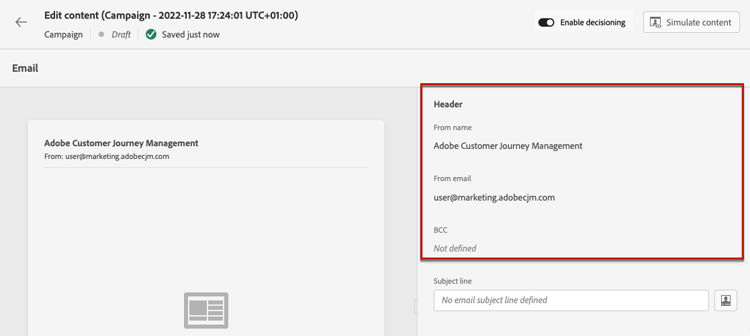
在 標題 區段中,檢查寄件者名稱、寄件者電子郵件和 密件副本 欄位。 它們是在您選取的電子郵件設定中設定。 深入瞭解
-
新增訊息的主旨列。 若要使用個人化編輯器設定並個人化主旨列,請按一下 開啟個人化對話方塊 圖示。 了解更多
note NOTE 主旨列是必填欄位。 其中不可包含分行符號。 -
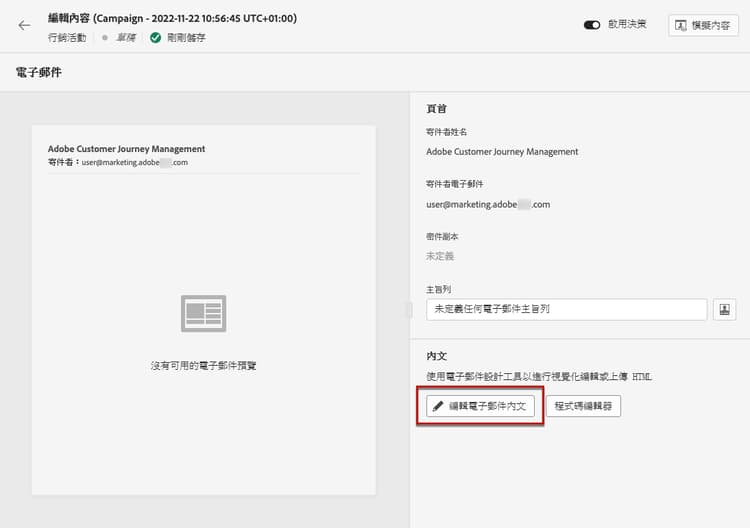
按一下 編輯電子郵件內文 按鈕以存取電子郵件Designer並開始建立您的內容。 了解更多
-
如果您在行銷活動中,也可以按一下 代碼編輯器 按鈕,使用顯示的快顯視窗在普通HTML中編碼您自己的內容。
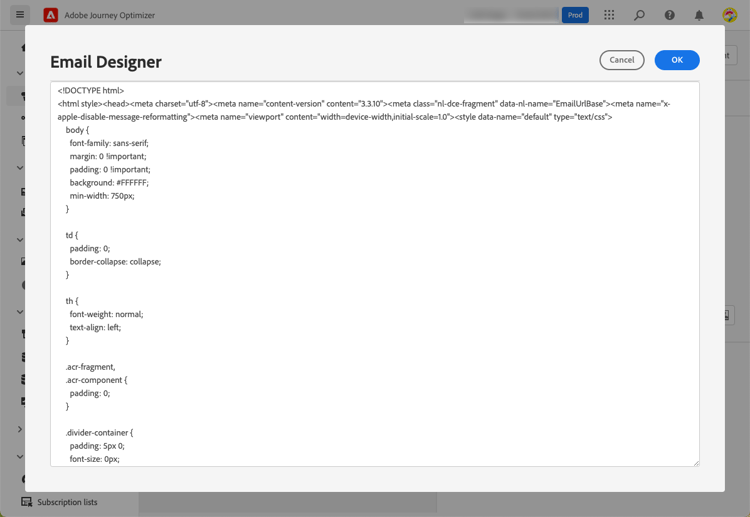
note NOTE 如果您已透過電子郵件Designer建立或匯入內容,此內容將會顯示在HTML中。 -
如有需要,請啟用 最佳化HTML大小 選項,以在發佈程式期間減少電子郵件HTML的大小。 了解更多
檢查警報 check-email-alerts
在設計訊息時,如果缺少關鍵設定,警示會顯示在介面(畫面右上方)中。
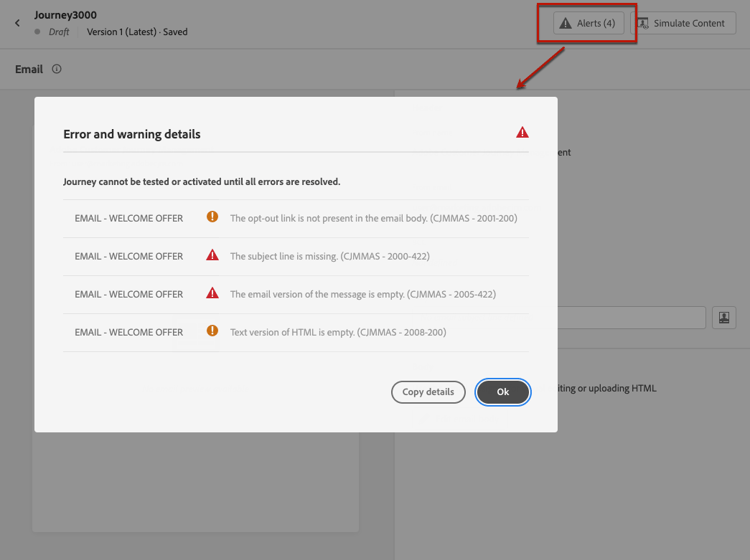
下面列出系統檢查的設定和元素。 您也會找到有關如何調整設定以解決相應問題的資訊。
可能會發生兩種型別的警報:
-
警告參考建議和最佳實務,例如:
-
電子郵件內文中不存在選擇退出的連結:將取消訂閱連結新增至您的電子郵件內文是最佳做法。 在本節中瞭解如何進行設定。
note NOTE 行銷類電子郵件務必要加入選擇退出連結,管理異動類的訊息則非必要。 訊息類別(行銷或異動)是在頻道設定層級,以及從歷程或行銷活動建立訊息時定義的。 -
HTML的文字版本是空的:別忘了定義您的電子郵件內文的文字版本,因為當HTML內容無法顯示時,將會使用此版本。 瞭解如何在本節中建立文字版本。
-
電子郵件內文中出現空白連結:檢查您電子郵件中的所有連結是否正確。 在本節中瞭解如何管理內容和連結。
-
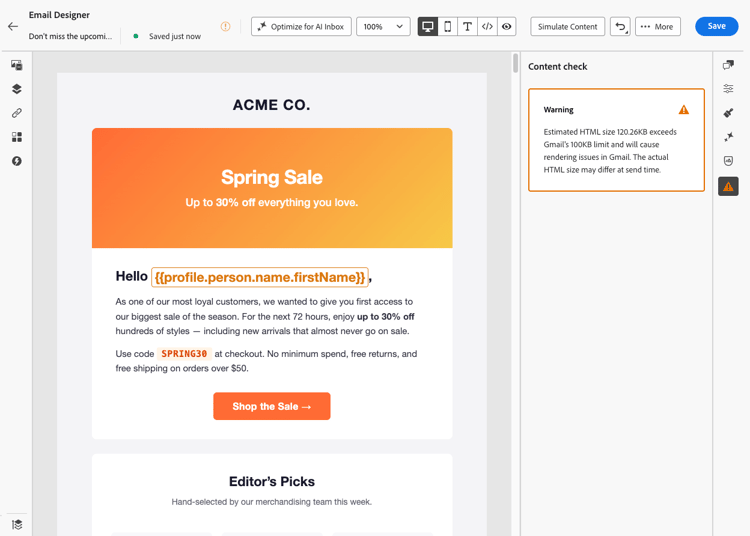
電子郵件大小已超過100KB的限制:若要取得最佳傳遞,請確定您的電子郵件大小不超過100KB。 若要減少HTML大小,請使用 最佳化HTML大小 選項。 了解更多
-
-
錯誤會阻止您測試或啟用歷程/行銷活動,只要這些錯誤未解決,例如:
- 主旨列遺失:電子郵件主旨列是必要的。 在本節中瞭解如何定義和個人化它。
最佳化電子郵件 HTML 大小 optimize-html-size
Journey Optimizer可讓您移除不必要的空白字元和縮排,在發佈程式期間壓縮電子郵件HTML版本。 保持HTML小型化可協助您:
- 避免電子郵件剪輯 — 某些使用者端(例如Gmail)會截斷大於~100 KB的郵件,使收件者無法檢視完整內容。
- 改善收件者收件匣中的電子郵件載入時間。
- 改善 傳遞能力 並減少頻寬使用量。
此最佳化不會自動套用 — 您必須在編輯內容畫面中手動啟用它。
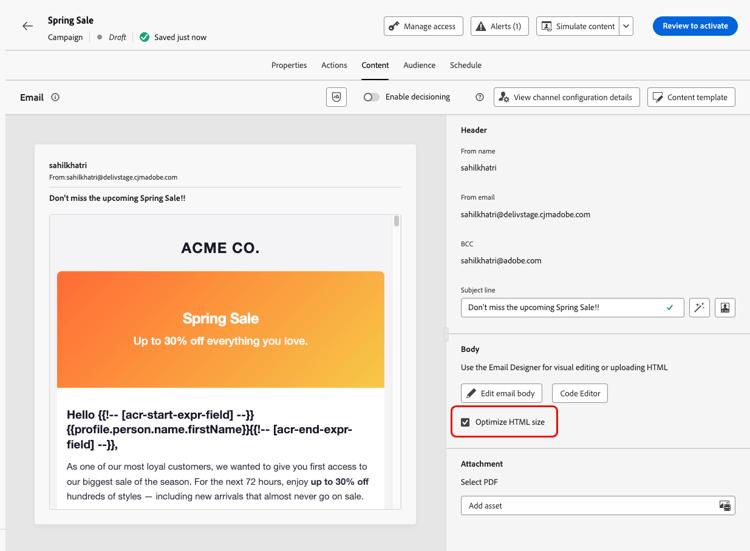
最佳化是電子郵件使用者端安全:
- 它會保留MSO/Outlook條件式註解。
- 這不會改變您的實際內容、影像或視訊。
您可以在傳送校樣時先測試HTML大小最佳化的影響,然後再發佈。 了解更多
在多語言電子郵件中最佳化HTML大小 optimize-html-multilingual
使用多語言電子郵件變體時,最佳化HTML大小設定會在電子郵件層級追蹤,而非根據地區設定追蹤。
因此,在任何一個地區設定上啟用此設定,會在發佈時套用至該電子郵件的所有地區設定,甚至在UI中核取方塊仍顯示為未勾選的地區設定也是如此。 您不需要針對每個地區設定重複此動作。
若要停用HTML大小最佳化,您必須取消勾選每個地區設定的最佳化HTML大小。 即使在一個地區設定中將其保持啟用狀態,就足以在所有地區設定中套用最佳化。
檢查並傳送您的電子郵件
定義訊息內容後,您可以使用任一模擬方法來預覽其內容:
- 按一下 模擬內容 以測試內容變數與範例輸入資料或AI自動產生。 瞭解如何模擬內容變化
- 按一下模擬內容,然後從下拉式清單中選取模擬內容(AEP設定檔),以使用測試設定檔預覽、傳送校樣並檢查電子郵件呈現。
您也可以驗證內容品質,以評估可讀性、有效性和內容一致性。 了解更多關於內容品質驗證的資訊
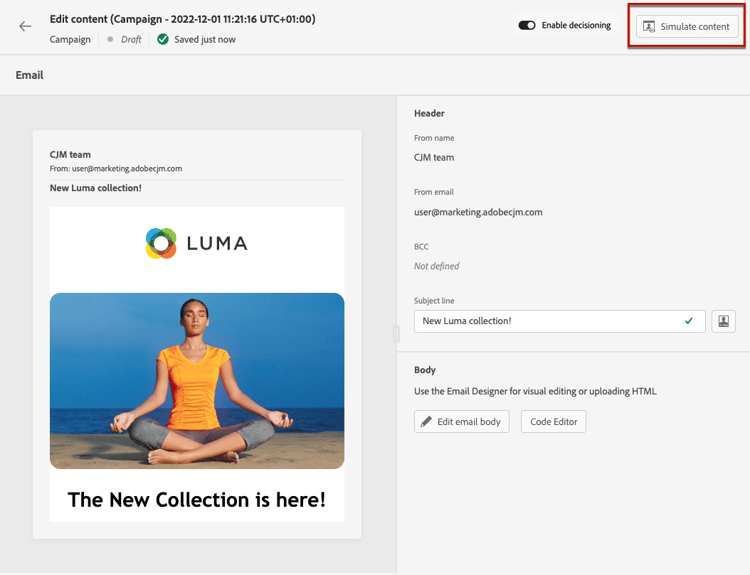
有關如何選取測試設定檔及預覽內容的詳細資訊,請參閱內容管理區段。
當您的電子郵件準備就緒時,請完成您的歷程或行銷活動的設定,並啟動它以傳送訊息。
測試HTML大小最佳化 optimize-html-proof
如果您已啟用HTML大小最佳化選項,您可以在傳送校樣時先評估其影響,然後再發佈。 請遵循下列步驟。
-
在電子郵件Designer中,按一下右側欄中的「問題」圖示。 如果轉譯的電子郵件大小超過100 KB,會顯示一則訊息,警告您這可能會導致某些電子郵件使用者端發生截斷。
-
按一下模擬內容。
-
若要測試最佳化版本,請按一下 傳送校樣 按鈕,然後選取 最佳化HTML大小 選項。 這會將縮減的HTML大小的校樣傳送給測試收件者。
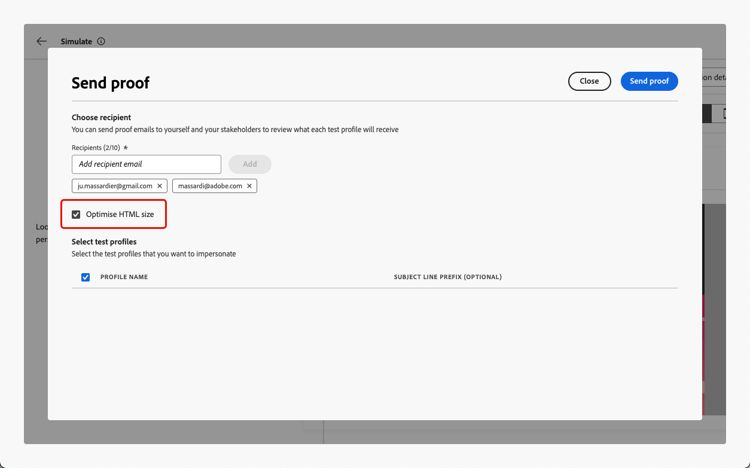
note NOTE 此設定獨立於電子郵件編輯器 — 校樣會反映您在校樣中選擇的任何內容,無論選項在電子郵件本身中是啟用還是停用。 -
選取測試收件者並按一下 傳送校樣 按鈕。 在本節中進一步瞭解傳送校樣。
-
傳送後,在 Simulate 畫面中,按一下 檢視校樣 按鈕。
-
按一下校樣狀態旁邊的資訊圖示。 最佳化詳細資訊會顯示在快顯視窗中,包括原始HTML大小、最佳化HTML大小和大小縮減百分比。
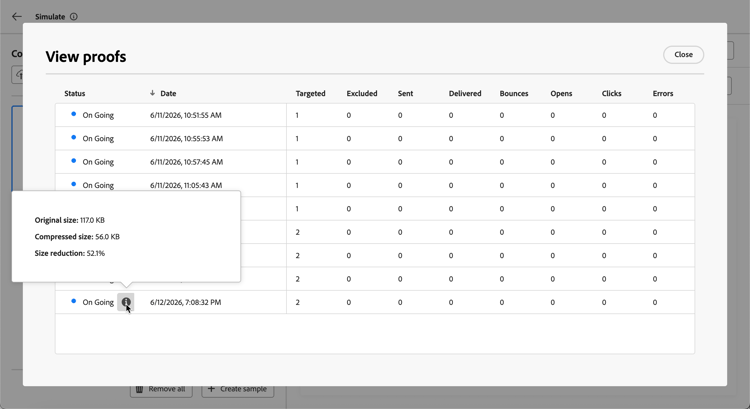
使用此資訊來驗證最佳化的輸出,並確認電子郵件在發佈之前保持在建議的100 KB臨界值內。
note NOTE 檢視校樣快顯視窗中顯示的大小反映了HTML範本的大小,其中Handlebars運算式會以其最小可能值評估,而不是最終傳送之電子郵件的大小。 在傳遞時,動態運算式(例如 {{#each}}回圈)會針對收件者的設定檔資料進行解析,這可能會大幅增加實際電子郵件大小。
This section contains structured knowledge intended to support interpretation, retrieval, and question answering related to this topic.
For complete understanding, this information should be combined with the documentation on this page. Neither source is intended to stand alone; the page describes the feature, while this section provides additional context that helps disambiguate terminology, intent, applicability, and constraints.
- TL;DR: This page explains how to create an email in Journey Optimizer by adding an Email action to a journey or campaign, defining its subject and content in the Email Designer, resolving alerts, optimizing HTML size, and previewing before sending.
Intents:
- Add an Email action to a journey or a campaign
- Define the email subject line and body with the Email Designer
- Enable decisioning to add decision policies to an email
- Resolve warning and error alerts before testing or activating
- Enable and test HTML size optimization to avoid email clipping
- Preview and validate the email before sending
Glossary:
- Email action: The channel action added to a journey or campaign that sends an email when profiles reach that step (product-specific)
- Email Designer: The Journey Optimizer editor used to build and personalize the email body (product-specific)
- Optimize HTML size: An option that compresses the email HTML at publication time (removing unnecessary whitespace and indentation) to reduce size and avoid clipping (product-specific)
- Alerts: In-interface messages raised when key settings are missing — Warnings (recommendations/best practices) and Errors (blocking issues) (product-specific)
- Decision policy: A container for offers that uses the Decisioning engine to return the best content for each audience member (in Limited Availability for emails) (product-specific)
Guardrails:
- The subject line is mandatory and must not include line breaks.
- Legacy native channel activities (Email, Push, SMS, In-app, Web, Code-based experience, and Content Card) are deprecated as of the March 2026 release; existing journeys using them continue to work without changes and no migration is required.
- Decision policy creation in emails is in Limited Availability — contact your Adobe representative to gain access.
- All error alerts (for example a missing subject line, an empty email version, or a deleted configuration) must be resolved before you can test or activate the journey/campaign; warnings do not block.
- HTML size optimization is not applied automatically — you must enable it manually — and is applied only at publication time.
- In multilingual emails, Optimize HTML size is tracked at the email level, not per locale: enabling it on any one locale applies it to all locales at publish time; to disable it, uncheck it on every locale.
- Removal of non-essential HTML comments during optimization is temporarily disabled as of July 10, 2026.
- The sizes shown in View proofs reflect the HTML template with Handlebars expressions evaluated at their minimum value, not the size of the final delivered email.
Terminology:
- Canonical name: Email action — Acronym: n/a — variants: email activity, email channel action
- Do not confuse: “Warnings” (recommendations/best practices; do not block testing or activation) ≠ “Errors” (must be resolved before testing or activating)
- Do not confuse: “Simulate content” (test variations with sample input data or AI auto-generation) ≠ “Simulate content (AEP profiles)” (preview with test profiles, send proofs, and check email rendering)
FAQ:
- Q: How do I create an email? — Add an Email action to a journey or a campaign, select or create an email configuration, then define the subject and body in the Email Designer.
- Q: Are the legacy native email/push/SMS journey activities still usable? — They are deprecated as of the March 2026 release, but existing journeys using them continue to work without changes and no migration is required.
- Q: Why can I not test or activate my journey or campaign? — All error alerts (such as a missing subject line, an empty email version, or a deleted configuration) must be resolved first; warnings do not block testing or activation.
- Q: What does the Optimize HTML size option do, and is it automatic? — It compresses the email HTML at publication time by removing unnecessary whitespace and indentation, which helps avoid email clipping (some clients such as Gmail truncate messages over ~100 KB). It is not automatic — you must enable it manually.
- Q: How does Optimize HTML size behave for multilingual emails? — It is tracked at the email level, not per locale: enabling it on one locale applies it to all locales at publish time, and to disable it you must uncheck it on every locale.
- Q: How can I preview or test my email before sending? — Use Simulate content (sample input data or AI auto-generation), or Simulate content (AEP profiles) to preview with test profiles, send proofs, and check rendering; you can also validate content quality.