在此頁面上:瞭解如何啟用傳送時間最佳化,讓Adobe的AI根據每位客戶的歷史開啟和點按行為,預測傳送電子郵件和推播訊息的最佳時機。
Adobe Journey Optimizer的傳送時間最佳化功能採用Adobe的Journey AI服務,可根據客戶的歷史開啟和點按行為,選擇最佳的電子郵件和推播訊息傳送時間,以最大化客戶參與度。
-
已依要求為Adobe Journey Optimizer客戶啟用傳送時間最佳化功能。 請聯絡 Adobe 客戶服務,或是您的 Adobe 代表,為貴組織啟用這項功能。
-
傳送時間最佳化僅適用於 電子郵件 和 推播通知 頻道,以及 等待 活動。
-
下列AEP中樞區域支援傳送時間最佳化: VA7、NLD2、AUS5、CAN2、GBR9、IND2、CHE2。 這些是Adobe部署區域代碼,如果您不確定您的組織使用哪個區域,請聯絡您的Adobe代表。
使用傳送時間最佳化 use-send-time-optimization
若要對電子郵件或推播動作啟用並設定傳送時間最佳化,請遵循下列步驟。
開始之前,請先考慮哪些訊息適合開啟。 「傳送時間最佳化」不應用於緊急且有時效性的作業訊息,例如訂單確認、密碼重設通知或航班閘道變更通知。 它最適合用於不太緊急的行銷通訊,例如每週廣告、新產品的促銷資訊,或長達一個月的銷售資訊。
-
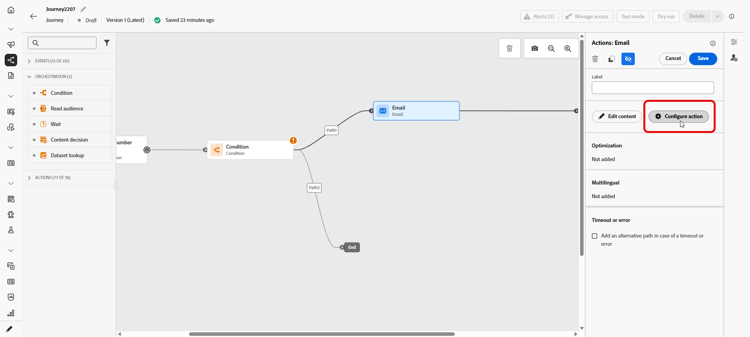
從您的歷程中,開啟 設定動作 功能表。
電子郵件通道設定中的
-
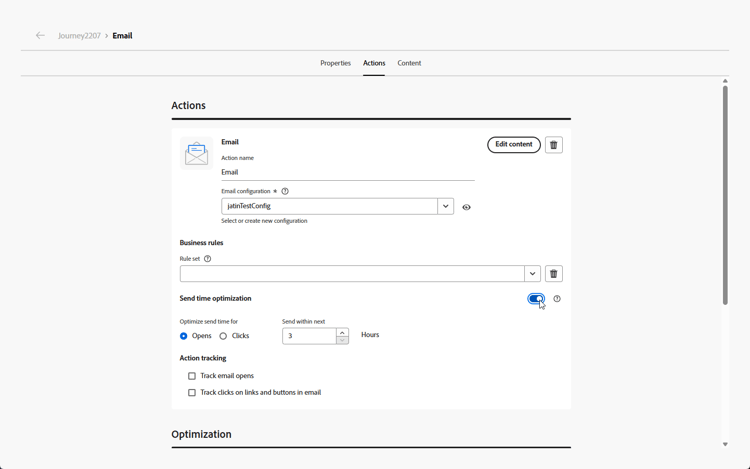
開啟[傳送時間最佳化]功能表中的 傳送時間最佳化 引數。
電子郵件通道設定中的
-
針對電子郵件訊息,選取適當的選項,以選擇最佳化開啟次數或點進次數。 推送訊息一律會針對開啟次數最佳化。
為了獲得最佳結果,請針對 點按 最佳化大部分電子郵件。 當訊息是資訊性且不是用來驅動特定動作時,請選擇開啟。
-
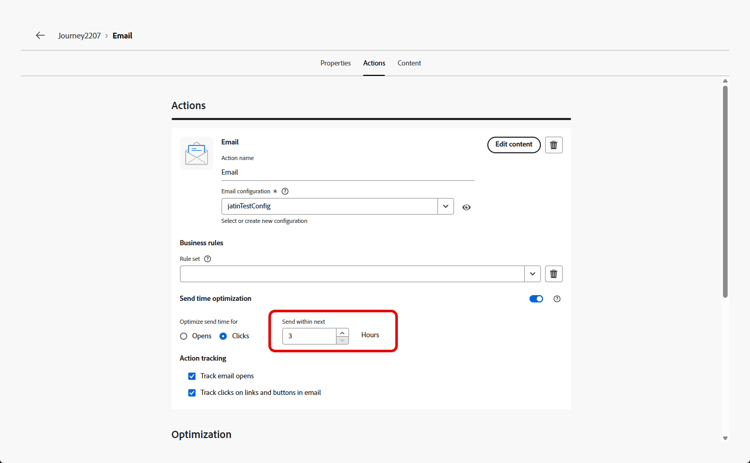
對於電子郵件和推播訊息,請將 在next 內傳送設定為系統在傳送訊息之前等待的最大小時數(2-100)。
為獲得最佳結果,請選擇6到24小時之間的值。 較低的值會減少可用傳送次數,並可限制傳送時間最佳化的好處。 較高的值可能表示訊息已過期,或在傳送時較不相關。
電子郵件通道設定中的
-
針對電子郵件訊息,選擇動作追蹤的設定方式。 您可以追蹤電子郵件開啟次數,以及追蹤電子郵件中連結和按鈕的點按。
當您的歷程已啟用且客戶達到歷程中的電子郵件或推播動作時,傳送時間最佳化將在您的指定限制內,選擇每個使用者的最佳預測傳送時間。
若要監視歷程的效能,請參閱概觀頁面。
等待活動中的傳送時間最佳化 sto-wait-activity
在等待活動中
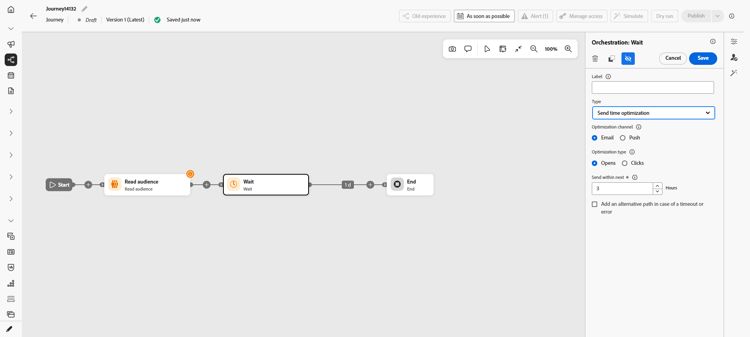
除了電子郵件和推播動作之外,您也可以將傳送時間最佳化套用至 等待 活動。 其需仰賴相同的傳送時間最佳化模型來計算每個設定檔的最佳等待時間,但此處等待與傳送脫離:與其僅繫結至電子郵件或推播動作,後面可以接著任何活動,例如自訂動作。
傳送時間最佳化的運作方式 how-send-time
傳送時間最佳化模型會擷取您組織的Adobe Journey Optimizer客戶行為資料,並檢視使用者層級的開啟和點按事件,以判斷客戶何時最有可能與您的訊息互動。
傳送時間最佳化會根據三種行為資料,針對每位使用者預測一週中的每一小時:
- 使用者的整體行為
- 相同時區中相似使用者的行為
- 該個別使用者的行為
這些預測會使用貝葉斯方法進行加權和組合,針對每個客戶產生每個量度(電子郵件開啟、電子郵件點按和推播開啟)的「熱度圖」,其指出每週聯絡該使用者最可能且最不可能導致所需參與結果(開啟/點按)的時數,如下例熱度圖所示:

如果在星期三上午9點,且開啟傳送時間最佳化且等待時間上限為7小時的情況下,將具有上述預測概率的使用者設為目標,則訊息的選定傳送時間將會是晚上12點:

傳送時間最佳化模型訓練和評分詳細資料 model-send-time
為您的組織啟用傳送時間最佳化功能後,系統會針對過去16週您組織的所有歷程和動作,以電子郵件和推播傳送、開啟和點按事件來訓練Journey AI模型,不論這些動作是否使用傳送時間最佳化。 這可讓傳送時間最佳化受益於客戶產生的所有資料。
模型最初會接受培訓,並每週評分。 16週後,模型會每月重新訓練並重新掃描。 模型評分包括所有客戶設定檔 — 自上次評分執行以來,既有且新的。
「傳送時間最佳化」傳送的訊息會收到「探索」訊息傳送時間(選取以測試不同傳送時間並觀察客戶回應方式),或是「最佳化」訊息傳送時間(選取以最大化點按/開啟率)。 5%的傳送事件會收到「探索」傳送時間,而95%的傳送事件已「最佳化」。
探索傳送時間是從傳送時間中隨機選取,而該傳送時間可由您設定的最長等待時間提供。 例如,如果在星期三上午9點選取訊息,並開啟傳送時間最佳化且等待時間上限3小時,則訊息的Exploration傳送時間將平均分割為上午9點、上午10點、上午11點與下午12點。
常見問題 faq-send-time
您可以在下方找到有關傳送時間最佳化的常見問題。
需要更多詳細資料? 使用此頁面底部的意見回饋選項來提出您的問題,或與Adobe Journey Optimizer 社群連絡。
貴組織應先在Journey Optimizer中使用「電子郵件」動作,至少30天後再在電子郵件中使用「傳送時間最佳化」 ,以收集一些電子郵件傳送、開啟和點按事件。
貴組織應先在Journey Optimizer內使用「推播」動作30天以上,再使用「推播」內的「傳送時間最佳化」來允許收集某些推播傳送和開啟事件。
如果您的組織已使用電子郵件及/或推播動作型別至少30天,則貴組織在Adobe啟用傳送時間最佳化後,不需要等候更久即可使用。 隨著您的組織收集資料長達16週,結果將會持續改善。
_experience.intelligentServices.journeyAI.sendTimeOptimization中儲存的3個設定檔屬性中,且並非設計為人類看得懂的。傳送時間最佳化可在組織最佳化的所有郵件中,提高電子郵件點按率和推播開啟率,幅度約為2%至10%。
例如,如果組織傳送電子郵件時未將傳送時間最佳化,則平均點按率為5.0%,而同一組具有傳送時間最佳化的電子郵件平均可產生高達5.5%的點按率(5.0% * (1+10%) = 5.5%)。
由於小型樣本大小中的可變性,在傳送單一訊息時,可能無法觀察到傳送時間最佳化的好處。
組織在以下情況下更有可能從使用傳送時間最佳化中獲得更大的好處:
- 現有歷程使用的傳送時間是固定的且未妥善最佳化
- 客戶行為的可變性(點按和開啟)會對應至客戶地點和客戶偏好設定
- 組織對大部分電子郵件和推播訊息使用傳送時間最佳化
- 組織選擇建議的6-12小時範圍內的最大等待時間
發生此問題的原因有多種:
- 您的訊息已選取為「探索」訊息傳送時間,而非「最佳化」訊息傳送時間。
- 相似使用者的行為影響了模型以建議另一個傳送時間。
timeZone設定檔欄位來決定使用者的時區。 如果無法供該使用者使用,「傳送時間最佳化」會嘗試從使用者設定檔中的其他地理資訊(例如國家/地區和州)推斷使用者的時區。傳送時間最佳化可在下列情況下,於使用者當地時區的夜間將推播訊息傳送給使用者:
- 當使用者表現出行為表示他們很可能會與夜間傳送的訊息互動時
- 模型選擇「探索」傳送時間時
為避免在夜間時段向客戶傳送推播訊息,請排程批次推播訊息傳送以在早上或午後發生,並選擇較短的持續時間以進行傳送時間最佳化。 (例如,上午9點的傳送時間與最長8小時的等候時間。)
This section contains structured knowledge intended to support interpretation, retrieval, and question answering related to this topic.
For complete understanding, this information should be combined with the documentation on this page. Neither source is intended to stand alone; the page describes the feature, while this section provides additional context that helps disambiguate terminology, intent, applicability, and constraints.
- TL;DR: This page explains how to configure and use Send-Time Optimization in Adobe Journey Optimizer, an AI-powered feature that predicts the best time to send email or push messages to each individual to maximize engagement.
Intents:
- Enable Send-Time Optimization on the Email or Push channel of an Action activity in a journey
- Choose whether to optimize for opens or click-throughs on email messages
- Set the maximum wait window (Send within next) for delayed delivery
- Understand how the AI model predicts optimal send times using behavioral data
- Determine whether Send-Time Optimization is appropriate for a given message type
- Use Send-Time Optimization within a Wait activity to delay before any downstream activity, decoupled from the message send
Glossary:
- Send-Time Optimization (STO): An AI-powered feature that delays message delivery to each profile until the predicted optimal engagement hour within a configured time window (product-specific)
- Journey AI: Adobe’s AI services powering Send-Time Optimization within Journey Optimizer (product-specific)
- Exploration send time: A randomly selected send time (used for 5% of sends) to test different times and improve model accuracy (product-specific)
- Optimized send time: A model-predicted send time selected to maximize click or open rates (used for 95% of sends) (product-specific)
- Send within next: The maximum number of hours (2–100) the system will wait before sending the message to a given profile (product-specific)
Guardrails:
- Send-Time Optimization must be enabled by Adobe for the organization; contact Adobe Customer Care or your Adobe representative to activate it.
- Send-Time Optimization is available for the Email and Push channels (selected in an Action activity) within journeys, and for the Wait activity; it is not currently available for messages sent through campaigns or for other action types.
- The organization should use the Email channel for a minimum of 30 days before using Send-Time Optimization within Email, and the Push channel for a minimum of 30 days before using it within Push; an organization that has already used the Email and/or Push channels for at least 30 days does not need to wait longer once the feature is enabled by Adobe.
- Do not use Send-Time Optimization for urgent or time-sensitive operational messages (e.g., order confirmations, password resets, flight gate changes).
- Maximum wait time range is 2–100 hours; recommended range is 6–24 hours for best results.
- Model scores are stored in profile attributes at
_experience.intelligentServices.journeyAI.sendTimeOptimizationand are not human-readable. - Models are trained weekly initially, then retrained and rescored monthly after 16 weeks.
Terminology:
- Canonical name: Send-Time Optimization — Acronym: STO
- Do not confuse: “Exploration send time” ≠ “Optimized send time” (exploration is random for model testing; optimized is model-predicted for engagement)
FAQ:
- Q: Which channels support Send-Time Optimization? — The Email and Push channels (selected in an Action activity) within journeys, and the Wait activity; messages sent through campaigns and other action types are not currently supported.
- Q: Should I optimize for opens or clicks on email? — Optimize for Clicks for most emails. Choose Opens when the message is informational and not intended to drive a specific action.
- Q: How long does the organization need to wait before enabling STO? — The organization should use the Email channel (for Email) or the Push channel (for Push) for a minimum of 30 days to allow the collection of send, open, and click events. Results continue to improve for up to 16 weeks.
- Q: Can STO send push notifications at night? — Yes, if a user’s behavior suggests night-time engagement or if an exploration send time is selected. To avoid this, use a morning send time with a short maximum wait window.
- Q: What is the expected benefit of Send-Time Optimization? — Approximately 2–10% improvement in email click rate or push open rate across all optimized messages, though benefits may not be observable on individual small-volume sends.