在此頁面上:管理收件者如何取消訂閱通訊和選擇退出個人化,以便您可以尊重他們的同意選擇,並履行您的法律和品牌信譽義務。
向接收者提供取消訂閱接收來自品牌通訊的功能是一項法律要求,同時確保此選擇獲得遵守。 若未遵守這些法規,品牌將面臨法律風險。 它可協助您避免傳送未經請求的通訊給您的收件者,這可能會使他們將您的訊息標示為垃圾訊息,並損害您的聲譽。
進一步瞭解 Experience Platform 文件中的適用法規。
管理歷程和行銷活動中的取消訂閱 opt-out-ajo
從歷程或行銷活動傳送訊息時,您必須一律確保客戶可取消訂閱未來的通訊。 取消訂閱後,輪廓將自動從未來行銷訊息的客群中移除。
Journey Optimizer 提供管理電子郵件和簡訊訊息中選擇退出的方式,而推播通知不需要由您執行任何動作,因為收件者可以透過其裝置自行取消訂閱。 例如,在下載或使用您的應用程式時,他們可以選擇停止通知。 同樣地,他們也可以透過行動裝置作業系統變更通知設定。
檢查推播選擇退出狀態 push-opt-out-status
行動應用程式的推播選擇退出會在裝置層級處理:當使用者在其裝置上停用通知時,推播權杖會從他們的輪廓中移除。 因此,輪廓上的 推播權杖存在 即為隱含推播同意的指標。
若要在 Adobe Experience Platform 中驗證輪廓的推播同意狀態:
- 在 Adobe Experience Platform 的 輪廓 區段中開啟輪廓。
- 移至 屬性 標籤,並尋找 推播通知詳細資料 欄位群組。
- 如果存在推播權杖,輪廓已隱含同意接收推播通知。 如果找不到權杖,則表示使用者已在裝置層級選擇退出。
在以下章節中了解如何管理 Journey Optimizer 電子郵件和簡訊訊息中的選擇退出:


實施個人化同意 opt-out-personalization
您的客戶也可以選擇退出提供的個人化內容。 輪廓從個人化選擇退出後,您需要確保其資料不會用於個人化,且您必須使用遞補變體取代任何個人化內容。
在決定管理中 opt-out-decision-management
運用產品建議時,個人化偏好設定不會自動於使用來自決策 API 請求或 邊緣決策 API 請求的決定範圍實施。 在這種情況下,您需要手動強制執行個人化同意。 若要執行此操作,請遵循下列步驟。

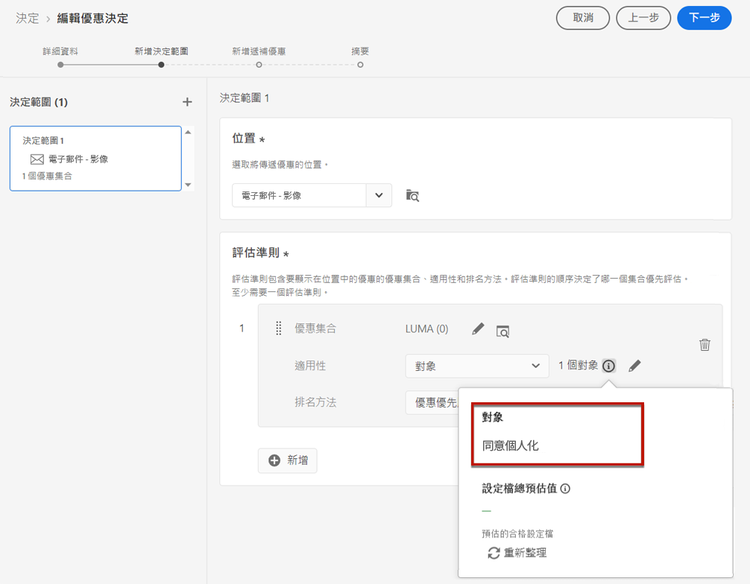
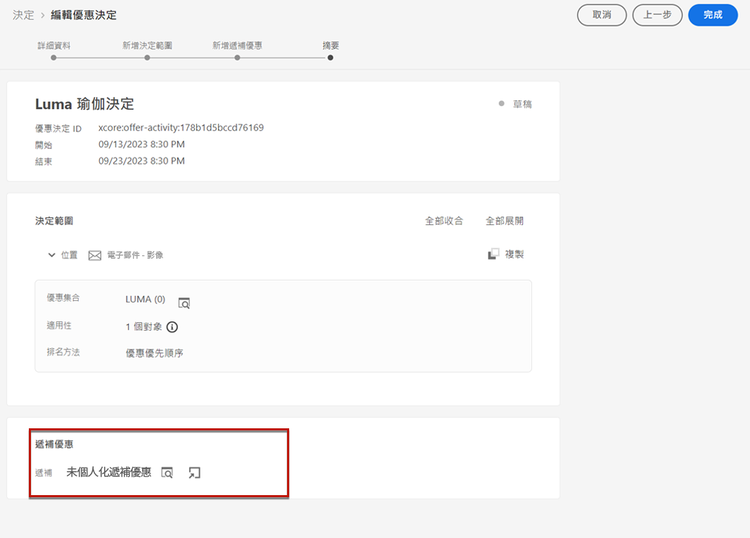
如果使用者:
-
同意個人化,決定範圍將決定該輪廓的最佳產品建議。
-
未同意個人化,對應的輪廓將不符合評估條件中的任何產品建議資格,因此將收到非個人化的後備產品建議。
在個人化編輯器中 opt-out-expression-editor
此個人化編輯器本身因不涉及訊息傳送,所以不會進行任何同意檢查或強制動作。
不過,使用以權限為基礎的存取控制標籤可限制哪些欄位能用於個人化。 此訊息預覽和電子郵件轉譯服務會遮蔽以敏感資訊識別的欄位。
在 Journey Optimizer 行銷活動中,依照下列方式強制執行同意原則:
-
您可以在客群建立過程中加入同意原則定義,以確保為行銷活動選取的客群已篩選掉不符合同意條件的輪廓。
-
Journey Optimizer 將在頻道層級執行一般同意檢查,確保輪廓已選擇接收對應頻道上的行銷通訊。
note NOTE Journey Optimizer 行銷活動物件本身目前不會執行任何其他同意原則執行檢查。
若要在行銷活動中手動強制執行個人化同意,請遵循下列其中一個選項。
使用區段規則產生器
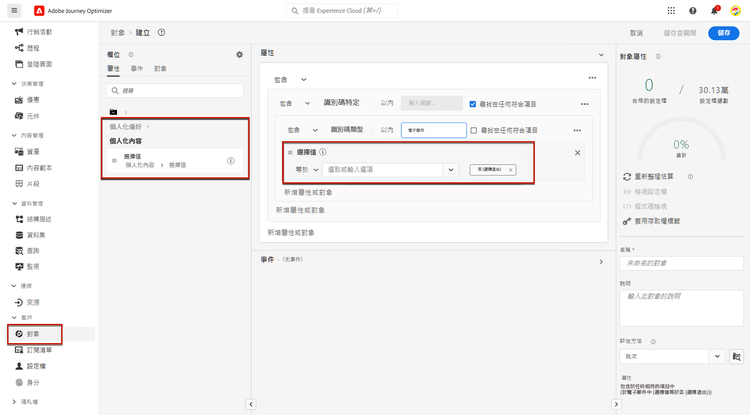
您可以使用區段規則產生器,建立包含選擇退出輪廓的客群。
-
使用細分服務建立 Adobe Experience Platform 客群。

-
選取輪廓屬性,例如個人化內容 = 否 (選擇退出),排除未同意個人化的使用者。
-
按一下儲存。
您現在可以使用此客群,從行銷活動中篩選掉未同意個人化的輪廓。
在構成工作流程中使用分割活動
您也可以將分割活動新增至構成工作流程,以將個人化同意檢查新增至客群。
-
使用 撰寫客群 選項建立客群。 了解更多如何建立構成工作流程的相關資訊
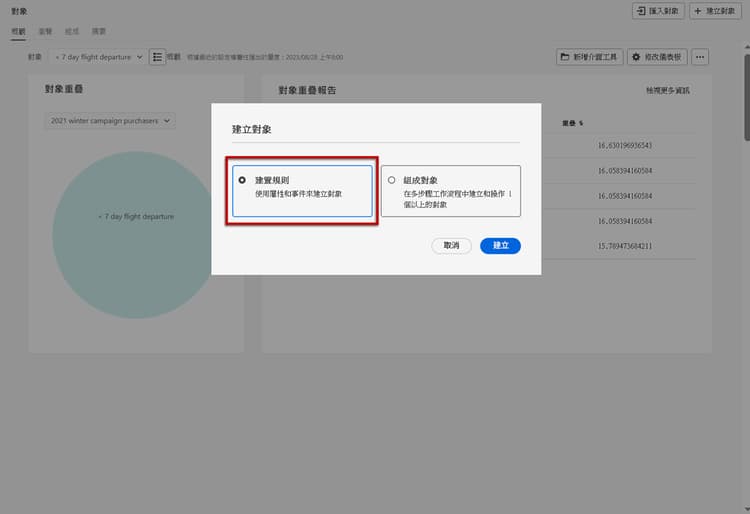
-
使用右側的專用按鈕新增起始客群。
-
按一下 + 圖示,然後選取 分割 活動以建立分割客群。
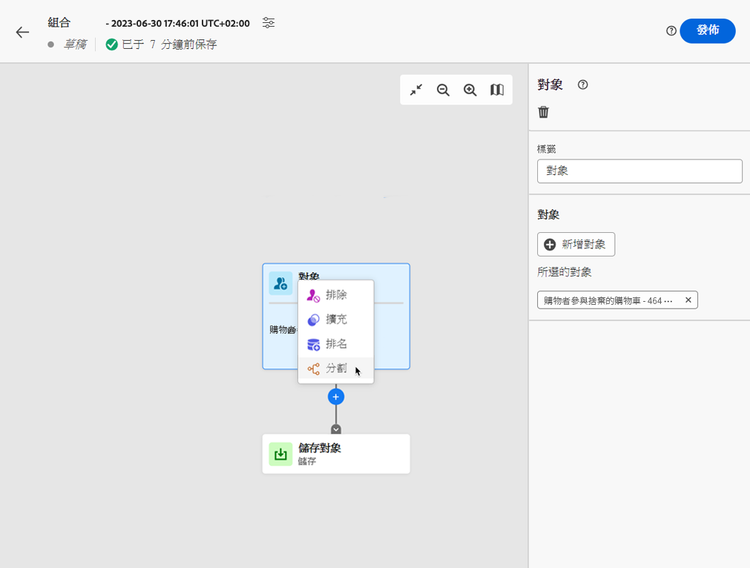
-
在右窗格中,選取 屬性分割 作為分割類型。
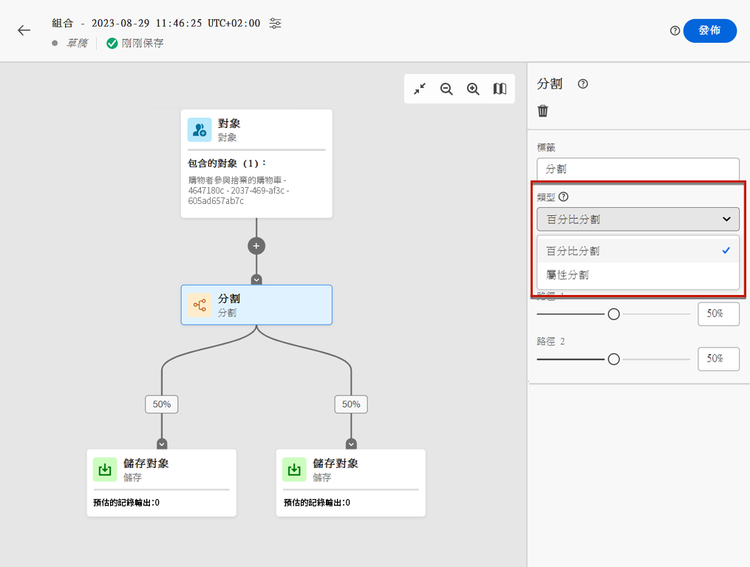
-
按一下 屬性 欄位旁邊的鉛筆圖示,以開啟 選取輪廓屬性 視窗。
-
搜尋個人化同意屬性 (
profile.consents.personalize.content.val) 並加以選取。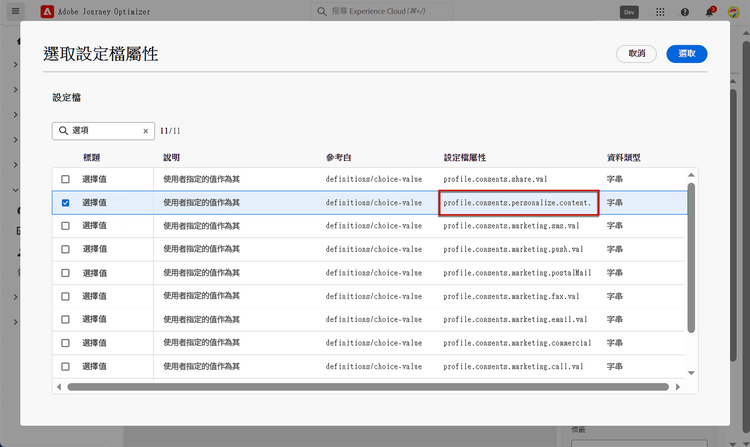
-
路徑 1 將會是非個人化的客群。 選擇相關標籤。
-
從此清單中選擇適當的值。
在此情況下,我們將使用
n表示使用者不同意將其資料用於個人化。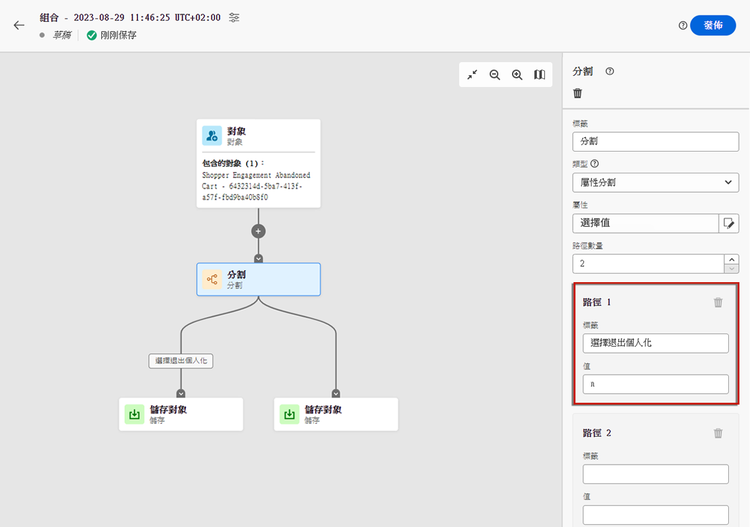
-
您可以為其他選擇值建立個別路徑。 您也可以選擇刪除其餘路徑,然後開啟 其他輪廓 以包含沒有
n選擇值的所有其他輪廓。 -
完成後,請對每個路徑按一下儲存客群,以將工作流程的結果儲存至新客群。 每個路徑都會將一個客群儲存至 Adobe Experience Platform。
-
完成後,發佈構成工作流程。
您現在可以使用此客群,從行銷活動中篩選掉未同意個人化的輪廓。
This section contains structured knowledge intended to support interpretation, retrieval, and question answering related to this topic.
For complete understanding, this information should be combined with the documentation on this page. Neither source is intended to stand alone; the page describes the feature, while this section provides additional context that helps disambiguate terminology, intent, applicability, and constraints.
- TL;DR: This page explains how to manage recipient opt-out from communications and opt-out from personalization in Journey Optimizer so you can honor consent choices and meet your legal and brand-reputation obligations.
Intents:
- Manage unsubscriptions in journeys and campaigns
- Check a profile’s push opt-out status in Adobe Experience Platform
- Understand how consent is handled through the Experience Platform Consent schema
- Implement personalization consent in decision management and campaigns
- Use the segment rule builder or a split activity to filter out profiles that have not consented to personalization
Glossary:
- Opt-out: recipient action to unsubscribe from communications; once unsubscribed, profiles are automatically removed from the audience of future marketing messages (product-specific)
- Suppression REST API: API used to control outgoing messages using suppression and allow lists (product-specific)
- Push token: token whose presence on a profile indicates implicit push consent, and which is removed when a user disables notifications at the device level (product-specific)
consents.marketing.push.val: attribute used for explicit push consent tracking, whereyindicates explicit opt-in andnindicates explicit opt-out (product-specific)- Consent schema: Experience Platform schema that handles consent; by default the value is empty and treated as consent to receive communications (product-specific)
- Consent policies: used to override the default consent logic (product-specific)
profile.consents.personalize.content.val: personalization consent attribute used in a split activity, wherensignifies that users do not consent to the use of their data for personalization (product-specific)
Guardrails:
- Providing recipients the capability to unsubscribe from communications is a legal requirement, as is ensuring this choice is honored
- Journey Optimizer provides ways of managing opt-out in email and SMS messages; push notifications do not require any action on your side, as recipients can unsubscribe through their devices
- By default, the value for the consent field is empty and treated as consent to receive communications; you can modify this default value while onboarding, or use consent policies to override the default logic
- In decision management, personalization preferences are not automatically implemented in decision scopes used from a decisioning API or edge decisioning API request; you must manually enforce personalization consent
- Decision scopes used in Journey Optimizer authored channels satisfy the personalization consent requirement from the journey or campaign they belong to
- Consent for having profile data used in data modeling is not supported yet in Journey Optimizer
- The personalization editor does not perform any consent checks or enforcement, as it is not involved in the delivery of messages
- The Journey Optimizer campaign object itself does not perform any additional consent policy enforcement checks at this time
- The message preview and email rendering service mask the fields identified with sensitive information
Terminology:
- Canonical name: Opt-out
- Do not confuse: “opt-out from communications” (unsubscribe from receiving messages) ≠ “opt-out from personalization” (excluding a profile’s data from being used for personalized content)
- Do not confuse: “
consents.marketing.push.val” (explicit push consent attribute) ≠ “presence of a push token” (indicator of implicit push consent) - Do not confuse: “Personalize Content = Yes (opt-in)” ≠ “Personalize Content = No (opt-out)”
FAQ:
- Q: What happens once a recipient unsubscribes? — The profile is automatically removed from the audience of future marketing messages.
- Q: Do push notifications require opt-out action in Journey Optimizer? — No, recipients can unsubscribe through their devices, and push opt-out is handled at the device level.
- Q: How do you check whether a profile has opted out of push? — In Adobe Experience Platform, open the profile, go to the Attributes tab, and look at the Push Notification Details field group; the presence of a push token indicates implicit consent, and no token indicates opt-out at the device level.
- Q: How is consent handled by default? — Through the Experience Platform Consent schema, where the default empty value is treated as consent; this can be changed at onboarding or overridden with consent policies.
- Q: Is consent for data modeling supported? — No, consent for having profile data used in data modeling is not supported yet in Journey Optimizer.
- Q: How do you enforce personalization consent for a campaign? — Include consent policy definitions as part of audience creation, or build an audience with the segment rule builder or a split activity to filter out profiles that have not consented to personalization.