このページ:ジャーニーまたはキャンペーンを通じて web エクスペリエンスを作成し、そのコンテンツを編集およびテストし、訪問者を別の URL にリダイレクトし、Adobe Journey Optimizer で公開、アクティブ化、停止する方法について説明します。
Journey Optimizer では、インバウンドのジャーニーまたはキャンペーンを通じて、顧客に提供する web エクスペリエンスをパーソナライズできます。
ジャーニーまたはキャンペーンを通じた web エクスペリエンスの定義 create-web-experience
キャンペーンまたはジャーニーを通じて web エクスペリエンスの作成を開始するには、次の手順に従います。
ジャーニーに web アクティビティを追加するには、次の手順に従います。
-
ジャーニーを「イベント」または「オーディエンスを読み取り」アクティビティで開始します。
-
パレットの「アクション」セクションから アクション アクティビティをドラッグ&ドロップします。 詳しくは、アクションアクティビティを参照してください。
note important IMPORTANT 従来のネイティブチャネルアクティビティ(電子メール、プッシュ、モバイルメッセージ、アプリ内、web、コードベースのエクスペリエンス、コンテンツカード)は、2026年3月のリリースで廃止されました。 これらのアクティビティを使用している既存のジャーニーでは、変更を必要とせずに引き続き機能します。移行は必要ありません。 -
「Web」をアクションタイプとして選択します。
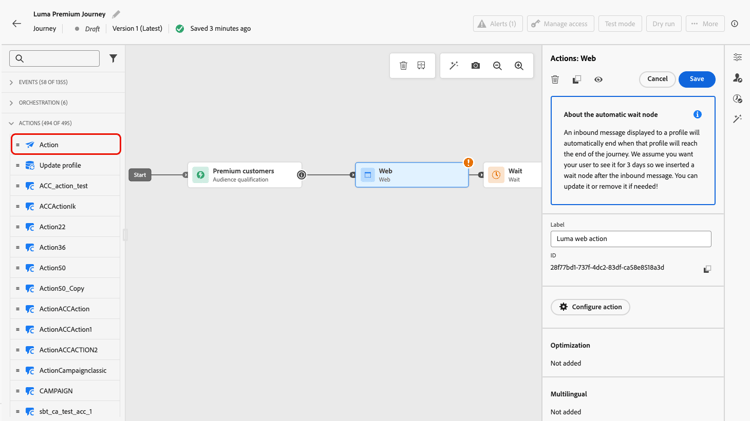
note NOTE Web はインバウンドエクスペリエンスアクティビティなので、3 日間の 待機 アクティビティが付随しています。 詳細情報 -
ジャーニーキャンバスでアクションを識別するには、ラベルを入力します。
-
「アクションを設定」ボタンをクリックします。
-
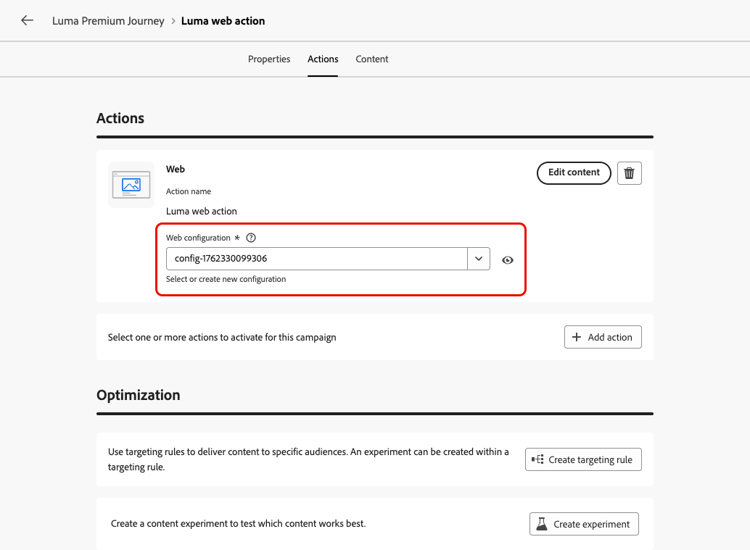
「アクション」タブに移動します。 使用する web 設定を選択または作成します。
-
「アクションを追加」ボタンをクリックすると、web エクスペリエンスに 1 つ以上のインバウンドアクションを追加できます。 詳細情報
-
ジャーニーキャンバスに戻ります。 必要に応じて、追加のアクションまたはイベントをドラッグ&ドロップして、ジャーニーフローを完了します。 詳細情報
-
「コンテンツを編集」ボタンを選択し、必要に応じてコンテンツを編集します。 詳細情報
ジャーニーの作成、設定、公開方法について詳しくは、このページを参照してください。
キャンペーンを通じて web エクスペリエンスの作成を開始するには、次の手順に従います。
-
キャンペーンの作成. 詳細情報
-
実施するキャンペーンのタイプを選択します。
-
Scheduled - Marketing:キャンペーンをすぐに実行するか、指定日に実行します。 スケジュール済みキャンペーンは、マーケティングメッセージを送信することを目的としています。 ユーザーインターフェイスから設定および実行します。
-
API トリガー - マーケティング/トランザクション:API 呼び出しを使用してキャンペーンを実行します。 API トリガーキャンペーンは、マーケティングメッセージまたはトランザクションメッセージのいずれか、つまり、個人が実行したアクション(パスワードのリセット、買い物かごでの購入など)に続いて送信されるメッセージの送信を目的としています。API を使用してキャンペーンをトリガーする方法の詳細情報
-
-
Web アクションを選択します。
-
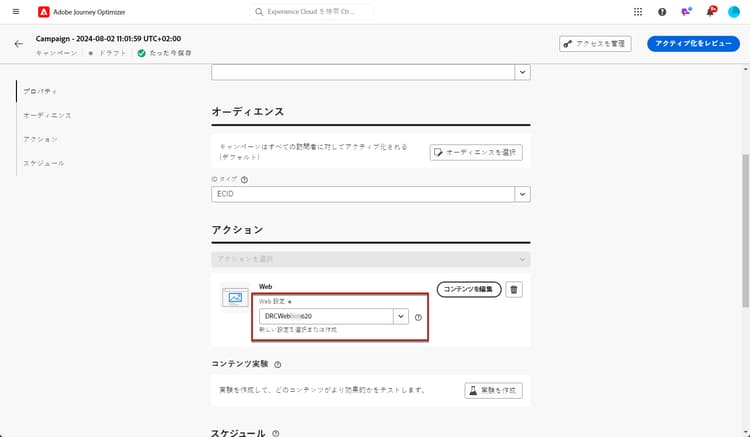
Web 設定を選択または作成します。 詳しくは、web 設定を参照してください
-
「コンテンツを編集」ボタンをクリックし、必要に応じてコンテンツを編集します。 詳細情報
キャンペーンの設定方法について詳しくは、このページを参照してください。
Web コンテンツの編集 edit-web-content
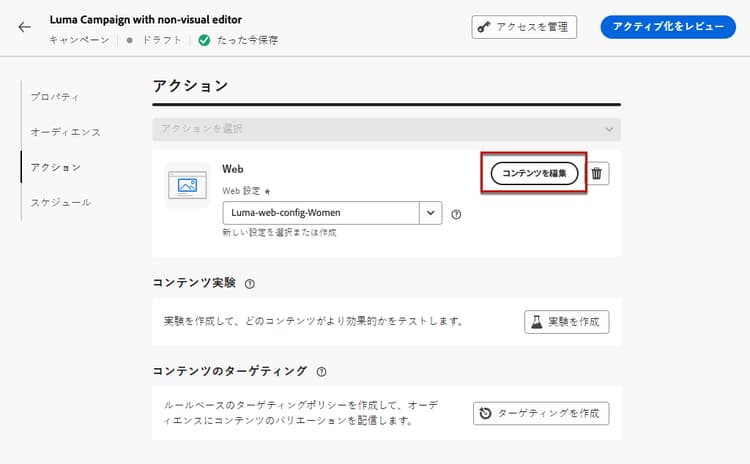
ジャーニーまたはキャンペーンに web アクションを追加すると、次のいずれかでサイトのコンテンツを編集できるようになります。
- ビジュアルエディターを使用してエクスペリエンスを作成する web designer、
- または非ビジュアルエディターを使用します。
Web エクスペリエンスのオーサリングを開始するには、次の手順に従います。
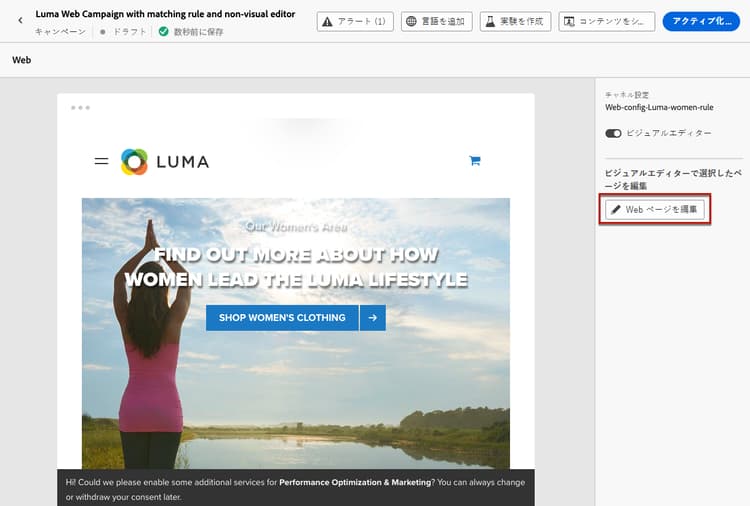
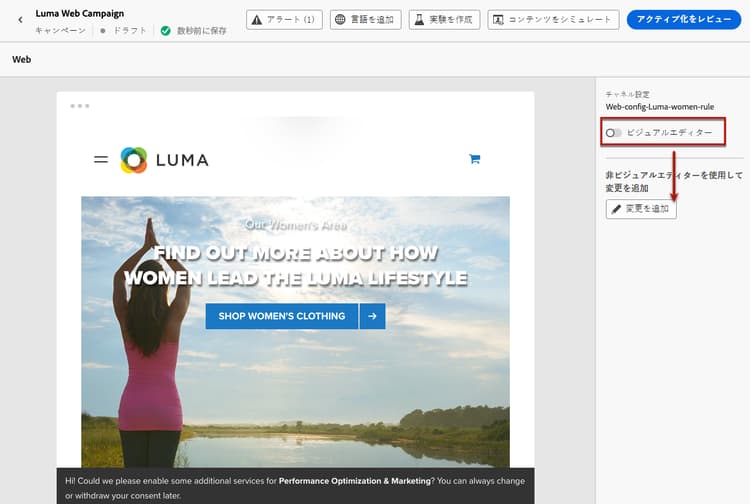
Web エクスペリエンスのテスト test-web-experience
Web デザイナーを使用して web エクスペリエンスを作成したら、次のいずれかのシミュレーション方法を使用して、変更した web ページをプレビューできます。
- 「コンテンツをシミュレート」をクリックし、サンプル入力データまたは AI 自動生成を使用して、コンテンツバリエーションをテストします。 コンテンツバリエーションのシミュレート方法の詳細情報
- 「コンテンツをシミュレート」をクリックし、ドロップダウンから「コンテンツをシミュレート(AEP プロファイル)」を選択し、テストプロファイルでプレビューし、テストプロファイルを追加して、web ページを確認します。
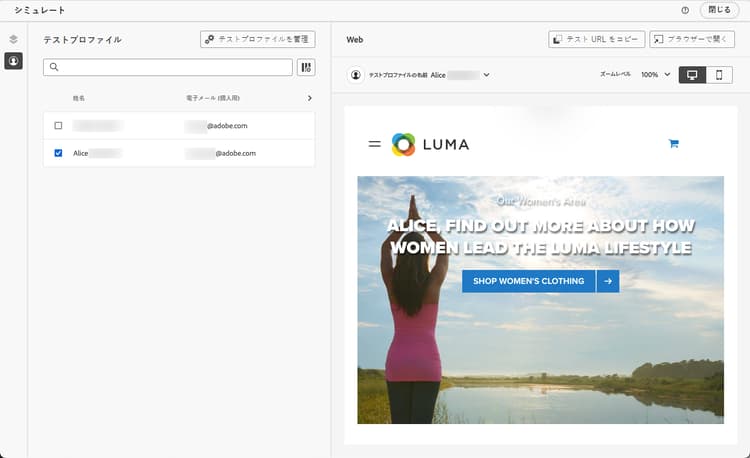
また、デフォルトのブラウザーで開くことも、テスト URL をコピーして任意のブラウザーに貼り付けることもできます。 これにより、キャンペーンの実施前に任意のブラウザーで新しい web エクスペリエンスをプレビューできるチームや関係者とリンクを共有できます。
テストプロファイルの選択およびコンテンツのプレビュー方法について詳しくは、「コンテンツ管理」の節を参照してください。
URL にリダイレクト web-redirect-to-url
Web エクスペリエンスを作成する際に、web designer で新しいバリエーションを作成するのではなく、別の既存の URL に訪問者をリダイレクトできます。
この機能を使用すると、ページ内のいくつかの要素を変更するだけでなく、2 つの異なるエクスペリエンスを比較するコンテンツ実験を実行できます。
例えば、次の 2 つの処理を含む web キャンペーンを作成します。
-
処理 A では、ターゲット母集団の半分に対して web designer を使用して web エクスペリエンスを作成します。
-
処理 B では、ターゲット母集団の残りの半分に対して「URL にリダイレクト」オプションを選択します。 Journey Optimizer 以外で作成した代替デザインを含むページの URL を入力します。
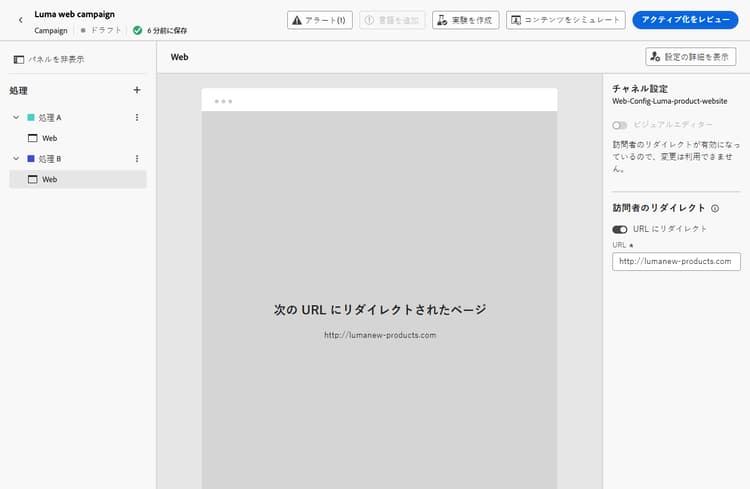
note NOTE Web サイトのプレビューは表示されなくなり、ビジュアルエディターの切替スイッチボタンが無効になります。
Web キャンペーンがライブになったら、ページ訪問者と外部ランディングページにリダイレクトされた訪問者に対する、Journey Optimizer で作成した web エクスペリエンスのパフォーマンスを追跡できます。 方法について詳しくは、実験キャンペーンレポートを参照してください
Web エクスペリエンスの公開 web-experience-live
Web エクスペリエンスを定義し、必要に応じてコンテンツを編集したら、ジャーニーまたはキャンペーンをアクティブ化して、変更をオーディエンスに表示できます。
公開する前に web エクスペリエンスのコンテンツをプレビューすることもできます。 詳細情報
Web ジャーニーの公開 activate-web-journey
ジャーニーから web エクスペリエンスを公開するには、次の手順に従います。
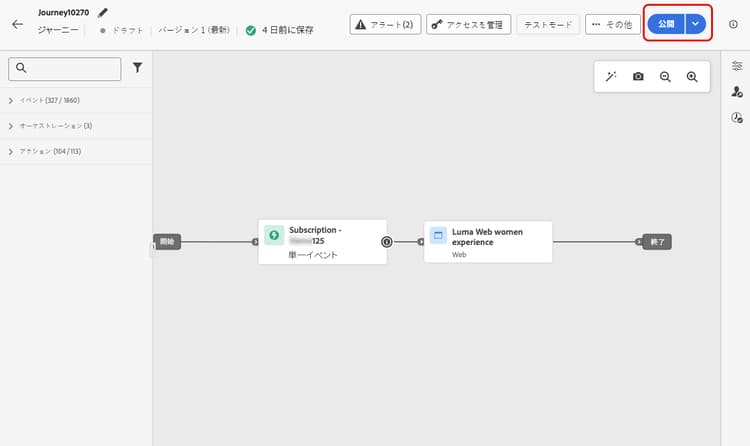
Web ジャーニーが「ライブ」ステータスになり、読み取り専用になります。 ジャーニーの各受信者は、web サイトに追加した変更を表示できます。
Web キャンペーンのアクティブ化 activate-web-campaign
Web キャンペーンの設定を定義し、必要に応じてコンテンツを編集したら、web キャンペーンをレビューおよびアクティブ化できます。 次の手順に従います。
-
Web キャンペーンから、「アクティブ化するレビュー」を選択します。
-
コンテンツ、プロパティ、設定、オーディエンス、スケジュールを必要に応じて確認および編集します。
-
「アクティブ化」を選択します。
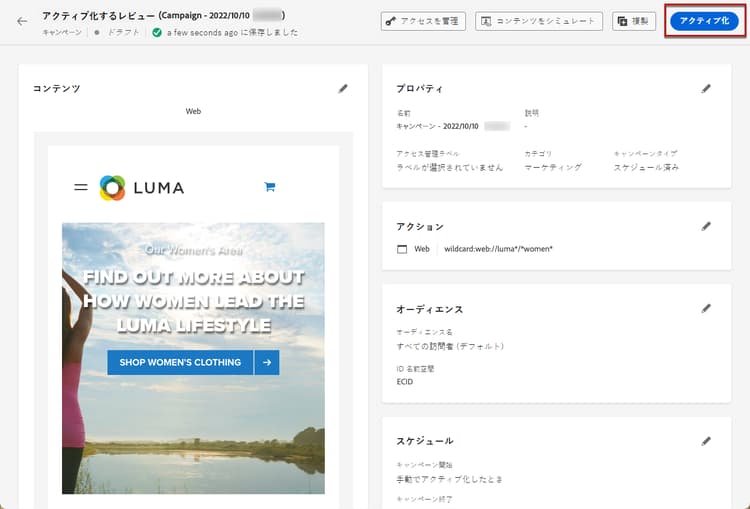
note NOTE キャンペーンのアクティブ化について詳しくは、この節を参照してください。
Web キャンペーンは ライブ ステータスになり、選択したオーディエンスに対して表示されるようになりました。 キャンペーンの各受信者は、web サイトに追加した変更を表示できます。
エクスペリエンスが公開されたら、web ジャーニーとキャンペーンを監視できます。 詳細情報
Web ジャーニーまたはキャンペーンの停止 stop-web-experience
Web ジャーニーまたはキャンペーンが公開されている場合、停止して、オーディエンスに変更が表示されないようにすることができます。 次の手順に従います。
-
それぞれのリストから公開中のジャーニーまたはキャンペーンを選択します。
-
必要に応じて、関連するアクションを実行します。
-
キャンペーンの上部メニューから、「キャンペーンを停止」を選択します。
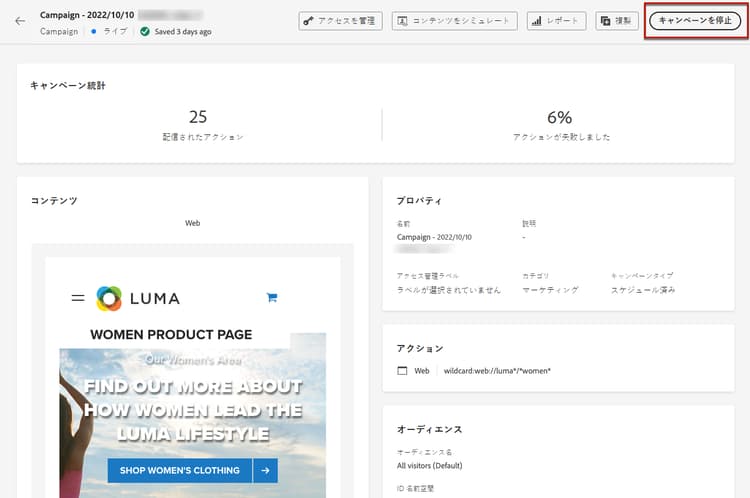
-
ジャーニーのトップメニューから、「詳細」ボタンをクリックし、「停止」を選択します。
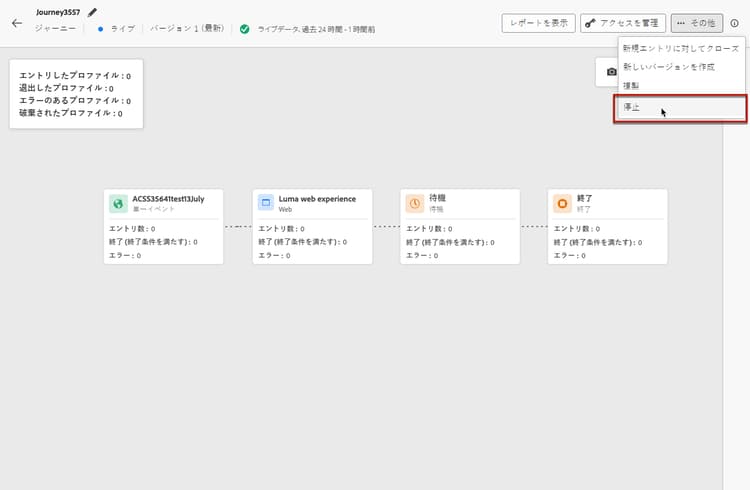
-
-
追加した変更は、定義したオーディエンスには表示されなくなります。
チュートリアルビデオ video
以下のビデオでは、web キャンペーンの作成、プロパティの設定、レビュー、公開の方法を確認できます。
This section contains structured knowledge intended to support interpretation, retrieval, and question answering related to this topic.
For complete understanding, this information should be combined with the documentation on this page. Neither source is intended to stand alone; the page describes the feature, while this section provides additional context that helps disambiguate terminology, intent, applicability, and constraints.
- TL;DR: This page explains how to create a web experience through a journey or campaign in Journey Optimizer by adding an Action activity with the Web channel selected, editing and testing its content, optionally redirecting visitors to another URL, and publishing, activating, or stopping it.
Intents:
- Add an Action activity with the Web channel to a journey, or create a web campaign
- Select or create a web configuration matching a single page URL or multiple pages
- Edit web content using the web designer or the non-visual editor
- Preview and test a web experience before it goes live
- Redirect visitors to another existing URL instead of authoring a new variation
- Publish a web journey or activate a web campaign, and stop a live web experience
Glossary:
- Web channel: An inbound channel, selected in the Action activity of a journey, that displays a web experience to profiles when they reach that step; it references a web configuration that defines the content shown (product-specific)
- Web configuration: The definition that can match a single page URL or multiple pages (via a pages matching rule) to deliver content modifications across one or several web pages (product-specific)
- Pages matching rule: A rule that targets multiple URLs matching the same pattern, so changes apply across all pages matching the rule (product-specific)
- Web designer: The visual editor used to author the web experience (product-specific)
- Non-visual editor: An editing mode used to edit web content without loading the visual editor, reached by unselecting the Visual editor option and clicking Add a modification (product-specific)
- Redirect to URL: An option to redirect page visitors to another existing URL rather than authoring a new variation in the web designer (product-specific)
Guardrails:
- Legacy native channel activities (Email, Push, Mobile message, In-app, Web, Code-based experience, and Content Card) are deprecated as of the March 2026 release; existing journeys using them continue to work without any changes and no migration is required.
- As Web is an inbound channel, it comes with a 3-days Wait activity.
- If this is your first time creating a web experience, you must follow the web prerequisites.
- If a campaign is subject to an approval policy, you must request approval before you can activate the web experience.
- If multiple journeys or campaigns update the same element(s) of a website, the highest priority journey/campaign takes precedence.
- After you click Publish (journey) or Activate (campaign), it can take up to 15 minutes for the changes to be available live on the website.
- Once a web journey or campaign is stopped, you cannot edit or activate it again; you can only duplicate it and activate the duplicate.
- A published web journey takes the Live status and becomes read-only.
Terminology:
- Canonical name: Web channel — Acronym: n/a
- Do not confuse: “Simulate content” (test content variations with sample input data or AI auto-generation) ≠ “Simulate content (AEP profiles)” (preview with test profiles and add a test profile)
- Do not confuse: “Publish” (option used to make a web journey live) ≠ “Activate” (used to make a web campaign live via Review to activate)
- Do not confuse: “Live” (status of a published/activated web experience) ≠ “Scheduled” (status of a web campaign with a defined schedule until the start date and time are reached)
FAQ:
- Q: How do I create a web experience? — Add an Action activity to a journey and select the Web channel, or create a web campaign, then select or create a web configuration and edit the content.
- Q: Can I apply changes across multiple pages? — Yes, a web configuration can match multiple pages using a pages matching rule, and the changes apply to all pages matching the rule.
- Q: How do I preview my web experience before it is live? — Use Simulate content (sample input data or AI auto-generation) or Simulate content (AEP profiles) to preview with test profiles; you can also open it in the default browser or copy the test URL to share.
- Q: How do I make my web experience live? — Publish the journey (it takes the Live status and becomes read-only) or Review to activate and Activate the campaign; it can take up to 15 minutes for changes to appear live.
- Q: Can I reuse a stopped web journey or campaign? — No, once stopped you cannot edit or activate it again; you can only duplicate it and activate the duplicate.
- Q: What happens if two live journeys/campaigns affect the same page? — All changes are applied, and if multiple journeys or campaigns update the same element(s), the highest priority journey/campaign takes precedence.