このページ:キャンペーンの基本を理解し、利用可能なキャンペーンタイプを比較します。また、エンドツーエンドの作成ワークフローに従うことで、適切なアプローチを選択し、Adobe Journey Optimizer のチャネル全体でターゲットを絞ったコンテンツを配信するキャンペーンを構築できるようになります。
Adobe Journey Optimizer を使用すると、複数のチャネルにわたって特定のオーディエンスにターゲットを絞った 1 回限りのコンテンツを配信できます。 キャンペーンを使用すると、調整されたマーケティングアクションを同時に実行し、適切なメッセージを適切なタイミングでオーディエンスに届けることができます。
このガイドでは、キャンペーンの基本を理解し、ユースケースに適したキャンペーンタイプを選択し、影響力のあるカスタマーエクスペリエンスを提供するキャンペーンを自信を持ってデザインできるように、明確なロードマップを提供します。
キャンペーンとは
キャンペーンとは、1 つ以上のチャネルをまたいで特定のオーディエンスにコンテンツを配信する、調整されたマーケティングアクションです。 アクションが順番に実行されるジャーニーとは異なり、キャンペーンでは、アクションが即時に、または定義されたスケジュールに従って同時に実行されます。
Journey Optimizer キャンペーンを使用すると、次の操作を実行できます。
- ターゲットオーディエンスセグメントに 1 回限りのコンテンツまたは繰り返しコンテンツを配信
- メール、プッシュ通知、モバイル、アプリ内、web など、調整されたマルチチャネル通信を実行
- API 呼び出し経由の 自動応答 のトリガーにより、リアルタイムのイベント駆動型メッセージを実現
- 視覚的なオーケストレーションツールで 複雑なマーケティングワークフロー をデザイン
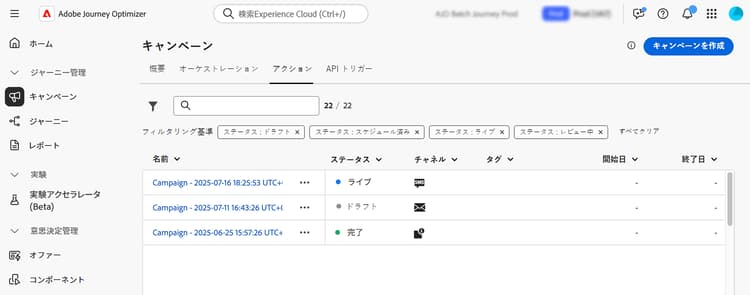
➡️ 作成を開始する準備は整っていますか? 数分で最初のキャンペーンを作成できます。
キャンペーンタイプの選択 campaign-types
作成を開始する前に、ユースケースに適したキャンペーンのタイプを理解することが重要です。 Adobe Journey Optimizer では、それぞれ異なるシナリオとアクティブ化メカニズム向けにデザインされた、次の 3 つのキャンペーンタイプをサポートしています。
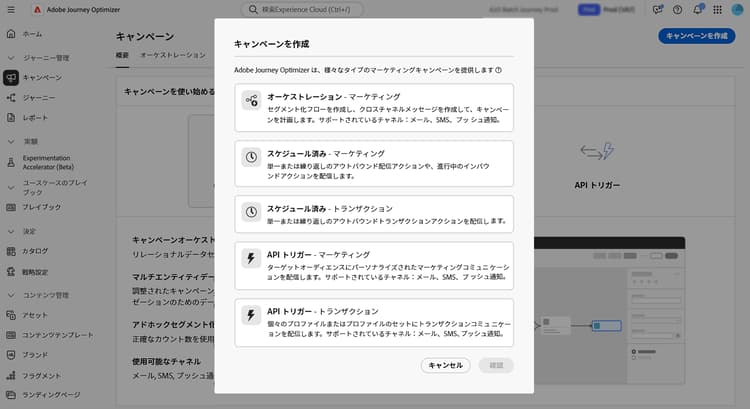
用途:複雑なマルチステップのマーケティングワークフロー
オーケストレーションキャンペーンは、視覚的なドラッグ&ドロップキャンバスを提供し、高度なマーケティングワークフローをデザインおよび自動化します。 オーディエンスのセグメント化から、チャネルをまたいだパーソナライズされたメッセージ配信まで、すべてが速度とコントロールを目的に作成された、1 つの直感的な環境で実行されます。
最適な用途:マルチステップの顧客エンゲージメントプログラム、複雑なセグメント化とターゲティング戦略、クロスチャネルキャンペーンオーケストレーション、大規模なブランド主導型マーケティング、複数の決定ポイントがある高度なワークフローオートメーション。
用途:シンプルなスケジュール済みバッチ通信
アクションキャンペーン(スケジュール済みキャンペーンとも呼ばれる)は、特定の時間に実行される、わかりやすい 1 回限りのバッチ通信または繰り返しバッチ通信に最適です。
2 つのカテゴリ:
- マーケティング - プロモーションオファー、エンゲージメントキャンペーン、お知らせ、法律上の注意、またはポリシーの更新。 受信者はオプトインしている必要があります。
- トランザクション - 中断、緊急事態、キャンセル。 オプトインは必要ありません。
最適な用途:顧客セグメントへの毎月のニュースレター、時間的制約のあるプロモーションのお知らせ、季節のマーケティングキャンペーン、製品ローンチのお知らせ、サービス中断の通知。
用途:外部システムとのリアルタイムなイベント駆動型メッセージ
API トリガーキャンペーンは、API 呼び出しを通じてアクティブ化され、外部システムから直接自動化されたメッセージングが可能になります。 これらのキャンペーンは、API ペイロードからのプロファイル属性とリアルタイムコンテキストデータの両方を使用したパーソナライズ機能をサポートしています。
2 つのカテゴリ:
- マーケティング - ターゲットオーディエンスへのパーソナライズされたマーケティング通信
- トランザクション - 個々のアクション(パスワードのリセット、買い物かごの購入など)の後のメッセージ
最適な用途:パスワードのリセットの確認、買い物かご放棄対策、注文確認と発送状況の更新、アカウントアクティビティ通知、リアルタイムのパーソナライズされたレコメンデーション。
前提条件 prerequisites
キャンペーンを使用する前に、以下の準備が整っていることを確認してください。
-
オーディエンス - キャンペーンを作成する前に、Adobe Experience Platform でオーディエンスを使用可能にする必要があります。 オーディエンスの基本を学ぶ →
note NOTE キャンペーンによってエンゲージされたすべてのプロファイルは、組織の エンゲージ可能プロファイル ライセンス指標にカウントされます(12 か月の期間を繰り返し、サンドボックスごとに 1 回カウントされます)。 大規模なオーディエンスや新しいオーディエンスに対してキャンペーンをアクティブ化すると、この数が大幅に増加する可能性があります。 エンゲージ可能なプロファイルのカウントの監視 -
チャネル設定 - 使用するチャネルで、チャネル設定(プリセット)を作成し、使用可能にする必要があります。 チャネル設定の指定 →
-
権限 - キャンペーンタイプに基づく適切な権限が必要です。 キャンペーン機能にアクセスできない場合は、管理者にお問い合わせください。 ビルトインの役割の詳細情報 →
accordion キャンペーン権限リスト table 0-row-2 1-row-2 2-row-2 キャンペーンタイプ 権限 アクションキャンペーンおよび API トリガーキャンペーン キャンペーン管理者
キャンペーン承認者
キャンペーンマネージャー
キャンペーンビューアーオーケストレーションキャンペーン オーケストレーションキャンペーン管理者
オーケストレーションキャンペーン承認者
オーケストレーションキャンペーンマネージャー
オーケストレーションキャンペーンビューアーaccordion キャンペーン権限の割り当て方法 -
Permissions 製品の「役割」タブに移動し、ビルトインのキャンペーン関連の 役割 を 1 つ選択します。
-
「ユーザー」タブで「ユーザーを追加」をクリックします。
-
ユーザーの名前またはメールアドレスを入力するか、リストからユーザーを選択して、「保存」をクリックします。
まだユーザーを作成していない場合は、ユーザーの追加についてのドキュメントを参照してください。
これにより、ユーザーをインスタンスへリダイレクトするメールがユーザーに送られます。
-
キャンペーン作成ワークフロー workflow
成功するキャンペーンを作成するには、明確で繰り返し可能なプロセスに従います。 ステップバイステップのワークフローを次に示します。
開始する前に、目的を明確にしてください。
- 目標は何ですか? (例:コンバージョンの推進、エンゲージメントの向上、顧客への通知)
- オーディエンスは誰ですか? (例:Adobe Experience Platform から作成または選択)
- 適合するキャンペーンタイプはどれですか? (上記のキャンペーンタイプを参照)
- 使用するチャネルは何ですか? (メール、プッシュ、モバイル、アプリ内、web など) → キャンペーンタイプ別にサポートされるチャネルを参照
- いつ実行すればよいですか? (即時、スケジュール済みまたは API トリガー)
キャンペーンの基盤を設定します。
- キャンペーンの 名前と説明を入力 して、キャンペーンを識別しやすくします
- キャンペーンタイプ(アクション、API トリガー、オーケストレーション)を選択します
- オーディエンスを選択します
- 競合管理を使用する場合は、優先度を設定します
- スケジュール(アクションキャンペーンの場合)または API の詳細(API トリガーの場合)を設定します。 アクションキャンペーンの場合は、ウェーブを使用して送信し、時間の経過と共にバッチでメッセージを配信することもできます。
タイプ固有のガイド:アクションキャンペーンプロパティ | API トリガーキャンペーンプロパティ | オーケストレーションキャンペーン設定
オーディエンスに魅力的なメッセージを作成します。
- E メールデザイナーを使用して、リッチなメールエクスペリエンスを実現
- 画像とディープリンクを使用した プッシュ通知 を設定
- パーソナライゼーションを使用して モバイルメッセージ をデザイン
- アプリ内および web エクスペリエンスを作成
- プロファイル属性とコンテキストデータを使用して パーソナライゼーション を追加
タイプ固有のガイド:アクションキャンペーンコンテンツ | API トリガーキャンペーンコンテンツ | オーケストレーションキャンペーンコンテンツ
キャンペーンをアクティブ化する前に、次の点を常にレビューします。
- テストプロファイルを使用してコンテンツをプレビュー
- 適切なオーディエンスを確保するためにターゲティングを確認
- スケジュールとアクティブ化の設定を確認
- 承認ワークフローを使用している場合は、承認をリクエスト
- シードリストを使用して配信品質をテスト
タイプ固有のガイド:アクションキャンペーンのレビュー | API トリガーキャンペーンのレビュー | オーケストレーションキャンペーンのレビュー
レビューが完了したら、キャンペーンをアクティブ化します。
- 手動アクティブ化 - すぐにアクティブ化するか、スケジュール済みの時間にアクティブ化します
- API アクティブ化 - API トリガーキャンペーンの場合は、アクティブ化エンドポイントを使用します
- 承認プロセス - 必要に応じて、関係者の承認を待ちます
メモ:アクティブなキャンペーンは編集できません(変更するには、複製する必要があります)
タイプ固有のガイド:アクションキャンペーンのアクティブ化 | API トリガーキャンペーンのアクティブ化 | オーケストレーションキャンペーンのアクティブ化
キャンペーンのパフォーマンスを追跡します。
- キャンペーンレポートと分析を表示
- 配信率とエンゲージメント指標を監視
- エラーとバウンスを追跡
- コンバージョンと ROI を分析
- インサイトを使用して最適化
タイプ固有のガイド:アクションキャンペーンレポート | API トリガーキャンペーンモニタリング | オーケストレーションキャンペーン分析
さらに深く掘り下げましょう get-started-types
Journey Optimizer のキャンペーンを理解できたところで、キャンペーンタイプを選択して開始します。



キャンペーンに慣れたら、次の強力な機能を探索します。

スケジュールとタイミング
特定の日時でキャンペーンをスケジュールし、繰り返し配信を設定し、送信時間を最適化して効果を最大化します (アクションおよび API トリガーキャンペーン)。


オーディエンスのターゲティング
特定の Adobe Experience Platform オーディエンスを正確にターゲットにし、オーディエンスの適格性を動的に管理します。


This section contains structured knowledge intended to support interpretation, retrieval, and question answering related to this topic.
For complete understanding, this information should be combined with the documentation on this page. Neither source is intended to stand alone; the page describes the feature, while this section provides additional context that helps disambiguate terminology, intent, applicability, and constraints.
- TL;DR: This page explains what campaigns are, compares the three campaign types (Orchestrated campaigns, Action campaigns, API triggered campaigns), lists the prerequisites, and outlines the six-step campaign creation workflow.
Intents:
- Understand what campaigns are and how they differ from journeys
- Choose between Orchestrated campaigns, Action campaigns (Scheduled), and API-triggered campaigns for a use case
- Know the prerequisites before working with campaigns: audiences, channel configurations, and permissions
- Know which permissions apply to each campaign type
- Follow the six-step campaign creation workflow and find the type-specific guide for each step
- Find the capabilities to explore next, such as scheduling, rate control, audience targeting, approval workflows, quiet hours, and optimization
Glossary:
- Campaign: A coordinated marketing action that delivers content to a specific audience across one or more channels; actions are performed simultaneously, either immediately or on a defined schedule (product-specific)
- Action campaign (also known as Scheduled campaign): Campaign type for straightforward, one-off or recurring batch communications that run at a specific time (product-specific)
- API-triggered campaign: Campaign type that is activated through API calls, enabling automated messaging directly from external systems; it supports personalization using both profile attributes and real-time context data from the API payload (product-specific)
- Orchestrated campaign: Campaign type that provides a visual, drag-and-drop canvas to design and automate sophisticated marketing workflows, from audience segmentation to personalized message delivery across channels (product-specific)
- Marketing and Transactional: The two categories of Action campaigns and of API-triggered campaigns
- Engageable Profiles: License metric of the organization to which every profile engaged by a campaign counts (product-specific)
- Channel configurations (presets): Configurations for the channels used by campaigns (product-specific)
Guardrails:
- Every profile engaged by a campaign counts toward the organization’s Engageable Profiles license metric (rolling 12-month window, counted once per sandbox). Activating a campaign to a large or new audience can cause a significant increase in this count.
- For Action campaigns, Marketing requires recipients to be opted in, and Transactional does not require opt-in.
Prerequisites and permissions:
-
Audiences: available in Adobe Experience Platform before creating campaigns.
-
Channel configurations: created and available for the channels you want to use.
-
Permissions: appropriate permissions based on the campaign type. Contact your administrator if you cannot access campaign functionalities.
- Action campaigns and API triggered campaigns: Campaign administrator, Campaign approver, Campaign manager, Campaign viewer.
- Orchestrated campaigns: Orchestrated Campaign Administrator, Orchestrated Campaign Approver, Orchestrated Campaign Manager, Orchestrated Campaign Viewer.
Applicability:
- Scheduling & timing, Approval workflows, and Quiet hours: labeled on the page as Action & API-triggered campaigns.
- In the campaign properties step, configure the schedule for Action campaigns, or the API details for API-triggered campaigns.
- In the activate step, API activation (use the activation endpoint) is for API-triggered campaigns.
Terminology:
- Canonical name: Campaigns — variants: Adobe Journey Optimizer campaigns
- Canonical name: Action campaigns — variants: Scheduled campaigns, Action campaigns (Scheduled)
- Canonical name: API-triggered campaigns — variants: API triggered campaigns
- Acronym: CJA — Customer Journey Analytics
- Do not confuse: “campaigns” (actions are performed simultaneously, either immediately or on a defined schedule) ≠ “journeys” (actions execute sequentially)
FAQ:
- Q: What is a campaign? — Campaigns are coordinated marketing actions that deliver content to a specific audience across one or more channels. Unlike journeys where actions execute sequentially, campaigns perform actions simultaneously, either immediately or on a defined schedule.
- Q: Which campaign types are available? — Three: Orchestrated campaigns (complex, multi-step marketing workflows), Action campaigns, also known as Scheduled campaigns (simple, scheduled batch communications), and API triggered campaigns (real-time, event-driven messaging with external systems).
- Q: What do I need before creating a campaign? — Audiences available in Adobe Experience Platform, channel configurations (presets) for the channels you want to use, and the appropriate permissions for the campaign type.
- Q: Which permissions do I need? — For Action campaigns and API triggered campaigns: Campaign administrator, Campaign approver, Campaign manager or Campaign viewer. For Orchestrated campaigns: Orchestrated Campaign Administrator, Orchestrated Campaign Approver, Orchestrated Campaign Manager or Orchestrated Campaign Viewer.
- Q: Which campaign type should I start with if I am not sure? — Start with Action campaigns for scheduled batch communications or API-triggered campaigns for real-time messaging; these cover most common use cases.
- Q: What are the steps of the campaign creation workflow? — Plan your campaign, configure campaign properties, design your content, review and test, activate your campaign, then monitor and analyze.
Examples:
- Action campaigns: monthly newsletters to customer segments, time-sensitive promotional announcements, seasonal marketing campaigns, product launch communications, and service disruption notifications.
- API-triggered campaigns: password reset confirmations, cart abandonment recovery, order confirmations and shipping updates, account activity notifications, and real-time personalized recommendations.
- Orchestrated campaigns: multi-step customer engagement programs, complex segmentation and targeting strategies, cross-channel campaign orchestration, brand-initiated marketing at scale, and advanced workflow automation with multiple decision points.
- Action campaign Transactional category: disruptions, emergencies, cancellations. API-triggered campaign Transactional category: messages following individual actions (password resets, cart purchases, and so on).
Best practices:
- Always review your campaign before activation: preview content with test profiles, check targeting, verify schedule and activation settings, request approval if using the approval workflow, and test deliverability with seed lists.
- If you are not sure which campaign type to choose, start with Action campaigns or API-triggered campaigns.
Related pages:
- Create your first Action campaign: Create your first campaign (campaigns/create-campaign.md)
- Orchestrated campaigns: Learn about Orchestrated campaigns (orchestrated/gs-orchestrated-campaigns.md)
- API-triggered campaigns: Learn about API-triggered campaigns (campaigns/api-triggered-campaigns.md)
- Audiences: Get started with audiences (audience/about-audiences.md)
- Engageable Profiles count: Monitor your Engageable Profiles count (audience/license-usage.md)
- Channel configurations: Set up channel configurations (configuration/channel-surfaces.md)
- Supported channels by campaign type: See supported channels by campaign type (channels/gs-channels.md#channels)
- Built-in roles: Learn about built-in roles (administration/ootb-product-profiles.md)
- Action campaign properties: Action campaign properties (campaigns/campaign-properties.md)
- API-triggered campaign properties: API-triggered campaign properties (campaigns/api-triggered-campaign-properties.md)
- Orchestrated campaign setup, content, review, activation and analytics: Orchestrated campaign setup (orchestrated/create-orchestrated-campaign.md)
- Action campaign content: Action campaign content (campaigns/campaign-content.md)
- API-triggered campaign content: API-triggered campaign content (campaigns/api-triggered-campaign-content.md)
- Review and activate Action campaigns: Review Action campaigns (campaigns/review-activate-campaign.md)
- Review and activate API-triggered campaigns: Review API-triggered campaigns (campaigns/review-activate-api-triggered-campaign.md)
- Action campaign reports: Action campaign reports (reports/campaign-global-report-cja.md)
- API-triggered campaign monitoring: API-triggered campaign monitoring (campaigns/api-triggered-campaigns.md#monitor)
- Send using waves: send using waves (delivery/send-using-waves.md)
- Scheduling: Learn about scheduling (campaigns/campaign-schedule.md)
- Audience targeting: Select campaign audience (campaigns/campaign-audience.md)
- Approval workflows: Review and activate (campaigns/review-activate-campaign.md)
- Quiet hours: Configure quiet hours (conflict-prioritization/quiet-hours.md)
- Optimization with targeting rules and content experiments: Optimize campaigns (content-management/gs-message-optimization.md)