このページ:キャンペーンにアクセス、検索、整理し、各ライフサイクルステータを理解して、カレンダーと一般的な操作を使用します。これにより、キャンペーンワークスペースを効率的に維持し、各キャンペーンを適切なタイミングで実行できます。
Adobe Journey Optimizer でキャンペーンにアクセスし、整理および管理する方法について説明します。 このガイドでは、キャンペーンの検索からステータスの理解、一般的な操作の実行、キャンペーンワークスペースの維持まで、すべての内容について説明しています。
以下の必要な項目に直接ジャンプします。
- 新しいキャンペーンの作成 - キャンペーンタイプの選択 | アクションキャンペーンの作成 | API トリガーキャンペーンの作成 | オーケストレーションキャンペーンの作成
- 既存のキャンペーンを検索 - 検索とフィルター | フォルダーで整理
- キャンペーンパフォーマンスの表示 - キャンペーンレポート
- キャンペーンのスケジュール - カレンダーの使用
- 競合の管理 - 競合管理ガイド
キャンペーンへのアクセスと参照 access
キャンペーンは、キャンペーンメニューからアクセスできます。 タブを使用して、タイプ別のキャンペーンを参照します:アクション キャンペーン、API トリガー キャンペーン、オーケストレーション キャンペーン、フォルダー。 詳しくは、キャンペーンのタイプを参照してください。 使用可能なタイプは、ライセンス契約と権限によって異なります。
「アクション」タブを選択して、アクションキャンペーンのリストにアクセスします。
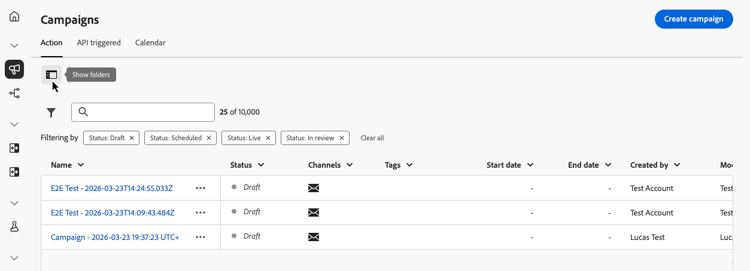
デフォルトでは、リストにはドラフト、スケジュール済み、ライブステータスのすべてのキャンペーンが表示されます。 停止、完了およびアーカイブされたキャンペーンを表示するには、フィルターをクリアする必要があります。

「API トリガー」タブを選択して、API トリガーキャンペーンのリストにアクセスします。
デフォルトでは、リストにはドラフト、スケジュール済み、ライブステータスのすべてのキャンペーンが表示されます。 停止、完了およびアーカイブされたキャンペーンを表示するには、フィルターをクリアする必要があります。

「オーケストレーション」タブを選択して、オーケストレーションキャンペーンのリストにアクセスします。
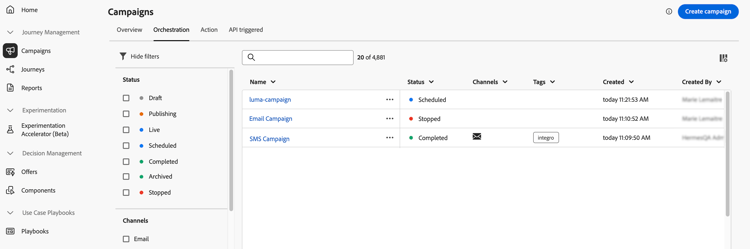
リスト内の各オーケストレーションキャンペーンには、キャンペーンの現在のステータス、関連付けられたチャネルとタグ、最終変更日時などの情報が表示されます。

キャンペーンの検索とフィルタリング search-filter
また、検索バーとフィルターを使用して、リスト内での検索を簡単にすることができます。 例えば、キャンペーンをフィルタリングして、特定のチャネルまたはタグに関連付けられたキャンペーンや、特定の日付範囲中に作成されたキャンペーンのみを表示できます。
フォルダーを使用したキャンペーンの整理 folders
キャンペーンのインベントリで、フォルダーを表示 アイコンをクリックしてフォルダービューを開き、キャンペーンを整理します。 検索、フィルター、整理*でフォルダーを操作する方法について説明します。*
キャンペーンの操作 operations
キャンペーン一覧の


使用可能なアクション
すべてのキャンペーンタイプ:
- 全期間のレポートを表示/過去 24 時間のレポートを表示 - レポートにアクセスして、キャンペーンの影響とパフォーマンスを測定および視覚化します。 キャンペーンレポートの詳細情報 →
- タグを編集 - キャンペーンに関連付けられたタグを編集します。 タグの使用方法の詳細情報 →
- 複製 - このオプションを使用すると、停止したオーケストレーションキャンペーンを実行する場合などに、キャンペーンを複製できます。 複製の詳細情報 →
- 削除 - このオプションを使用して、キャンペーンを削除します。 削除の詳細情報 →
- アーカイブ - キャンペーンをアーカイブします。 すべてのアーカイブキャンペーンは、最終変更日から 30 日後に順次削除されます。 このアクションは、ドラフトキャンペーンを除くすべてのキャンペーンで使用できます。 アーカイブの詳細情報 →
アクションおよび API トリガーキャンペーンのみ:
- アラートに登録 - このキャンペーンにのみ適用するキャンペーンライフサイクルシステムアラートを選択します(サンドボックス全体のアラートの登録に加えて)。 システムアラートの詳細情報 →
- パッケージに追加 - キャンペーンを別のサンドボックスに書き出すには、パッケージに追加します。 オブジェクトのエクスポート方法の詳細情報 →
- ドラフトバージョンを開く - キャンペーンの新しいバージョンが作成され、まだアクティブ化されていない場合は、このアクションを使用して、そのドラフトバージョンにアクセスできます。
オーケストレーションキャンペーンのみの場合:
- ドラフトに戻る - エラーからの復元のために、キャンペーンを非公開にし、ドラフトステータスに戻します。 このアクションは、スケジュール済みキャンペーンがまだ開始されていない場合や、実行が完了する前にライブキャンペーンでエラーが発生した場合に使用できます。 キャンペーンを元に戻す方法の詳細情報 →
一括アクション bulk-actions-campaigns
複数のキャンペーンを一度に選択し、すべてに対して一括操作を適用できます。 使用可能な操作には、項目のパッケージへの追加、項目のフォルダーへの移動、タグの編集、アクセスの管理、削除が含まれます。 一括アクションの詳細情報 →
キャンペーンステータスについて statuses
各キャンペーンはライフサイクルに沿って進行し、その状態はインターフェイスのステータスに反映されます。 これらのステータスを理解すると、使用可能なアクションと次に行うアクションを把握できます。
エラー指標 error-indicators
1 つのキャンペーン内でエラーが発生した場合、キャンペーンのステータスの横に警告アイコンが表示されます。 アラートに関する情報を表示するには、アラートをクリックします。 これらのアラートは、キャンペーンメッセージが公開されていない場合または選択した設定が正しくない場合など、様々な状況で発生する場合があります。

カレンダー
キャンペーンスケジュールは、ジャーニースケジュールを含む統合カレンダー メニューに表示されます。 カレンダーの使用方法を学ぶ。
繰り返しアクションキャンペーンの変更と停止 modify
アクションキャンペーンの変更 modify-an-action-campaign
繰り返しアクションキャンペーンを変更して新しいバージョンを作成するには、次の手順に従います。
-
アクションキャンペーンを開き、「キャンペーンを変更」ボタンをクリックします。
-
キャンペーンの新しいバージョンが作成されます。 ライブバージョンを確認するには、「ライブバージョンを開く」をクリックします。

ドラフトバージョンには、独自のバージョン IDがあります。 ドラフトの作業中は、現在のライブバージョンを使用できます。ドラフトをアクティブ化すると、ライブバージョンに置き換わります。
コンテンツ実験を含む決定ポリシーを持つキャンペーンの場合、キャンペーンバージョンには、複製された決定ポリシーと別の実験を含めることができます。 テストとコントロールのグループのメンバーシップを含む処理の割り当ては、バージョン間で再セグメント化される可能性があるので、割り当てや結果がバージョン間で連続していると仮定しないでください。 実験結果を解釈する際に、バージョン境界を考慮します。
キャンペーンリストで、ドラフトバージョンが進行中のアクティブ化されたキャンペーンは、ステータス列に特定のアイコンで表示されます。 このアイコンをクリックして、キャンペーンのドラフトバージョンを開きます。

-
変更の準備が整ったら、新しいバージョンのキャンペーンをアクティブ化できます(キャンペーンのレビューとアクティブ化を参照)。
note important IMPORTANT ドラフトをアクティブ化すると、キャンペーンのライブバージョンが置き換えられます。
関連トピック:
公開済みメッセージの編集 edit-published-message
キャンペーンがアクティブ化されると、そのメッセージが公開され、キャンペーンは ライブ になります。 アクションとAPI トリガーのキャンペーンの場合:
- 公開されたメッセージは直接更新できません。 変更するには、キャンペーンの新しいバージョンを作成し、ドラフトバージョンを編集してからアクティベートします。 アクションキャンペーンの変更を参照してください。
- 新しいバージョンは、公開された(ライブ)メッセージからのみ作成できます。 ドラフトであるメッセージは直接編集されます。
- 公開されたメッセージを ドラフト に戻すことはできません。 代わりに新しいバージョンを作成します。
アクションキャンペーンの停止 stop
繰り返しキャンペーンを停止するには、キャンペーンを開いてから「キャンペーンを停止」ボタンをクリックします。

キャンペーンのアーカイブ archive-a-campaign
時間が経過すると、キャンペーンのリストは増え続け、最終的には完了済みのキャンペーンと停止済みのキャンペーンを参照するのが難しくなります。
これを防ぐには、不要になった完了済みのキャンペーンと停止済みのキャンペーンをアーカイブします。 これを行うには、「…」ボタンをクリックし、「アーカイブ」を選択します。

アーカイブキャンペーンは、リスト内の専用フィルターを使用して取得できます。
キャンペーンの削除 delete-a-campaign
キャンペーンを削除するには、省略記号

キャンペーンの複製 duplicate-a-campaign
キャンペーンを複製するには(例えば、キャンペーンが停止されている場合)、省略記号
キャンペーンの名前を入力して確定します。
キャンペーンが作成され、キャンペーンリストに追加されます。
その他のリソース
-
はじめに - キャンペーンの基本を学ぶ | 最初のアクションキャンペーンの作成 | API トリガーキャンペーンガイド | オーケストレーションキャンペーンガイド
-
キャンペーン設定 - キャンペーンプロパティ | キャンペーンアクションとチャネル | キャンペーンコンテンツのデザイン | キャンペーンオーディエンスの選択 | キャンペーンスケジュール
-
高度な機能 - 承認ワークフロー | 競合管理と優先順位付け | チャネル別のフリークエンシーキャップ | 優先度スコア | キャンペーンの他のサンドボックスへのエクスポート
-
モニタリングと最適化 - キャンペーンレポート(CJA) | アラートの設定
This section contains structured knowledge intended to support interpretation, retrieval, and question answering related to this topic.
For complete understanding, this information should be combined with the documentation on this page. Neither source is intended to stand alone; the page describes the feature, while this section provides additional context that helps disambiguate terminology, intent, applicability, and constraints.
- TL;DR: This page explains how to access, search, filter and organize campaigns, what each campaign status means, how to use the campaigns calendar, and how to modify, stop, archive, delete and duplicate campaigns.
Intents:
- Access the lists of Action, API-triggered and Orchestrated campaigns, and search, filter or organize them with folders
- Understand each campaign status and the next actions available
- Use the campaigns calendar, including external calendars
- Modify a recurring Action campaign by creating a new version, or stop it
- Edit a campaign message that is already published
- Archive, delete or duplicate a campaign
Glossary:
- Campaigns menu: Entry point to the campaigns lists, with tabs Action campaigns, API-triggered campaigns, Orchestrated campaigns, and Folders
- Campaigns inventory: The list of campaigns, where the More actions button gives access to the operations
- Draft version: New version of an activated campaign that has not been activated yet; it has its own version ID, and activating it replaces the live version (product-specific)
- Live version: The current activated version of the campaign, available while you work on the draft version
- Modify campaign: Button that creates a new version of a recurring Action campaign
- Open draft version / Open live version: Actions to open the draft version or the live version of a campaign
- Bulk actions: Operations applied at once to multiple selected campaigns, such as adding items to a package, moving them to a folder, editing tags, managing access, and deleting
- External calendars: Calendars of events added from CSV files, shown on both Journey and Campaign calendars
Guardrails:
- By default, the Action and API triggered lists show the campaigns with the Draft, Scheduled, and Live statuses. To display stopped, completed, and archived campaigns, you need to clear the filter.
- Archive is available for all campaigns except Draft campaigns. All archived campaigns are deleted on a rolling schedule 30 days after their last modified date.
- Delete is available for Draft campaigns only.
- Activating the draft version replaces the live version of the campaign.
- Stopping a campaign does not stop an ongoing sending, but it stops a scheduled sending or the next occurrences if sending is already ongoing.
- For Action and API-triggered campaigns, a published message cannot be updated directly. A new version can only be created from a published (Live) message; a message that is still a draft is edited directly. A published message cannot be set back to Draft; create a new version instead.
- For a campaign with a decision policy that includes a content experiment, treatment assignments, including test and control group membership, may be re-segmented between versions. Do not assume assignments or results are continuous across versions.
- The calendar shows live and scheduled campaigns for the selected week by default. Draft campaigns are not displayed. Campaigns are displayed as 1-hour timespans, but this does not reflect actual send or completion time. If no start time is specified, the closest manual activation time is used to position the campaign.
- Up to three external calendars can be added. Uploaded events appear for all users in your organization and display on both Journey and Campaign calendars. CSV format: event name, start date in mm/dd/yy format, end date in mm/dd/yy format.
- Assets and images are accessible in delivered content for up to 2 years (730 days) since their first publication in any fragment or inline message. Re-publishing is required after this expiry period to keep them accessible for another 2 years. A re-publication done within 730 days of the first publication does not extend the expiry.
- Folders for journeys and campaigns are in limited availability.
Prerequisites and permissions:
- Available campaign types depend on your license agreement and your permissions.
Applicability:
- Subscribe to alerts, Add to package and Open draft version: Action and API triggered campaigns only.
- Back to draft: Orchestrated campaigns only.
- View all time report / View last 24 hours report, Edit tags, Duplicate, Delete and Archive: all campaign types.
- Statuses: Draft, Scheduled, Live, Stopped, Completed and Archived apply to Action, API-triggered and Orchestrated campaigns. In review and Failed apply to Action and API-triggered campaigns. Publishing applies to Orchestrated campaigns only.
Terminology:
- Canonical name: Campaign status — variants: lifecycle status
- Canonical name: Action campaigns — variants: Action campaigns tab (Action tab)
- Do not confuse: Stopped (manually stopped, cannot reactivate) ≠ Completed (execution complete, auto-assigned 3 days after activation or at end date for recurring campaigns) ≠ Archived (auto-deleted after 30 days)
- Do not confuse: Scheduled (configured for a specific start date) ≠ Live (activated and running) ≠ Draft (being edited, not activated)
- Do not confuse: In review (submitted for approval) ≠ Publishing (being published, Orchestrated campaigns)
FAQ:
- Q: What does each campaign status mean? — Draft: being edited, not activated. Scheduled: configured for a specific start date. Live: activated and running. In review: submitted for approval. Stopped: manually stopped, cannot reactivate. Completed: execution complete, auto-assigned 3 days after activation or at the end date for recurring campaigns. Failed: execution failed. Archived: archived, auto-deleted after 30 days. Publishing: being published.
- Q: How do I reuse a stopped campaign? — A stopped campaign cannot be reactivated. Duplicate it with Duplicate, enter the name of the campaign and confirm.
- Q: How do I modify a recurring Action campaign? — Open the campaign and click Modify campaign. A new version is created; check the live version with Open live version. Activate the new version when your changes are ready.
- Q: How do I stop a recurring campaign? — Open it, then click the Stop campaign button.
- Q: Why can I not delete my campaign? — Delete is available for Draft campaigns only.
- Q: Why can I not see my completed, stopped or archived campaigns? — By default the list shows the Draft, Scheduled, and Live statuses. Clear the filter to display them. Archived campaigns can be retrieved using the dedicated filter in the list.
- Q: Can I see a draft campaign in the calendar? — No. Draft campaigns are not displayed in the calendar.
Troubleshooting:
- A warning icon appears alongside the campaign’s status — an error occurred within the campaign. Alerts may occur in various situations, such as when the campaign message has not been published or if the chosen configuration is incorrect. Click the icon to display information regarding the alert.
Related pages:
- Choose a campaign type: Choose your campaign type (campaigns/get-started-with-campaigns.md#campaign-types)
- Create an Action campaign: Create Action campaign (campaigns/create-campaign.md)
- Create an API-triggered campaign: Create API-triggered campaign (campaigns/api-triggered-campaigns.md)
- Create an Orchestrated campaign: Create Orchestrated campaign (orchestrated/gs-orchestrated-campaigns.md)
- Folders: Learn how to work with folders (start/search-filter-categorize.md#organize-folders)
- Tags: Learn how to use tags (start/search-filter-categorize.md#add-tags)
- Bulk actions: Learn more about bulk actions (start/search-filter-categorize.md#bulk-actions)
- Campaign reports: Campaign reports (reports/campaign-global-report-cja.md)
- System alerts: Learn more about system alerts (reports/alerts.md#subscribe-alerts)
- Export a campaign to another sandbox: Learn how to export objects (configuration/copy-objects-to-sandbox.md)
- Back to draft for Orchestrated campaigns: Learn more about reverting campaigns (orchestrated/start-monitor-campaigns.md#back-to-draft)
- Approval: approval (test-approve/gs-approval.md)
- Activating the new version: Review and activate a campaign (campaigns/review-activate-campaign.md)
- Journey Optimizer release status: Journey Optimizer release cycle (rn/releases.md)
- Conflict management: Conflict management guide (conflict-prioritization/gs-conflict-prioritization.md)