在此頁面上:瞭解如何透過歷程或行銷活動建立Web體驗、編輯和測試其內容、將訪客重新導向至其他URL,以及在Adobe Journey Optimizer中發佈、啟動或停止它。
Journey Optimizer可讓您個人化您透過傳入歷程或行銷活動提供給客戶的網頁體驗。
透過歷程或行銷活動定義網路體驗 create-web-experience
若要透過行銷活動或歷程開始建立您的Web體驗,請遵循下列步驟。
若要將 Web 活動新增至歷程,請遵循下列步驟:
-
建立歷程。
-
從浮動視窗的 動作 區段拖放 動作 活動。 深入瞭解動作活動。
note important IMPORTANT 舊版原生管道活動(電子郵件、推播、簡訊、應用程式內、網頁、程式碼型體驗和內容卡)自2026年3月版本起即已淘汰。 使用這些活動的現有歷程仍可繼續運作,不會有任何變更,無需移轉。 -
選取 Web 作為動作型別。
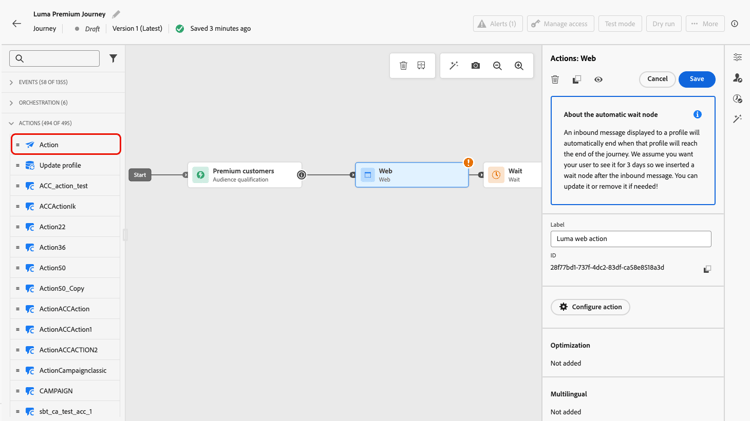
note NOTE 由於 Web 是傳入體驗活動,因此它附帶3天 等待 活動。 了解更多 -
輸入 標籤 以識別您在歷程畫布中的動作。
-
按一下 設定動作 按鈕。
-
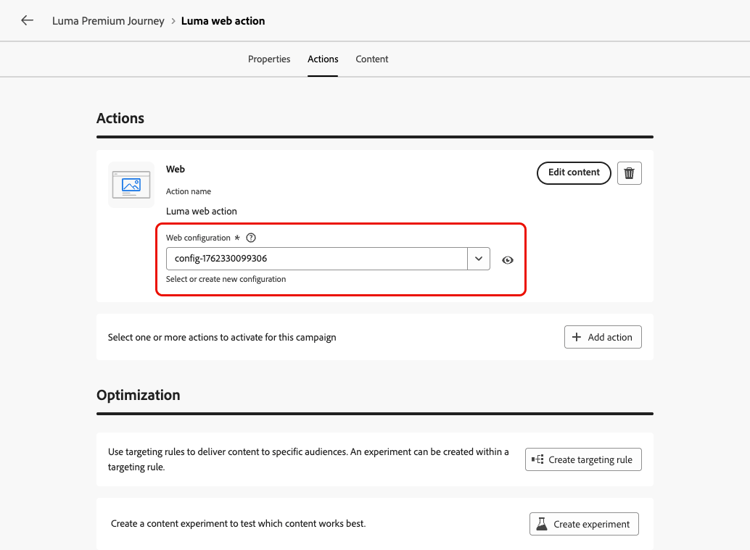
您被導向到 動作 標籤。 從那裡,選取或建立要使用的網頁組態。
-
您可以按一下 新增動作 按鈕,新增一或多個傳入動作至您的網頁體驗。 了解更多
-
返回歷程畫布。 如有必要,請拖放其他動作或事件以完成您的歷程流程。 了解更多
-
選取 編輯內容 按鈕,並視需要編輯您的內容。 了解更多
有關如何建立、設定和發佈歷程的詳細資訊,請參閱此頁面。
若要透過行銷活動開始建立您的Web體驗,請遵循下列步驟。
-
建立行銷活動。 了解更多
-
選取您要執行的行銷活動型別
-
已排程 — 行銷:立即或在指定日期執行行銷活動。 已排程的行銷活動旨在傳送行銷訊息。 可從使用者介面設定及執行。
-
API觸發 — 行銷/異動:使用API呼叫執行行銷活動。 API觸發的行銷活動旨在傳送行銷或交易式訊息,例如在個人執行動作後傳送的訊息:密碼重設、購物車購買等。瞭解如何使用API觸發行銷活動
-
-
選取 Web 動作。
-
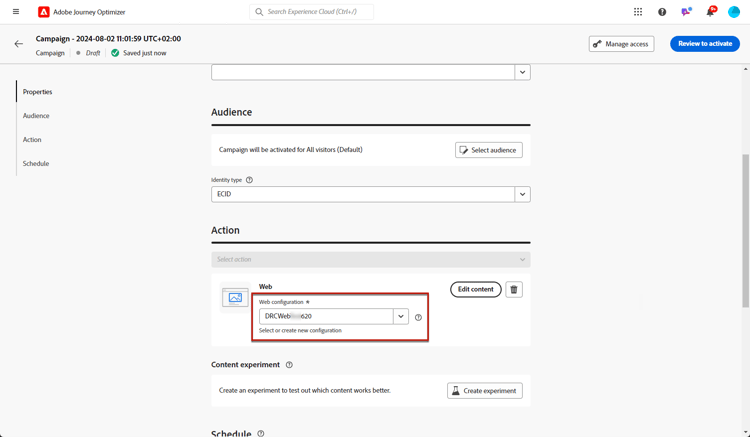
選取或建立網頁組態。 進一步瞭解Web設定
-
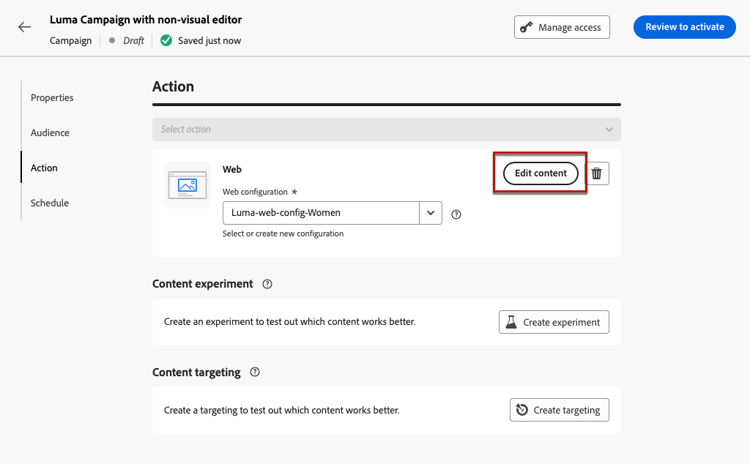
按一下 編輯內容 按鈕,視需要編輯您的內容。 了解更多
如需如何設定行銷活動的詳細資訊,請參閱此頁面。
編輯網頁內容 edit-web-content
在您將網頁動作新增到歷程或行銷活動後,您可以使用以下其中一種方式編輯您的網站內容:
若要開始編寫您的Web體驗,請遵循下列步驟。
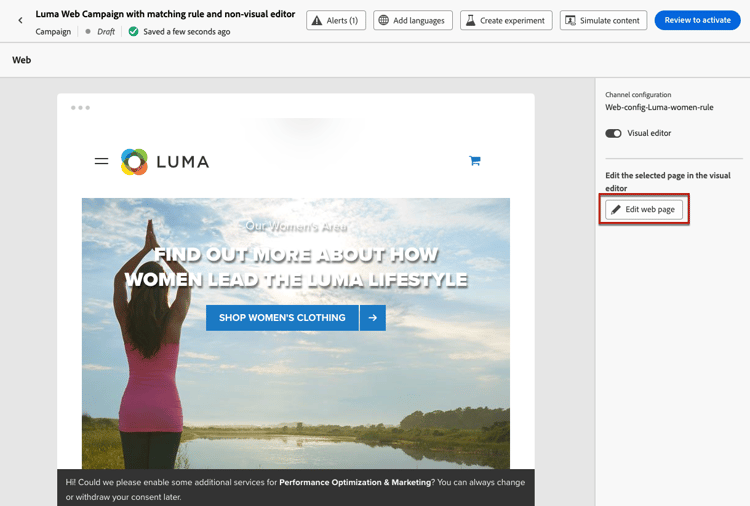
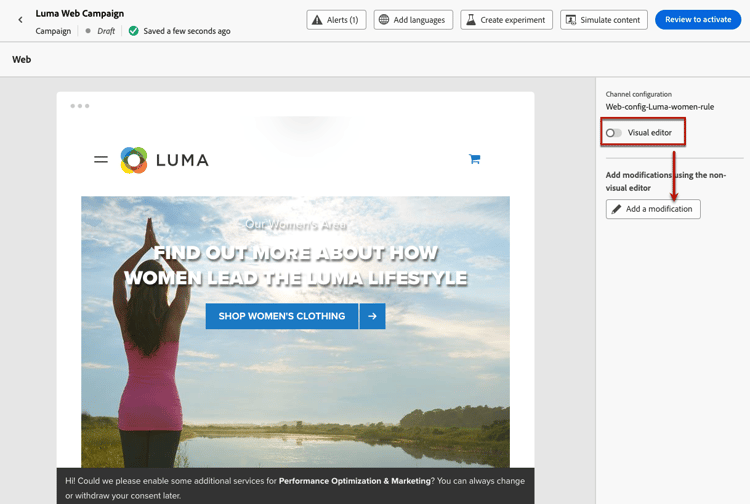
測試網路體驗 test-web-experience
使用網頁設計工具編寫您的網頁體驗後,您可以使用任一模擬方法來預覽您修改的網頁:
- 按一下 模擬內容 以測試內容變數與範例輸入資料或AI自動產生。 瞭解如何模擬內容變化
- 按一下模擬內容,然後從下拉式清單中選取模擬內容(AEP設定檔),以使用測試設定檔預覽,並新增測試設定檔以檢查您的網頁。
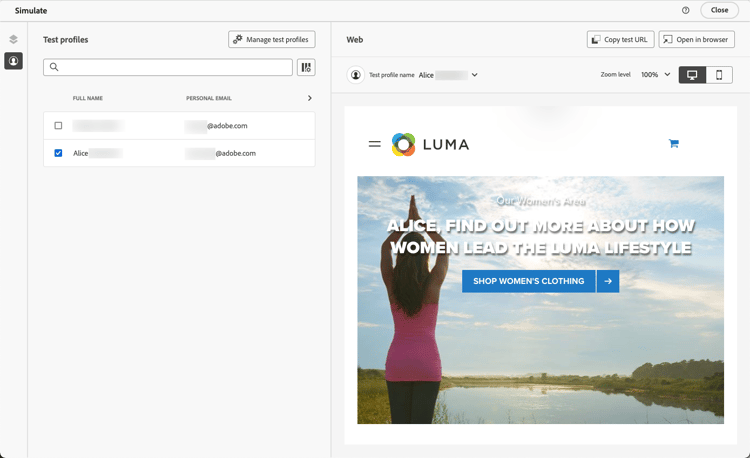
您也可以在預設瀏覽器中開啟測試網址,或複製測試URL以貼到任何瀏覽器中。 這可讓您與團隊和利害關係人共用連結,這些利害關係人將能夠在行銷活動上線之前在任何瀏覽器中預覽新的網頁體驗。
有關如何選取測試設定檔及預覽內容的詳細資訊,請參閱內容管理區段。
重新導向至 URL web-redirect-to-url
建立Web體驗時,您可以將訪客重新導向至另一個現有URL,而不是在Web設計工具中編寫新的變數。
使用此容量,您可以執行比較兩個不同體驗的內容實驗,而不只是變更頁面中的幾個元素。
例如,建立具有兩種處理的網路行銷活動:
-
在 處理A 中,使用網頁設計工具為一半目標母體編寫網頁體驗。
-
在 處理B 中,選取目標母體其他一半的 重新導向至URL 選項。 輸入您於Journey Optimizer之外編寫之替代設計的頁面URL。
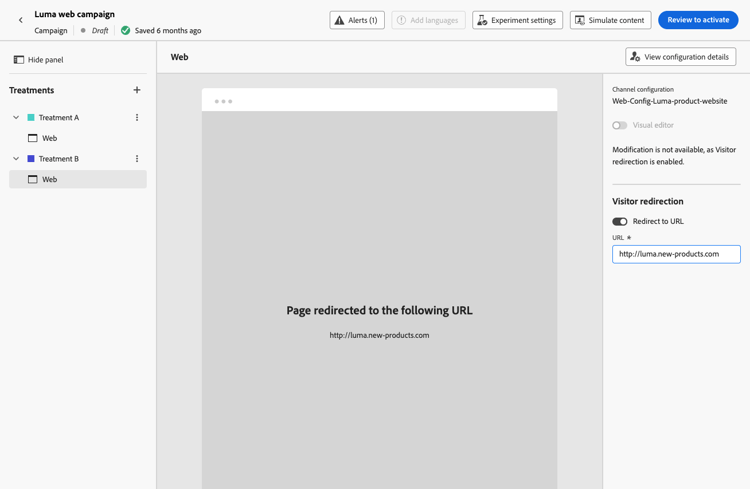
note NOTE 網站預覽不再顯示,視覺化編輯器切換按鈕已停用。
一旦您的網頁行銷活動上線,您就可以追蹤您在Journey Optimizer中編寫的網頁體驗針對重新導向至外部登陸頁面之訪客的執行情形。 瞭解如何使用實驗性行銷活動報告
讓您的網頁體驗上線 web-experience-live
定義網頁體驗並視需要編輯內容後,您就可以啟用歷程或行銷活動,讓您的變更對對象可見。
您也可以在讓網頁體驗內容上線之前,先預覽該內容。 了解更多
發佈網站歷程 activate-web-journey
若要讓您的網頁體驗透過歷程上線,請遵循下列步驟。
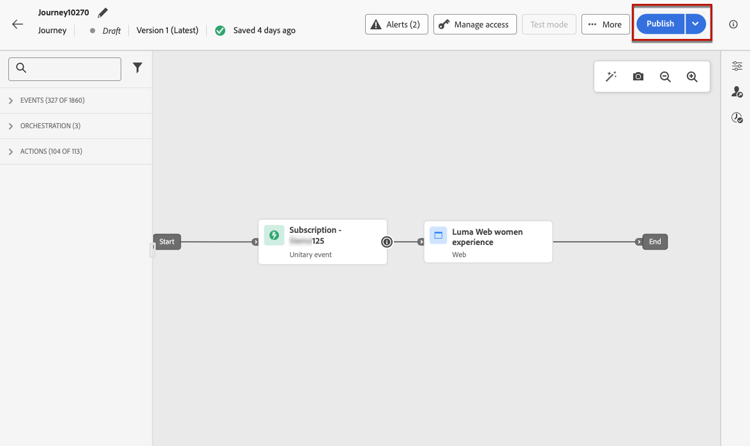
您的網路歷程會採用 即時 狀態,且現在為唯讀。 您歷程的每個收件者都能看到您新增至網站的修改專案。
啟動網站行銷活動 activate-web-campaign
定義網路行銷活動設定並視需要編輯內容後,您就可以檢閱並啟用網路行銷活動。 請遵循下列步驟。
-
從您的網路行銷活動中,選取檢閱以啟動。
-
視需要檢查並編輯內容、屬性、設定、對象和排程。
-
選取啟動。
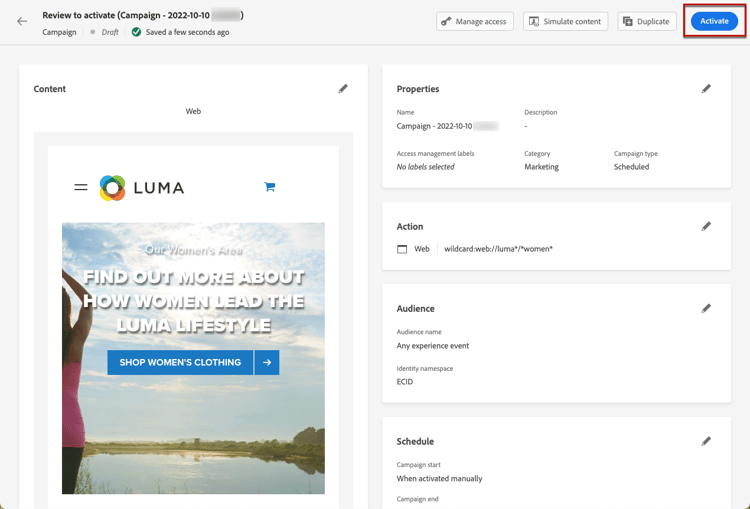
note NOTE 在本節中進一步瞭解啟用行銷活動。
您的網路行銷活動會採用即時 狀態,且現在對選取的對象可見。 行銷活動的每位收件者都能看到您新增至網站的修改內容。
一旦您的體驗上線,您就可以監視您的網路歷程和行銷活動。 了解更多
停止網站歷程或行銷活動 stop-web-experience
當網站歷程或行銷活動上線時,您可以停止它以防止您的對象看到您的修改。 請遵循下列步驟。
-
從個別清單中選取即時歷程或行銷活動。
-
根據您的情況執行相關動作:
-
從行銷活動頂端功能表,選取停止行銷活動。
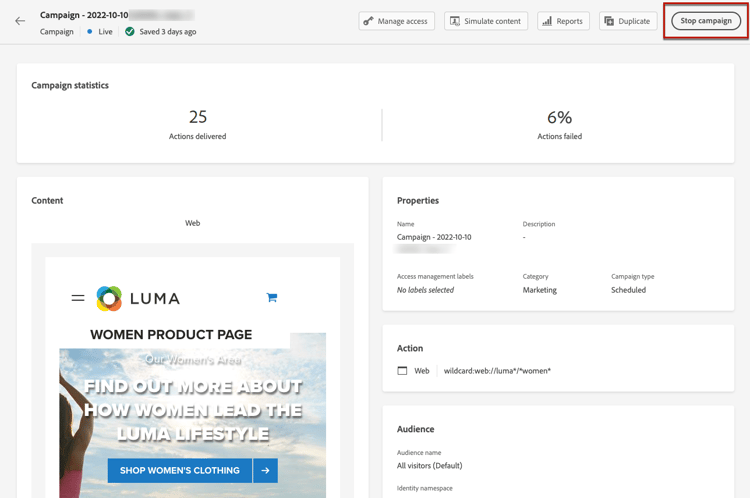
-
從歷程頂端功能表,按一下 更多 按鈕,然後選取停止。
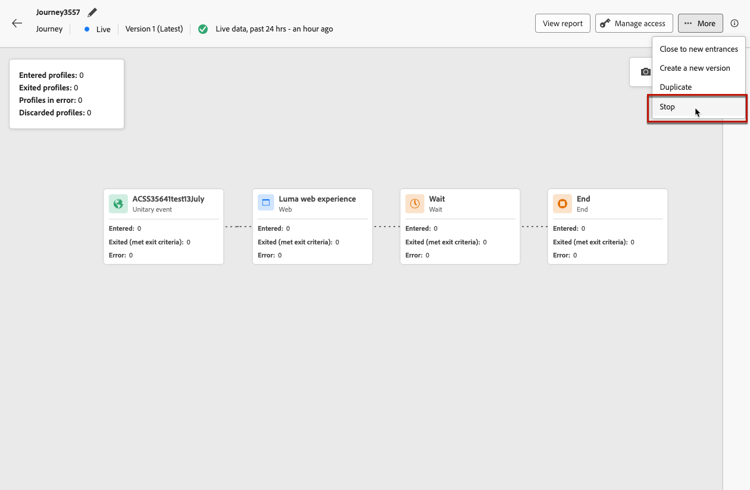
-
-
您所定義的對象看不見您新增的修改。
作法影片 video
以下影片說明如何建立網站行銷活動、設定其屬性、檢閱及發佈。
This section contains structured knowledge intended to support interpretation, retrieval, and question answering related to this topic.
For complete understanding, this information should be combined with the documentation on this page. Neither source is intended to stand alone; the page describes the feature, while this section provides additional context that helps disambiguate terminology, intent, applicability, and constraints.
- TL;DR: This page explains how to create a web experience through a journey or campaign in Journey Optimizer by adding a Web action, editing and testing its content, optionally redirecting visitors to another URL, and publishing, activating, or stopping it.
Intents:
- Add a Web activity to a journey or create a web campaign
- Select or create a web configuration matching a single page URL or multiple pages
- Edit web content using the web designer or the non-visual editor
- Preview and test a web experience before it goes live
- Redirect visitors to another existing URL instead of authoring a new variation
- Publish a web journey or activate a web campaign, and stop a live web experience
Glossary:
- Web action: An inbound action that displays a web experience to profiles when they reach that step of the journey; it references a web configuration that defines the content shown (product-specific)
- Web configuration: The definition that can match a single page URL or multiple pages (via a pages matching rule) to deliver content modifications across one or several web pages (product-specific)
- Pages matching rule: A rule that targets multiple URLs matching the same pattern, so changes apply across all pages matching the rule (product-specific)
- Web designer: The visual editor used to author the web experience (product-specific)
- Non-visual editor: An editing mode used to edit web content without loading the visual editor, reached by unselecting the Visual editor option and clicking Add a modification (product-specific)
- Redirect to URL: An option to redirect page visitors to another existing URL rather than authoring a new variation in the web designer (product-specific)
Guardrails:
- Legacy native channel activities (Email, Push, SMS, In-app, Web, Code-based experience, and Content Card) are deprecated as of the March 2026 release; existing journeys using them continue to work without any changes and no migration is required.
- As Web is an inbound experience activity, it comes with a 3-days Wait activity.
- If this is your first time creating a web experience, you must follow the web prerequisites.
- If a campaign is subject to an approval policy, you must request approval before you can activate the web experience.
- If multiple journeys or campaigns update the same element(s) of a website, the highest priority journey/campaign takes precedence.
- After you click Publish (journey) or Activate (campaign), it can take up to 15 minutes for the changes to be available live on the website.
- Once a web journey or campaign is stopped, you cannot edit or activate it again; you can only duplicate it and activate the duplicate.
- A published web journey takes the Live status and becomes read-only.
Terminology:
- Canonical name: Web action — Acronym: n/a — variants: Web activity, Web experience activity, Web action type
- Synonyms: “web designer” = “visual editor”
- Do not confuse: “Simulate content” (test content variations with sample input data or AI auto-generation) ≠ “Simulate content (AEP profiles)” (preview with test profiles and add a test profile)
- Do not confuse: “Publish” (option used to make a web journey live) ≠ “Activate” (used to make a web campaign live via Review to activate)
- Do not confuse: “Live” (status of a published/activated web experience) ≠ “Scheduled” (status of a web campaign with a defined schedule until the start date and time are reached)
FAQ:
- Q: How do I create a web experience? — Add a Web action to a journey (via an Action activity) or create a web campaign, then select or create a web configuration and edit the content.
- Q: Can I apply changes across multiple pages? — Yes, a web configuration can match multiple pages using a pages matching rule, and the changes apply to all pages matching the rule.
- Q: How do I preview my web experience before it is live? — Use Simulate content (sample input data or AI auto-generation) or Simulate content (AEP profiles) to preview with test profiles; you can also open it in the default browser or copy the test URL to share.
- Q: How do I make my web experience live? — Publish the journey (it takes the Live status and becomes read-only) or Review to activate and Activate the campaign; it can take up to 15 minutes for changes to appear live.
- Q: Can I reuse a stopped web journey or campaign? — No, once stopped you cannot edit or activate it again; you can only duplicate it and activate the duplicate.
- Q: What happens if two live journeys/campaigns affect the same page? — All changes are applied, and if multiple journeys or campaigns update the same element(s), the highest priority journey/campaign takes precedence.