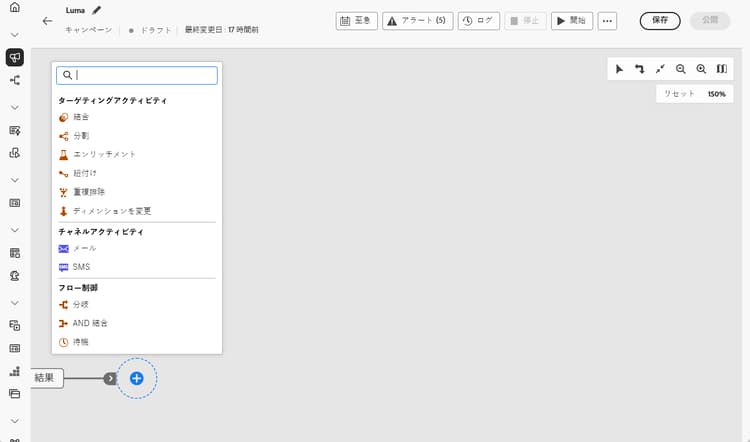
このページ:クロスチャネルのオーケストレーションキャンペーンを作成するために、キャンバスで使用できるターゲティング、チャネル、フロー制御のアクティビティについて説明します。
オーケストレーションキャンペーンアクティビティは、複数のカテゴリにグループ化されます。 使用可能なアクティビティは、コンテキストに応じて異なる場合があります。 すべてのアクティビティについて、以下の節で詳しく説明します。
ガードレールと制限 activity-guardrails
-
チャネルアクティビティ制限 - オーケストレーションされたキャンペーンは、公開時に最大10個のチャネルアクティビティ(メール、モバイルメッセージ、プッシュ、ダイレクトメール)をサポートします。 ターゲティング、データ管理、フロー制御アクティビティは、この制限にカウントされません。
-
キャンバスアクティビティの制限 - キャンバスのアクティビティ数は 500 に制限されます。 メンテナンス性とパフォーマンスを確保するために、実際のワークフローは 100 個以下のアクティビティに抑えることをお勧めします。
オーケストレーションキャンペーンのすべてのガードレールと制限について詳しくは、ガードレールと制限を参照してください。
ターゲティングアクティビティ targeting
これらのアクティビティは、ターゲティングに固有です。 オーディエンスを定義するか、積集合、和集合、除外の各操作を使用して分割または結合することで、1 つまたは複数のターゲットを作成できます。
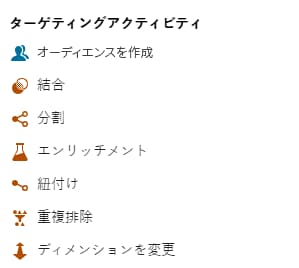
使用可能なターゲティングアクティビティは次のとおりです。
- オーディエンスを作成:ターゲット母集団を定義します。 既存のオーディエンスを選択するか、ルールビルダーを使用して独自のクエリを定義できます。
- ディメンションを変更:調整されたキャンペーンの作成時にターゲティングディメンションを変更します。
- 結合:インバウンド母集団に対してセグメント化を実行します。 和集合、積集合または除外を使用できます。
- 重複排除 - 重複:インバウンドアクティビティの結果から重複を削除します。
- エンリッチメント:調整されたキャンペーンで処理する追加のデータを定義します。 このアクティビティでは、インバウンドトランジションを利用し、追加データを活用して出力トランジションを補完するようにアクティビティを設定できます。
- 紐付け:Journey Optimizer データ内のデータと作業用テーブル内のデータ(外部ファイルから読み込まれたデータなど)を結ぶリンクを定義します。
- 分割:入力母集団を複数のサブセットにセグメント化します。
データ管理アクティビティ data-management
これらのアクティビティを使用すると、外部ファイルに保存されているデータを操作し、キャンバス上でのターゲティング、パーソナライゼーション、ダウンストリームのアクティビティに使用できるようになります。
使用可能なデータ管理アクティビティは次のとおりです。
- ファイルを読み込み(限定提供):CSV または TXT ファイルをキャンバスにアップロードして使用することで、キャンペーンオーディエンス(ファイルベースのターゲティング)を定義します。ファイルをあらかじめ Adobe Experience Platform に取り込む必要はありません。 アクセス権をリクエストするには、アドビ担当者にお問い合わせください。
チャネルアクティビティ channel
Adobe Journey Optimizer を使用すると、複数のチャネル間でマーケティングキャンペーンを自動化および実行できます。 チャネルアクティビティをキャンバスに組み合わせて、顧客の行動に基づいてアクションをトリガーできるクロスチャネルのオーケストレーションキャンペーンを作成できます。
詳しくは、オーケストレーションキャンペーンでのチャネルアクションの作成を参照してください。
フロー制御アクティビティ flow-control
次のアクティビティは、オーケストレーションキャンペーンの整理と実行に固有です。 主なタスクは、他のアクティビティの調整です。
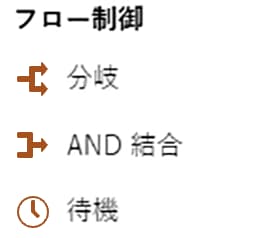
使用可能なフロー制御アクティビティは次のとおりです。
This section contains structured knowledge intended to support interpretation, retrieval, and question answering related to this topic.
For complete understanding, this information should be combined with the documentation on this page. Neither source is intended to stand alone; the page describes the feature, while this section provides additional context that helps disambiguate terminology, intent, applicability, and constraints.
- TL;DR: This page describes the targeting, data management, channel, and flow control activities available on the canvas to build cross-channel Orchestrated campaigns.
Intents:
- Identify the categories of activities available on the Orchestrated campaign canvas.
- Choose the right targeting activity to build, split, combine, or deduplicate an audience.
- Use the Load file activity to bring external file data onto the canvas.
- Add channel activities to create cross-channel actions in an Orchestrated campaign.
- Use flow control activities to coordinate branches, including ending a branch and signaling a downstream campaign.
Glossary:
- Targeting activities: activities that let you build one or more targets by defining an audience and splitting or combining these audiences using intersection, union, or exclusion operations (product-specific)
- Data Management activities: activities that let you work with data stored in external files and make it available for targeting, personalization, or downstream activities on the canvas (product-specific)
- Channel activities: activities combined on the canvas to create a cross-channel Orchestrated campaign that can trigger actions based on customer behavior (product-specific)
- Flow control activities: activities specific to organizing and executing Orchestrated campaigns, whose main task is to coordinate the other activities (product-specific)
- Load file: a Data Management activity (Limited Availability) to upload a CSV or TXT file on the canvas and use it to define the campaign audience (file-based targeting) without first ingesting the file into Adobe Experience Platform (product-specific)
- End: a flow control activity that marks the end of a branch on the canvas, optionally used to send a signal to another Orchestrated campaign that starts on a signal (product-specific)
Guardrails:
- Channel activities limit: an Orchestrated campaign supports a maximum of 10 channel activities (Email, Mobile message, Push, or Direct mail) at publication (hard limit). Targeting, Data Management, and flow control activities do not count toward this limit.
- Canvas activities limit: the number of activities on the canvas is limited to 500 (hard limit).
- Available activities may differ depending on licensing model, permissions, and implementation.
- Load file is a Limited Availability activity; to request access, contact your Adobe representative.
Terminology:
- Do not confuse: “Targeting activities” (build, split, or combine audiences) ≠ “Data Management activities” (work with data from external files) ≠ “Channel activities” (execute cross-channel actions) ≠ “Flow control activities” (coordinate other activities, for example End, Alert, And-join, Fork, Wait).
FAQ:
- Q: What categories of activities are available on the Orchestrated campaign canvas? — Targeting activities, Data Management activities, Channel activities, and Flow control activities.
- Q: How many channel activities can an Orchestrated campaign have? — A maximum of 10 channel activities (Email, Mobile message, Push, or Direct mail) at publication; Targeting, Data Management, and flow control activities do not count toward this limit.
- Q: How many activities can be placed on the canvas? — Up to 500.
- Q: What does the Load file activity do? — It lets you upload a CSV or TXT file on the canvas and use it to define the campaign audience without first ingesting the file into Adobe Experience Platform; it is a Limited Availability activity requiring a request to your Adobe representative.
- Q: What does the End activity do? — It marks the end of a branch on the canvas, and can optionally send a signal to start a downstream Orchestrated campaign.
Best practices:
- For maintainability and performance, keep workflows under 100 activities in practice.
Related pages:
- For all Orchestrated campaign guardrails and limitations: Guardrails and limitations (orchestrated/guardrails.md)
- For defining your target population: Build audience (orchestrated/activities/build-audience.md)
- For changing the targeting dimension while building an Orchestrated campaign: Change dimension (orchestrated/activities/change-dimension.md)
- For performing segmentation on an inbound population using union, intersection, or exclusion: Combine (orchestrated/activities/combine.md)
- For deleting duplicates in the results of inbound activities: Deduplication (orchestrated/activities/deduplication.md)
- For defining additional data to process in an Orchestrated campaign: Enrichment (orchestrated/activities/enrichment.md)
- For defining the link between Journey Optimizer data and data in a work table: Reconciliation (orchestrated/activities/reconciliation.md)
- For segmenting incoming population into several subsets: Split (orchestrated/activities/split.md)
- For uploading a CSV or TXT file to define the campaign audience: Load file (orchestrated/activities/load-file.md)
- For creating a channel action in an Orchestrated campaign: create a channel action in an Orchestrated campaign (orchestrated/activities/channels.md)
- For notifying subscribers when execution reaches a specific point: Alert (orchestrated/activities/alert.md)
- For synchronizing multiple execution branches: And-join (orchestrated/activities/and-join.md)
- For creating outbound transitions to start several activities at the same time: Fork (orchestrated/activities/fork.md)
- For momentarily pausing execution of part of an Orchestrated campaign: Wait (orchestrated/activities/wait.md)
- For sending a signal to start a downstream Orchestrated campaign from the End activity: Trigger an Orchestrated campaign using a signal (orchestrated/trigger-orchestrated-campaign.md)
Personas:
- marketer: Can select targeting activities such as Build audience, Change dimension, Combine, Deduplication, Enrichment, Reconciliation, and Split to build and refine an audience on the canvas. Can add channel activities and flow control activities such as Alert, And-join, Fork, Wait, and End to coordinate a cross-channel Orchestrated campaign. The page states that an Orchestrated campaign supports a maximum of 10 channel activities at publication, and that the canvas is limited to 500 activities. Where: “Guardrails and limitations”.
Onboarding:
- Level: Intermediate
- First minimal step: Define your target population by selecting an existing audience or using the rule builder to define your own query.
- Next: See all Orchestrated campaign guardrails and limitations: Orchestrated campaigns guardrails and limitations (orchestrated/guardrails.md); Learn how to create a channel action in an Orchestrated campaign: Add a channel activity in a multistep campaign (orchestrated/activities/channels.md)