Release notes release-notes
Adobe Journey Optimizer follows a continuous delivery model, allowing Adobe to deliver new capabilities, enhancements, and fixes on an ongoing basis. This approach enables a scalable, phased rollout of capabilities to ensure performance and stability across all environments. Because of this model, release notes are updated between monthly releases. For full details about the release cycle and availability phases, see Journey Optimizer release cycle.
Adobe Journey Optimizer is built natively on Adobe Experience Platform and inherits from its latest innovations and improvements. Learn more about these changes in Adobe Experience Platform Release Notes.
Usability improvements
Each month, Adobe Journey Optimizer delivers usability improvements to make everyday work easier. Look for the [Usability]{class="badge positive"} badge within each product area to spot these improvements at a glance.
October '26 updates oct-26-updates
Channels oct-26-channels
The following capability is coming to channels in this release.
Custom outbound channels let administrators bring any outbound HTTP-based messaging channel — such as WeChat, Kakao Talk, Messenger, or a proprietary provider — directly into Journey Optimizer through a no-code Channel Builder. Once configured, custom channels are available across campaigns, journeys, and orchestrated campaigns, with the same full set of capabilities as native channels: personalization with the expression editor, content experimentation, preview and proof, out-of-the-box reporting, and consent and governance enforcement.
With this release, custom outbound channels also gain several new capabilities:
- Use Journey Optimizer Decisioning in the custom channel payload through the Personalization Editor, the same way as in code-based experiences.
- Apply business rules to custom channels, the same way you already can on native channels.
- Select custom channels in the channel list for API-triggered campaigns, which was not previously possible.
Previously available in Limited Availability, this capability is now available to all environments (General Availability), with the enhancements described above.
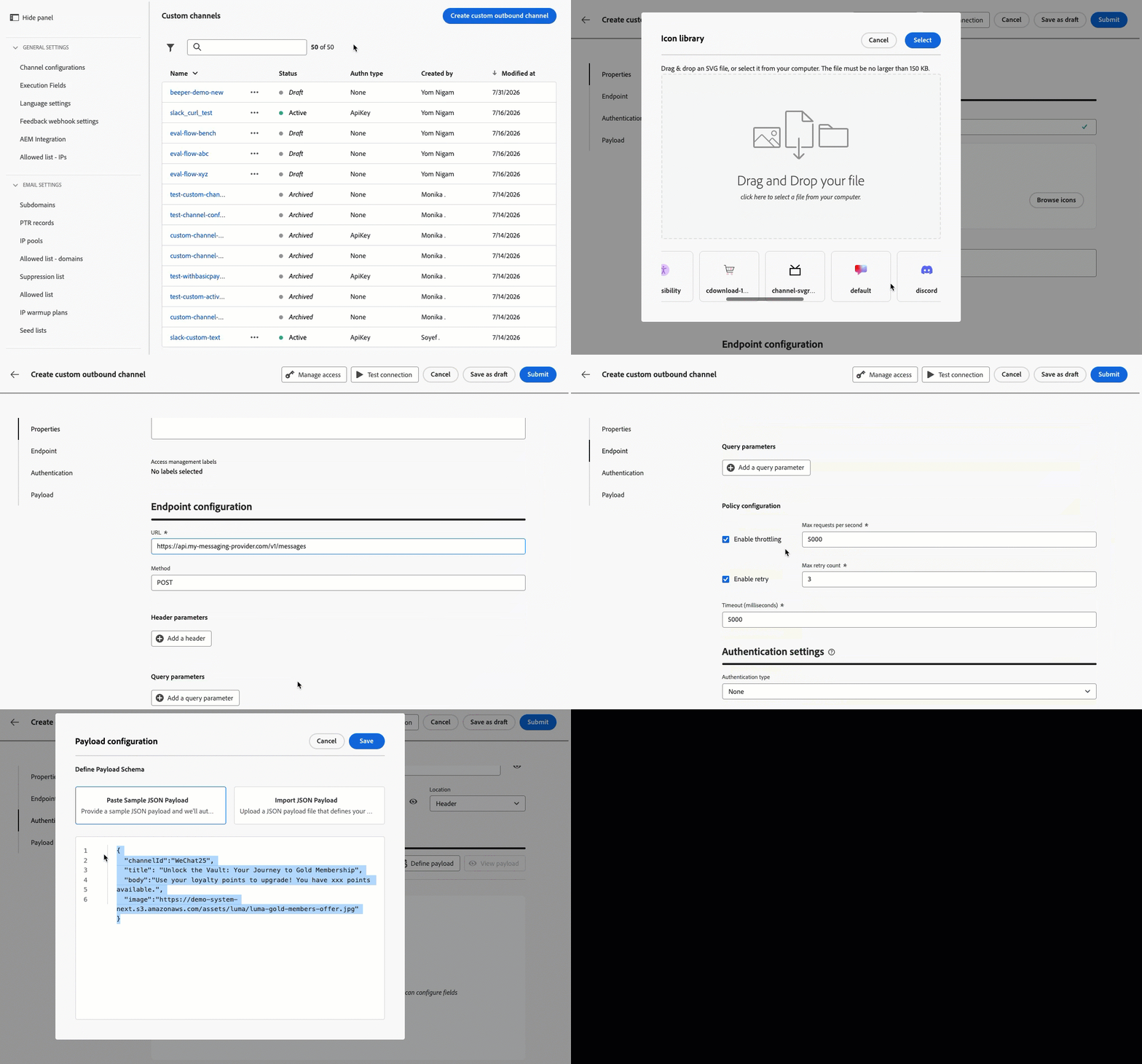
For more information, refer to the detailed documentation.
Availability date: October 2, 2026
Journeys oct-26-journeys
A new Stop action activity in the journey canvas lets you remove a profile from up to five inbound activities or experiences directly from a journey, decoupling inbound disqualification from journey exit for more advanced cross-channel orchestration.
For more information, refer to the detailed documentation.
Availability date: October 12, 2026
A new Validate button lets you run configuration checks, including message checks, when you're ready to test or publish, reducing repeated checks during editing and helping keep larger journey canvases responsive.
For more information, refer to the detailed documentation.
Availability date: October 9, 2026
-
HMAC-signed JWT authentication for custom actions (Limited Availability) - Certificate-based custom authentication now supports JWT client assertions signed with your OAuth client secret (
HS256,HS384,HS512;client_secret_jwt), as an alternative to Adobe’s RSA certificate. Configurations withoutalgcontinue to useRS256.This capability is available in Limited Availability for a set of customers. Contact your Adobe representative to request access. Learn more in Custom actions and External data sources.
Availability date: October 13, 2026
-
Business Performance Analysis skill - Analyze journey performance and get concrete optimization recommendations directly in Adobe CX Enterprise Coworker chat. Learn more
Availability date: October 7, 2026
| table 0-row-1 1-row-1 |
|---|
| AI recommendation cards for journey alerts |
|
The Journey Optimizer home page now surfaces an AI recommendation card when a journey alert fires, covering Journey Custom Action failure and Journey Anomaly Detected alerts. Selecting the card opens the journey with the right rail pre-populated with the analysis already performed. |
| table 0-row-1 1-row-1 |
|---|
| Journey creation from Coworker rail |
| Journey creation with AI is now available directly from the Coworker right rail, replacing the previous AI Assistant experience with a re-branded, integrated entry point for generating journeys. |
-
Hygiene Analysis skill - Coworker can now scan your active and draft journeys for broken configurations, silent failures, and decaying or unused assets — such as stale draft journeys, orphaned data sources, and persistent custom action errors — and surface recommended fixes directly in chat.
-
Reduced step events for wait and event activities - Step events are no longer generated for wait activities and event activities when the profile was not actually processed at that activity.
-
[Usability]{class="badge positive"} Unified calendar for Campaigns, Journeys, and Orchestrated campaigns - The calendar view for journeys and campaigns now moves out of separate inventories into a unified menu accessible from the left rail that shows all three in one combined view.
Loyalty oct-26-loyalty
-
Performance settings in Loyalty configurations - Use the Performance settings tab to select your loyalty profile and event datasets and configure your organization’s priority Key performance indicator for loyalty insights. Choose Revenue, Engagement, Redemptions, or Conversions to determine which insights receive emphasis in your feed. Learn more
Availability date: October 1, 2026
Integrations oct-26-integrations
-
Dynamic token substitution for Experience Manager fragments - Experience Manager Content Fragment references now support a tokenSubstitution attribute. When set to
false, personalization inside the fragment’s fields resolves directly, without a token map in the reference. It defaults totrue, which keeps the existing behavior.This capability is only available for a set of organizations (Limited Availability). To gain access, contact your Adobe representative.
-
AEM Managed Services content fragments support in Decisioning - AEM Managed Services content fragments are now supported in Decisioning when managing decision items.
September '26 release notes sep-26-updates
This release brings several new and improved Coworker features and skills, listed here for visibility. Each one is also detailed in its relevant section below.
- CE Channel Content plugin - A new plugin that brings campaign copy, image, and email HTML skills together in Coworker, from campaign brief to production-ready copy and HTML.
- Content Management MCP tools - Discover and manage content templates, fragments, landing pages, and inline message content through natural language prompts in Coworker.
- Journey Simulation - Automate end-to-end journey validation and interpret the results directly in Coworker.
- Compare journey versions - Get a full-fidelity, structured diff between any two versions of a journey through Coworker Chat.
- Analyze Journey Anomalies skill - Detect unexpected spikes, drops, or flatlines in a journey’s entry, exit, or message-send counts, with root-cause diagnostics.
- Decisioning Explainer skill - Ask Coworker why a specific offer was or wasn’t shown to a profile, or to a segment, and get a full trace of eligibility, ranking, and rule exclusions.
- Rules & Ranking skill - Create, explain, simulate, and optimize Decisioning eligibility rules and ranking formulas in natural language, without writing or validating PQL syntax by hand.
Content management sep-26-content-management
The following capabilities and improvements are coming to content management in this release.
When you preview your content, Journey Optimizer now automatically checks the web links it contains and flags broken, insecure, or unreachable URLs before you send.
This capability is available in Limited Availability for a set of customers. Contact your Adobe representative to request access.
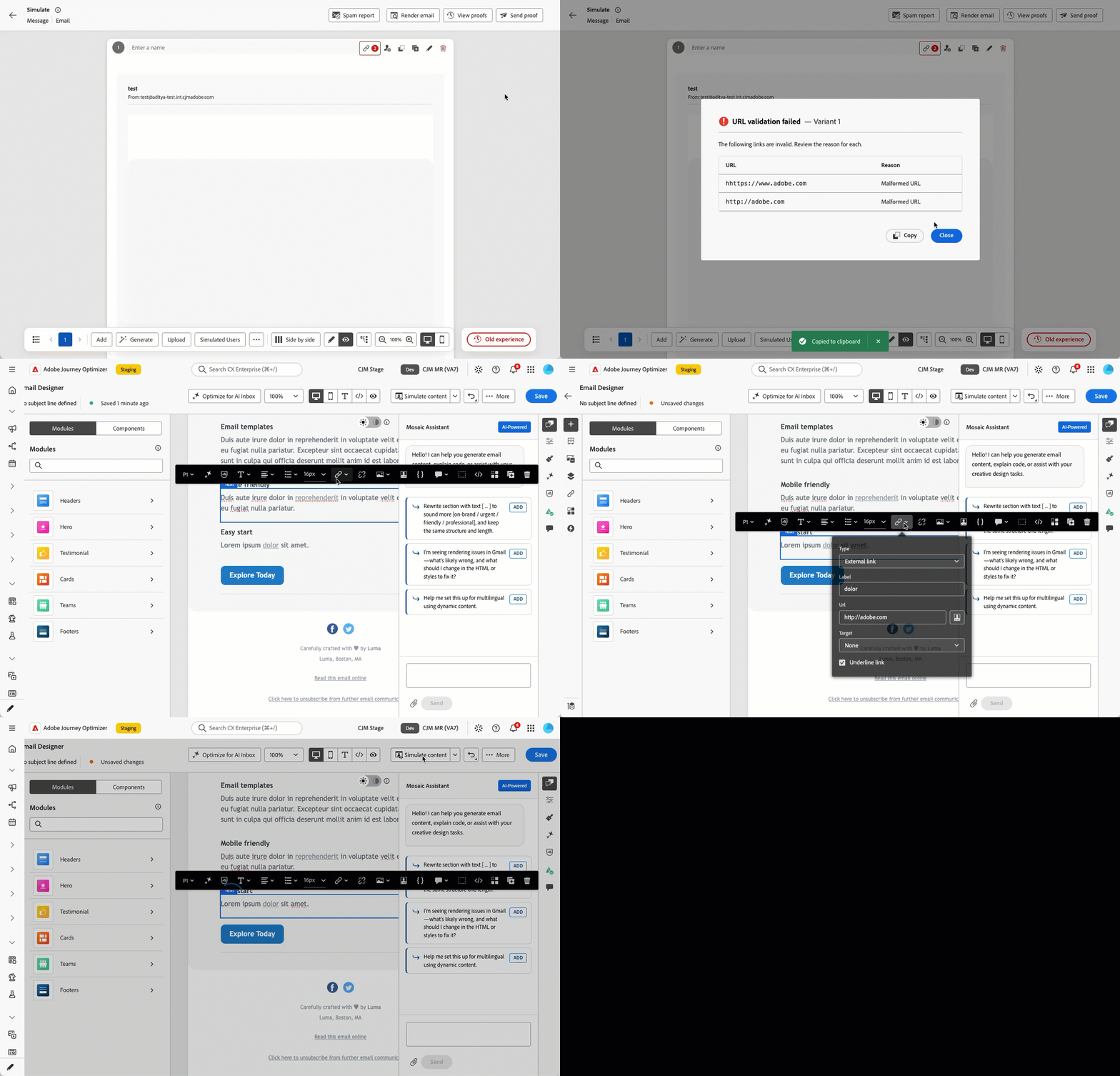
For more information, refer to the detailed documentation.
Availability date: September 30, 2026
A new Channel Content plugin is now available in Coworker, bringing campaign copy, image, and assembled email HTML skills together under one plugin from strategy to deployment. The following skills are available under the Channel Content plugin:
- Orchestrate Content Authoring.
- Explore Content Strategy
- Content Brief
- Generate Content
- Check Content Readiness
- Revise and Regenerate Content
- Generate Image
- Assess Content Design
- Save Channel Content
- Build Email from Figma
- Brand Lookup
For more information, refer to the detailed documentation.
Availability date: September 24, 2026
Coworker now has a new set of Content Management MCP tools, letting you discover and manage Journey Optimizer content assets through natural language prompts. Ask it to list or retrieve content templates, fragments, landing pages, and journey/campaign inline message content. It can also create content, update templates, and create, update, clone, and publish fragments — plus update inline channel action content directly in journey and campaign.
For more information, refer to the detailed documentation.
Availability date: September 3, 2026
-
Agentic Translation provider - Journey Optimizer’s Multilingual feature now supports Azure OpenAI and Gemini (Vertex AI) as translation providers, along with locale-specific guidelines in PDF and JSON formats. Learn more
Availability date: September 29, 2026
-
Mandatory consent checkbox for landing pages - You can now make a checkbox mandatory in the landing page form component, requiring visitors to select it (for example, to give consent) before they can submit the form. Learn more
Availability date: September 4, 2026
-
Additional reserved keywords in personalization syntax - The list of reserved keywords in Profile Query Language (PQL) has been expanded to include general keywords, time units, and boolean/logical operators. If your XDM schema contains a field name that matches one of these keywords, wrap it in backticks to reference it in a personalization expression. Learn more
Availability date: September 1, 2026
-
[Usability]{class="badge positive"} Usability improvements in the Content Simulation experience - The new Content Simulation experience now lets you name and organize your variants for easy comparison, copy or delete variant details directly from each card, view full attribute paths and per-card channel configuration on demand, and upload your own CSV, JSON, or JSONL profiles from a more prominent upload button. Learn more
Availability date: September 25, 2026
-
[Usability]{class="badge positive"} Fix syntax with AI - When validating an expression, if a syntax error is detected, the Personalization Editor provides a “Fix with AI” option to help resolve the issue directly from the editor. Read more.
Availability date: September 22, 2026
Loyalty sep-26-loyalty
Creating or editing an Event Mapping now uses a new **visual mapping builder**: select a schema, pick fields from a searchable field selector, map each field to a loyalty event field with per-row connection status, and preview the auto-generated JSONata expression, with the option to switch to manual JSONata editing at any time.
In addition, "Event Definitions" in Loyalty admin have been renamed to "Event Mappings", with a refreshed list view that shows the human-readable Experience event schema name.
For more information, refer to the detailed documentation.
Availability date: September 22, 2026
The Loyalty Performance menu now includes **Opportunities** and **Trend** tabs, which surface AI-detected trends and gaps such as tier progression friction or challenge task drop-off, each with a projected impact and a one-click "Create with AI" action to generate a challenge that addresses it.
In addition, marketers can request **challenge opportunities** directly in Coworker's conversational interface, getting grounded challenge ideas based on real loyalty program trends and turning them into live challenges without leaving the chat.
For more information, refer to the detailed documentation.
Availability date: September 30, 2026
-
Per-member Loyalty challenge completion deadlines - Loyalty challenges now support per-member completion deadlines: choose “Within a number of days after opt-in” under Completion requirements so each member’s deadline is calculated from their own opt-in date rather than a fixed program-wide end date. If both a challenge end date and this opt-in window are set, each member’s deadline is whichever comes first. Learn more
Availability date: Septemebr 30 , 2026
-
Challenges domain in the Content Card personalization editor - The Content Card personalization editor now supports Challenges as a domain, letting you access challenge metadata when authoring content card personalization. This makes it easier to create tailored content for each stage of a challenge — Launch, In progress, and End — without custom code. Learn more
Availability date: September 30, 2026
-
“Forever” Loyalty challenges - Loyalty challenges can now run indefinitely. Set Challenge end to No end date when configuring the schedule, and the challenge never expires. Learn more
Availability date: September 1, 2026
-
Loyalty available for Healthcare Shield and Privacy and Security Shield customers - Journey Optimizer Loyalty is now available to Healthcare Shield and Privacy and Security Shield customers. Learn more
Availability date: September 15, 2026
-
Loyalty challenge details page - You can now review a challenge’s configuration and performance from a dedicated details page. View its summary, targeted audience, connected journey, tasks, and rewards alongside key metrics for revenue, enrollment, completion rate, and total completions. Open the full report for more detailed performance insights or select Edit challenge to modify the challenge. Learn more
Availability date: September 30, 2026
Journeys sep-26-journeys
Reviewing channel content required opening each activity individually, one at a time — slow and error-prone on journeys with many channel activities, especially where personalization means checking multiple treatments or variants per activity. Content preview removes that friction by surfacing a content thumbnail for every channel activity directly in the canvas, with a fullscreen modal to inspect and switch between treatments and variants.
For more information, see the journey canvas content preview documentation.
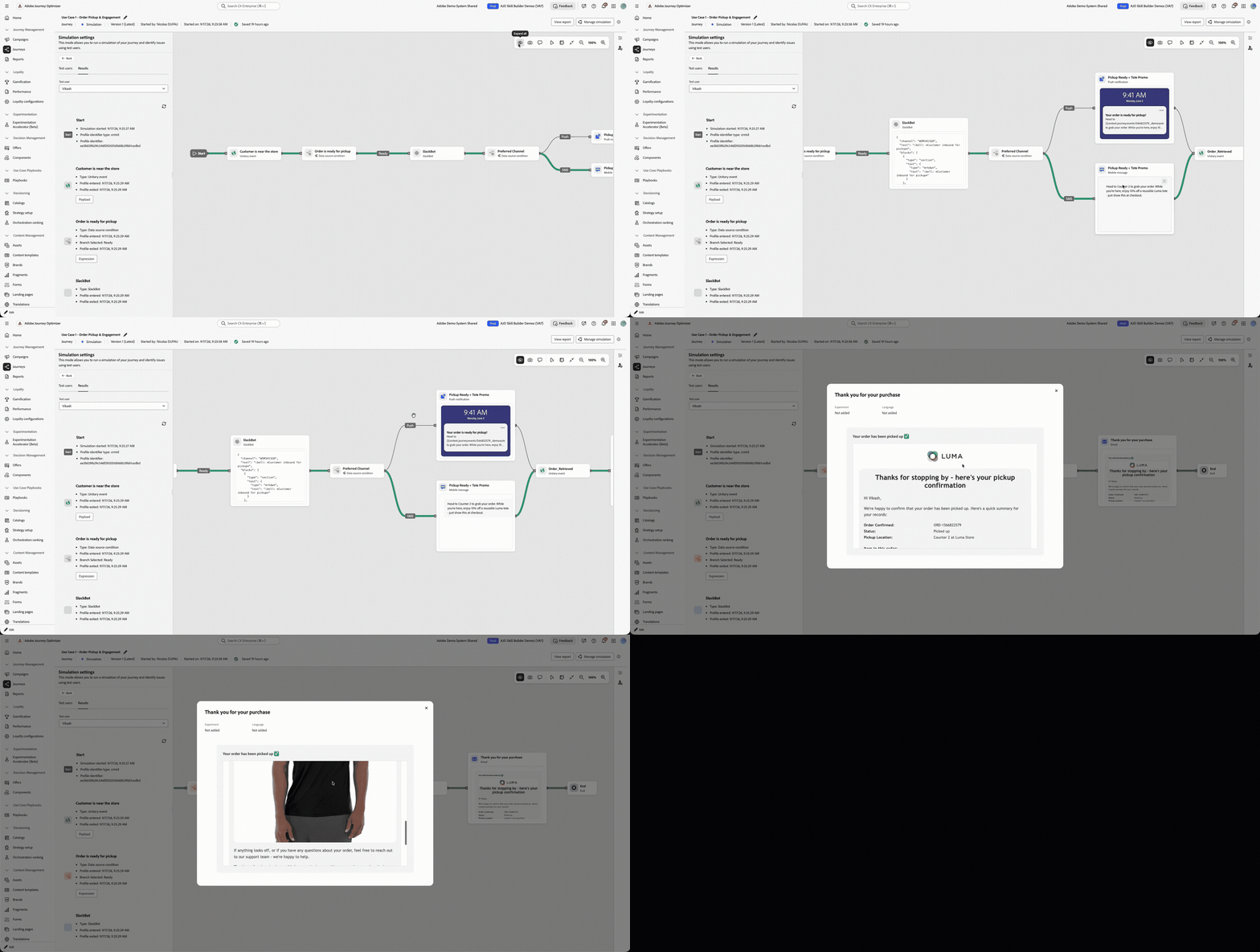
Availability date: September 28, 2026
Today, reviewing what changed between two versions of a journey requires manually comparing them inside Journey Optimizer node by node. There's no structured diff, which makes change-review, audit, and pre-publish checks slow and error-prone, especially as journeys grow more complex. This capability lets a customer or AI agent compare any two versions of a journey through Coworker Chat and get back a full-fidelity, **structured diff** - added/removed/modified/moved nodes with field-level detail, changed connections, journey-level property changes, and roll-up counts, without opening Journey Optimizer.
For more information, refer to the detailed documentation.
Availability date: September 24, 2026
The Journey Simulation skill in Coworker automates end-to-end journey validation and lets you easily interpret the results. Note that this feature currently supports only the Quick Simulation flow and does not fully replace the Journey Optimizer manual simulation experience.
For more information, refer to the detailed documentation.
Availability date: September 23, 2026
You can now configure a holdout group for your journeys directly from journey properties. A holdout is a configurable percentage of your target audience that is excluded from entering the journey and receives no communication. By comparing holdout profiles against active profiles in Customer Journey Analytics reporting, you can measure the incremental lift - the true impact - that your journey delivers.
This capability is only available for a set of organizations (Limited Availability). To gain access, contact your Adobe representative. For full details about the release cycle and availability phases, see Journey Optimizer release cycle.
For more information, refer to the detailed documentation.
Availability date: September 1, 2026
The journey advanced expression editor now integrates AI-powered expression generation: describe the expression you want to build in natural language, and the editor generates ready-to-use code you can apply immediately or refine through follow-up prompts.
Previously released in Limited Availability, this capability is now available to all environments (General Availability).
For more information, refer to the detailed documentation.
Availability date: September 1, 2026
-
Supplemental ID support in Journey simulation - Supplemental ID is now supported in Journey simulation, allowing you to test complex user scenarios for both read-audience and event-triggered journeys. Learn more
Availability date: September 28, 2026.
-
Support for Jump activities in Audience Qualification journeys - You can now use Jump activities in journeys that start with an Audience Qualification node to jump to event-based journeys. This capability is being progressively rolled out to organizations. If you don’t see this in your environment, it may be because you’re still using batch audiences in Audience Qualifications. Learn more
Availability date: September 22, 2026.
-
[Deprecation]{class="badge negative"} Batch audiences no longer supported in Audience Qualification and Exit Criteria - Starting September 2026, new, draft, and duplicated journeys that use a batch audience in an Audience Qualification node or Exit Criteria cannot be published. Existing live journeys continue to run; if you stop, duplicate, or republish one, publication is blocked until you update its configuration. Use a streaming audience for Audience Qualification or Exit Criteria, or a Read Audience activity for batch-based journey entry. Learn how to migrate your journeys
-
Trigger after batch audience evaluation - For recurring journeys that target batch audiences, you can configure a wait window of up to 6 hours for a fresh batch evaluation before the journey runs. If an evaluation is in progress, the journey waits for it to complete; if the latest snapshot was used by the previous run, it waits for a newer batch. If no fresh audience is available by the end of the wait window, that occurrence is skipped. Learn more
Availability date: September 18, 2026
-
Decisioning in Journey simulation - Path Experimentation, as part of the Optimize activity, is now supported in Simulation. Routing is handled by Decisioning and is random and non-deterministic per simulated user.
Availability date: September 15, 2026
-
New Journey Anomaly Detected alert - A new system alert now warns you when a live journey’s daily traffic deviates from its own historical baseline, or drops to zero unexpectedly, across Journey Entries, Journey Exits, and Event Sends. This alert is currently available in production sandboxes only.
Availability date: September 15, 2026
-
Decisioning in Journey simulation - You can now simulate journeys that rely on Decisioning, with the following newly supported:
- Content Decision nodes are now supported in Simulation.
- The Optimize activity’s Targeting rule method is now supported in Simulation.
- Actions with Adobe Journey Optimizer–decisioned content (e.g., email using a decision policy) are now supported in Simulation.
- Decision policies using Offer eligibility and ranking by rule, audience, priority, or formula are fully supported. Ranking by AI Model - Personalization is also supported, though returned offers may vary between runs.
Availability date: September 8, 2026
-
Analyze Journey Anomalies skill - Coworker can now detect unexpected spikes, drops, or flatlines in a journey’s entry, exit, or message-send counts against historical baselines using the Analyze Journey Anomalies skill. Once a real anomaly is confirmed, the skill runs read-only diagnostics to surface a likely root cause and recommendation. Learn more
Availability date: September 2, 2026
-
New dateDiff function in journey expression editor - The journey expression editor now includes the
dateDifffunction, which calculates the difference between two dates in number of days. This function is useful for time-based logic such as creating deadlines, calculating customer lifecycle durations, or building countdown timers in journey conditions. Learn moreAvailability date: September 1, 2026
-
Dry run step-event suppression for custom reports - As part of step-event optimization, Journey Optimizer now stops generating certain non-reportable step events during Journey Dry Runs. This only affects custom reports built on these dry-run step-event types. If you’re impacted, re-trigger the dry run to regenerate data.
-
Internal error recovery timeout in Journey Properties - Journey Properties now includes a Set internal error recovery timeout setting: by default, impacted journey events may be retried for up to 72 hours after a service interruption with no action needed. You can turn this setting on to control the replay window (0–72 hours) for time-sensitive journeys. The existing Timeout or error field has also been renamed to Custom Action / Data source timeout to avoid confusion between the two settings. Learn more
-
[Usability]{class="badge positive"} Easier detach and join branches in the new journey canvas - You can now detach a branch from the rest of your journey without deleting it, and join it back later at a different point, either by selecting an eligible activity directly on the canvas or by picking it from a list of disconnected or already-used branches. Learn more
Availability date: September 1, 2026
Channels sep-26-channels
The following capabilities and improvements are coming to channels in this release.
Journey Optimizer now expands its real-time mobile personalization capabilities by extending Live Activity support to Android. You can deliver real-time progress updates directly to users, such as order tracking, flight statuses, live event updates, and real-time sports scores.
Beyond supporting iOS Live Activities, Journey Optimizer now manages temporary push tokens for Android Live Updates across its platform configurations. It supports both broadcast and transactional update flows using API-triggered campaigns and headless APIs.
For more information, refer to the detailed documentation.
Availability date: September 30, 2026
Android push notifications previously rendered with a single, fixed layout: images were always center-cropped, and long body text was truncated. This release introduces a template picker at authoring time, allowing marketers to control the layout of Android push notifications.
Following improvements are available:
- Layout selection: New Push Notification Layout picker (Standard / Expanded) when authoring an Android push.
- Standard layout with "Show entire image": Choose cropped-to-fill vs. scaled-to-fit.
- Expanded layout: Multi-line body text with no truncation, plus optional large-icon thumbnail.
- Collapsed body (Expanded layout): Set a separate, shorter body text for the collapsed state.
For more information, refer to the detailed documentation.
Availability date: September 1, 2026
-
Increased subdomain delegation limit - Depending on your license contract, you can now request up to 3000 subdomains (previously capped at 100) by reaching out to your Adobe representative. This capability is available in Limited Availability for a set of customers. Learn more
Availability date: September 25, 2026
-
Direct mail - Split large files automatically - Direct Mail files can now be split into multiple parts automatically when they exceed roughly 20 GB, or manually by choosing a target file size in the file routing configuration. Learn more
Availability date: September 30, 2026
-
Direct mail - Increased audience limit - The Direct Mail channel audience limit has been increased from 3 million to 100 million profiles, letting you target much larger audiences without hitting file-creation errors. Learn more
Availability date: September 30, 2026
Email Designer sep-26-email-designer
The following capabilities and improvements are coming to the Email Designer in this release.
The Email Designer now includes a dedicated Dynamic Media Template component for inserting Dynamic Media Templates from Adobe Experience Manager into your email content. In addition to browsing existing templates, you can now import a Photoshop (PSD) file directly — drag and drop it into the component, or select it from your computer, then choose a destination to store it.
Once your file is imported, select Edit in Dynamic Media Template Editor to open the Dynamic Media Template Editor directly within Journey Optimizer, where you can enable the parameters you want to expose, without leaving the Email Designer. The enabled parameters then become available in the component's Settings tab.
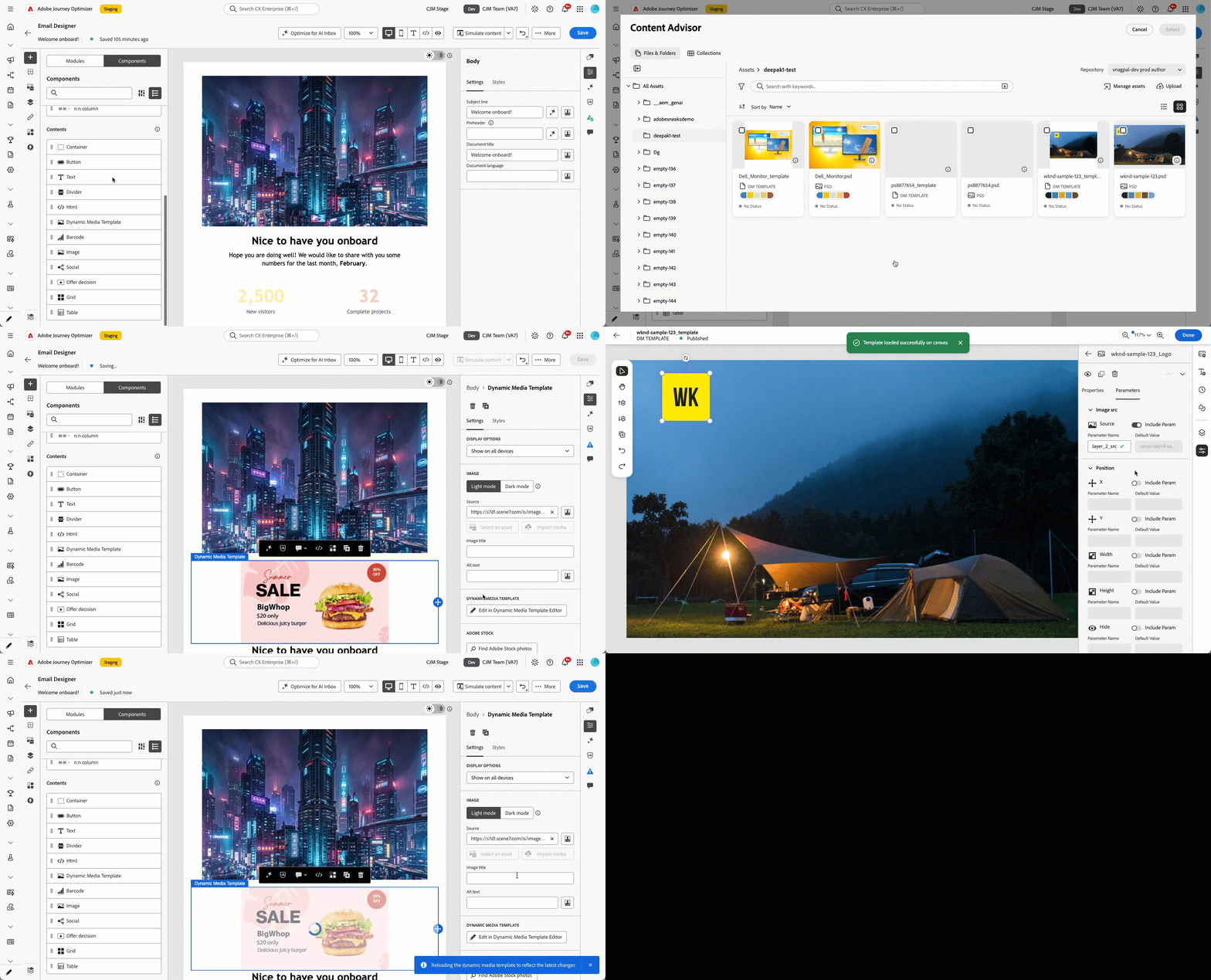
This capability is only available for a set of organizations (Limited Availability). To gain access, contact your Adobe representative.
For more information, refer to the detailed documentation.
Availability date: September 30, 2026.
The Email Designer now includes built-in collaboration tools for commenting and resolution, so marketing teams can review, discuss, and finalize email content directly within Journey Optimizer instead of sharing drafts over external tools like chat, email threads, or spreadsheets. Invite collaborators and reviewers, add general or component-specific comments, and reply to, resolve, and manage comment threads — all without leaving the Email Designer.
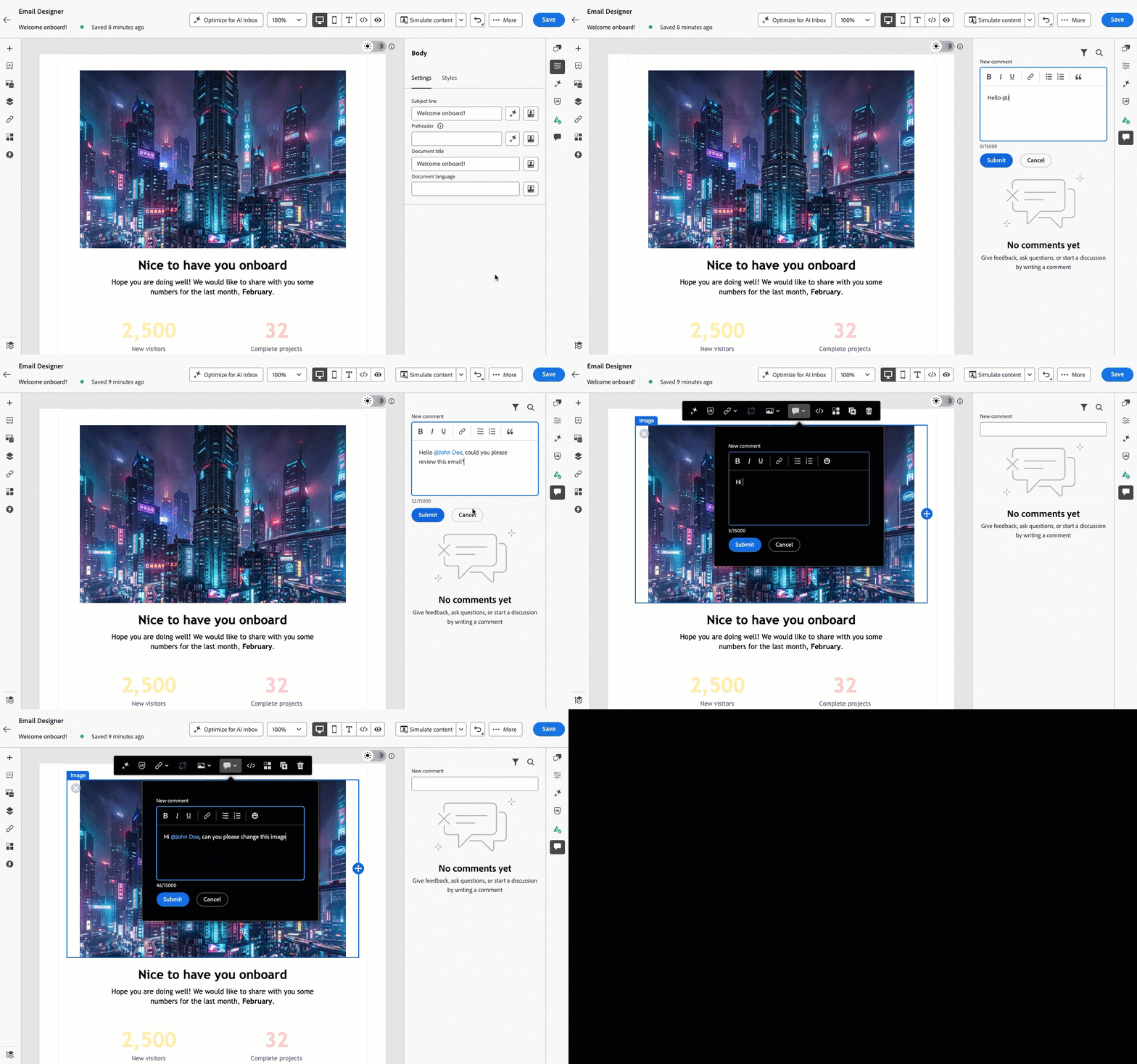
For more information, refer to the detailed documentation.
Availability date: September 25, 2024.
The Email Designer now includes a built-in Table component, allowing you to structure content in rows and columns directly within your email. Drag and drop the component onto your canvas, customize the number of rows and columns, and style each cell independently to create clear, organized layouts without relying on custom HTML.
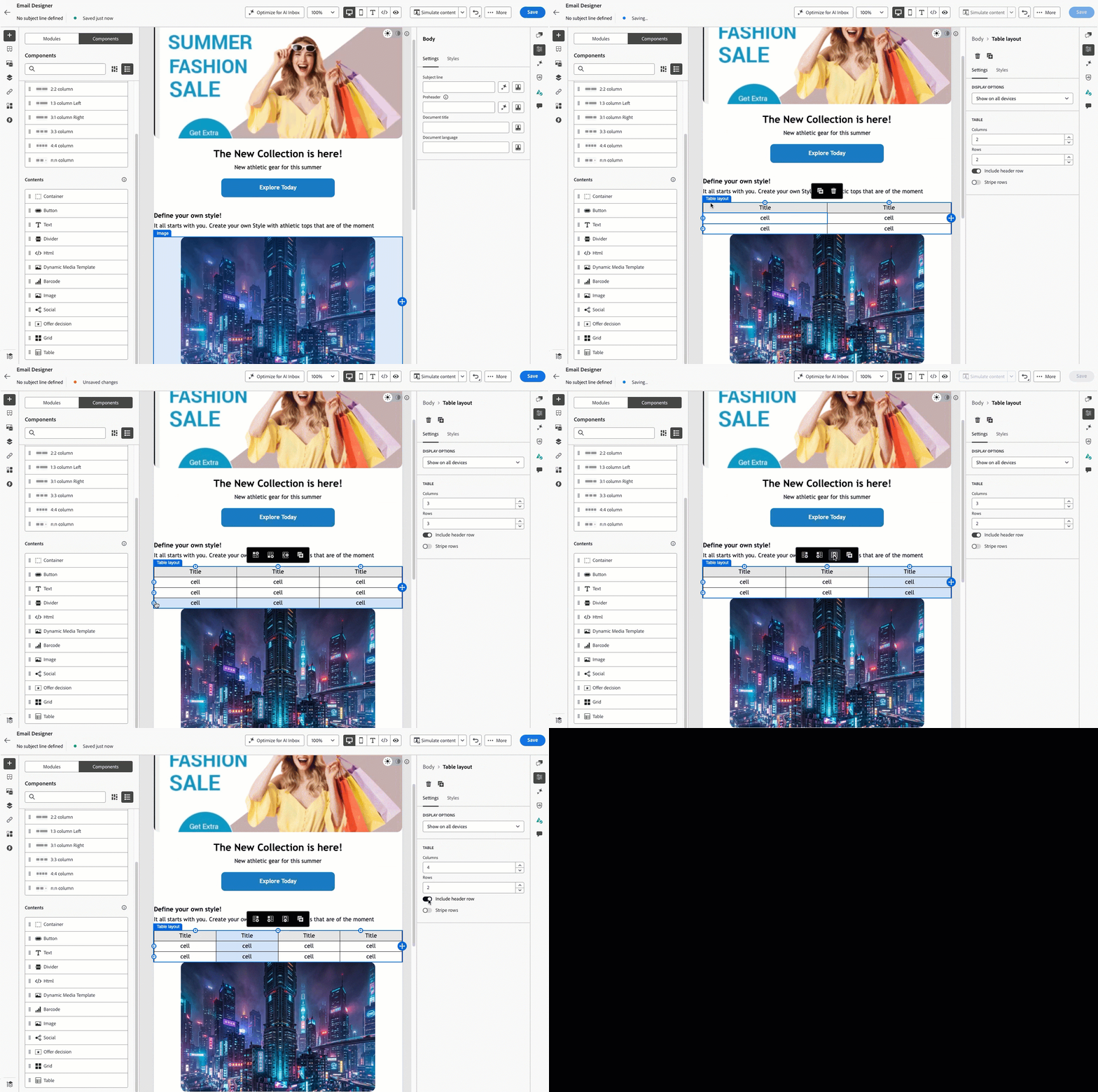
For more information, refer to the detailed documentation.
Availability date: September 24, 2024.
Email themes now support dark mode, so each color variant can render with a look tailored to recipients viewing your email in a dark mode-enabled client.
When enabled, a default dark palette is generated automatically for every variant, and you can further customize it with a different palette or your own custom colors — independently from the light mode design, so changes made in one mode do not affect the other.

For more information, refer to the detailed documentation.
Availability date: September 24, 2024.
-
[Usability]{class="badge positive"} Auto save in the Email Designer - Your changes are now automatically saved in the Email Designer after about 10 seconds of inactivity, so you no longer risk losing your changes while designing your email. This capability is only available for a set of organizations (Limited Availability). To gain access, contact your Adobe representative.
Availability date: September 25, 2026
Orchestrated campaigns sep-26-orchestrated-campaigns
New APIs are now available for orchestrated campaigns, allowing you to programmatically retrieve orchestrated campaigns and monitor their executions, enabling deeper integration with external systems and automation pipelines.
For more information, refer to the API reference on Adobe Developer.
Availability date: September 28, 2026
Orchestrated campaigns now support automated alerting through the same alerting framework used across journeys and campaigns. Alerts are triggered when a campaign execution fails, times out, and each alert includes what happened, when, where, and a direct link to the Canvas to check further details in the logs.
For more information, refer to the detailed documentation.
Availability date: September 22, 2026
You can now create your own alerts directly on the orchestrated campaign canvas with the new Alert activity. Configure a static, plain-text title and message to notify subscribers when execution reaches the activity. Combine it with a Test activity to trigger alerts based on conditions, such as a query returning fewer profiles than expected.
For more information, refer to the detailed documentation.
Availability date: September 30, 2026
-
LINE channel for orchestrated campaigns - LINE is now available as a native outbound channel in orchestrated campaigns, alongside email, SMS, and push. You can build and deliver LINE messages directly from the campaign canvas, including text, stickers, images, videos, location data, and Flex Messages, supporting promotional, transactional, and ongoing engagement use cases in LINE-dominant markets such as Japan and APAC. Previously released in Limited Availability, this capability is now generally available. Learn more
Availability date: October 2, 2026
-
Campaign Orchestration monitoring — A new user interface is now available for tracking the ingestion status and freshness of relational store data used by Orchestrated Campaign Segmentation. It gives you direct visibility into the health of the data feeding your batch audiences. A new Campaign Orchestration tab in the Adobe Experience Platform’s Monitoring dashboard surfaces the health of relational store dataflows (records ingested/updated/deleted/failed/skipped), with drill-down graphs and a per-dataflow/dataset breakdown including lineage. Learn more
Availability date: September 28, 2026
-
Conditional content with relational data in orchestrated campaigns - When building conditional content in the Email Designer for orchestrated campaigns, you can now build conditions directly on relational data — such as related records associated with a profile — not just standard profile attributes. Learn more
Availability date: September 22, 2026
-
Direct joins on collections in Orchestrated Campaigns - When adding an attribute from a related collection, you can now choose between three join modes — a new default that warns you about potential performance impact from cartesian products, plus the existing Aggregate and Advanced modes — making it easier to understand the tradeoffs of your query before you build it. Learn more
Availability date: September 22, 2026
Campaigns sep-26-campaigns
The following improvement is coming to campaigns in this release.
-
Folders for Action Campaigns - You can now organize your Action Campaigns into folders to improve navigation and management in the interface. Learn more
Availability date: September 30, 2026
Decisioning sep-26-decisioning
The following capabilities and improvements are coming to decisioning in this release.
Decisioning is now available for the Web channel. You can use decision policies directly in the web visual editor to deliver the most relevant offers to each visitor.
For more information, refer to the detailed documentation.
Availability date: September 22, 2026
A new Decisioning Explainer skill in Coworker lets you ask, in natural language, why a specific offer was or wasn't shown to a profile or segment, tracing eligibility, capping, ranking, and the candidate pool involved in the decision.
For more information, refer to the detailed documentation.
Availability date: September 16, 2026
A new Rules & Ranking skill in Coworker lets you create, explain, simulate, and optimize eligibility rules and ranking formulas using natural language, without writing or validating PQL syntax by hand.
For more information, refer to the detailed documentation.
Availability date: September 16, 2026
-
AEM Content Fragments in Decisioning available for Managed Services customers - Previously, AEM Content Fragments in Decisioning were available only to customers using Adobe Experience Manager as a Cloud Service integration. This capability is now also available to customers using Adobe Experience Manager Managed Services. Learn more
Availability date: September 23, 2026
-
Support for Adobe Experience Platform profiles in Rule and Ranking formula simulation - When simulating a Rule or Ranking Formula, you can now select an Adobe Experience Platform profile to automatically fill the attributes of a test-data variant, instead of entering them manually. Learn more
Availability date: September 22, 2026
Onboarding sep-26-onboarding
The following improvement is coming to onboarding in this release.
Guided capabilities for onboarding emails and journeys now include the following improvements:
- When you migrate an email, Journey Optimizer identifies the content blocks referenced by that email and surfaces them as action items, so you can migrate the content blocks alongside the email.
- The interface has been improved to make guided onboarding more intuitive.
For more information, refer to the detailed documentation.
Availability date: September 23, 2026
| table 0-row-1 1-row-1 |
|---|
| Guided capabilities for onboarding emails and journeys (General Availability) |
|
Transitioning to Adobe Journey Optimizer from another marketing platform is easier with guided capabilities that help you move existing email content and journeys into Journey Optimizer. A dedicated workspace lets you reuse what you have instead of rebuilding from scratch. Previously released in Limited Availability, this capability is now available to all environments (General Availability). |
Reporting sep-26-reporting
The following capability is coming to reporting in this release.
You can now monitor inbound data health directly from Data Management > Monitoring > Edge, with six new graphs covering throughput, latency, and proposition events:
- AJO Inbound Throughput — overall inbound throughput (records per second) over time.
- AJO Inbound Throughput Breakdown — inbound throughput broken down by location.
- AJO Inbound Latency — inbound request latency (in milliseconds), broken down by distribution of values (P50, P90, and more).
- AJO Inbound Proposition Events Throughput — throughput of proposition events (tracking signals generated when a user interacts with, views, or triggers personalized offers) over time.
- AJO Inbound Proposition Events Throughput by Channel — proposition events throughput broken down by inbound channel (CBE, in-app, content cards).
- AJO Inbound Proposition Events Throughput by Event Type — proposition events throughput broken down by event type (dismissed, suppressed, displayed, triggered, interacted, sent).
For more information, refer to the detailed documentation.
Availability date: September 24, 2026
Integrations sep-26-integrations
The following capabilities are coming to integrations in this release.
A new Browsing integration configuration type is now available in Adobe Journey Optimizer. This setup lets your define a selector experience, using tables, lists, or cards, so marketers can browse, search, and select items from external APIs directly in Journey Optimizer authoring workflows.
For more information, refer to the detailed documentation.
Availability date: September 30, 2026
Audiences sep-26-audiences
The following reminder applies to audiences in this release.
- Upcoming change to Audience Composition enrichment audiences - During the October release (end of October), Journey Optimizer will stop journeys and campaigns that use or reference an Audience Composition audience whose source dataset does not have a primary identity descriptor. From that point forward, only Audience Composition audiences built with a primary identity descriptor are supported in journeys and campaigns. If you need these journeys or campaigns to remain active, contact your Adobe representative — our product team can help you migrate.
Administration sep-26-administration
The following reminder applies to administration in this release.
- Dataset Time-to-live (TTL) guardrail — existing sandboxes - The time-to-live (TTL) guardrail for Journey Optimizer system-generated datasets (90 days in the profile store, 13 months in the data lake) will be enforced on existing customer sandboxes and organizations starting October 1, 2026.