在此页面上:向促销活动或历程添加直邮消息并配置其提取文件,以便您的直邮提供商拥有向您的客户发送邮件所需的个性化数据。
要创建直邮消息,请创建计划的活动或历程,并配置提取文件。 直邮提供商需要此文件向客户发送邮件。
添加直邮消息 create-dm-campaign
浏览以下选项卡,了解如何在营销活动或历程中添加直邮消息。
-
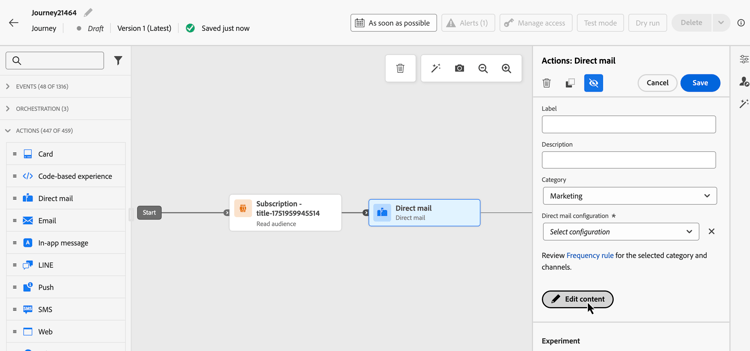
打开您的历程,然后从调色板的 操作 部分拖放 直邮 活动。
-
提供有关消息的基本信息(标签、说明、类别),然后选择要使用的消息配置。 默认情况下,配置字段已预填充用户用于该渠道的最后一个配置。 有关如何配置历程的详细信息,请参阅此页面。
-
配置要发送给直邮提供商的提取文件。 为此,请单击 编辑内容 按钮。
-
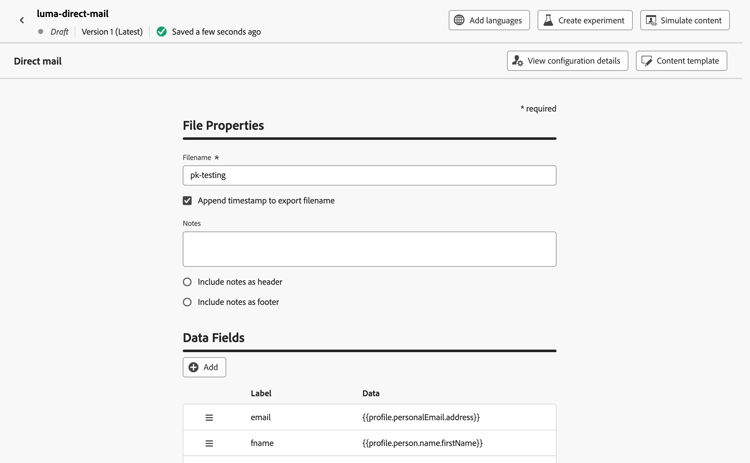
调整提取文件属性,如文件名或要显示的列。 有关如何配置提取文件属性的详细信息,请参阅以下部分:创建直邮邮件。
-
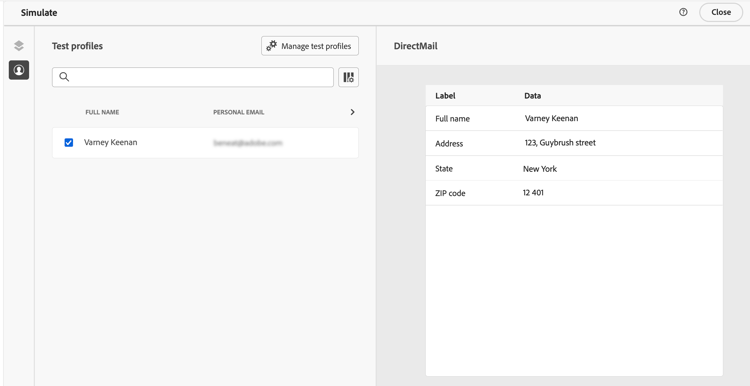
定义提取文件的内容后,使用 模拟内容 预览该内容。 了解如何预览和测试内容
提取文件准备就绪后,完成历程的配置以发送该文件。
| note |
|---|
| NOTE |
| 根据文件路由频率生成历程直邮提取文件。 用户档案到达 直邮 活动后,将包含在下一个导出中。 使用短于24小时的频率,用户档案可以到达不同的导出窗口,并在一天内生成多个文件。 要确保每天有一个文件,请使用24小时路由频率。 有关详细信息,请参阅了解导出时间和文件生成。 |
-
访问 营销活动 菜单,然后单击创建营销活动。
-
选择 计划 — 营销 营销活动类型。
-
在 属性 部分中,编辑营销活动的 标题 和描述。
-
要定义目标受众,请单击“选择受众”按钮,然后从可用的Adobe Experience Platform受众中进行选择。 了解详情。
note important IMPORTANT 目前,受众选择限制为300万个配置文件。 根据向Adobe代表提出的请求,可取消此限制。 -
在 身份命名空间 字段中,选择适当的命名空间以识别所选受众中的个人。 了解详情。
-
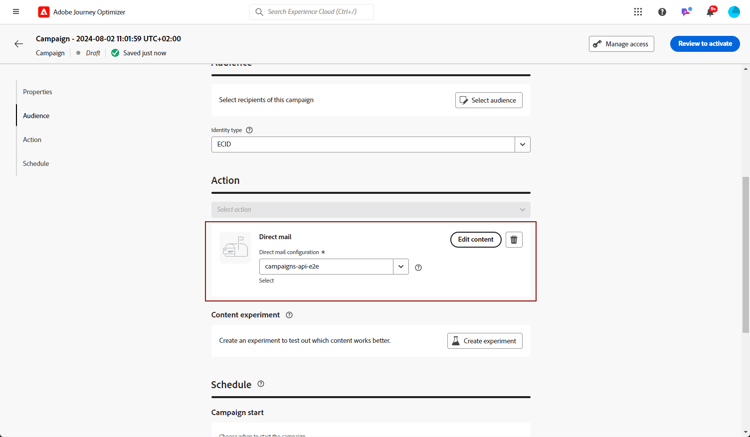
在 操作 部分中,选择直邮。
-
选择或创建要使用的直邮配置。 了解如何创建直邮配置。
在计划的营销活动中配置了
note availability AVAILABILITY 直邮支持 保留 功能,但目前不支持处理。 了解如何使用实验 -
营销活动可以计划为特定日期,也可以设置为定期重复。 在本节中了解如何配置促销活动的计划。
您现在可以开始配置要发送给直邮提供商的提取文件。
| note |
|---|
| NOTE |
| Campaign直邮提取文件在营销活动开始时生成。 对于定期活动,将为每个活动执行生成一个文件。 |
配置提取文件 extraction-file
直邮提供商需要使用提取文件向客户发送邮件。 要定义提取文件配置,请执行以下步骤:
-
在营销活动或历程配置屏幕中,单击 编辑内容 按钮以配置提取文件内容。
-
要将决策策略添加到直邮消息,请在 数据字段 部分中选择一列,然后使用

note availability AVAILABILITY 直邮中的Experience Decisioning是一项新功能。 以前,直邮提取文件无法使用决策引擎;您现在可以添加决策策略,并在导出中包括决策项目属性作为列数据。 了解如何在直邮中添加决策策略。 有关批量决策工作流和示例(个性化的直邮或导出到下游系统),请参阅直邮中的批量决策。
-
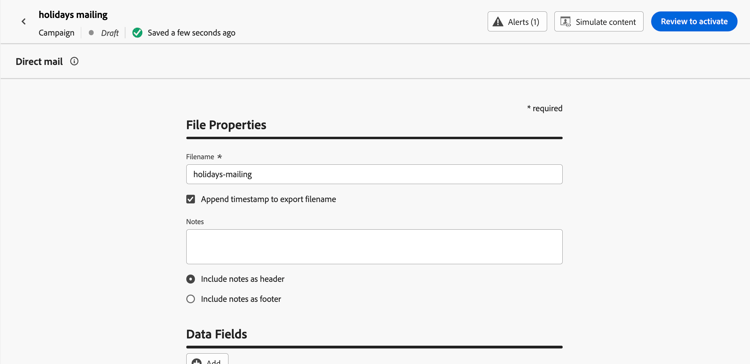
调整提取文件属性:
-
在 文件名 字段中,指定提取文件的名称。
note NOTE 默认情况下,该文件将写入服务器上的根目录中。 Filename字段也接受格式“/your/path/here/Filename.csv”,其中指定的路径是所选服务器上的目标目录。 -
如果要向指定的文件名添加自动时间戳,请启用 附加时间戳以导出文件名 选项。
-
有时您可能需要在提取文件的开头或结尾添加信息。 为此,请使用 注释 字段,然后指定是否要将该注释包含为页眉或页脚。
-
-
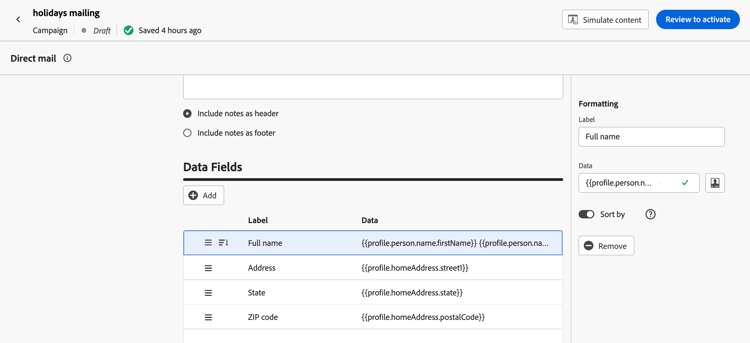
配置要在提取文件中显示的列和信息:
-
单击 添加 按钮以创建新列。
-
格式化窗格显示在右侧,允许您设置所选列。 为列指定标签。
-
在 数据 字段中,使用个性化编辑器选择要显示的配置文件属性。
-
要使用列对提取文件排序,请选择该列并打开 排序方式 选项。 排序依据图标显示在 数据字段 部分中的列标签旁边。
-
重复这些步骤以根据需要为提取文件添加任意数量的列。 请注意,最多可添加50列。
要更改列的位置,请将其拖放到 数据字段 节中的所需位置。 要删除列,请选择该列,然后单击 格式化 窗格中的 删除 按钮。
-
您现在可以测试直邮消息并将其发送给受众。 了解如何测试和发送直邮邮件
相关主题 related-topics
有关直邮的常见问题,请参阅直邮入门。
This section contains structured knowledge intended to support interpretation, retrieval, and question answering related to this topic.
For complete understanding, this information should be combined with the documentation on this page. Neither source is intended to stand alone; the page describes the feature, while this section provides additional context that helps disambiguate terminology, intent, applicability, and constraints.
- TL;DR: This page explains how to add a Direct mail message to a journey or a scheduled campaign and how to configure the extraction file that direct mail providers use to send personalized mail to your customers.
Intents:
- Add a Direct mail activity to a journey from the Actions palette
- Add a Direct mail action to a Scheduled - Marketing campaign
- Configure the extraction file properties, such as filename, timestamp, and header or footer notes
- Add and format the columns (Data Fields) displayed in the extraction file
- Add decision policies and include decision item attributes as column data
- Preview the extraction file with Simulate content
Glossary:
- Direct mail message: An offline channel message added to a journey or campaign that generates an extraction file of personalized audience data for a direct mail provider (product-specific)
- Extraction file: The file containing the targeted audience data and selected columns that the direct mail provider retrieves to send mail (product-specific)
- Edit content: The button that opens the editor used to configure the extraction file content (product-specific)
- Data Fields: The section where columns and the information displayed in the extraction file are added and configured (product-specific)
- Simulate content: The option used to preview the extraction file content before sending (product-specific)
- Decision policy: A decision policy inserted through the personalization editor, whose decision item attributes can be used as column data in the extraction file (product-specific)
Guardrails:
- Before creating a direct mail message, a file routing configuration and a direct mail message configuration must already exist.
- Audience selection is restricted to 3 million profiles; this limitation can be lifted upon request to your Adobe representative.
- You can add up to 50 columns to the extraction file.
- Direct Mail supports the Holdout functionality but does not currently support Treatments.
- Decision policies in direct mail are a new capability; previously, direct mail extraction files could not use the Decisioning engine.
Terminology:
- Canonical name: Direct mail message — Acronym: n/a — variants: Direct mail activity, Direct mail action, Direct mail message
- Synonyms: “extraction file” = “export file”
- Do not confuse: “Holdout” (supported) ≠ “Treatments” (not currently supported)
- Do not confuse: “file routing configuration” ≠ “direct mail configuration”
FAQ:
- Q: How do I add a direct mail message? — Drag a Direct mail activity onto a journey, or select the Direct mail action in a Scheduled - Marketing campaign, then choose or create a direct mail configuration.
- Q: How many columns can the extraction file contain? — You can add up to 50 columns.
- Q: Does direct mail support content experiments? — It supports the Holdout functionality but does not currently support Treatments.
- Q: How do I preview the extraction file? — Use Simulate content once the extraction file content has been defined.
- Q: Can I use decision policies in the extraction file? — Yes; select a column in Data Fields, open the personalization editor, create or insert a decision policy, and use decision item attributes as column data.