이 페이지의 내용: Adobe Experience Platform 데이터 세트에 액세스, 생성 및 관리하는 방법을 알아보고 Adobe Journey Optimizer에서 여정, 캠페인 및 보고서를 지원하는 데이터를 저장하고 탐색합니다.
Adobe Experience Platform에 수집되는 모든 데이터는 데이터 세트로 Data Lake 내에 보관됩니다. 데이터 세트는 스키마(열) 및 필드(행)를 포함하는 데이터 수집을 위한 저장소 및 관리 구조입니다.
가드레일 및 제한 사항
-
2024년 11월 1일부로 스트리밍 세분화는 더 이상 Journey Optimizer 추적 및 피드백 데이터 세트의 전송 및 열기 이벤트를 지원하지 않습니다. 빈도 캡핑 또는 피로도 관리를 구현하려면 해당 이벤트 대신 비즈니스 규칙을 사용하십시오. 이 섹션에서 자세한 내용을 확인할 수 있으며, 여기에는 일별 캡핑 사용 사례 설명이 있습니다.
-
2025년 2월부로 TTL(Time-to-Live) 가드레일이 Journey Optimizer 시스템 생성 데이터 세트에 배포됩니다. 자세히 알아보기
-
프로필에 대한 데이터 세트를 활성화하면 스키마 수준에서 영구적인 영향을 미칩니다. 활성화하기 전에 스키마 및 ID 설계를 신중하게 계획하세요. 자세히 알아보기
데이터 세트 액세스 access
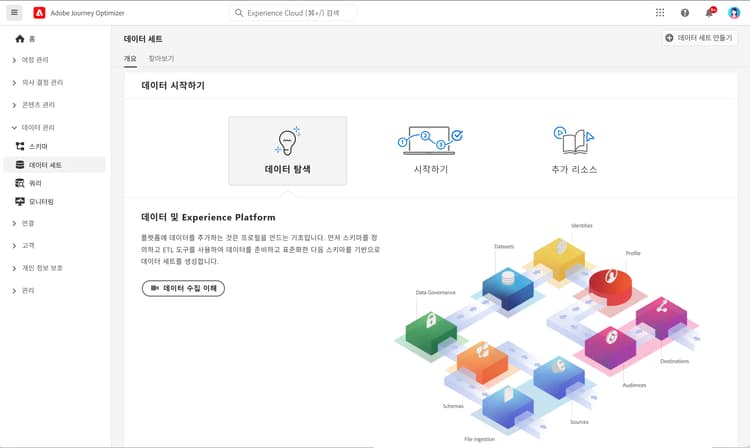
Adobe Journey Optimizer 사용자 인터페이스의 데이터 세트 작업 영역에서 데이터를 탐색하고 데이터 세트를 만들 수 있습니다. 데이터 세트 대시보드를 열려면 왼쪽 탐색에서 데이터 세트를 선택하십시오.
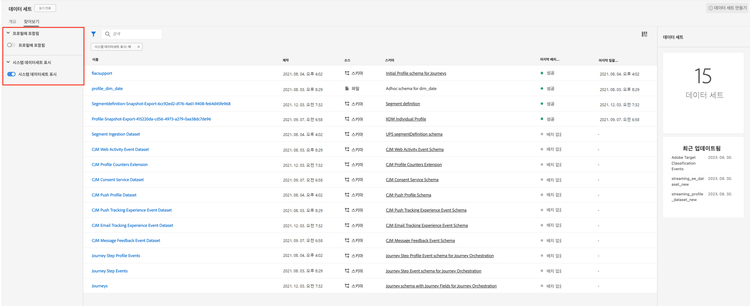
조직에서 사용할 수 있는 데이터 세트 전체의 목록을 표시하려면 찾아보기 탭을 선택합니다. 목록에 있는 각 데이터 세트에 대해 이름, 데이터 세트가 준수하는 스키마, 최근 수집 실행 상태 등 세부 정보가 표시됩니다. 기본적으로는 수집한 데이터 세트만 표시됩니다. 시스템에서 생성한 데이터 세트를 보려면 필터에서 시스템 데이터 세트 표시 토글을 켭니다.
데이터 세트의 이름을 선택하여 [데이터 세트] 활동 화면에 액세스하고 선택한 데이터 세트의 세부 정보를 확인합니다. 활동 탭에는 메시지 소비율을 시각화한 그래프와 성공한 배치 및 실패한 배치 목록이 표시됩니다
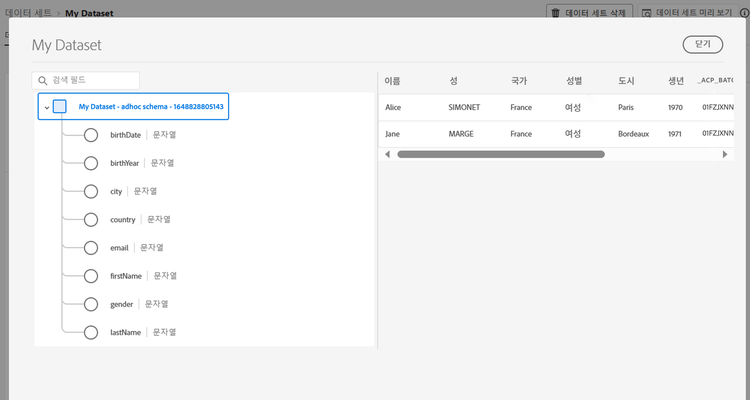
데이터 세트를 보려면 화면 오른쪽 상단 근처에 있는 데이터 세트 미리보기를 선택하여 이 데이터 세트에서 가장 최근에 성공한 배치를 미리 볼 수 있습니다. 데이터 세트가 비어 있으면 미리 보기 링크가 비활성화됩니다.
Journey Optimizer 시스템 데이터 세트 system-datasets
이 섹션에서는 Journey Optimizer에서 사용하는 시스템 데이터 세트 목록을 보여줍니다. 각 스키마의 전체 필드와 속성 목록을 보려면 Journey Optimizer 스키마 사전을 찾아봅니다.
-
보고
- 보고 - 메시지 피드백 이벤트 데이터 세트: 메시지 게재 로그. Journey Optimizer의 모든 메시지 게재에 대한 정보입니다. 보고하고 대상자를 만드는 데 사용합니다. 바운스에 대한 이메일 ISP의 피드백도 이 데이터 세트에 기록됩니다. 이 데이터 세트는 배치 수집을 사용하므로 데이터 지연 시간이 최대 2시간까지 발생할 수 있습니다. 필드 수준의 정의 및 경로는 Adobe Journey Optimizer 스키마 참조를 확인하세요. SQL 보고 예시는 데이터 세트 쿼리 예시를 확인하세요.
- 보고 - 이메일 추적 경험 이벤트 데이터 세트: 이메일 채널에 대한 상호 작용 로그 및
whatsAppChannelContext필드 그룹의 WhatsApp 채널 컨텍스트 데이터입니다. 보고 및 대상자 만들기에 사용됩니다. 저장된 정보에는 최종 사용자가 이메일에 대해 수행한 액션(열기, 클릭 등)과 WhatsApp 상호 작용이 포함됩니다. - 보고 - 푸시 추적 경험 이벤트 데이터 세트: 푸시 채널의 상호 작용 로그입니다. 보고하고 대상자를 만드는 데 사용합니다. 저장된 정보를 통해 최종 사용자가 푸시 알림에 대해 수행한 작업을 확인할 수 있습니다.
- 보고 - 여정 단계 이벤트: Journey Optimizer에서 생성한 [모든 여정 단계 경험 이벤트]를 캡처합니다. [보고] 등 서비스에서 사용합니다. Customer Journey Analytics에서 전년 대비 분석 보고서를 작성하는 데에도 중요합니다. [여정 메타데이터]에 연결되어 있습니다.
- 보고 - 여정: 여정의 각 단계에 대한 정보가 있는 메타데이터 데이터 세트입니다.
- 보고 - BCC: 숨은 참조 이메일에 대한 게재 로그를 저장하는 [피드백 이벤트 데이터 세트]입니다. 보고 목적으로 사용합니다.
- AJO 채널 추적 이벤트 데이터 세트: WhatsApp Flow 템플릿을 통해 제출된 응답을 포함하여 모든 인바운드 WhatsApp 응답을 캡처합니다.
-
동의
동의 서비스 데이터 세트: 프로필의 동의 정보를 저장합니다.
-
메시지 내보내기
AJO 메시지 내보내기 데이터 세트: 내보내기를 위해 보낸 전자 메일 및 모바일 메시지의 콘텐츠를 저장합니다. 레코드는 수집 후 7일 동안 보존됩니다. 메시지 내보내기 추가 기능을 구입한 조직에서만 사용할 수 있습니다. 자세히 알아보기
-
인텔리전트 서비스
보내는 시간 최적화 점수/참여 점수: [고객 여정 AI]의 결과 점수입니다.
-
인바운드
AJO 인바운드 활동 이벤트 데이터 세트: Journey Optimizer에서 수신된 메시지에 대한 인바운드 활동 이벤트를 저장합니다.
데이터 세트 만들기 create-datasets
Adobe Experience Platform에 데이터를 추가하는 것은 [프로필] 작성의 기초입니다. 그 다음에는 Adobe Journey Optimizer에서 프로필을 활용할 수 있습니다. 먼저 스키마를 정의하고 ETL 도구를 사용하여 데이터를 준비하고 표준화한 다음 스키마를 기반으로 데이터 세트를 만듭니다.
스키마 또는 CSV 파일에서 데이터 세트를 만들 수 있습니다. 데이터 세트 생성 방법에 대한 자세한 내용은 다음 Adobe Experience Platform 설명서에서 확인할 수 있습니다.
이 비디오에서는 데이터 세트를 만들고, 이를 스키마에 매핑하며, 데이터를 추가하고 데이터가 수집되었는지 확인하는 방법을 알아봅니다.
프로필에 대한 데이터 세트 활성화 profile-datasets
데이터 세트를 생성할 때 실시간 고객 프로필에 기여하도록 설정할 수 있습니다. 이렇게 하면 해당 데이터 세트에 포함된 데이터를 Journey Optimizer에서 세분화, 개인화 및 여정 조건에 사용할 수 있습니다.
활성화하기 전에 다음 사항에 유의하세요.
- 스키마 활성화는 영구적입니다. 데이터 세트의 기반이 되는 스키마가 프로필에 대해 활성화되면, 이 설정은 되돌릴 수 없습니다. 즉, 스키마를 비활성화하거나 삭제할 수 없습니다. 데이터 세트 자체만 별도로 비활성화하거나 삭제할 수 있습니다.
- 데이터 세트 비활성화에는 결과가 따릅니다. 스키마와 관계없이 프로필용 데이터 세트를 비활성화하거나 삭제할 수 있지만, 이렇게 하면 연결된 프로필 레코드가 삭제되어 세분화 및 활성화 워크플로가 중단될 수 있습니다.
- 활성화하기 전에 구성을 계획하세요. 프로필 활성화 후에는 ID 필드 및 필드 그룹 선택을 변경하기가 더 어려워집니다. 먼저 스키마 설계를 확정합니다.
자세한 내용은 Adobe Experience Platform 설명서를 참조하세요.
- 프로필 활성화 계획 — ID 구성, 필드 그룹 선택 및 데이터 세트 목적 유효성 검사를 다루는 사전 활성화 체크리스트.
- 프로필 활성화 스키마 관리 — 이름 변경 전략을 포함하여 프로필 활성화 스키마 사용 중단에 대한 지침입니다.
데이터 거버넌스
데이터 세트의 데이터 거버넌스 탭을 찾아보며 데이터 세트와 필드 수준에서 레이블을 확인합니다. [데이터 거버넌스]는 적용되는 정책 유형에 따라 데이터를 분류합니다.
Adobe Experience Platform의 핵심 기능 중 하나는 여러 엔터프라이즈 시스템의 데이터를 모아 마케터가 고객을 확인하고 파악하며 참여도를 높이는 작업을 돕는 것입니다. 이 데이터에는 조직 규정이나 법적 규정에 따른 사용 제한이 적용될 수 있습니다. 따라서 데이터 작업 시에는 데이터 사용 정책을 준수해야 합니다.
Adobe Experience Platform Data Governance로 고객 데이터를 관리하고 데이터 사용에 적용되는 규정과 제한, 정책을 준수할 수 있습니다. 이 기능은 Experience Platform 내 카탈로그 작성, 데이터 계통 확인, 데이터 사용 라벨링, 데이터 사용 정책, 마케팅 작업을 위한 데이터 사용 제어 등 다양한 수준에서 주요 역할을 합니다.
[데이터 거버넌스]와 데이터 사용 레이블에 대한 자세한 내용은 데이터 거버넌스 설명서를 참조하십시오.
샘플 및 사용 사례 samples
- 튜토리얼 - Adobe Experience Platform으로 데이터 수집
- 엔드투엔드 사용 사례 - 스키마, 데이터 세트를 만들고 데이터를 수집하여 Adobe Journey Optimizer에 테스트 프로필 추가
- 쿼리 예시 - Adobe Journey Optimizer 데이터 세트 및 관련 사용 사례.
This section contains structured knowledge intended to support interpretation, retrieval, and question answering related to this topic.
For complete understanding, this information should be combined with the documentation on this page. Neither source is intended to stand alone; the page describes the feature, while this section provides additional context that helps disambiguate terminology, intent, applicability, and constraints.
- TL;DR: This page explains how to access, create, and govern Adobe Experience Platform datasets in Journey Optimizer, including system-generated datasets and enabling a dataset for Real-Time Customer Profile.
Intents:
- Access and preview datasets in the Datasets workspace.
- Reveal and identify Journey Optimizer system-generated datasets.
- Create a dataset from a schema or from a CSV file.
- Enable a dataset for Real-Time Customer Profile.
- Review data governance labels at the dataset and field level.
Glossary:
- Dataset: a storage and management construct for a collection of data, typically a table, that contains a schema (columns) and fields (rows) (product-specific)
- Data Lake: where all data ingested into Adobe Experience Platform is persisted as datasets
- System dataset (system-generated dataset): a dataset created automatically by Journey Optimizer for reporting, consent, message export, intelligent services, and inbound activity (product-specific)
- Show system datasets: toggle in the Datasets workspace filter that reveals system datasets, which are hidden by default (product-specific)
- Enable for Profile: enabling a dataset to contribute to Real-Time Customer Profile (product-specific)
- Data Governance: dataset and field-level labels that categorize data according to applicable usage policies
Guardrails:
- System datasets must not be modified; any change is automatically reverted with every product update.
- Enabling the schema underlying a dataset for Profile is permanent: once enabled, the schema cannot be disabled or deleted (hard constraint). Only the dataset itself can be disabled or deleted separately.
- Disabling or deleting a Profile-enabled dataset removes the associated profile records and may disrupt segmentation and activation workflows.
- As of November 1, 2024, streaming segmentation no longer supports send and open events from Journey Optimizer tracking and feedback datasets; use Business Rules for frequency capping or fatigue management instead.
- As of February 2025, a time-to-live (TTL) guardrail is being rolled out to Journey Optimizer system-generated datasets.
- The AJO Message Export Dataset retains records for 7 calendar days from ingestion and is available only to organizations that purchased the Message Export add-on.
- The Message Feedback Event Dataset uses batch ingestion; expect a data latency of up to 2 hours (expected latency, batch ingestion).
- When a dataset is empty, the Preview dataset link is deactivated.
Terminology:
- Do not confuse: “profile dataset” (Profile-enabled, contributing to Real-Time Customer Profile) ≠ “event dataset” (behavioral data for journeys and analysis) ≠ “system dataset” (auto-created for tracking, feedback, and journey step events)
- Do not confuse: disabling or deleting a “dataset” (possible independently) ≠ disabling the underlying “schema” for Profile (permanent, cannot be reversed)
FAQ:
- Q: How do I see system-generated datasets? — Enable the Show system datasets toggle in the Datasets workspace filter, on the Browse tab.
- Q: Can I edit a system dataset? — No; any change is automatically reverted with every product update.
- Q: Is enabling a dataset for Profile reversible? — The schema enablement is permanent and cannot be reversed; the dataset can be disabled or deleted separately, but doing so removes the associated profile records.
- Q: How do I create a dataset? — From an existing schema or by mapping a CSV file to an XDM schema.
- Q: Why is the Preview dataset link deactivated? — The dataset is empty; preview shows the most recent successful batch.