在此頁面上:瞭解如何使用及設定對象資格事件,以在設定檔符合或退出Adobe Experience Platform對象資格時,觸發歷程進入或進展。
關於客群資格篩選事件 about-segment-qualification
此活動會聆聽Adobe Experience Platform對象中設定檔的入口和出口。 它可以讓個人進入歷程或前進。 如需建立對象的詳細資訊,請參閱此區段。
假設您有「銀級客戶」客群。 透過此活動,您可以讓所有新的銀級客戶進入歷程,並向他們傳送一系列個人化訊息。
此類事件可定位為歷程的第一步或後續步驟。
➡️ 在影片中探索此功能
設定活動 configure-segment-qualification
若要設定 對象資格 活動,請遵循下列步驟:
-
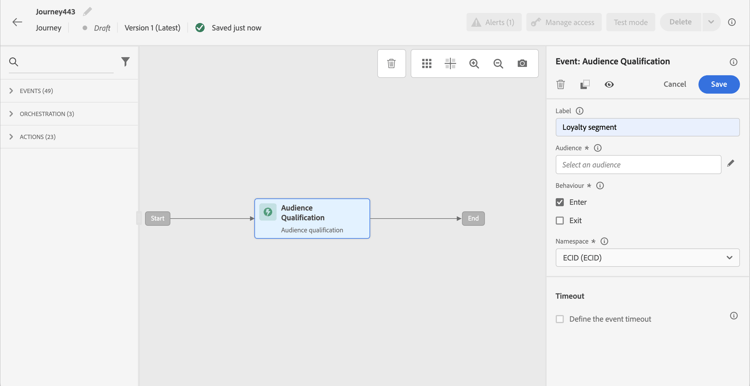
展開 事件 類別,並將 對象資格 活動放入您的畫布中。
-
將 標籤 新增至活動。 此步驟為選填。
-
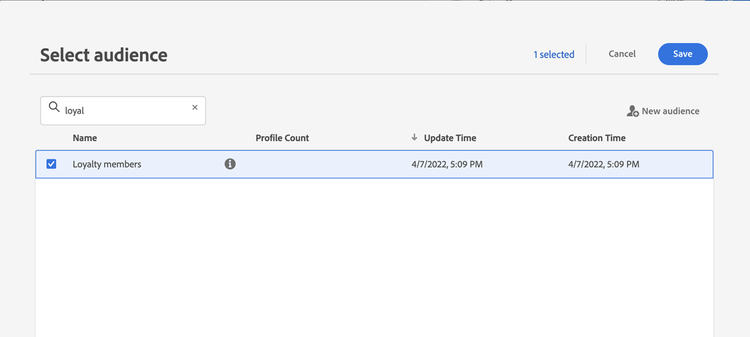
按一下 對象 欄位,然後選取您要利用的對象。
note NOTE 您可以自訂清單中顯示的欄並加以排序。 資格事件設定的
新增對象後,複製按鈕可讓您複製其名稱和ID:
{"name":"Loyalty membership","id":"8597c5dc-70e3-4b05-8fb9-7e938f5c07a3"}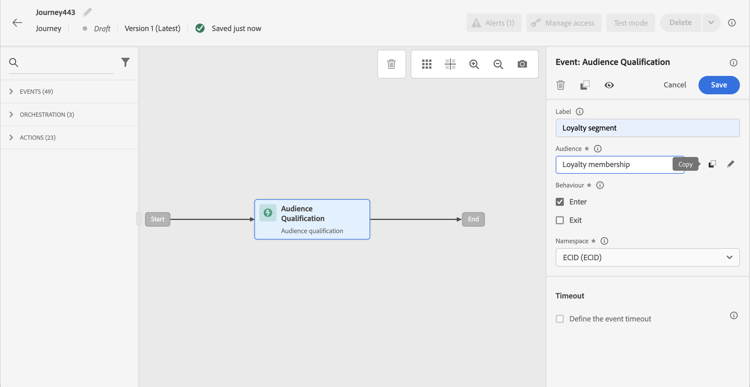
note tip TIP 若要在使用對象之前識別其評估方法,請開啟 對象 功能表、選取對象,然後檢查 評估方法 欄位 — 串流、批次或Edge。 您也可以將 評估方法 欄新增至此活動的對象清單。 評估方法會影響專案時間以及套用哪些最佳實務 — 請參閱批次對象和串流對象。 -
在 行為 欄位中,選擇您是要聆聽對象入口、出口或兩者。
note NOTE Enter和 Exit 對應至Adobe Experience Platform中的 Realized 和 Exited 對象參與狀態。
請參閱Segmentation Service檔案。 -
選取名稱空間。 只有在將事件定位為歷程的第一步時,才需要此專案。 此欄位預設會自動填入上次使用的命名空間。
note NOTE 您只能選取以人物為基礎的身分名稱空間。
名稱空間下拉式清單中沒有查閱資料表名稱空間(例如,產品查閱的ProductID)。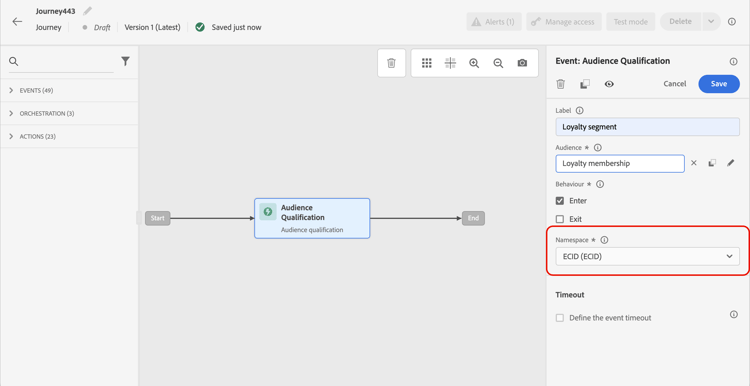
裝載包含以下內容資訊,您可在條件和動作中使用:
- 行為(入口、出口)
- 資格的時間戳記
- 對象id
在 對象資格 活動之後的條件或動作中使用運算式編輯器時,您有權存取 AudienceQualification 節點。 您可以選擇 上次資格取得時間 與狀態 (進入或退出)。
請參閱條件。
包含 對象資格 事件的新歷程在您發佈10分鐘後即可開始運作。 此間隔與專用服務的快取重新整理間隔相符。 在使用此歷程之前請等待十分鐘。
最佳做法 best-practices-segments
對象資格活動可讓符合Adobe Experience Platform對象資格或取消資格的個人立即進入歷程。
此資訊的接收速度很快。 測量顯示每秒接收10,000個事件。 規劃進入尖峰、儘可能避免尖峰,並準備您的歷程以處理尖峰。 在本節中深入了解歷程處理速率和輸送量限制。
批次對象 batch-speed-segment-qualification
針對批次對象使用「對象資格」時,請注意,入口尖峰會在每日計算時發生。 尖峰的大小視每天進入或離開對象的個人數量而定。
此外,如果批次對象是新建立並立即用於歷程中,則第一批計算可能會推動許多專案。 規劃此尖峰。
區塊會籍更新的時間 timing-segment-membership
在歷程中使用批次快照時,任何新區段會籍可能只反映在後續的快照中。 如果必須立即或當天新增區段,請考慮串流細分或驗證下一個快照是否擷取區段更新。
串流對象 streamed-speed-segment-qualification
針對串流對象使用「對象資格」時,因為評估是持續的,所以大型進入和退出尖峰的風險較低。 如果受眾定義同時符合許多客戶的資格,尖峰仍可能會發生。
避免使用具有串流細分的開啟和傳送事件。 請改用真正的使用者活動訊號,例如點選、購買或信標資料。 如需頻率或隱藏邏輯,請使用商業規則,而非傳送事件。 了解更多
請參閱Adobe Experience Platform 串流細分檔案。
為何不是所有合格的設定檔都可以進入歷程 streaming-entry-caveats
將串流對象與 對象資格 活動搭配使用時,並非所有符合對象資格的設定檔都會進入歷程。 發生此行為的原因如下:
-
已在對象中的設定檔:只有歷程發佈後新符合對象資格的設定檔才會觸發登入。 發佈前已在對象中的設定檔將不會進入。 同樣地,當串流區段使用以時間為基礎的條件 (例如「接下來8小時內的事件」)時,建立區段前已符合該條件的設定檔不會回溯評估 — 只有區段啟用後資料變更的設定檔才會根據該條件進行評估。
-
歷程啟用時間:當您發佈歷程時,對象資格活動最多需要 10分鐘 才能變成作用中並開始聆聽設定檔專案及結束。 進一步瞭解歷程啟用。
-
從對象快速退出:如果設定檔符合對象資格,但在觸發歷程專案之前退出,則該設定檔可能不會進入歷程。
-
資格與歷程處理之間的時間:由於Adobe Experience Platform的分佈性質,可能會出現時間差距。 在歷程處理資格事件之前,設定檔可以符合資格。
建議:
如何避免多載 overloads-speed-segment-qualification
以下是一些避免讓歷程中所運用的系統過載的最佳實務(資料來源、自訂動作、管道動作活動):
-
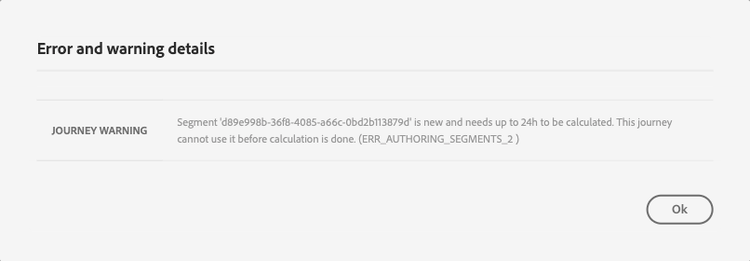
在 對象資格 活動中建立批次對象後,請勿立即使用批次對象。 這會避免第一個計算尖峰。 如果您即將使用從未計算的對象,歷程畫布中會顯示黃色警告。
-
為歷程中使用的資料來源和動作設定上限規則,以避免其過載。 進一步瞭解Journey Orchestration檔案。 請注意,上限規則沒有重試。 如果您需要重試,請核取方塊 在逾時或在條件或動作中發生錯誤 時新增替代路徑,以在歷程中使用替代路徑。
-
在生產歷程中使用對象之前,請每天評估符合此對象資格的個人數量。 若要這麼做,請檢查 對象 功能表、開啟對象,然後檢視 隨著時間變化的設定檔 圖表。
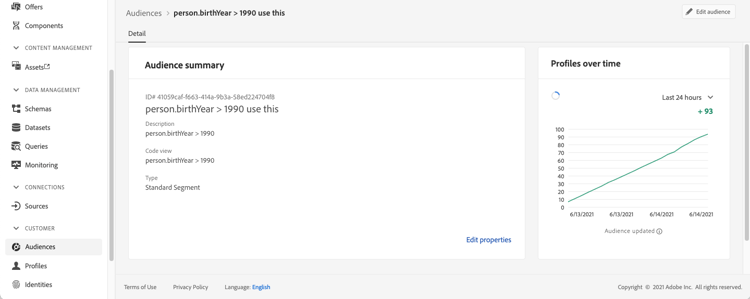
在本節中進一步瞭解進入率限制和輸送量。
護欄與限制 audience-qualification-guardrails
請遵循以下護欄和建議,以建置對象資格歷程。 瞭解哪些活動會計入沙箱對象資格限制。 另請參閱對象資格最佳做法。
-
對象資格歷程主要設計用於串流對象。 此組合可確保提供更出色的即時體驗。 強烈建議在對象資格活動中使用串流對象。
不過,如果您想要在串流對象或批次對象中使用批次擷取型屬性以進行「對象資格」歷程,請考慮對象評估/啟用的時間範圍。 使用批次擷取屬性的批次對象或串流對象在細分工作完成約 2小時 後,即可在 對象資格 活動中使用。 此工作每天會在Adobe組織管理員定義的時間執行一次。
-
Adobe Experience Platform個對象會每天計算一次(批次個對象),或即時計算(針對 串流 個對象,使用Adobe Experience Platform的「高頻對象」選項)。
- 如果對選取的對象進行串流,屬於此對象的個人可能會即時進入歷程。
- 如果對象是批次,則新符合此對象資格的人員可能會在Adobe Experience Platform上執行對象計算時進入歷程。
最佳做法是在 對象資格 活動中使用串流對象。 若是批次使用案例,請使用 讀取對象 活動。
note NOTE 由於使用構成工作流程和自訂上傳建立的對象批次性質,無法在「對象資格」活動中鎖定這些對象。 此活動中只能運用使用區段定義建立的對象。 -
體驗事件欄位群組不能用於以讀取對象、對象資格或 商業事件 活動開始的歷程。
-
在歷程中使用 對象資格 活動時,該活動最多可能需要10分鐘才會生效,並聆聽進入或退出對象的設定檔。
作法影片 video
透過此影片瞭解對象資格歷程的適用使用案例。 瞭解如何使用對象資格建立歷程,以及套用哪些最佳實務。
This section contains structured knowledge intended to support interpretation, retrieval, and question answering related to this topic.
For complete understanding, this information should be combined with the documentation on this page. Neither source is intended to stand alone; the page describes the feature, while this section provides additional context that helps disambiguate terminology, intent, applicability, and constraints.
- TL;DR: This page explains how to configure and use the Audience Qualification event activity in Journey Optimizer to trigger or advance profiles in a journey when they enter or exit an Adobe Experience Platform audience.
Intents:
- Configure an Audience Qualification event activity to trigger journey entry on audience membership changes
- Select the correct behavior (entrance, exit, or both) for an Audience Qualification activity
- Apply best practices to avoid overloading systems when using batch or streaming audiences
- Understand why some qualified profiles may not enter the journey and how to mitigate this
- Use the AudienceQualification node payload in downstream conditions and actions
Glossary:
- Audience Qualification event: A journey event activity that listens for profile entrances into or exits from an Adobe Experience Platform audience and triggers journey progression (product-specific)
- Behaviour (Enter/Exit): The setting that controls whether the journey reacts to profiles joining (“Realized”), leaving (“Exited”), or both states of an audience (product-specific)
- Streaming audience: An audience evaluated continuously in real time using the High Frequency Audiences option; recommended for Audience Qualification activities (product-specific)
- Batch audience: An audience recalculated once per day; introduces a daily peak of profile entries and requires a 2-hour readiness window after segmentation job completion (product-specific)
- AudienceQualification node: The context node available in the expression editor after an Audience Qualification activity, exposing last qualification time and status (product-specific)
- Edge-to-Hub propagation: The process by which a streaming segment membership evaluated at the Edge is synced to Hub before the journey can act on it; typically takes 15–30 minutes (product-specific)
Guardrails:
- A new Audience Qualification journey takes up to 10 minutes to become active after publishing
- Batch or streaming audiences using batch-ingested attributes become ready approximately 2 hours after the segmentation job completes
- Only audiences created using segment definitions can be used; composition workflow or custom upload audiences are not supported
- Experience event field groups cannot be used in journeys starting with Audience Qualification
- Only people-based identity namespaces are available for the namespace field; lookup table namespaces are not supported
- Profiles already in the audience before journey publication will not retroactively enter the journey
- Edge-to-Hub propagation for streaming segments typically takes 15–30 minutes
Terminology:
- Canonical name: Audience Qualification event — Acronym: none — variants: segment qualification, audience qualification activity
- Synonyms: “Enter” = “Realized” ; “Exit” = “Exited”
- Do not confuse: “Audience Qualification” ≠ “Read Audience” (Audience Qualification reacts to real-time membership changes; Read Audience processes all members at a scheduled time)
FAQ:
- Q: When does a newly published Audience Qualification journey start processing entries? — It takes up to 10 minutes after publication for the activity to become active and start listening for profile entries and exits.
- Q: Why are profiles not entering my Audience Qualification journey? — Common causes include: profiles were already in the audience before publishing, the 10-minute activation window has not elapsed, or the Edge-to-Hub propagation (15–30 min) for streaming segments has not completed yet.
- Q: Can I use a batch audience in an Audience Qualification activity? — Yes, but it is not recommended. Batch audiences generate a daily entry peak and are not suited for real-time use cases; use a Read Audience activity instead for batch scenarios.
- Q: What data is available in the AudienceQualification payload? — The payload includes the behavior (entrance or exit), the timestamp of qualification, and the audience ID.
- Q: Can I use audiences created from composition workflows in an Audience Qualification activity? — No, only audiences created using segment definitions are supported in this activity.