在此頁面上:瞭解設定檔入口和重新入口如何針對每種歷程型別運作,以便您可以控制設定檔何時及多久進入您的歷程。
設定檔入口管理取決於歷程型別。
歷程型別 types-of-journeys
透過Adobe Journey Optimizer,您可以建立下列型別的歷程:
在所有歷程型別中,設定檔無法在同一歷程中同時出現多次,適用於歷程的所有作用中版本。 若要檢查某人是否在歷程中,則會將設定檔身分識別當作金鑰。 系統不允許相同的索引鍵(例如索引鍵CRMID=3224)位於相同歷程中的不同位置。
歷程處理率 journey-processing-rate
歷程處理率受多個因素影響,這些因素決定設定檔如何流經歷程:
設定檔進入率 profile-entrance-rate
設定檔輸入歷程的方式及其預期費率取決於使用的第一個活動:
-
讀取對象歷程(批次案例,您定位設定檔對象並觸發該完整對象的歷程):最大為20,000 TPS (每秒交易數)。 這是 沙箱層級 可用的配額。 如果在該沙箱中同時執行多個歷程,則可能無法實現20,000 TPS。 請將此最大情況視為最佳情況。
-
對象資格歷程(單一案例,您想在設定檔符合或不符合串流對象資格時觸發歷程):最大為5,000 TPS。 請注意,這是以事件開始的歷程的共用限制,也會在 組織層級 的歷程間共用。
-
單一事件歷程(單一案例,您想要在從設定檔發出事件時觸發歷程):與上述相同,都共用相同的5,000 TPS限制。 有關歷程事件輸送量的詳細資訊,請參閱本節。
-
業務事件歷程(單一對批次情境,因為業務事件後面一律有讀取對象):業務事件會計入5,000 TPS配額。 後續的讀取對象活動與以讀取對象(20,000 TPS)開始的歷程具有相同的限制。
歷程中的事件和受眾資格 events-inside-journeys
進入之後,您可以在歷程中使用 單一事件 或 對象資格 活動。 設定檔可以輸入上述4種歷程型別中的任一種,並等待事件發出或等待此設定檔符合對象資格。 這些單一事件和受眾資格將計入上述配額中。 例如:如果您以讀取對象(最多20,000 TPS)開始歷程,並在之後有事件,則此事件最多為5,000 TPS。
等待活動影響 wait-activities-impact
歷程中的 等待 活動也會影響在特定時間流經歷程的個人檔案數。 等待活動通常以相對時間為基礎(例如:在進入等待2小時後退出,因此所有設定檔都不會同時退出)。 不過,如果在該等待活動上定義了固定時間,則多個設定檔可能會同時退出該歷程。 不建議使用此做法。 然後可以看到大量磁碟區,並且從此點開始TPS可以超過20,000 TPS。
動作活動 action-activities-impact
最後,動作活動可能會受到來自歷程的設定檔載入影響,也可能會影響處理速率。 這些包括電子郵件、行動訊息和推播等原生頻道,加上自訂動作、跳至其他歷程和更新設定檔活動。 例如,以具有較高回應時間的外部端點為目標的自訂動作將會減慢歷程處理速度。
對於自訂動作,預設的上限為每分鐘300,000次呼叫,這可以用自訂上限原則變更。 在本節中進一步瞭解自訂動作上限。
單一事件和受眾資格歷程 entry-unitary
在 單一事件 和 對象資格 歷程中,您可以啟用或停用重新進入:
-
如果啟用重新進入,設定檔可以進入歷程多次,但必須完全退出歷程的上一個執行個體,才能進入。
-
如果停用重新進入,則設定檔無法在全域歷程逾時期間內多次進入相同歷程。 請參閱本章節。
依預設,歷程允許重新進入。 啟動 允許重新進入 選項時,會顯示 重新進入等待期間 欄位。 它可讓您定義允許設定檔再次進入歷程之前的等待時間。 這可防止同一事件多次錯誤觸發歷程。 預設情況下,欄位會設為 5 分鐘。 持續時間上限為90天(全域逾時)。

在重新進入期間後,設定檔可以重新進入歷程。 為避免此情況,並完全停用這些設定檔的重新進入,您可以使用設定檔或受眾資料,新增條件以測試是否已輸入設定檔。
跨歷程版本重新進入 reentrance-versions
設定檔無法在同一歷程中同時作用中多次,包括該歷程的作用中版本。
重新進入設定是在目前的歷程版本上設定,但Journey Optimizer也會檢查設定檔是否已在相同歷程的其他使用中版本中啟用。 如果設定檔仍在執行舊版,則會封鎖新專案,直到該活動執行個體結束或移除設定檔為止。
發佈新歷程版本不會將執行中的設定檔移動到新版本。 已進入先前版本的設定檔會保留在該版本,直到結束歷程為止。 如果他們稍後再次符合資格,則會輸入最新的即時版本。
範例
若要瞭解跨版本封鎖的運作方式,請考量下列順序:
- 歷程版本1為即時狀態,且設定檔已進入歷程。
- 您發佈相同歷程的第2版。
- 如果設定檔在版本1中仍處於活動狀態,則無法同時在版本2中啟動新的活動執行個體。
- 設定檔退出舊版執行個體後,即可根據歷程的重新進入設定,再次輸入最新的即時版本。
exportedsegment_existinginstance?exportedsegment_existinginstance,這通常表示設定檔在相同歷程中已經有使用中的執行個體。 當週期性或重複專案嘗試在該歷程的另一個執行個體(包括較早的有效版本)中仍處於作用中狀態時開始時,最常會發生這種情況。- 設定檔是否仍在歷程的另一個作用中版本中進行。
- 上一個週期性執行是否仍然有效。
- 歷程設計是否包括長時間等待或其他活動,以將設定檔保持作用中狀態一段長時間。
業務歷程 entry-business
在 商業歷程 中,若要允許多個商業事件執行,請在歷程屬性的 執行 區段中啟動對應的選項。
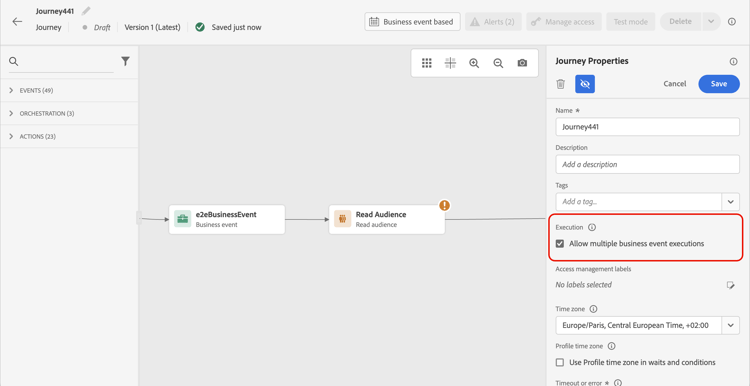
若是業務事件,對於特定歷程,第一次執行所擷取的對象資料會在1小時時段內重複使用。
個人資料可能在同一歷程中同時出現多次,但在不同業務事件的情境下會出現。
如需詳細資訊,請參閱此區段
讀取對象歷程 entry-read-audience
讀取對象歷程可以是週期性或非週期性:
-
對於非循環歷程:設定檔在歷程中只輸入一次。
-
對於循環歷程:依預設,屬於對象的所有設定檔都會在每次循環時進入歷程。 使用者必須先完成歷程,才能在另一個發生次數中重新進入。
有數個選項可用於循環讀取受眾歷程。 如需詳細資訊,請參閱在歷程中使用對象區段。
相關主題
- 歷程登入與退出條件指南 — 包含真實世界範例和最佳實務的完整指南
- 設定退出條件 — 定義設定檔應何時離開您的歷程
- 結束歷程 — 瞭解歷程如何關閉和完成
- 歷程使用案例 — 檢視登入與退出設定的完整範例
This section contains structured knowledge intended to support interpretation, retrieval, and question answering related to this topic.
For complete understanding, this information should be combined with the documentation on this page. Neither source is intended to stand alone; the page describes the feature, while this section provides additional context that helps disambiguate terminology, intent, applicability, and constraints.
- TL;DR: This page explains how profile entry management works across the four journey types in Adobe Journey Optimizer, including throughput limits, reentrance settings, and the behavior of Wait and action activities on processing rate.
Intents:
- Understand the entry behavior and throughput limits for each journey type (Unitary event, Business event, Read audience, Audience qualification)
- Enable or disable profile reentrance and configure the reentrance wait period
- Allow multiple business event executions for a Business journey
- Identify how Wait activities and action activities affect journey processing rate
- Ensure a profile is not present in the same journey at the same time
Glossary:
- Reentrance: The ability for a profile to enter the same journey again after previously exiting it; configurable with a wait period (product-specific)
- Reentrance wait period: The minimum time that must pass before a profile can re-enter a journey; default is 5 minutes, maximum is 90 days in journey properties (product-specific)
- TPS (Transactions Per Second): The throughput rate at which profiles can enter or be processed in a journey (product-specific)
- Unitary event journey: A journey triggered by a single event associated with one profile (product-specific)
- Read audience journey: A journey that processes a batch of profiles belonging to a defined audience, either once or on a recurring schedule (product-specific)
- Business event journey: A journey triggered by a business event that targets an audience, creating one journey instance per profile (product-specific)
- Audience qualification journey: A journey triggered when a profile enters or exits a streaming audience in real-time (product-specific)
Guardrails:
- A profile cannot be present multiple times in the same journey at the same time across all active versions.
- Read audience journeys: maximum 20,000 TPS (sandbox-level quota; shared across all concurrent Read Audience journeys in the same sandbox)
- Audience qualification and Unitary event journeys: maximum 5,000 TPS (org-level quota; shared with each other across all sandboxes in the org)
- Business events count toward the 5,000 TPS org-level quota; the subsequent Read audience activity shares the 20,000 TPS sandbox-level quota
- Default reentrance wait period is 5 minutes; maximum configurable value is 90 days in journey properties
- Fixed-time Wait activities can cause profile surges exceeding 20,000 TPS and are not recommended.
- Custom action default capping is 300,000 calls per minute.
- For Business journeys, audience data from the first execution is reused for 1 hour.
Terminology:
- Canonical name: Profile entrance management — Acronym: n/a — variants: profile entry management, journey entry
- Synonyms: “reentrance” = “re-entry”
- Do not confuse: “Unitary event journey” ≠ “Audience qualification journey” — both are unitary scenarios but triggered differently (event emission vs. audience membership change)
FAQ:
- Q: Can a profile enter the same journey twice simultaneously? — No, the system uses the profile identity as a key and prevents the same profile from being at different places in the same journey at the same time.
- Q: What is the default reentrance wait period? — 5 minutes, configurable up to a maximum of 90 days in journey properties.
- Q: How many profiles per second can a Read audience journey process? — Up to 20,000 TPS at sandbox level, though this maximum may not be achievable if multiple journeys run simultaneously in the same sandbox.
- Q: What happens to throughput after a Wait activity with a fixed time? — Multiple profiles may exit the wait simultaneously, potentially exceeding 20,000 TPS; relative-time Wait activities are recommended to avoid this.
- Q: Can a profile appear in a Business journey multiple times at the same time? — Yes, but only in the context of different business events.