[有限可用性]{class="badge informative"}

與共同作業人員建立連線 establishing-connections

AVAILABILITY
Adobe Real-Time Customer Data Platform (CDP) Collaboration目前在美國、加拿大、澳洲、紐西蘭以及歐洲、中東和非洲等地推出,全球即將推出。 請聯絡您的 Adobe 代表以取得更多資訊。瞭解如何開始

共同作業人員必須建立連線,才能共同處理行銷活動。 此連線可讓他們啟用對象、建立專案,以及執行行銷活動績效報表。

系統會根據您選擇的共同作業模式來建立連線。 Collaboration支援兩種關鍵共同作業模式:廣告商對發佈商和品牌對品牌。 若要深入瞭解這些模式,請參閱使用案例指南。

若要瞭解如何建立連線,請閱讀以下與您的共同作業模式對應的章節:

廣告商與發佈商的連線 advertiser-to-publisher-connection
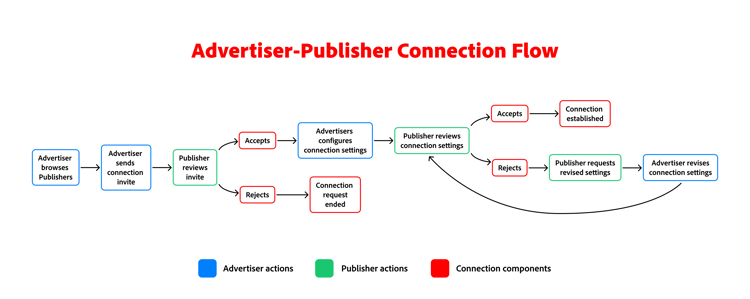
廣告商 — 發佈商連線程式的高階圖表。{modal="regular"}

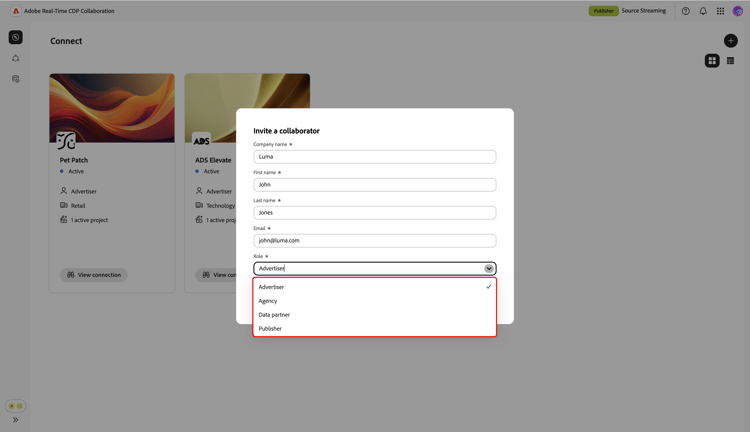
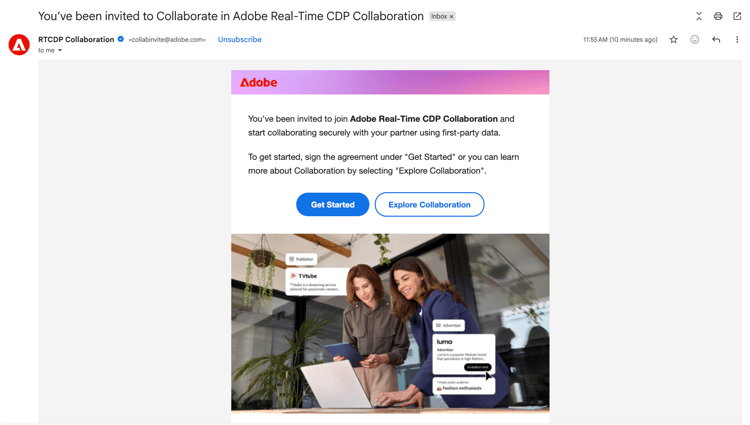
在廣告商對發佈者模式中,廣告商會透過​ 探索共同作業人員 ​工作區發現他們想要合作的發佈者,並傳送連線邀請。 發佈者接著會稽核並接受邀請,允許廣告商提出連線設定。 發佈者接受連線設定後,連線就會建立,兩個共同作業人員就可以開始一起處理專案。

高層級概觀

若要在廣告商與發佈商之間建立連線,需執行下列步驟:

  1. 探索發佈者:廣告商可識別要合作的潛在共同作業人員。
  2. 傳送邀請:廣告商傳送連線邀請給選取的發行者。
  3. 接受邀請:發行者稽核並接受邀請。
  4. 設定連線設定:廣告商會設定連線設定,並將設定傳送給發佈者進行稽核。
  5. 確認連線設定:發行者檢閱連線設定,然後接受或拒絕連線設定。 如果接受,則會建立連線。 若遭拒絕,發佈者可針對產品外部的修訂提供意見回饋。 然後廣告商可以修訂設定並重新傳送以進行稽核。

接受連線設定後,連線即建立,共同作業人員已準備好建立專案以開始共同作業行銷活動。

品牌對品牌連線 brand-to-brand-connection
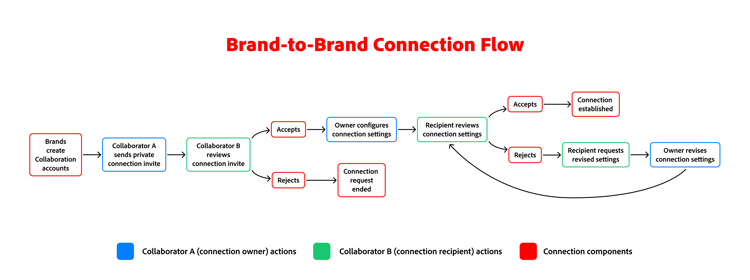
品牌對品牌連線程式的高階圖表。{modal="regular"}

TIP
本指南說明廣告商對發佈商和品牌對品牌共同作業模式的連線程式。 若要瞭解如何與廣告平台連線,請參閱連線總覽指南中的廣告商與廣告平台連線區段。

CONNECT connect

連線​工作區可讓您管理與共同作業人員的連線、傳送連線邀請,以及廣告商可瀏覽發佈者目錄。 工作區分為兩個主要標籤:

探索協作者 discover-collaborators

IMPORTANT
只有廣告商可以使用​ 探索共同作業人員 ​工作區來探索發佈者。 若要瞭解如何與共同作業人員連線,而不論其角色為何,請閱讀品牌對品牌連線區段。

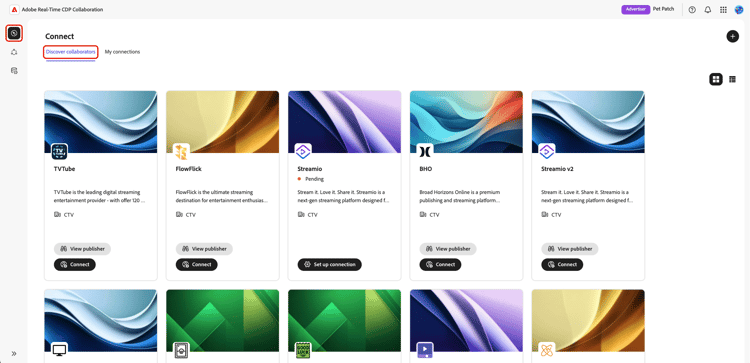
若要探索發行者,請瀏覽至​ 連線 ​索引標籤中的​ 探索共同作業人員 ​工作區。 在這裡,您可以使用工作區底部的分頁控制項,瀏覽可用的發佈者清單。 若要深入瞭解​ 探索共同作業人員 ​工作區,請參閱探索共同作業人員指南。

探索共同作業人員工作區顯示可用的發行者清單。{modal="regular"}

傳送邀請 send-invite

IMPORTANT
本節說明廣告商透過​ 探索共同作業人員 ​工作區傳送連線邀請給發佈者的程式。 若要瞭解如何在品牌之間建立連線,而不論其角色為何,請閱讀品牌對品牌連線區段或造訪私人連線邀請區段。

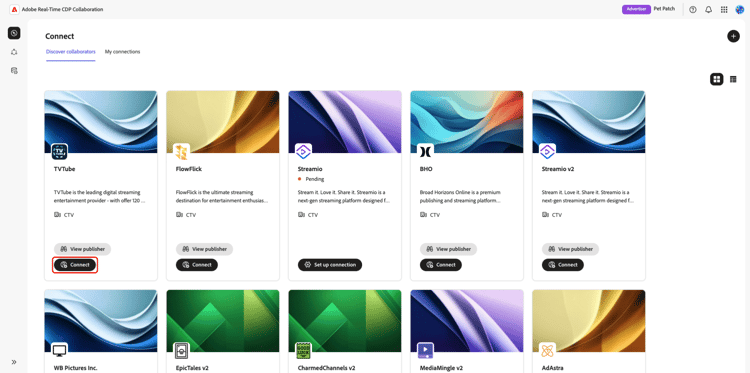
識別要共同作業的發行者後,請選取發行者卡片上的​ 連線 ​選項。 這個動作會啟動連線程式。

在Discover共同作業人員工作區的特定發行者上反白顯示連線選項。{modal="regular"}

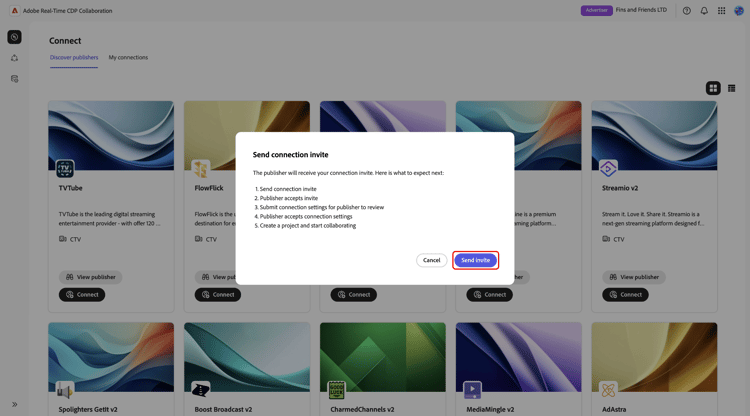
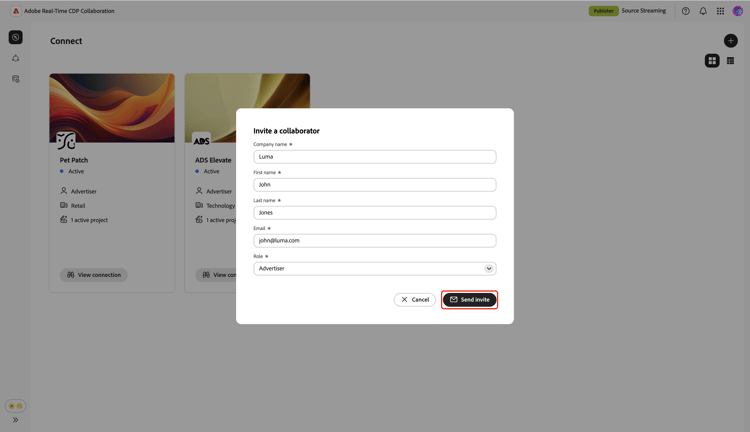
會出現一個對話方塊,提示您傳送連線邀請給發行者。 選取​ 傳送邀請 ​以繼續。

反白顯示傳送邀請按鈕的傳送連線邀請對話方塊。{modal="regular"}

NOTE
如果您想要與產品外部的發行者聯絡,可以使用私人連線邀請選項。 若要深入瞭解,請參閱私人連線邀請區段。

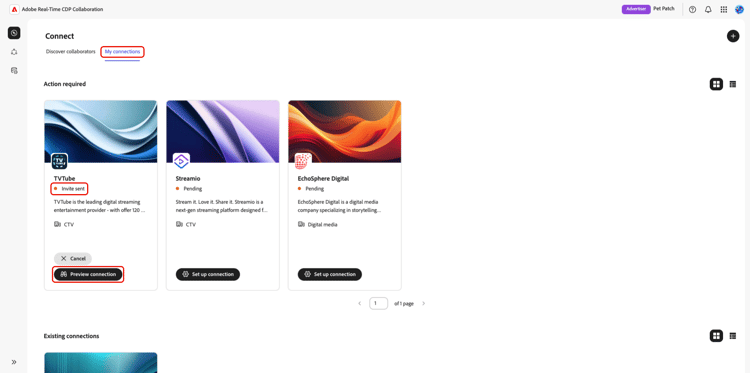
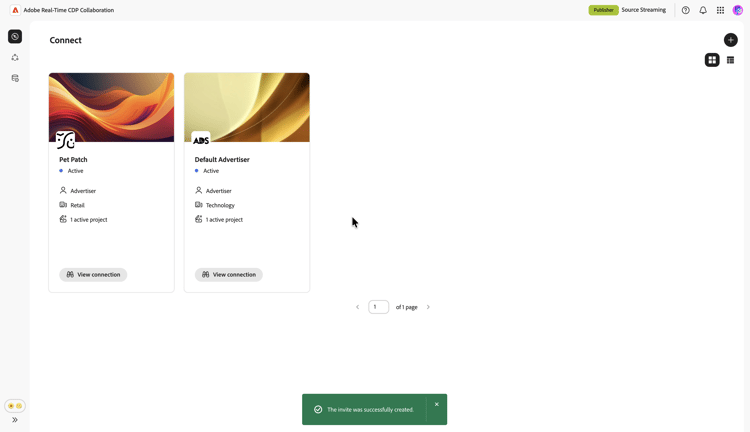
擱置邀請會顯示在​ 需要動作 ​區段的​ 我的連線 ​索引標籤中。 連線狀態顯示為​已傳送邀請。 您可以選取​ 預覽連線 ​來預覽連線設定,但只有發行者接受邀請後,才能編輯連線設定。

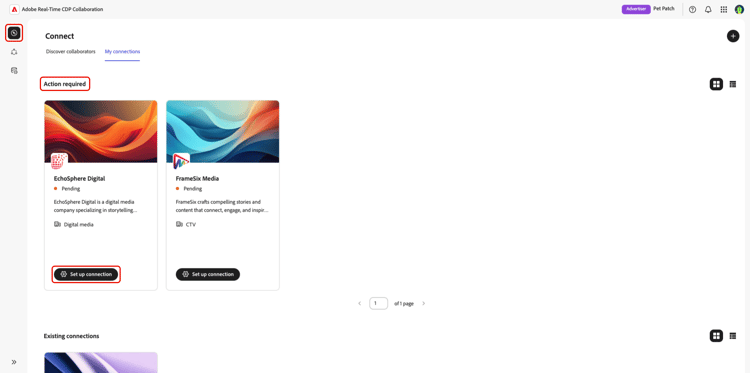
擱置的連線會顯示在需要動作區段的我的連線工作區中。{modal="regular"}

私人連線邀請 private-connection-invite

私人連線邀請可讓您使用​連線代碼,與產品外部的合作者連線。 若要建立私人連線,您必須從產品外部要連線的共同作業人員取得​連線代碼。 然後,您可以使用此程式碼傳送私人連線邀請給​ 連線 ​工作區中的共同作業人員。

連接代碼 connect-code

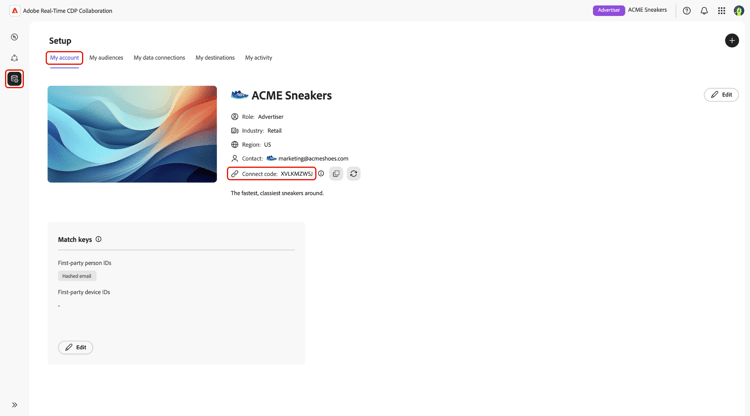
在您傳送私人連線邀請之前,您想要的共同作業人員必須提供您唯一的​連線代碼。 若要尋找並複製您的​連線代碼,請瀏覽至​ 設定 ​工作區中的​ 我的帳戶 ​索引標籤。 連線代碼​會顯示在您的帳戶詳細資料中。

設定工作區中的「我的帳戶」索引標籤中,反白顯示Connect程式碼。{modal="regular"}

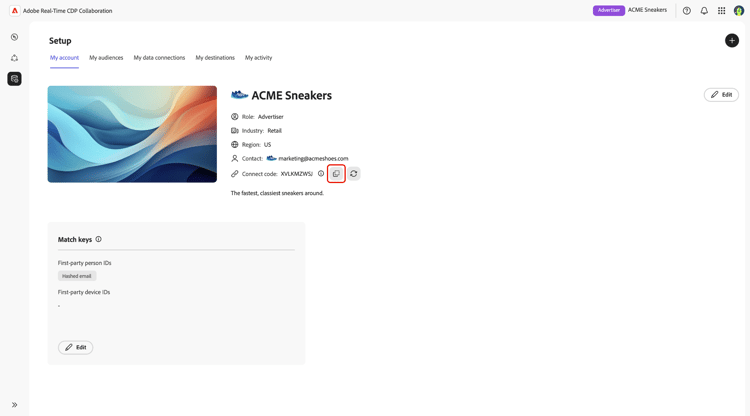
選取​ Connect程式碼 ​旁的復製圖示( 復製圖示)以將其複製到剪貼簿。 然後,您便可以在產品外部將此程式碼與您的共同作業人員共用。

反白顯示復製圖示的Connect程式碼。{modal="regular"}

重新整理連執行緒式碼 refresh-connect-code

您可以隨時重新整理您的​連線代碼。 重新整理程式碼會產生新的唯一程式碼,供您與共同作業人員共用。 如果您基於安全考量想讓先前的程式碼失效,這個方法很有用。 使用舊程式碼建立的任何連線都將保持作用中,但新的共同作業人員需要使用新程式碼與您連線。

IMPORTANT
在擱置邀請期間重新整理您的​ 連執行緒式碼 ​可能會使邀請無法被接受。 如果您重新整理程式碼,您的共同作業人員可能需要使用新程式碼重新傳送私人連線邀請。

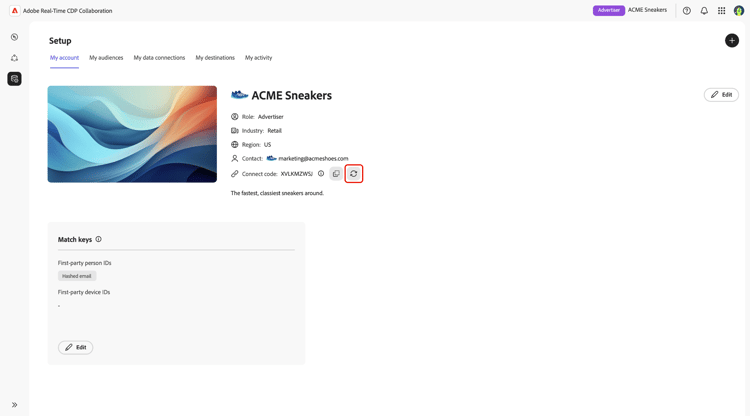
若要重新整理您的​連線代碼,請選取​ 連線代碼 ​旁的重新整理圖示( 重新整理圖示)。

反白顯示重新整理圖示的Connect程式碼。{modal="regular"}

IMPORTANT
在引入​ 連線代碼 ​功能之前建立的任何帳戶將不會有產生的連線代碼,而且連線欄位將顯示為​無法使用。 使用重新整理選項來產生新的連線代碼。

傳送私人連線邀請 send-private-connection-invite

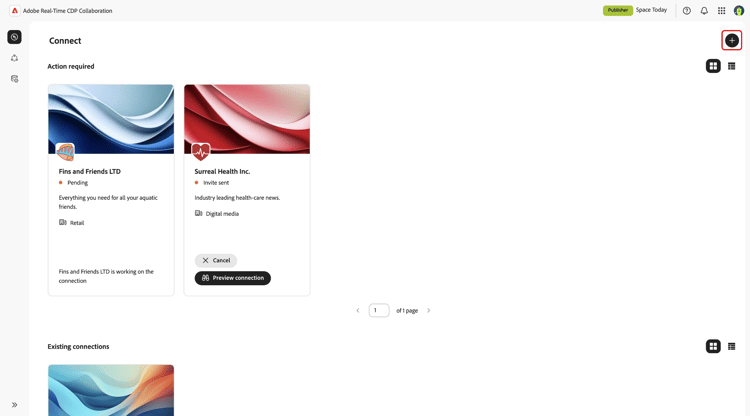
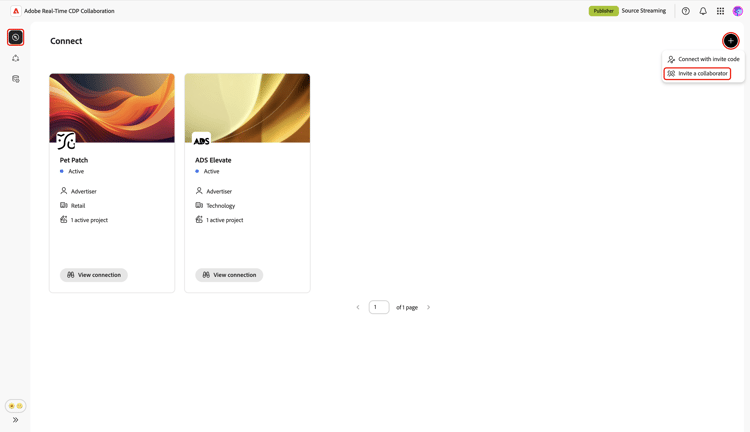
從共同作業人員取得​ 連線代碼 ​後,您就可以傳送私人連線邀請。 若要這麼做,請導覽至​ 連線 ​工作區,並選取右上角的加號圖示( 加號圖示)。

連線工作區中反白的加號圖示。{modal="regular"}

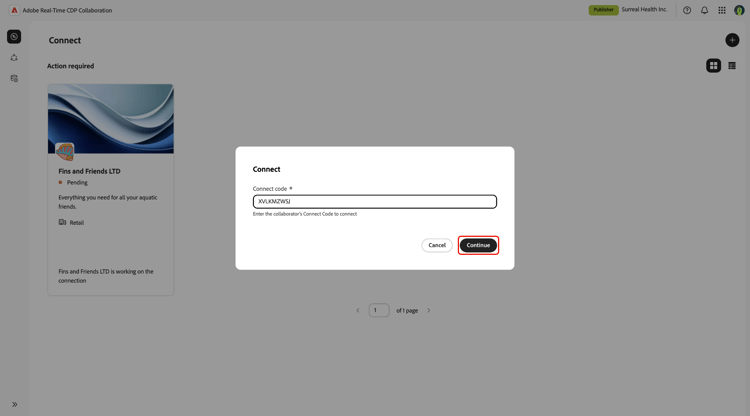
出現​ 連線 ​對話方塊,提示您輸入要連線的共同作業人員的​連線代碼。 將程式碼貼到文字欄位中,並選取​ 繼續 ​以繼續。

已填入連線程式碼欄位且繼續選項反白顯示的連線對話方塊。{modal="regular"}

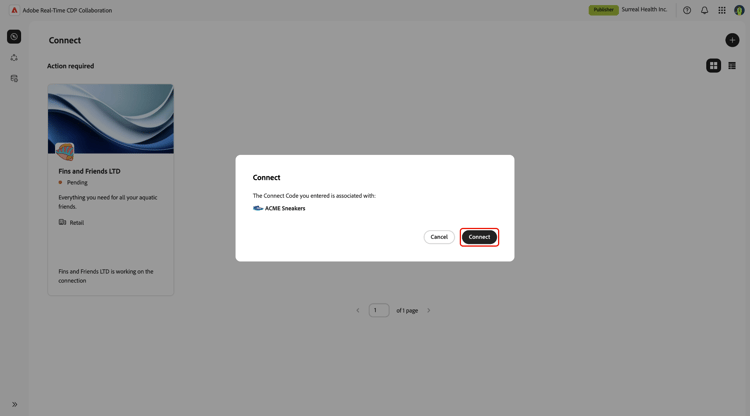
接著,連線​對話方塊會顯示與程式碼關聯的共同作業人員,讓您確認連線的是正確的共同作業人員。 如果共同作業人員正確,請選取​ 連線 ​以傳送私人連線邀請。

顯示連線對話方塊,其中顯示共同作業程式詳細資料,並反白顯示連線選項。{modal="regular"}

接受邀請 accept-invite

TIP
討論連線程式時,所有者​和​ 收件者 ​之間會有區別。 擁有者是透過傳送邀請來啟動連線的共同作業人員,而收件者是接收及檢閱邀請的共同作業人員。

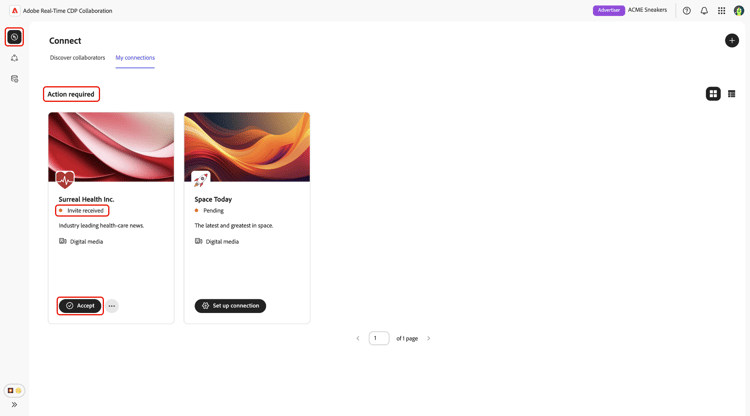
在擁有者可以設定連線設定之前,收件者必須接受連線邀請。 若要這麼做,請瀏覽至​ 連線 ​工作區,並在​ 需要動作 ​區段中尋找擱置的連線。 連線狀態顯示為​收到邀請。 選取​ 接受 ​以接受邀請。

會顯示擱置的連線。連線工作區的需要動作區段會反白顯示接受選項。{modal="regular"}

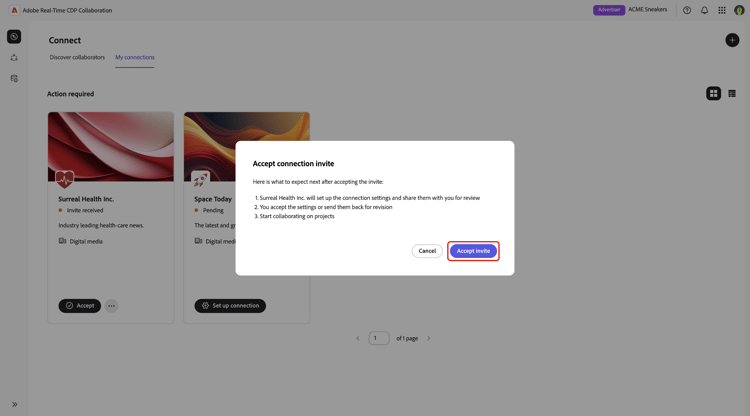
會出現對話方塊,提示您接受邀請。 選取​ 接受邀請 ​以繼續。

​ Accept連線邀請對話方塊中反白顯示Accept邀請選項。{modal="regular"}

連線的狀態變更為​擱置中。 擁有者現在可以設定連線設定。

設定連線設定 configure-connection-settings

連線設定會定義兩個共同作業人員之間的術語。 這些設定包括使用案例、比對索引鍵、信用分割和法律協定。 Collaborators connecting with advertisers can also add advertiser names to the connection settings, which will be used when creating projects.

After the recipient accepts the invite, the owner can configure the connection settings. To do this, navigate to My connections and find the pending connection in the Action required section. Select Set up connection to configure the connection settings.

The Connect workspace with the Set up connection option highlighted in the Action required section.{modal="regular"}

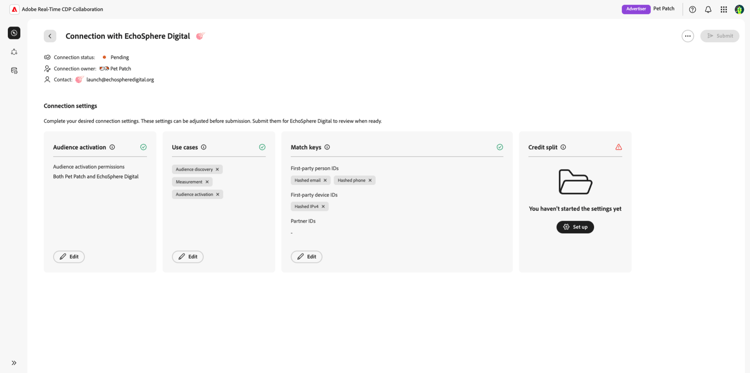
The connection settings workspace appears, allowing you to configure the various settings for the connection.

The connection settings workspace.{modal="regular"}

連線設定 connection-settings

You can configure the following connection settings:

Audience Activation audience-activation
IMPORTANT
Any connections created before the Audience activation feature was introduced will automatically have the audience activation setting set to the connection owner. If you want to allow both collaborators to activate audiences, you will need delete your current connection and create a new one with the updated settings.

Audience activation allows you to select which collaborator can activate audiences within the connection. Audience activation will only be an option if the Audience activation use case is selected. If you choose to remove the use case during the connection process, the audience activation setting will be removed from the connection settings. To learn more about audience activation, see the activate guide.

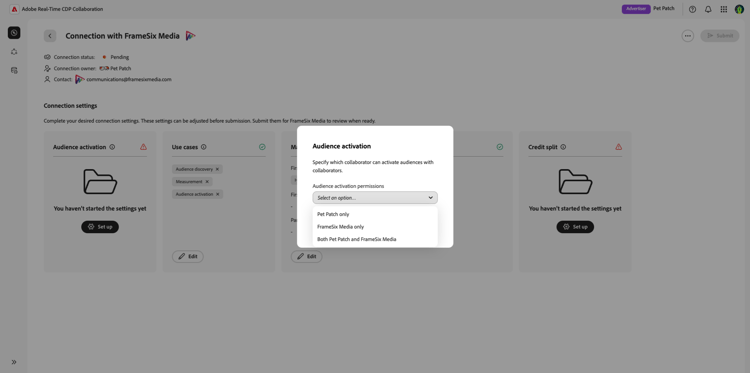
To set up audience activation, select Set up in the Audience activation section. Use the dropdown menu to specify which collaborator can activate audiences. You can choose a single collaborator or allow both collaborators to activate audiences.

The Audience activation dialog with options in the connection settings workspace.{modal="regular"}

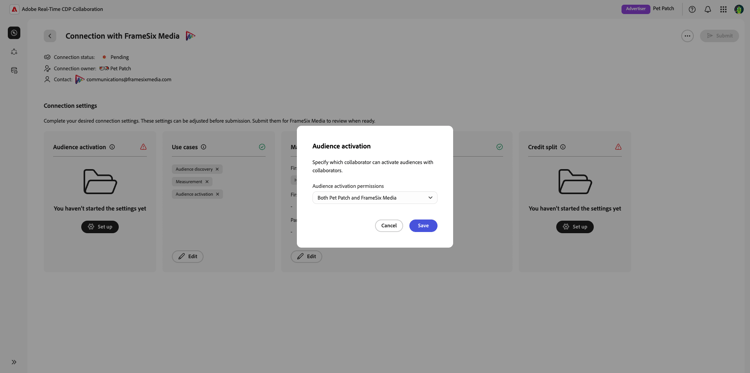
When you’re done, select Save to save your changes.

The Audience activation dialog with the Save option in the connection settings workspace.{modal="regular"}

使用案例 use-cases

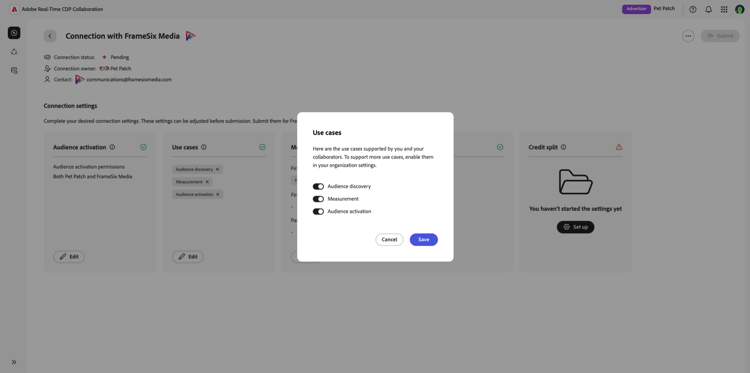
Use cases are automatically populated with all available options. Selected use cases determine which views and options are available within your projects. To learn more, read the project use cases guide.

To customize your use cases, select Edit in the Use cases section and turn off any you don’t wish to include in any projects with your collaborator. When you’re done, select Save to save your changes.

The Use cases settings in the connection settings workspace.{modal="regular"}

比對索引鍵 match-keys
IMPORTANT
When activating audiences where multiple match keys are used, if one (or more) match key has no overlaps, no audience counts, or falls below threshold, the entire activation will fail. Ensure your audiences have sufficient overlap and meet the minimum threshold of 1000 IDs across all match keys before activating.

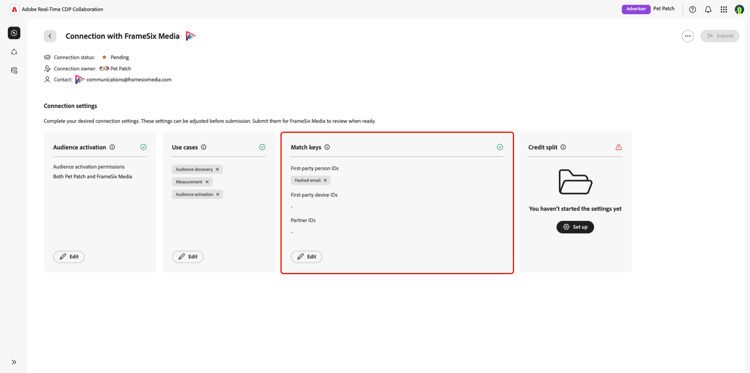
Match keys are automatically populated with the common match keys that you and your collaborator selected while setting up your accounts. Only match keys that both you and your collaborator selected and have in common will appear.

The connection settings workspace with the Match keys section highlighted showing the common match keys.{modal="regular"}

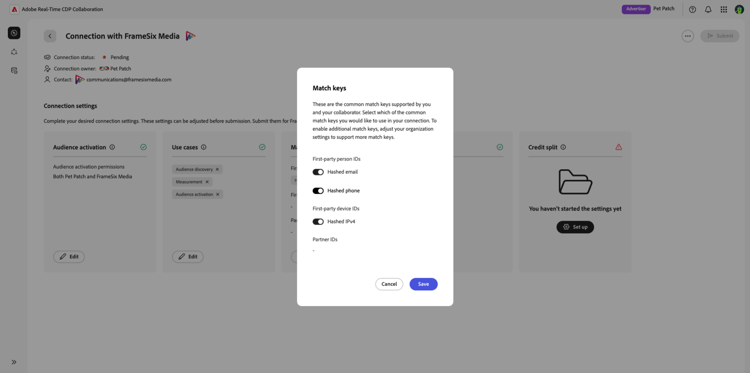
When the connection owner is setting up the connection settings, they can edit their account match keys to include additional match keys. After toggling on more match keys in your account settings, those match keys will be available to toggle on in connection settings if your collaborator has also selected them. Match keys added once the connection process has begun will not automatically populate, and must be manually toggled on.

To customize your match keys, select Edit in the Match keys section and toggle off any match keys you don’t want to use in this connection. When you’re done, select Save to save your changes.

The connection settings workspace with the Match keys section dialog open showing a toggled off match key.{modal="regular"}

IMPORTANT
Once your collaborator has accepted the connection settings, the match keys will be locked in and cannot be changed.
點數分割 credit-split

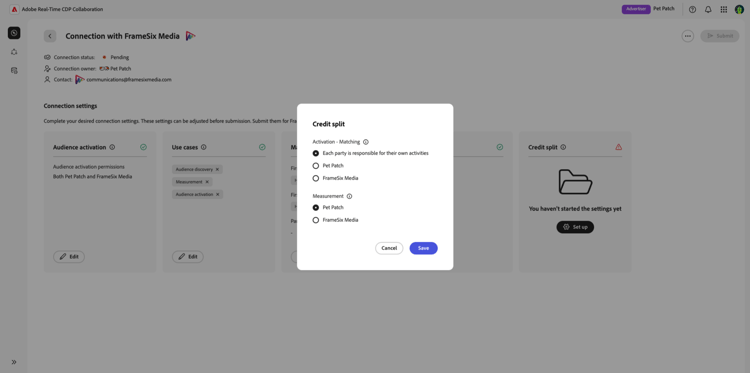
Use the credit split section to determine which of the two collaborating parties will cover the costs for the activities. Credit split options are determined by the selected use cases for the connection. While the Measurement use case requires one party to cover the costs, the Activation - Matching use case gives an additional option to have each party cover their own costs. For information on the breakdown of costs, read the credit activity types guide.

NOTE
Audience - Egress is always covered by the the collaborator that receives the audience, therefore no selection is required.

To set up the credit split, select Edit in the Credit split section. You can then select the appropriate options for each use case. When you’re done, select Save to save your changes.

The Credit split dialog with options in the connection settings workspace.{modal="regular"}

廣告商名稱 advertiser-names
NOTE
This option may appear during the connection settings configuration or the review of the connection settings, depending on the who initiates the connection.

If you are a publisher forming a connection with an advertiser, you can choose to add advertiser names in the connection settings. This allows you to add multiple names by which the advertiser is known to you in your systems. 如果廣告商出現在多個地理位置,或在不同內容中以不同的名稱識別,這會特別有用。 稍後,當您建立專案時,您可以從連線設定中所設定的名稱清單中選取適當的廣告商名稱。
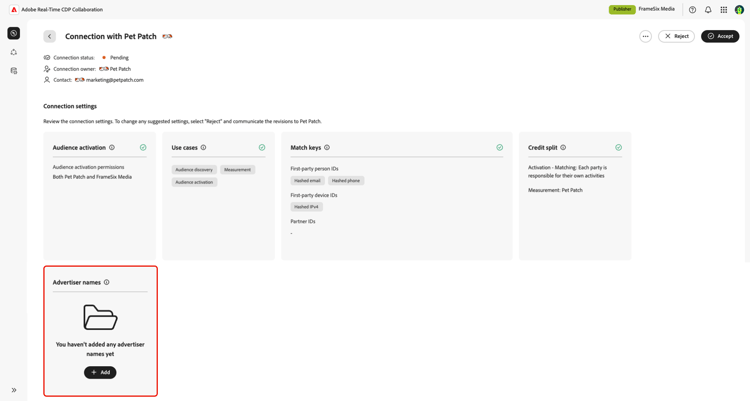
連線設定工作區中的廣告商名稱。{modal="regular"}

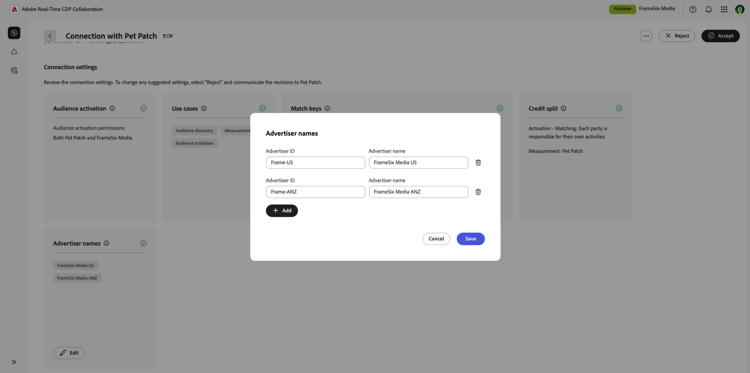
若要新增廣告商名稱,請在​ 廣告商名稱 ​區段中選取​編輯。 然後,您可以輸入在您的系統中您知道的廣告商的​廣告商ID,以及要在Collaboration中與該ID建立關聯的​廣告商名稱。 您可以選取​ 新增 ​選項,以新增多個廣告商名稱。

在連線設定工作區中使用選項的廣告商名稱對話方塊。{modal="regular"}

完成後,選取​ 儲存 ​以儲存變更。

建立專案時,廣告商名稱將根據連線期間建立的下列設定預先填入 :

  1. 未設定廣告商名稱:如果未新增廣告商名稱,Collaboration預設會使用廣告商名稱做為廣告商名稱。
  2. 一個廣告商名稱集:如果新增了單一廣告商名稱,Collaboration會自動使用該名稱作為專案的廣告商名稱。
  3. 設定多個廣告商名稱:如果新增多個廣告商名稱,您或您的共同作業人員可以在建立專案時選取任何提供的名稱。
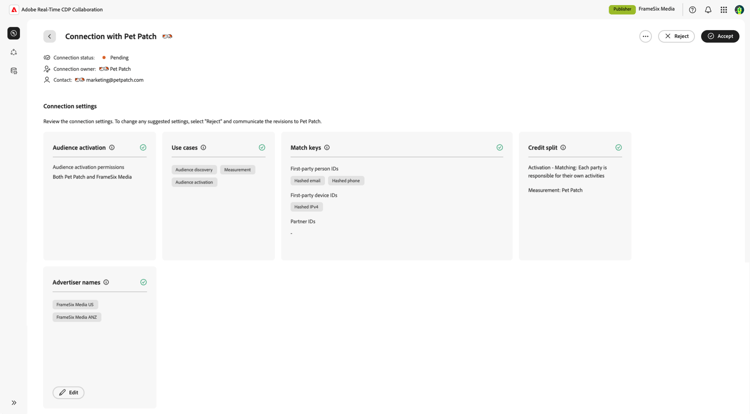
NOTE
傳送連線設定後,您將無法再新增或編輯廣告商名稱。

已填入廣告商名稱區段的連線設定工作區。

選取之後,選取​ 提交 ​將建議的設定傳送給收件者進行檢閱。

審核連線設定 review-connection-settings

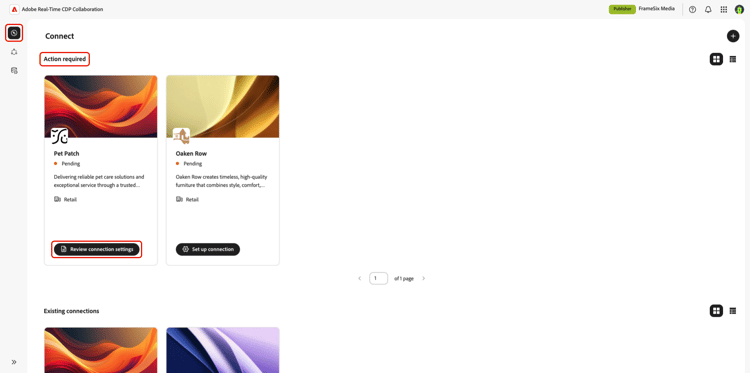
接著,收件者需要檢閱擁有者提出的連線設定。 收件者可以瀏覽至​ 連線 ​工作區中的​ 我的連線 ​索引標籤來執行此動作。 連線將顯示在​ 需要動作 ​區段中。 選取​ 檢閱連線設定 ​以檢閱建議的連線設定。

反白顯示檢閱連線設定選項的我的連線工作區。{modal="regular"}

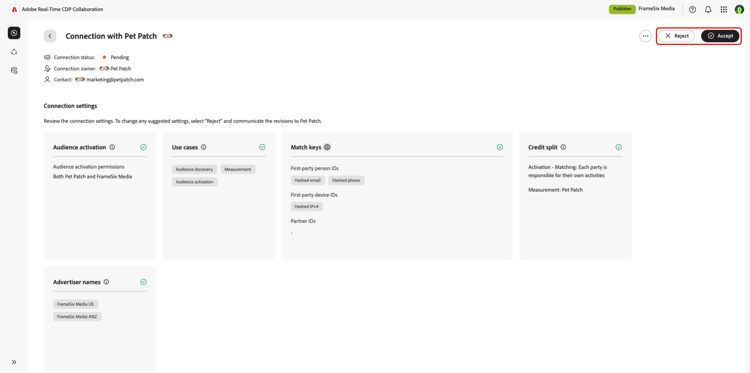
檢閱共同作業人員提議的設定。 您可以接受或拒絕連線設定。 如果您拒絕連線設定,則必須與共同作業人員溝通您要在產品外部進行的變更。 共同作業人員的連絡資訊會顯示在連線設定工作區的​ 連絡人 ​區段中。 然後,擁有者可以修訂連線設定,並重新傳送它們以供檢閱。

連線設定工作區中反白顯示接受並拒絕選項。{modal="regular"}

此外,如果您是發行者且正在連線廣告商,您現在可以在連線設定中新增廣告商名稱。 若要深入瞭解此程式,請參閱連線設定區段。

NOTE
接受連線設定後,您將無法再新增或編輯廣告商名稱。

接著,選取​ 接受 ​以繼續連線。 連線狀態將變更為​作用中,您現在可以開始共同作業專案。

後續步驟

與共同作業人員建立連線後,您和共同作業人員現在可以建立專案

recommendation-more-help
real-time-cdp-collaboration-help-guide