SQL로 일괄 처리 수집 탐색, 문제 해결 및 확인
이 문서에서는 SQL을 사용하여 수집된 일괄 처리의 레코드를 확인하고 검증하는 방법을 설명합니다. 이 문서에서는 다음 방법을 설명합니다.
- 데이터 세트 일괄 처리 메타데이터 액세스
- 일괄 처리를 쿼리하여 데이터 무결성 문제 해결 및 보장
전제 조건
이 문서에서 설명하는 개념을 이해하려면 다음 항목에 대한 지식이 있어야 합니다.
- 데이터 수집: 관련된 다양한 방법 및 프로세스를 포함하여 Experience Platform에 데이터를 수집하는 방법에 대한 기본 사항을 알아보려면 데이터 수집 개요를 참조하십시오.
- 일괄 처리 수집: 일괄 처리 수집의 기본 개념에 대해 알아보려면 일괄 처리 수집 API 개요를 참조하십시오. 특히 "배치"란 무엇이며 Experience Platform의 데이터 수집 프로세스 내에서 어떻게 작동하는지 설명합니다.
- 데이터 세트의 시스템 메타데이터: 시스템 메타데이터 필드를 사용하여 수집된 데이터를 추적하고 쿼리하는 방법에 대해 알아보려면 카탈로그 서비스 개요를 참조하십시오.
- XDM(경험 데이터 모델): XDM 스키마와 Experience Platform에 수집된 데이터의 구조 및 형식을 나타내고 확인하는 방법에 대해 알아보려면 스키마 UI 개요 및 의 스키마 구성 기본 사항을 참조하세요.
데이터 세트 일괄 처리 메타데이터 액세스 access-dataset-batch-metadata
시스템 열(메타데이터 열)이 쿼리 결과에 포함되도록 하려면 쿼리 편집기에서 SQL 명령 set drop_system_columns=false을(를) 사용하십시오. SQL 쿼리 세션의 동작을 구성합니다. 새 세션을 시작하는 경우 이 입력을 반복해야 합니다.
그런 다음 데이터 집합의 시스템 필드를 보려면 SELECT all 문을 실행하여 데이터 집합의 결과를 표시합니다(예: select * from movie_data). 오른쪽의 _acp_system_metadata 및 _ACP_BATCHID에 새 열이 두 개 있습니다. 메타데이터 열 _acp_system_metadata 및 _ACP_BATCHID은(는) 수집된 데이터의 논리적 및 물리적 파티션을 식별하는 데 도움이 됩니다.
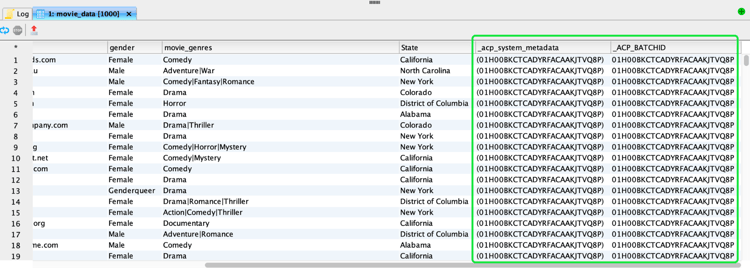
데이터가 Experience Platform으로 수집되면 들어오는 데이터를 기반으로 논리 파티션에 할당됩니다. 이 논리 파티션은 _acp_system_metadata.acp_sourceBatchId(으)로 표시됩니다. 이 ID는 데이터 배치를 처리하고 저장하기 전에 논리적으로 그룹화하고 식별하는 데 도움이 됩니다.
데이터가 처리되고 데이터 레이크로 수집되면 _ACP_BATCHID(으)로 표현되는 실제 파티션이 할당됩니다. 이 ID는 수집된 데이터가 있는 데이터 레이크의 실제 저장소 파티션을 반영합니다.
SQL을 사용하여 논리적 및 물리적 분할 영역 이해 understand-partitions
수집 후 데이터를 그룹화하고 배포하는 방법을 이해하려면 다음 쿼리를 사용하여 각 논리 파티션(_acp_system_metadata.acp_sourceBatchId)에 대해 고유한 실제 파티션(_ACP_BATCHID)의 수를 계산하십시오.
SELECT  _acp_system_metadata, COUNT(DISTINCT _ACP_BATCHID) FROM movie_data
GROUP BY _acp_system_metadata
이 쿼리의 결과는 아래 이미지에 표시됩니다.
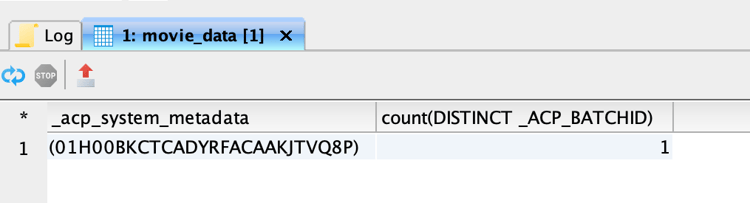
이러한 결과는 시스템이 데이터를 데이터 레이크에 배치 및 저장하는 가장 효율적인 방법을 결정하므로 입력 배치 수가 출력 배치 수와 반드시 일치하지 않는다는 것을 보여 줍니다.
이 예제에서는 CSV 파일을 Experience Platform으로 수집한 후 drug_checkout_data(이)라는 데이터 세트를 만든 것으로 가정합니다.
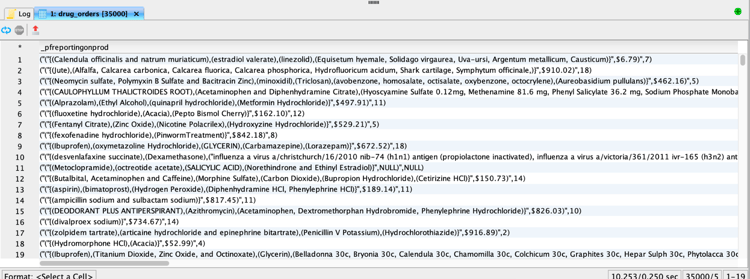
drug_checkout_data 파일은 35,000개의 레코드로 구성된 많이 중첩된 집합입니다. SQL 문 SELECT * FROM drug_orders;을(를) 사용하여 JSON 기반 drug_orders 데이터 집합에서 첫 번째 레코드 집합을 미리 봅니다.
아래 이미지는 파일 및 해당 레코드의 미리 보기를 보여 줍니다.
SQL을 사용하여 일괄 처리 수집 프로세스에 대한 통찰력 생성 sql-insights-on-batch-ingestion
아래의 SQL 문을 사용하여 데이터 수집 프로세스가 입력 레코드를 그룹화하고 일괄 처리하는 방법에 대한 통찰력을 제공합니다.
SELECT _acp_system_metadata,
       Count(DISTINCT _acp_batchid) AS numoutputbatches,
       Count(_acp_batchid)          AS recordcount
FROM   drug_orders
GROUP  BY _acp_system_metadata
쿼리 결과는 아래 이미지에 표시됩니다.
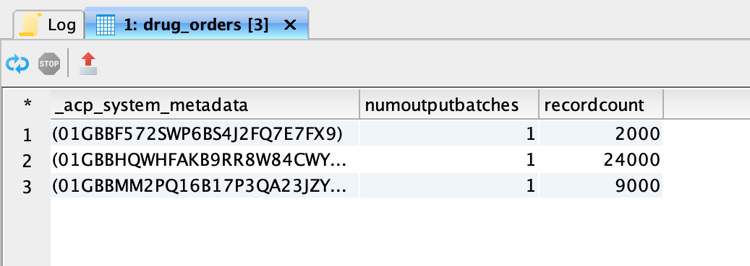
이 결과는 데이터 수집 프로세스의 효율성과 비헤이비어를 보여 줍니다. 각각 2000개, 24000개 및 9000개의 레코드를 포함하는 3개의 입력 배치가 생성되었지만 레코드를 결합하고 중복 제거할 때 하나의 고유 배치만 남았습니다.
SQL을 사용하여 배치 유효성 검사 validate-a-batch-with-SQL
그런 다음 SQL을 사용하여 데이터 세트에 수집된 레코드의 유효성을 검사하고 확인합니다.
일괄 처리를 수집했으면 데이터를 수집한 데이터 세트의 데이터 세트 활동 탭(으)로 이동해야 합니다.
Experience Platform UI의 왼쪽 탐색에서 데이터 세트를 선택하여 데이터 세트 대시보드를 엽니다. 그런 다음 찾아보기 탭에서 데이터 세트 이름을 선택하여 데이터 세트 활동 화면에 액세스합니다.
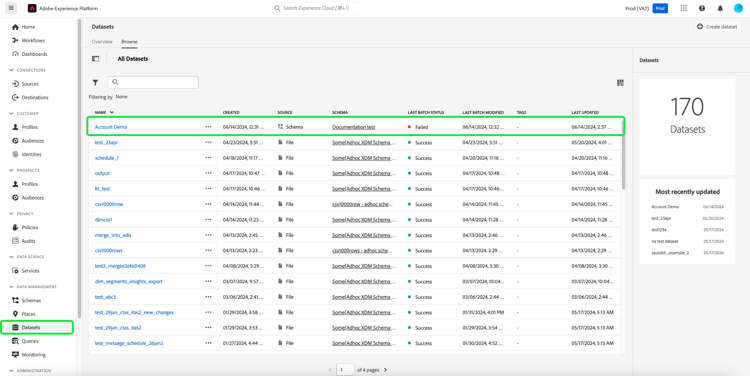
데이터 집합 활동 보기가 나타납니다. 이 보기에는 선택한 데이터 세트에 대한 세부 정보가 포함되어 있습니다. 여기에는 테이블 형식으로 표시되는 수집된 일괄 처리가 포함됩니다.
사용 가능한 일괄 처리 목록에서 일괄 처리를 선택하고 오른쪽의 세부 정보 패널에서 일괄 처리 ID를 복사합니다.
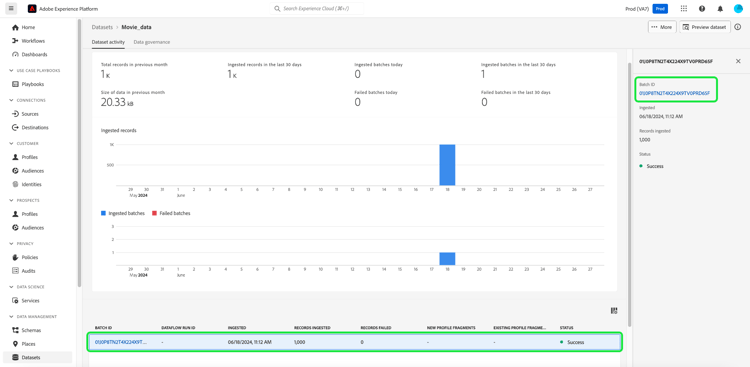
그런 다음 다음 쿼리를 사용하여 데이터 세트에 해당 배치의 일부로 포함된 모든 레코드를 검색합니다.
SELECT * FROM movie_data
WHERE  _acp_batchid='01H00BKCTCADYRFACAAKJTVQ8P'
LIMIT 1;
_ACP_BATCHID 키워드는 일괄 처리 ID을(를) 필터링하는 데 사용됩니다.
LIMIT 절은 표시되는 행 수를 제한하려는 경우에 유용하지만 필터 조건이 더 좋습니다.쿼리 편집기에서 이 쿼리를 실행하면 결과가 100개의 행으로 잘립니다. 쿼리 편집기는 빠른 미리 보기 및 조사를 위해 설계되었습니다. 최대 50,000개의 행을 검색하려면 DBVisualizer 또는 DBeaver와 같은 서드파티 도구를 사용할 수 있습니다.
다음 단계 next-steps
이 문서를 읽은 후에는 데이터 수집 프로세스의 일부로 수집된 배치의 레코드를 확인하고 확인하는 데 필요한 핵심 사항에 대해 알아보았습니다. 또한 데이터 세트 배치 메타데이터에 액세스하고, 논리 및 물리적 파티션을 이해하고, SQL 명령을 사용하여 특정 배치를 쿼리하는 통찰력을 얻었습니다. 이 지식을 통해 데이터 무결성을 보장하고 Experience Platform에서 데이터 저장소를 최적화할 수 있습니다.
다음으로 학습한 개념을 적용하기 위해 데이터 수집을 연습해야 한다. 제공된 샘플 파일 또는 고유한 데이터를 사용하여 샘플 데이터 세트를 Experience Platform에 수집합니다. 아직 수행하지 않았다면 데이터를 Adobe Experience Platform으로 수집하는 방법에 대한 자습서를 읽어 보십시오.
또는 데이터 분석 기능을 향상시키기 위해 다양한 데스크톱 클라이언트 응용 프로그램과 쿼리 서비스를 연결 및 확인하는 방법에 대해 알아볼 수 있습니다.