このページ:パーソナライゼーションエディターの仕組み、使用できるプロファイルデータ、学習プレイグラウンド、インライン編集など、Adobe Journey Optimizer のパーソナライゼーションの基本を学びます。
Adobe Journey Optimizer のパーソナライゼーション機能を使用すると、受信者に関するデータと情報を活用して、特定の受信者に合わせてメッセージを作成できます。 名前、興味、住所、購入品などの情報です。
パーソナライゼーションの仕組み
パーソナライゼーションエディターを使用すると、すべてのデータを選択、整理、カスタマイズ、検証して、コンテンツ用にカスタマイズされたパーソナライゼーションを作成したり、ヘルパー関数や事前定義済みの式などの様々なツールを活用してメッセージを効果的に調整したりできます。
Journey Optimizer では、ハンドルバーに基づいたインラインのパーソナライゼーション構文を使用します。この構文を使用すると、コンテンツを二重の中括弧 {{}} で囲んだ式を作成できます。
Journey Optimizer は、メッセージを処理する際に、式を Experience Platform データセットに含まれるデータで置き換えます。 例えば、Hello {{profile.person.name.firstName}} {{profile.person.name.lastName}} は動的に Hello John Doe になります。 この構文を使用すると、メールの件名、メッセージ本文、プッシュ通知、URL など、複数のフィールドをまたいでメッセージをパーソナライズできます。
パーソナライゼーションに使用するデータ
パーソナライゼーションは、XDM 個人プロファイルスキーマ(Adobe Experience Platform で定義)で管理されるプロファイルデータに基づいています。 XDM 個人版プロファイルスキーマは、Journey Optimizer でコンテンツをパーソナライズするのに使用できる唯一のスキーマです。 詳しくは、Adobe Experience Platform データモデル(XDM)ドキュメントを参照してください。
また、計算属性を利用して、コンテンツをパーソナライズすることもできます。 計算属性を使用すると、個々の行動イベントを、Adobe Experience Platform で使用可能な計算プロファイル属性に要約できます。 詳しくは、計算属性の操作方法を参照してください。
さらに、Journey Optimizer を使用すると、パーソナライゼーションエディターで Adobe Experience Platform のデータを利用して、コンテンツをパーソナライズすることができます。 これを行うには、まず、API 呼び出しを通じて参照パーソナライゼーションに必要なデータセットを有効にする必要があります。 完了したら、そのデータを使用して、コンテンツを Journey Optimizer にパーソナライズできます。 この機能は現在ベータ版で使用可能です。 詳細情報
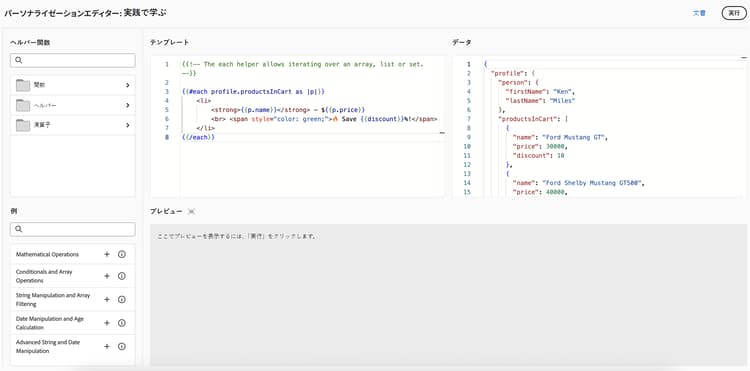
パーソナライズ機能の学習と実験 playground
Adobe Journey Optimizer には、パーソナライズ機能の学習と実験に役立つように設計されたインタラクティブなツールが含まれています。
このプレイグラウンドは、ライブデータセットを必要とせずに、サンプルデータを使用してパーソナライゼーションコードを記述およびテストするためのシミュレーション環境を提供します。 定義済みコードサンプルの活用、ダミーのプロファイルペイロードの編集、パーソナライゼーションコードの出力のリアルタイムプレビューを行うことができます。
パーソナライゼーション式のコンテンツを生成 ai-personalization-expressions
Personalization Editorまたはメール Designer ツールバー(式を追加)から、Generate Contentを使用すると、自然言語から新しい式を生成し、既存のコードの機能を説明し、選択範囲の問題を修正し、意図に一致したときに出力を適用できます。
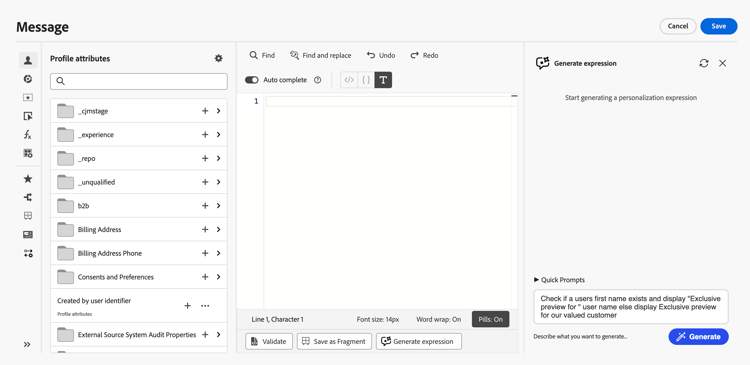
➡️ パーソナライゼーション式のコンテンツ生成の操作方法を説明
プロファイル属性のインライン編集 inline-personalization
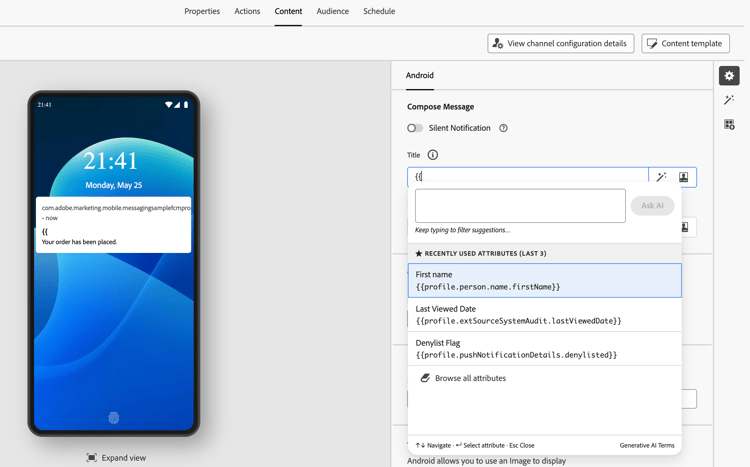
E メールデザイナーや プッシュチャネルエディター でコンテンツを編集しながら、完全なパーソナライゼーションエディターを開くことなく、プロファイル属性の式を直接挿入できます。
それには、次の手順に従います。
- 任意のテキストフィールドに
{{と入力します。 インラインオートコンプリートドロップダウンがカーソル位置で開きます。 - 入力を開始して、使用可能なプロファイル属性をフィルタリングします。
- 必要な属性を選択します。カーソル位置にパーソナライゼーショントークンとして挿入されます。
さらに深く掘り下げましょう
これで、Journey Optimizer のパーソナライゼーションについて理解できたので、これらのドキュメントの節で詳しく説明し、この機能の使用を開始します。



チュートリアルビデオ video-perso
ジャーニーのコンテキストイベント情報を使用してメッセージをパーソナライズする方法を説明します。
プロファイルベースのパーソナライゼーションをメッセージに追加する方法と、オーディエンスメンバーシップをパーソナライゼーションブロックの前提条件として使用する方法について説明します。
パーソナライゼーションエディタープレイグラウンドを活用し、サンプルデータを使用してパーソナライゼーションコードを記述およびテストする方法について説明します。
パーソナライゼーションの機能とベストプラクティスに関するその他のビデオチュートリアルについて詳しくは、パーソナライゼーションチュートリアルを参照してください。
This section contains structured knowledge intended to support interpretation, retrieval, and question answering related to this topic.
For complete understanding, this information should be combined with the documentation on this page. Neither source is intended to stand alone; the page describes the feature, while this section provides additional context that helps disambiguate terminology, intent, applicability, and constraints.
- TL;DR: This page introduces personalization in Journey Optimizer — how the Handlebars-based personalization editor works, what data it uses, the interactive playground, Generate Content for expressions, and inline attribute editing in the Email Designer and Push editor.
Intents:
- Understand how Journey Optimizer personalization works (Handlebars syntax with double curly braces)
- Identify the data sources available for personalization (XDM Individual Profile schema, computed attributes, AEP dataset lookup in beta)
- Experiment with personalization using the interactive playground without a live sandbox
- Use AI to generate, explain, or fix personalization expressions from natural language
- Insert profile attributes inline in the Email Designer or Push editor by typing
{{
Glossary:
- Personalization editor: The full-featured tool for building, customizing, and validating personalization expressions; available in any Journey Optimizer field that supports personalization. (product-specific)
- XDM Individual Profile schema: The only schema that can be used to personalize content in Journey Optimizer; defines all profile attributes available for personalization. (product-specific)
- Computed attributes: Pre-calculated profile attributes summarizing individual behavioral events into profile-level values; available as personalization data alongside standard XDM profile fields. (product-specific)
- Personalization playground: An interactive, simulated environment on Experience League for writing and testing personalization code with sample data — no live datasets or sandbox required. (product-specific)
- Inline editing: The ability to type
{{in any text field in the Email Designer or Push channel editor to trigger an autocomplete dropdown and insert profile attributes without opening the full personalization editor. (product-specific) - Generate Content (personalization expressions): An AI tool in the personalization editor and Email Designer that generates personalization expressions from natural language, explains existing code, and fixes issues in a selection. (product-specific)
Guardrails:
- XDM Individual Profile schema is the only schema that can be used to personalize content in Journey Optimizer.
- AEP dataset lookup for personalization requires datasets to be enabled through an API call before use; this feature is currently in beta.
- Inline editing (typing
{{in Email Designer or Push editor) supports profile attributes only.
Terminology:
- Canonical name: personalization — variants: content personalization, message personalization, expression personalization
- Canonical name: personalization editor — variants: personalization capabilities
- Do not confuse: Personalization editor (used to build content expressions in messages and offers — supports both Handlebars and PQL) ≠ Advanced expression editor (used in the journey for conditions on data sources and event information, custom wait activities, and action parameters mapping — provides built-in functions and operators that differ from those in the personalization editor)
- Do not confuse: inline editing (type
{{in Email Designer or Push for quick attribute insertion without opening the full editor) ≠ personalization editor (full tool for complex expressions, helper functions, conditional rules, and fragments) - Do not confuse: XDM Individual Profile schema (the only schema usable for personalization in Journey Optimizer) ≠ other AEP schemas (not usable for personalization unless exposed via dataset lookup)
FAQ:
- Q: What data can be used for personalization in Journey Optimizer? — Profile data from the XDM Individual Profile schema, computed attributes (behavioral events summarized at the profile level), and AEP record dataset lookup (currently beta — requires datasets to be enabled via API).
- Q: What is the personalization playground? — An interactive, simulated environment on Experience League where you can write and test personalization code using sample data, without requiring a live Journey Optimizer sandbox or real datasets.
- Q: How does inline attribute editing work? — Type
{{in any text field in the Email Designer or Push channel editor to open an autocomplete dropdown at the cursor position. Start typing to filter profile attributes, then select one to insert it as a personalization token. Only profile attributes are available inline. - Q: What can Generate Content do in the personalization editor? — It can generate new personalization expressions from natural language descriptions, explain what existing code does, and fix issues in a selected expression — then apply the output when it matches your intent.