このページでは:行動イベントをプロファイル属性に集約する計算属性を作成し、Adobe Journey Optimizerのセグメンテーション、パーソナライゼーション、ジャーニーロジックに使用する方法を説明します。
計算属性を使用すると、個々の行動イベントを、Adobe Experience Platform で使用可能な計算プロファイル属性に要約できます。 これらの属性は、Adobe Experience Platform に取り込まれたプロファイル対応のエクスペリエンスイベントデータセットに基づいており、顧客プロファイル内に保存される集計データポイントとして機能します。
各計算属性は、ジャーニーやキャンペーンでのセグメント化、パーソナライゼーションおよびアクティブ化に活用できるプロファイル属性です。 この簡素化により、さらにタイムリーで意味のあるパーソナライズされたエクスペリエンスを顧客に提供できるようになります。
計算属性の作成 manage
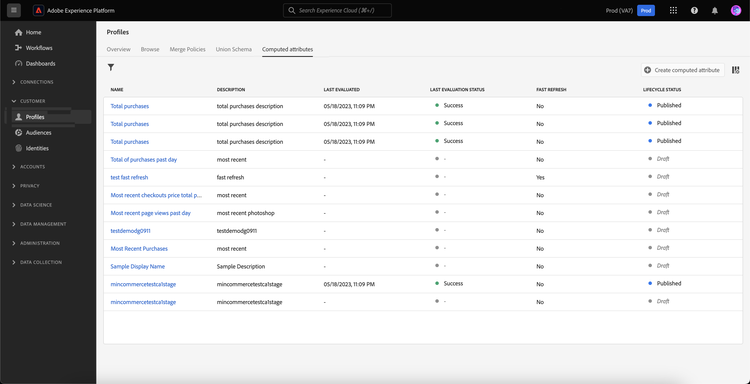
計算属性を作成するには、左側にある プロファイル メニューの「計算属性」タブを参照します。
この画面から、イベント属性、集計関数および指定のルックバック期間を組み合わせたルールを作成することで、計算属性を作成できます。 例えば、過去 3 か月間の購入の合計を計算したり、過去 1 週間に購入を行っていないプロファイルが最近閲覧した商品を特定したり、各プロファイルが貯めた報酬ポイントの合計を集計したりできます。
ルールの準備が整ったら、計算属性を公開して、Journey Optimizer などの他のダウンストリームサービスで使用できるようにします。
計算属性の作成および管理について詳しくは、計算属性のドキュメントを参照してください
Adobe Experience Platform データソースへの計算属性の追加 source
計算属性を Journey Optimizer で活用するには、計算属性を Journey Optimizer Experience Platform データソースに追加します。
Adobe Experience Platform のデータソースは、Adobe リアルタイム顧客プロファイルサービスへの接続を定義します。 このデータソースは、リアルタイム顧客プロファイルサービスからプロファイルデータとエクスペリエンスイベントデータを取得します。
データソースに計算属性を追加するには、次の手順に従います。
-
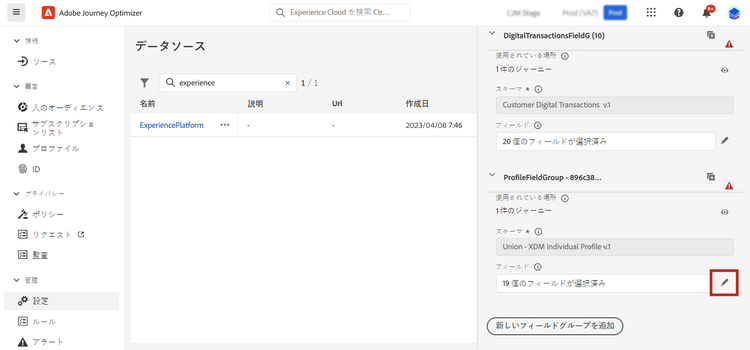
左側の 設定 メニューを参照して、「データソース」カードをクリックします。
-
Experience Platform データソースを選択します。
-
作成されたすべての計算属性を含んだ SystemComputedAttributes フィールドグループを追加します。
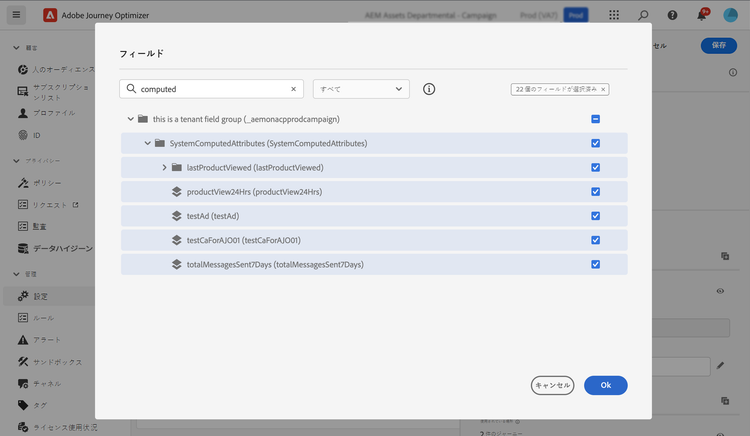
これで、計算属性が Journey Optimizer で使用できるようになりました。 Journey Optimizer で計算属性を使用する方法の詳細情報
Adobe Experience Platform データソースへのフィールドグループの追加について詳しくは、この節を参照してください。
Journey Optimizer での計算属性の使用 use
計算属性は、Journey Optimizer 内で多岐にわたる機能を提供します。 メッセージコンテンツのパーソナライズ、新しいオーディエンスの作成、特定の計算属性に基づくジャーニーの分岐など、様々な目的で使用します。 例えば、条件アクティビティに 1 つの計算属性を追加することにより、過去 3 週間のプロファイルの合計購入数に基づいてジャーニーのパスを分割します。 また、最近閲覧された商品をプロファイルごとに表示して、メールをパーソナライズすることもできます。
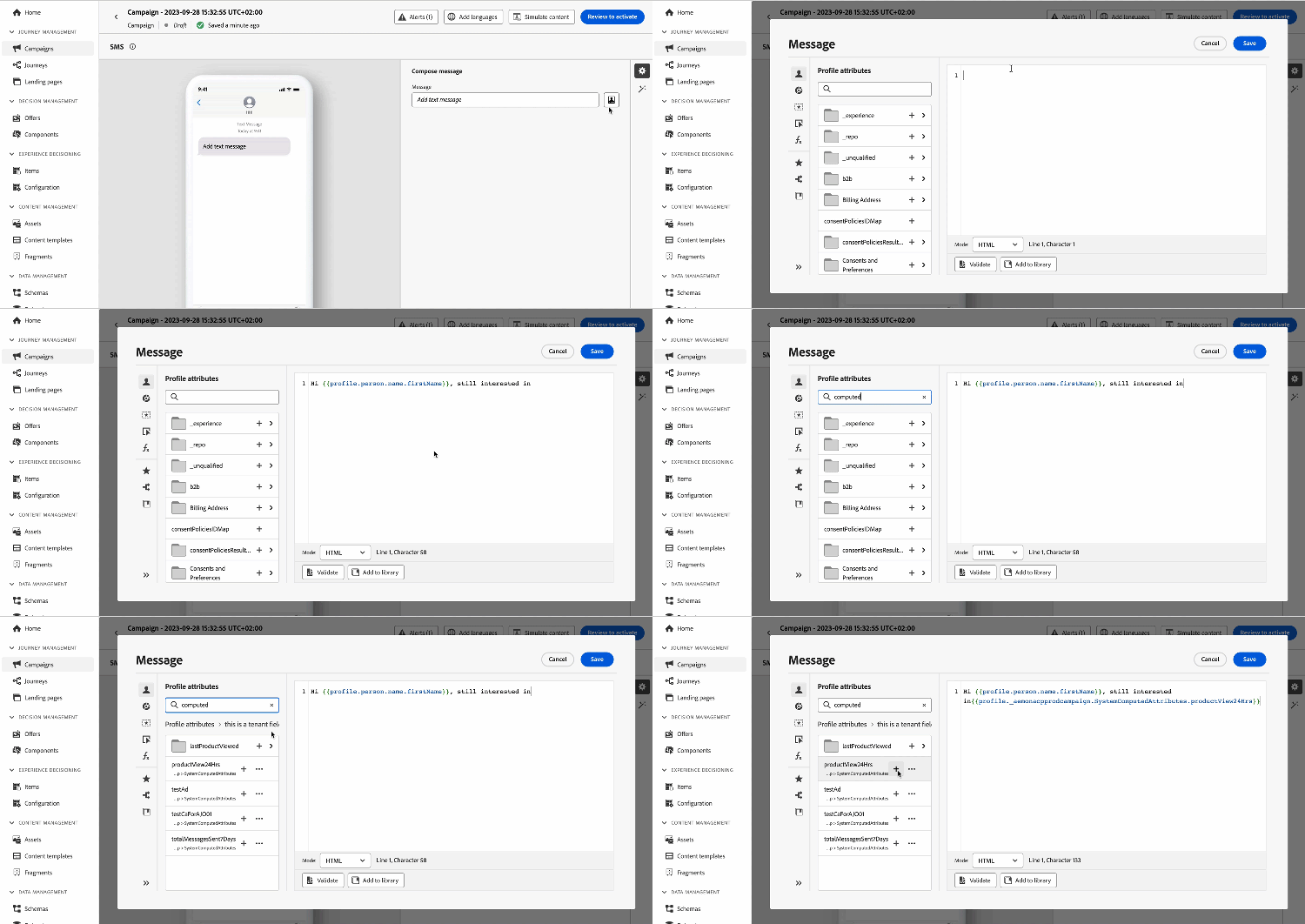
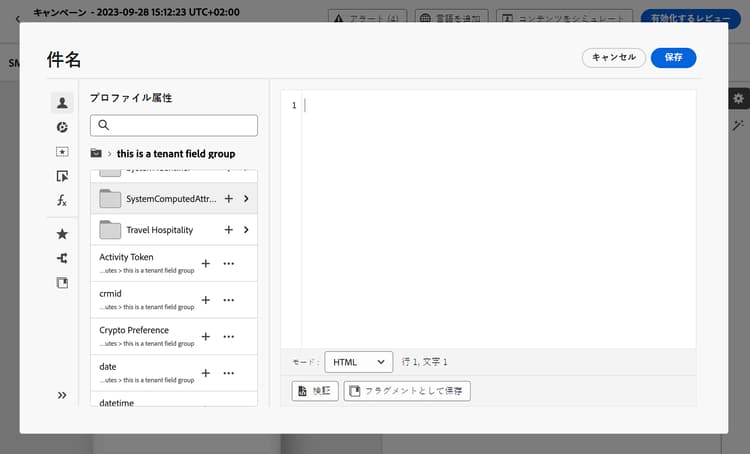
計算属性は、プロファイル結合スキーマに基づいて作成されたプロファイル属性フィールドなので、SystemComputedAttributes フィールドグループ内のパーソナライゼーションエディターからアクセスします。 そこから、計算属性を式に追加し、他のプロファイル属性と同様に扱って、目的の操作を実行します。
This section contains structured knowledge intended to support interpretation, retrieval, and question answering related to this topic.
For complete understanding, this information should be combined with the documentation on this page. Neither source is intended to stand alone; the page describes the feature, while this section provides additional context that helps disambiguate terminology, intent, applicability, and constraints.
- TL;DR: Learn how to create computed attributes on Adobe Experience Platform and leverage them in Journey Optimizer for segmentation, personalization, and journey logic.
Intents:
- Understand what computed attributes are and how they differ from standard profile attributes
- Create computed attributes by combining event attributes, aggregate functions, and a lookback period
- Add the SystemComputedAttributes field group to the Experience Platform data source in AJO
- Use computed attributes in journey conditions, audience building, and message personalization
Glossary:
- Computed attribute: A profile attribute derived from aggregated behavioral event data, stored in customer profiles (product-specific)
- Lookback period: The time window applied when calculating a computed attribute’s aggregation rule (e.g. “last 3 months”) (product-specific)
- SystemComputedAttributes field group: The field group in AJO’s Experience Platform data source that exposes all published computed attributes for use in journeys and personalization (product-specific)
- Profile union schema: The merged schema that combines all profile fragments for a given identity, where computed attributes are stored
Guardrails:
- Requires View Computed attributes and Manage Computed attributes permissions to access the feature
- Computed attributes must be published in AEP before they become available downstream in Journey Optimizer
- Computed attributes must be explicitly added to the Experience Platform data source in AJO before they can be used in journeys or personalization
- Computed attributes are based on Profile-enabled Experience Event datasets ingested into Adobe Experience Platform
Terminology:
- Canonical name: Adobe Journey Optimizer — Acronym: AJO — variants: Journey Optimizer, A-JO
- Canonical name: Adobe Experience Platform — Acronym: AEP
- Synonyms: “computed attributes” = “computed profile attributes”
- Do not confuse: “computed attributes” (AEP/AJO-specific aggregated feature) ≠ generic “profile attributes”
FAQ:
- Q: What are computed attributes? — Aggregated behavioral event data (e.g. total purchases, last viewed item) stored as profile attributes on AEP and usable in AJO.
- Q: Do I need special permissions? — Yes: “View Computed attributes” and “Manage Computed attributes” are both required.
- Q: How do I make computed attributes available in Journey Optimizer? — Add the
SystemComputedAttributesfield group to the Experience Platform data source under Configurations > Data sources. - Q: Where can I use computed attributes in AJO? — In Condition activities (journey splitting), audience creation, and the personalization editor.
- Q: What is a lookback period? — The time window used to scope the aggregation rule, e.g. “sum of purchases in the last 3 weeks.”
- Q: Can I use computed attributes in real-time journeys? — Yes, once published and added to the data source, they are accessible like any other profile attribute.