在此页面上:了解各个用户档案和整体的历程结束方式,以及在需要停止新进入或所有处理时如何关闭或停止实时历程。
实时历程如何结束
在达到全局历程超时或在最后一次发生基于受众的定期历程后,历程将关闭。 了解历程的结束方式。
如果您需要终止实时历程,我们建议您手动关闭它。 然后,新客户进入旅程会被阻止。 已进入历程的用户档案将能够体验到历程的结尾。
您还可以停止历程,但仅限于紧急情况下且必须立即结束所有历程处理的情况下。 已进入历程的用户都将在进度中停止。
用户档案如何结束历程
历程在以下两个特定上下文中为个人结束:
- 个人到达路径的最后一个活动,然后移至结束标记。
- 个人达到 条件 活动(或具有条件的 等待 活动)并且不匹配任何条件。
之后,如果允许重新进入,个人可以重新进入历程。 了解有关进入/重新进入管理的更多信息
历程结束标记 end-tag
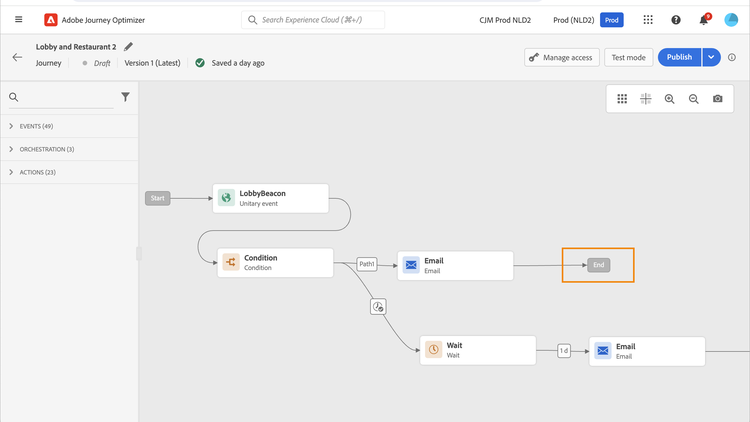
创作历程时,每个路径的末尾会显示一个结束标记。 用户无法添加此节点,无法删除此节点,只能更改其标签。 它标记历程的每个路径的结尾。
如果历程包含多个路径,我们建议您在每个末端添加一个标签,以使报告更易于阅读。 了解有关历程报告的更多信息。
历程工具栏中的
关闭历程 close-journey
旅程可能由于以下原因而关闭:
在 91天历程全局超时 后,读取受众历程将切换到 已完成 状态。 此行为设置为91天,因为有关进入历程的用户档案的所有信息在进入91天后会被删除。 仍在历程中的人员会自动受到影响。 他们在91天超时后退出历程。 了解有关历程全局超时的更多信息。
非定期受众的自动历程停止 auto-stop-non-recurring
非循环读取受众历程在其计划运行后的安全缓冲区之后自动转换为 已停止 状态。 这消除了以前的行为,即非循环读取受众历程一直保持在 实时 状态直到91天全局超时到期,即使没有用户档案积极地流经这些历程。
工作方式:
- 历程将运行,并处理受众中的所有配置文件。
- 当每个用户档案到达历程结尾时,它通常会退出。
- 计划运行后,在安全缓冲期间,历程保持在 实时 状态。
- 安全缓冲过后(在历程的计划运行时间后约96小时),历程会在不久后自动转换为 已停止 状态。
此行为仅适用于非循环读取受众历程。 周期性历程不受影响。
-
自动停止计时:安全缓冲区包含两个窗口:一个 24小时空闲窗口 以允许完成任何飞行中的发送,一个72小时免打扰时间(免打扰时间最多可延迟发送72小时)。 在历程的计划运行时间后,缓冲区的总时间约为96小时(~4天)。 在此期间,历程保持在 实时 状态。 这是预期行为,并不表示存在问题。
-
排除基于批次的历程:此自动停止行为不适用于基于批次的历程和使用发送时间优化的历程。 这些历程在所有计划批次中保持活动状态,并且仅通过标准91天全局超时停止,除非手动关闭或停止这些历程。
-
此自动停止行为 不 适用于包含导致等待时间的节点的非循环历程,如 Wait 节点(基于计时器)、反应节点(等待电子邮件打开或单击等事件),或事件触发的过渡。 这些历程仍受标准91天全局超时的约束。
-
您仍然可以使用 关闭新入口 选项随时手动关闭非循环读取受众历程。 自动停止行为只需确保在不再需要历程时自动停止,而无需手动干预。
何时将历程视为“已完成”? journey-finished-definition
“已完成”的定义因旅程类型而异:
对新进入关闭 close-to-new-entrances
手动关闭历程可确保已进入历程的客户能够完成其路径,但新用户无法进入历程。 当历程关闭时(由于上述任何原因),其状态为已关闭。 历程停止让新个人进入历程。 历程中已有的用户档案可以正常完成历程。 在默认全局超时91天后,历程将切换到 已完成 状态。
对于以受众资格开始的历程,了解关闭历程如何影响沙盒受众资格限制。
您可以从 实时 或 已暂停 状态停止历程。 当历程为 已暂停 时,您不需要先将其恢复到实时。 了解有关停止暂停的历程的详细信息。
要从历程列表中关闭历程,请单击历程名称右侧的 省略号 按钮,然后选择关闭新入口。
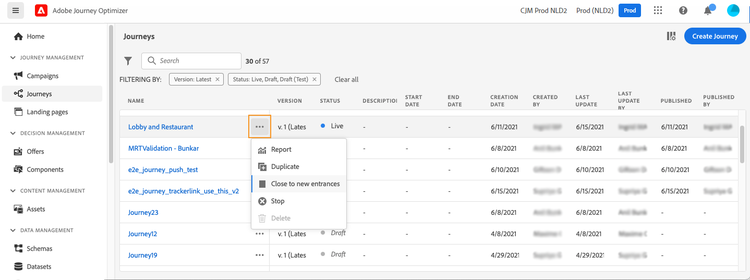
您还可以:
-
在 历程 列表中,单击要关闭的旅程。
-
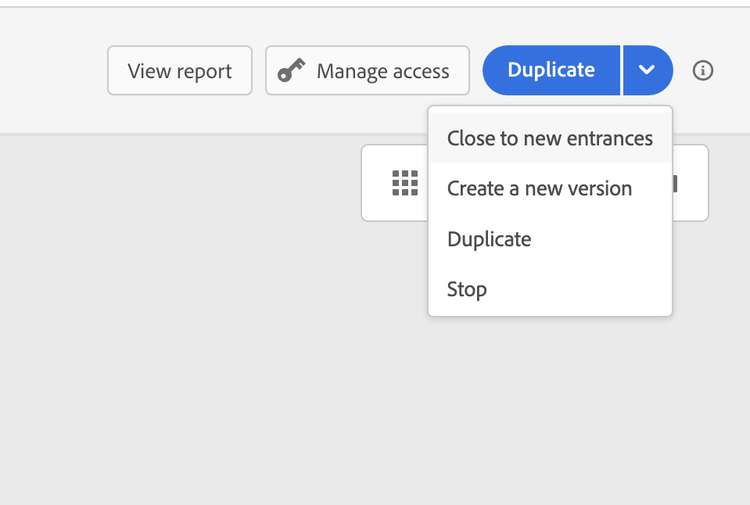
单击右上方的向下箭头。
-
单击关闭新入口,然后在对话框中确认。
停止历程 stop-journey
如果需要停止历程中所有个人的进度,可以停止它。 停止历程超时:历程中的所有个人。 但是,停止旅程的过程涉及所有已进入旅程的人员都在进程中停止。 旅程基本上是关闭的。 如果要结束历程,最佳实践是关闭历程。
您还可以直接停止 已暂停 历程,而无需先将其恢复到实时。 了解详情。
例如,您可以停止历程,如果营销人员意识到历程定位了错误的受众,或应该投放消息的自定义操作无法正常工作。 要从历程列表中停止历程,请单击历程名称右侧的 省略号 按钮,然后选择停止。
您还可以:
-
在 历程 列表中,单击要停止的旅程。
-
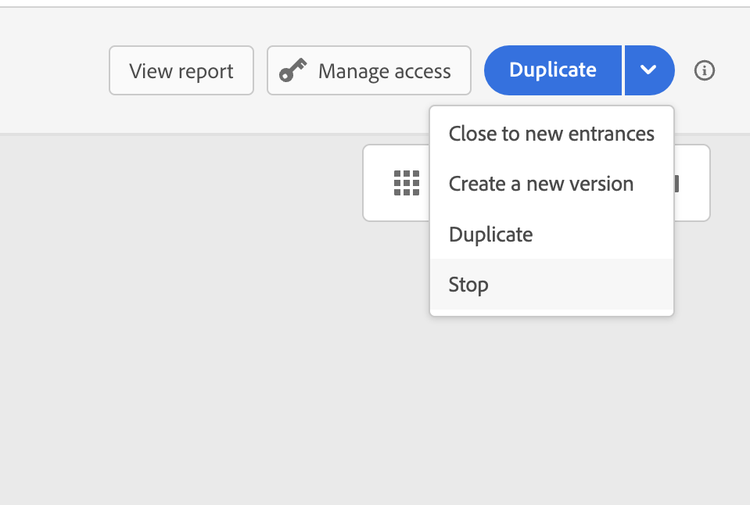
单击右上方的向下箭头。
-
单击停止,然后在对话框中确认。
停止时,历程状态将设置为已停止。
相关主题
- 历程进入和退出标准指南 — 包含真实示例和最佳实践的完整指南
- 用户档案进入管理 — 配置用户档案进入历程的方式
- 配置退出条件 — 设置从历程中自动删除配置文件
- 暂停历程 — 暂时停止历程执行
This section contains structured knowledge intended to support interpretation, retrieval, and question answering related to this topic.
For complete understanding, this information should be combined with the documentation on this page. Neither source is intended to stand alone; the page describes the feature, while this section provides additional context that helps disambiguate terminology, intent, applicability, and constraints.
- TL;DR: This page explains the different ways a live journey can end — including the global 91-day timeout, manual closure to new entrances, and emergency stop — along with their effects on in-progress profiles.
Intents:
- Close a live journey to new entrances while allowing current profiles to complete it
- Stop a journey immediately to halt all in-progress profiles
- Understand the difference between Closed, Stopped, and Finished journey statuses
- Determine when a journey is considered “finished” based on its type and configuration
- Delete a journey once it has reached the Finished status
Glossary:
- End tag: An auto-generated, non-removable node displayed at the end of each journey path during authoring; its label can be changed (product-specific)
- Close to new entrances: A manual action that prevents new profiles from entering a journey while allowing existing profiles to complete their path (product-specific)
- Global journey timeout: The 91-day maximum duration after which a journey automatically switches to Finished status and all profile data is removed (product-specific)
- Stopped status: A journey state in which all in-progress profiles are immediately halted; the manual Stop action is used only for emergencies, though a non-recurring Read Audience journey also auto-transitions to Stopped after its run (product-specific)
Guardrails:
- Closed and Stopped journeys cannot be restarted or deleted; only a new version or duplicate can be created.
- Only journeys in Finished status can be deleted.
- Stopping a journey requires the Manage journeys permission; journeys with inline campaigns or messaging nodes also require Campaigns > Publish Campaigns permission.
- After the 91-day global timeout, all profile journey data is removed and remaining profiles are automatically exited.
- A non-recurring Read Audience journey without long-running Wait, Reaction, or event-triggered nodes automatically transitions to Stopped approximately 96 hours (~4 days) after its scheduled run. The journey remains in Live status during this buffer. Waves-based journeys, and journeys that use Send-Time Optimization, are excluded from this auto-stop and remain subject to the 91-day global timeout unless manually closed or stopped.
Terminology:
- Canonical name: Close to new entrances — Acronym: n/a — variants: close journey, manually close
- Do not confuse: “Stopped” journey ≠ “Closed” journey — stopped halts all profiles immediately; closed only blocks new entrances
- Do not confuse: “End tag” ≠ “End activity” — the End tag is auto-generated and cannot be removed; the End activity is a placeable canvas node
FAQ:
- Q: What is the difference between closing and stopping a journey? — Closing blocks new entrances but lets existing profiles finish; stopping immediately halts all profiles in their tracks.
- Q: Why does a non-recurring journey remain in Live status for several days after its run? — This is expected. AJO applies a safety buffer of ~96 hours (~4 days): 24 hours to allow in-flight sends to complete, plus 72 hours for Quiet Hours deferrals. The journey transitions to Stopped shortly after the buffer elapses.
- Q: Do waves-based journeys auto-stop after ~96 hours? — No. Waves-based journeys, and journeys that use Send-Time Optimization, are excluded from this automatic stop so they can stay active across all scheduled waves. They follow the standard 91-day journey timeout unless closed or stopped manually.
- Q: When does a Read audience journey reach Finished status? — For a non-recurring Read Audience journey: it auto-stops to Stopped approximately 96 hours (~4 days) after its scheduled run (safety buffer: 24h idle window + 72h Quiet Hours allowance). The journey remains in Live status during this buffer. If Wait, Reaction, or event nodes keep profiles active, the standard 91-day global timeout applies instead. Finished is reached when a Closed journey hits the 91-day global timeout, or per recurring-journey rules in the finished-definition table.
- Q: Can I delete a Closed journey? — No, only Finished journeys can be deleted.
- Q: What happens to profiles still in a journey when the 91-day timeout hits? — They are automatically exited from the journey at that point.
- Q: Do I need special permissions to stop a journey? — Yes, the Manage journeys permission is required, plus Campaigns > Publish Campaigns if the journey contains inline campaigns or messaging nodes.