在此页面上:启用基于记录的Adobe Experience Platform数据集以进行查找,以便在Journey Optimizer中通过运行时检索的引用和事务型数据来扩充个性化、决策和Journey Orchestration。
Journey Optimizer允许您利用来自Adobe Experience Platform数据的具有个性化、决策和历程编排功能的数据。 要实现此目的,必须首先按照如下所述为查找服务启用查找个性化所需的基于记录的数据集。
要了解有关如何访问和使用数据集的更多信息,请参阅此部分:数据集入门
必读
护栏和准则 guidelines
在开始之前,请查看以下限制和准则:
-
数据集中没有PII — 启用查找的数据集不应包含任何个人身份信息(PII)。
-
删除风险 — 未保护个性化中使用的数据集不被删除。 您必须跟踪正在使用哪些数据集,以确保未将其删除。
-
架构类型 — 数据集必须与配置文件或事件类型的 NOT 架构关联。
-
保持查找切换打开 — 避免反复打开和关闭数据集。 这样做可能会导致意外的索引行为。 最佳实践是,在您计划使用数据集进行查找期间,一直启用该数据集。
-
Edge激活区域 — 启用查找功能的数据集仅在数据集沙盒所在的区域(例如,NLD2或VA7)可用于基于入站边缘的激活。 您可以在UI中沙盒名称旁边看到沙盒区域。
-
批量数据删除 — 从数据集中删除批量数据会从查找服务中完全删除所有匹配的键。 例如:
批次1: Sku1、Sku2、Sku3
批次2:Sku1、Sku2、Sku3、Sku4、Sku5、Sku6
批次3:Sku7、Sku8、Sku9、Sku10如果您删除批次1,则Sku1、Sku2和Sku3将从查找存储中删除。 生成的查找数据将包含:Sku4、Sku5、Sku6、Sku7、Sku8、Sku9、Sku10。
查找服务的权利
启用数据集进行数据查找 enable
要将数据集中的数据用于个性化,您需要启用数据集以进行查找。
先决条件 prerequisites-enable
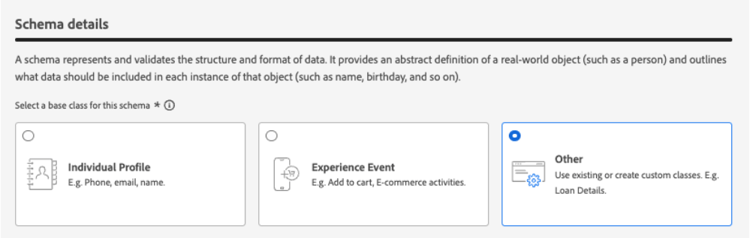
与要启用查找的数据集关联的架构必须是记录类型。 架构不应属于配置文件或事件类。
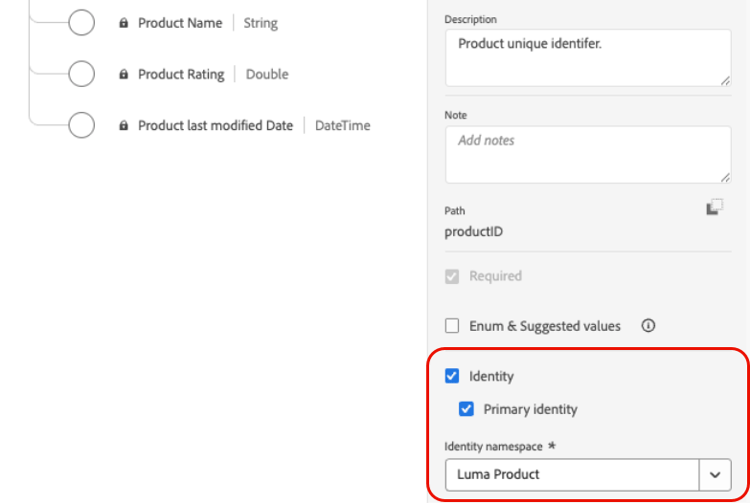
架构必须定义主标识。
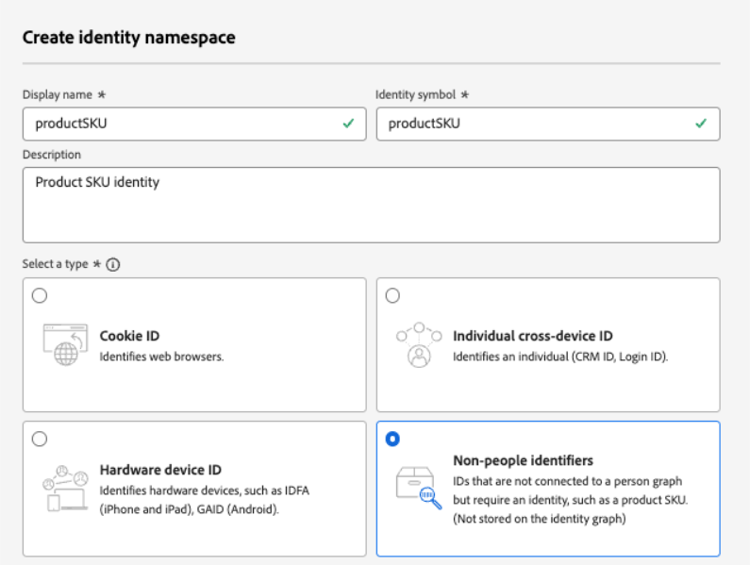
如果尚未定义自定义命名空间,请确保该身份是非人员标识符。
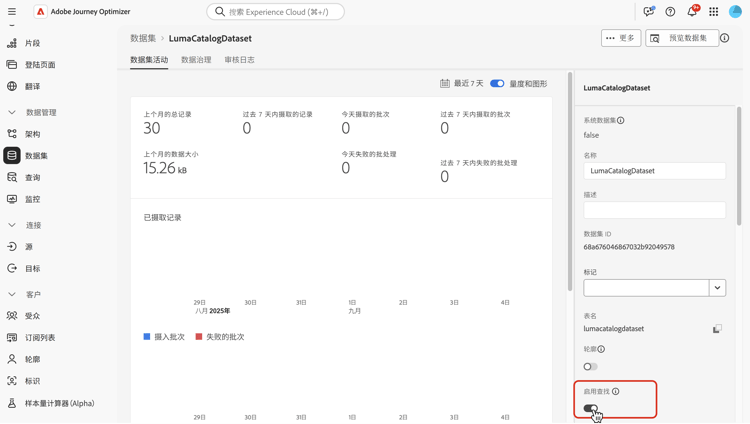
在数据集管理界面中启用数据集以进行查找
在数据集管理用户界面中,使用切换开关启用数据集以供查找。
API方法
按照本文档中详述的说明配置环境以发送API命令。
先决条件
-
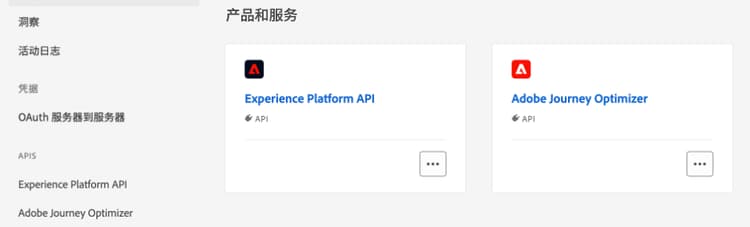
开发人员项目必须将Adobe Journey Optimizer和Adobe Experience Platform API添加到其项目中。
-
作为您的角色的一部分,您必须具有管理数据集权限。
-
数据集所基于的架构必须包含一个可充当查找键的主标识。
API调用结构
curl -s -XPATCH "https://platform.adobe.io/data/core/entity/lookup/dataSets/${DATASET_ID}/${ACTION}" \ -H "Authorization: Bearer ${ACCESS_TOKEN}" \ -H "x-api-key: ${API_KEY}" \ -H "x-gw-ims-org-id: ${IMS_ORG}" \ -H "x-sandbox-name: ${SANDBOX_NAME}"
其中:
- URL为
https://platform.adobe.io/data/core/entity/lookup/dataSets/${DATASET_ID}/${ACTION} - 数据集ID是您希望启用的数据集。
- 操作是启用或禁用。
- 可以从开发人员控制台中检索访问令牌。
- 可以从开发人员控制台检索API密钥。
- IMS组织ID是您的Adobe组织。
- 沙盒名称是数据集所在的沙盒名称(即prod、dev等)。
"error_code": "403003","message": "Api Key is invalid"数据集监控
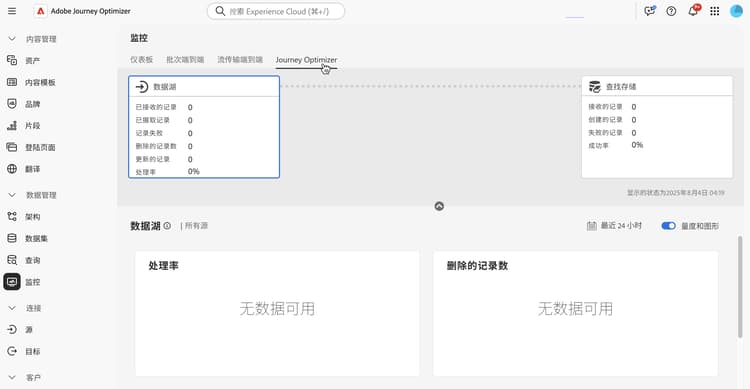
启用数据集进行查找后,您可以通过转到 监视 菜单并选择 Journey Optimizer 选项卡来查看摄取到查找服务的状态。
此流程指示器有助于了解查找服务中何时提供了新批次的数据。
后续步骤
在使用API调用启用数据集查找后,您可以将数据用于Journey Optimizer个性化和决策功能。 有关详细信息,请参阅以下部分:
This section contains structured knowledge intended to support interpretation, retrieval, and question answering related to this topic.
For complete understanding, this information should be combined with the documentation on this page. Neither source is intended to stand alone; the page describes the feature, while this section provides additional context that helps disambiguate terminology, intent, applicability, and constraints.
- TL;DR: This page explains how to enable record-based Adobe Experience Platform datasets for the lookup service so their data can enrich personalization, Decisioning, and journey orchestration at runtime, including the entitlement guardrails.
Intents:
- Enable a record-based dataset for lookup using the dataset management toggle or the API.
- Meet the prerequisites (record-type schema, primary identity, non-person namespace).
- Review the lookup entitlement limits.
- Monitor lookup ingestion status.
- Use enabled data with personalization, Decisioning, and journey orchestration.
Glossary:
- Lookup service: the service that retrieves record-based dataset data at runtime for personalization, Decisioning, and journey orchestration (product-specific)
- Lookup dataset: a record-based dataset enabled for lookup (product-specific)
- Primary identity (lookup key): the identity, required on the schema, that acts as the lookup key (product-specific)
- Record-type schema: the required schema type for lookup — a schema that is NOT of Profile or Event class
- Edge activation region: the region (for example, NLD2 or VA7) where the dataset’s sandbox resides, for inbound edge-based activation (product-specific)
Guardrails:
- Enabled Lookup Datasets: maximum 10 per organization, combined across production and development sandboxes (default; if additional volumes are needed, contact your Adobe representative).
- Dataset Record Count: up to 2 million records per dataset, counted as the total across all batches (default; raisable by contacting your Adobe representative).
- Record Size: up to 2 KB per record (default maximum record size supported).
- Dataset Size: up to 4 GB per individual dataset; the record count and dataset size limits are independent guardrails and both must be satisfied (default; raisable by contacting your Adobe representative).
- Dataset Frequency Updates: up to 5 updates per day per dataset (default; raisable by contacting your Adobe representative).
- Datasets enabled for lookup should not contain any Personally Identifiable Information (PII).
- Datasets used in personalization are not protected from deletion; keep track of which datasets are in use.
- The schema must be record-type (NOT of Profile or Event class) and must have a primary identity defined; if a custom namespace is not defined, the identity must be a non-person identifier.
- Keep the lookup toggle on; repeatedly turning datasets on and off can lead to unexpected indexing behavior.
- Datasets enabled for lookup are available for inbound edge-based activation only in the region where the dataset’s sandbox resides.
- Removing a batch of data completely removes all matching keys from the lookup service.
- The data lookup capability is in Limited Availability and is available to all Journey Optimizer customers.
- To enable a dataset with the API, the developer project must have the Adobe Journey Optimizer and Adobe Experience Platform APIs added, and you must have manage datasets permission as part of your role.
Terminology:
- Canonical name: lookup service — variants: data lookup, enable for lookup
- API ACTION values:
enableORdisable - Do not confuse: the required schema for lookup (record-type) ≠ a schema of Profile or Event type or class
FAQ:
- Q: What schema type is required for a lookup dataset? — A record-type schema that is NOT of Profile or Event class, with a primary identity defined that can act as the lookup key.
- Q: How many datasets can I enable for lookup? — Up to 10 per organization, combined across production and development sandboxes; contact your Adobe representative for more.
- Q: What are the record and size limits? — Up to 2 million records and 4 GB per dataset, up to 2 KB per record, and up to 5 updates per day per dataset; the record count and dataset size are independent guardrails that must both be satisfied.
- Q: Can lookup datasets contain PII? — No; datasets enabled for lookup should not contain any Personally Identifiable Information.
- Q: What happens if I delete a batch of data? — Removing a batch completely removes all matching keys from the lookup service; for example, deleting Batch 1 (Sku1, Sku2, Sku3) removes those keys from the lookup store even though Batch 2 also contained them.
- Q: Should I toggle lookup on and off frequently? — No; repeatedly turning datasets on and off can lead to unexpected indexing behavior, so leave the dataset enabled for as long as you plan to use it for lookups.