在此頁面上:使用通用搜尋、清單篩選器和標籤,快速找到並整理歷程、行銷活動和資產,讓您能夠在 Journey Optimizer 專案推進的同時保持生產力。
隨著您的 Adobe Journey Optimizer 專案發展,尋找和整理內容對於提高工作效率至關重要。 此頁面說明如何使用通用搜尋快速找到歷程、行銷活動和資產;篩選清單以聚焦特定項目;以及使用標籤、資料夾和類別整理您的工作。這些工具可協助您導覽大量內容、維護跨團隊的一致性,並簡化您的日常工作流程。
搜尋 unified-search
在 Adobe Journey Optimizer 介面中,使用頂端列中央的統一Adobe CX Enterprise搜尋功能,在您的沙箱中尋找資產、歷程、資料集等項目。
開始輸入內容以顯示排名最前的結果。 有關輸入關鍵字的說明文章也會顯示在結果中。
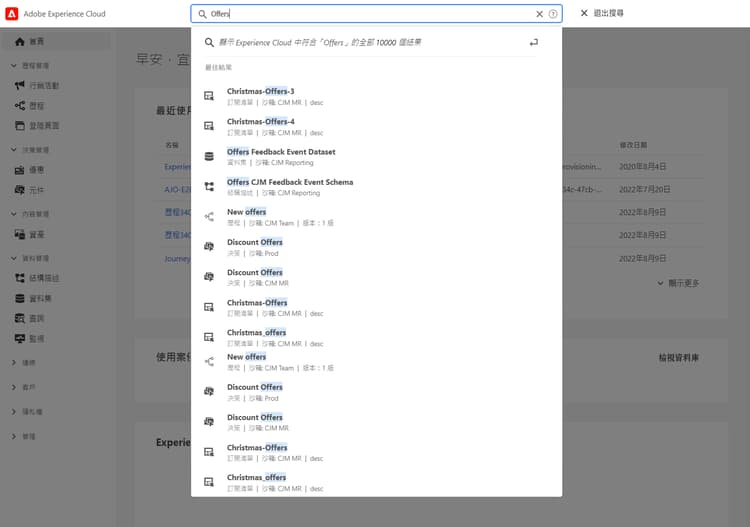
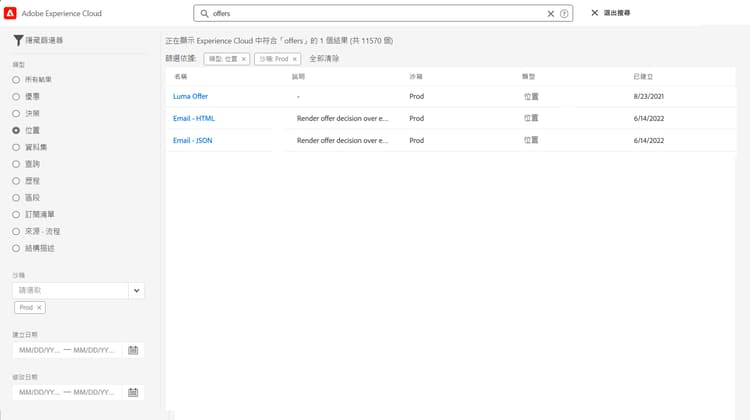
請按下 Enter 以存取所有結果,並按業務對象進行篩選。
篩選清單 filter-lists
在大部分清單中使用搜尋列來尋找特定項目並定義篩選條件。 您可以按一下欄位標頭來排序任何清單。 在行銷活動資料夾檢視中,也支援依 優先順序 和 管道設定 排序。
按一下清單左上方的篩選圖示,即可存取篩選器。 篩選選單可讓您根據不同條件篩選顯示的元素:您可選擇僅顯示特定類型或狀態的元素、您建立的元素,或最近 30 天修改的元素。 選項會因內容而異。
此外,您也可利用統一標籤來篩選清單,視指派至物件的標籤而定。 目前,標籤可供歷程與行銷活動使用。 您也可以使用資料夾組織歷程和行銷活動。
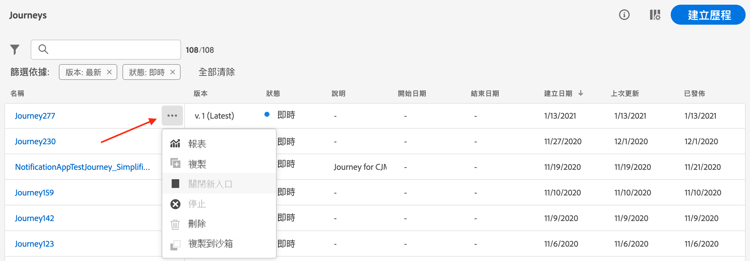
您可以對清單的每一元素執行基本動作。 例如,您可以複製或刪除項目。
使用資料夾組織歷程和行銷活動 organize-folders
資料夾會在介面中把歷程和行銷活動分組,用來補充標籤和清單篩選。
存取及管理資料夾
若要存取資料夾,請存取行銷活動或歷程詳細目錄,並選取 顯示資料夾 圖示。若為歷程,您也可以從 資料夾檢視 索引標籤存取資料夾。
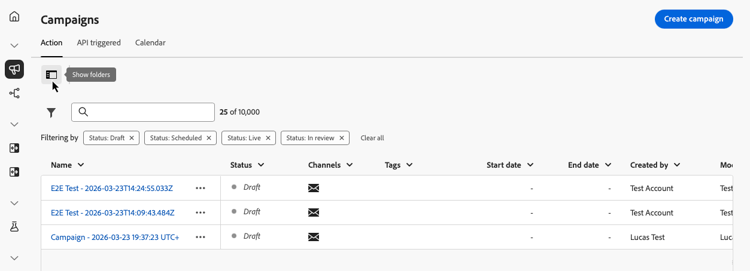
選取資料夾後,清單會篩選為該資料夾。若要返回完整的詳細目錄清單,請選取 所有歷程 或所有行銷活動
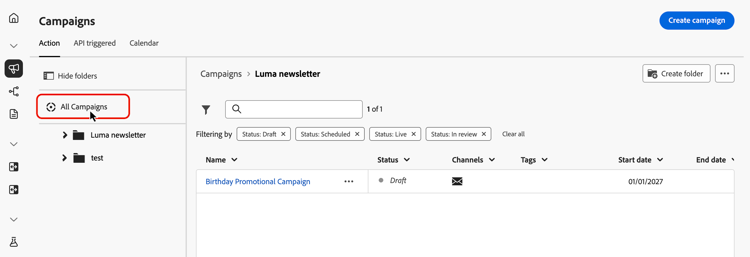
若要建立新資料夾,請存取資料夾檢視,然後選取建立資料夾。若要重新命名、刪除或移動資料夾,請按一下資料夾旁的

將歷程和行銷活動移至資料夾
若要將歷程或行銷活動移至資料夾:
-
存取歷程或行銷活動詳細目錄,然後按一下歷程或行銷活動名稱旁的
-
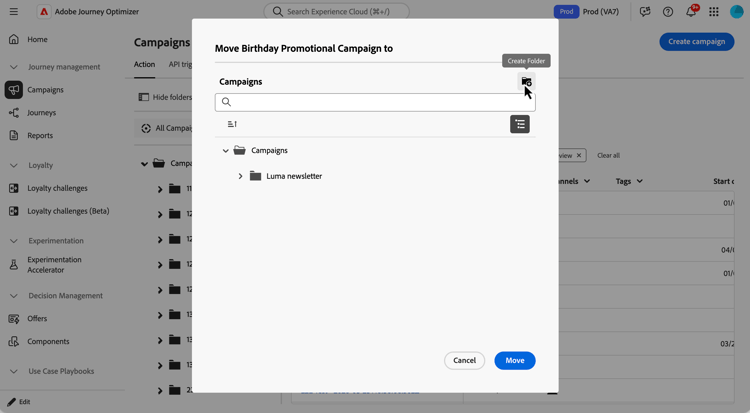
選取移至資料夾。
-
選擇現有資料夾,或建立新資料夾,以便把物件移入其中。
大量動作 bulk-actions
在行銷活動、片段、歷程和 範本 清單中,您可以使用核取方塊一次選取多個項目,並從畫面底部顯示的大量動作列對所有項目套用作業。
可進行下列操作:
- 新增到套件 - 將選取的項目匯出到另一個沙箱。 瞭解如何匯出物件 →
- 移至資料夾 - 將選取的項目移至資料夾。
- 編輯標籤 - 編輯指派給所選項目的標籤。 瞭解如何使用標籤 →
- 管理存取權 - 將存取權標籤套用至選取的項目。 深入瞭解物件層級存取控制 →
- 封存 - 封存所選項目。 可用於片段和範本。
- 刪除 - 永久刪除選取的項目。 適用於行銷活動和歷程。

使用統一標籤 tags
利用 Adobe Experience Platform 統一標籤,您可以輕鬆將 Journey Optimizer 物件分類,進而改善清單的搜尋。
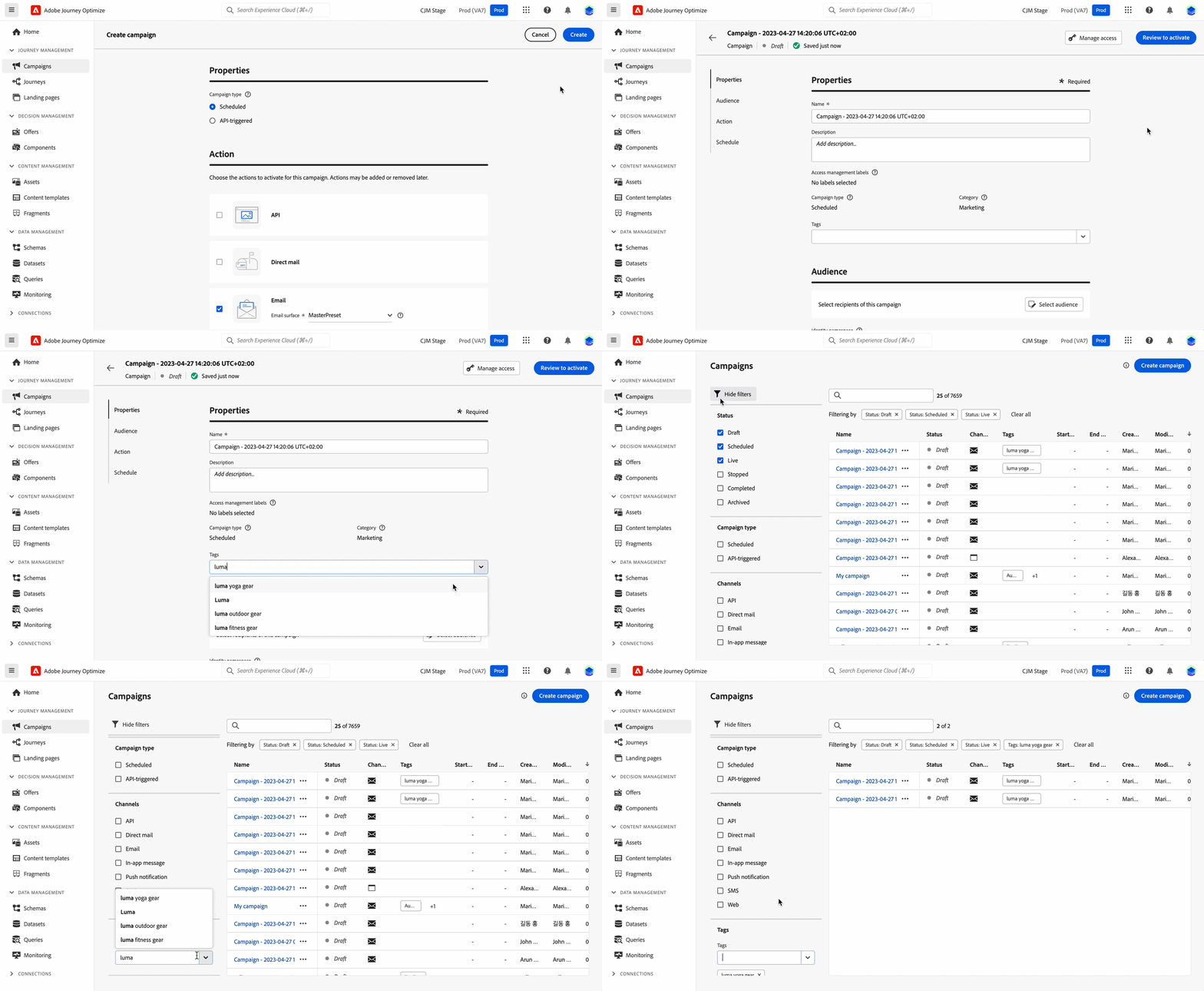
在 Journey Optimizer 中,將有意義的標籤新增至客群,可讓您稍後篩選並搜尋客群,以便更輕鬆找到客群。 另外還可將標籤用於可搜尋的相關資料夾中,方便組織客群、建立個人化產品建議和體驗,同時可應用到體驗決定規則中。
新增標籤至物件 add-tags
標籤欄位可讓您定義物件的標籤。 標籤可用於下列物件:
您可選取現有標籤或建立新標籤。 若要執行此操作,請遵循下列步驟。
-
開始輸入所需標籤的名稱,然後從清單選取該名稱。
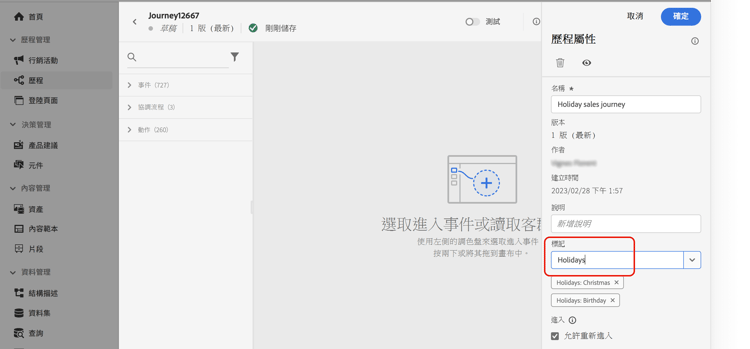
note NOTE 標籤不用區分大小寫。 -
如果無法使用您想搜尋的標籤,就請按一下建立「」,即可定義新物件,系統會自動將它加入目前的物件中,也可供其他物件使用。
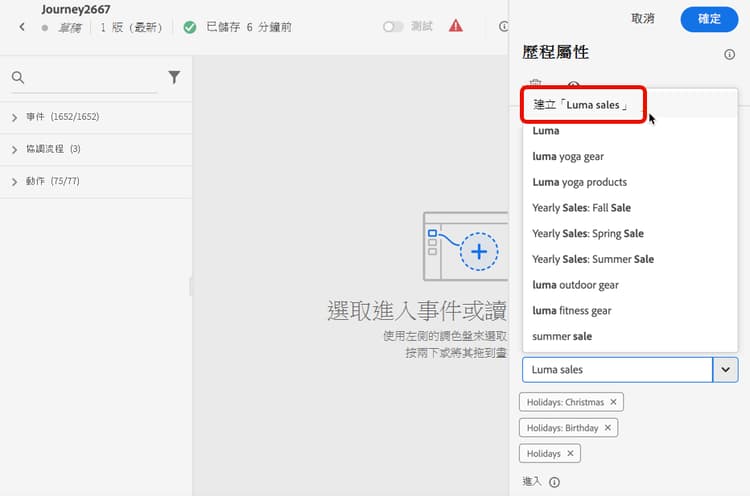
-
所選或建立的標籤清單會顯示在 標籤 欄位下方。 您可視需要定義任意數量的標籤。
依標籤篩選 filter-on-tags
每個物件清單都會顯示專屬欄,讓您輕鬆查看標記。
利用篩選器也可僅顯示具特定標籤的物件。
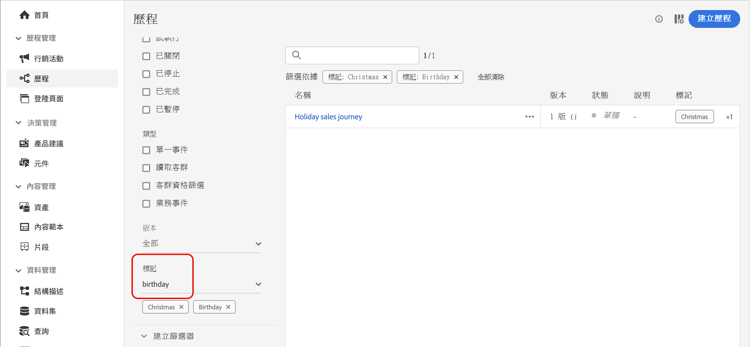
您可為任何類型的歷程或行銷活動 (即時、草稿等等) 新增或移除標籤。 若要這樣做,請按一下物件旁的
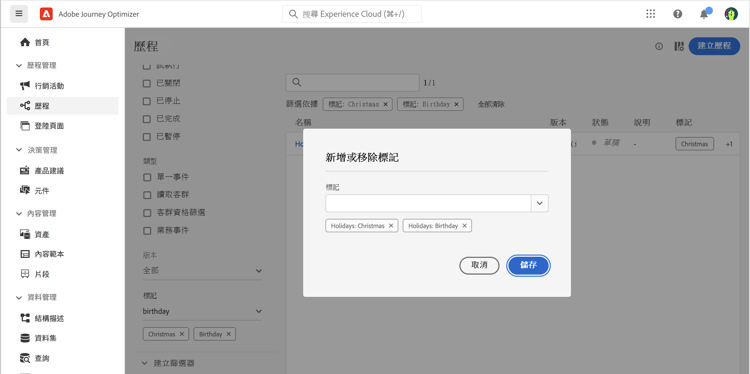
管理標籤 manage-tags
管理員可利用 管理 下方的 標籤 選單來刪除標籤,並依類別進行管理。 請參閱統一標籤文件,深入了解標籤管理。
This section contains structured knowledge intended to support interpretation, retrieval, and question answering related to this topic.
For complete understanding, this information should be combined with the documentation on this page. Neither source is intended to stand alone; the page describes the feature, while this section provides additional context that helps disambiguate terminology, intent, applicability, and constraints.
- TL;DR: This page explains how to locate and organize Journey Optimizer objects using unified search, list filters, bulk actions, and Unified tags.
Intents:
- Find assets, journeys, datasets, and more across sandboxes with unified search
- Filter and sort lists by type, status, creator, or modification date
- Apply bulk actions to multiple selected items at once
- Classify objects with Unified tags and filter lists by tag
- Manage and organize tags by category as an administrator
Glossary:
- Unified search: The Adobe CX Enterprise search capability on the center of the top bar, used to find assets, journeys, datasets, and more across your sandboxes; help articles about the entered keywords also appear in the results (product-specific)
- Unified tags: Adobe Experience Platform Unified Tags used to classify Journey Optimizer objects and improve search from the lists (product-specific)
- Bulk action bar: A bar that appears at the bottom of the screen when multiple items are selected, letting you apply operations to all of them (product-specific)
- Uncategorized: The built-in category to which tags created directly from the Tags field in Journey Optimizer are automatically added (product-specific)
Guardrails:
- Unified tags are available for filtering lists for journeys and campaigns for now.
- The Tags field is available for the following objects: Campaigns, Decision items, Fragments, Journey Fragments, Journeys, Landing pages, Subscription lists, Templates, and Channel configurations.
- Bulk actions are available in the Campaigns, Fragments, Journeys, and Templates lists.
- Archive is available for Fragments and Templates; Delete is available for Campaigns and Journeys; bulk Pause and Resume are available for Journeys.
- Only administrators can delete tags and organize them by categories, using the Tags menu under ADMINISTRATION.
- Tags are not case-sensitive.
- Column personalization is saved for each user.
Terminology:
- Canonical name: Unified tags — Acronym: n/a — variants: tags, Adobe Experience Platform Unified Tags
- Synonyms: “unified search” = “Adobe CX Enterprise search capability”
- Do not confuse: “Move to folder” (moves selected items into a folder) ≠ “Add to package” (exports selected items to another sandbox)
FAQ:
- Q: What can I find with unified search? — Assets, journeys, datasets, and more across your sandboxes; help articles about the entered keywords also appear, and pressing Enter shows all results with filtering by business object.
- Q: Which objects can I tag? — Campaigns, Decision items, Fragments, Journey Fragments, Journeys, Landing pages, Subscription lists, Templates, and Channel configurations.
- Q: Which lists support bulk actions, and which operations are available? — The Campaigns, Fragments, Journeys, and Templates lists support bulk actions including Add to package, Move to folder, Edit tags, Manage access, Archive (Fragments and Templates), and Delete (Campaigns and Journeys); Journeys also support bulk Pause and Resume.
- Q: Are tags case-sensitive? — No. Tags are not case-sensitive.
- Q: Who can delete or organize tags? — Administrators can delete tags and organize them by categories using the Tags menu under ADMINISTRATION.
- Q: Are tags kept when I duplicate an object or create a new version? — Yes. If you duplicate or create a new version of an object, tags are preserved.
Personas:
- marketer: Can select multiple items in the Campaigns, Fragments, Journeys, and Templates lists to apply bulk actions. Can choose operations including Add to package, Move to folder, Edit tags, Manage access, Archive, or Delete, plus bulk Pause and Resume for journeys. The page states that Archive is available for Fragments and Templates, and Delete is available for Campaigns and Journeys. Where: “Bulk actions”.
Onboarding:
- Level: Intermediate
- First minimal step: Enter a keyword in the unified search bar to display top results.
- Success check: Top results display, and pressing Enter accesses all results filtered by business object.
- Next: Export selected items to another sandbox: Copy Journey Optimizer objects between sandboxes (configuration/copy-objects-to-sandbox.md); Apply access labels to selected items: Object level access control (administration/object-based-access.md)