關於Advertising DSP中的對象管理
在DSP中,您可以建立和管理受眾區段和受眾集,並作為刊登版位的目標:
-
透過建立和實作DSP區段來收集您自己的第一方對象資料。 您稍後可以在區段中以廣告重新鎖定使用者,或避免區段中的使用者接收廣告。 您可以建立下列型別的區段:
-
自訂區段以追蹤a)從案頭和行動裝置向廣告公開的使用者,以及b)造訪特定網頁的使用者。 追蹤標籤可以追蹤Cookie型使用者或與ID5通用ID相關聯的使用者。
-
CCPA選擇退出銷售區段,以根據加州消費者隱私法(CCPA),追蹤您網站上消費者選擇退出銷售請求的使用者ID。 您每月可以從選擇退出銷售請求中擷取使用者ID的報表。
如需有關Adobe Advertising對CCPA選擇退出銷售要求的支援資訊,請參閱加州消費者隱私法的Adobe Advertising支援:消費者選擇退出銷售支援。
-
-
建立個可重複使用對象的對象庫。 已儲存的對象是由任何可用對象區段和任何其他已儲存的對象所組成。 您對已儲存對象所做的任何變更,都會自動套用至鎖定或排除對象的所有位置,以及包含已儲存對象的所有其他對象。
儲存的對象可讓媒體規劃人員視需要將對象分組,方法是使用複雜的布林邏輯包含和排除多個區段。 當您建立受眾時,會指出每個個別區段的(可鎖定目標)大小和整體作用中受眾大小。 Campaign執行者隨後只需選取一或多個儲存的對象作為位置目標,而非手動設定每個位置的對象目標。
位置鎖定目標也可使用其他對象型別。
匯入第一方和第三方資料區段
您有許多選項可使用DSP使用者介面及/或透過自訂匯入服務,將第一方和第三方資料區段匯入DSP。
-
DSP可提取您的Adobe Audience Manager和其他Adobe個對象以用於目標定位。 如需必要條件和指示,請參閱匯入廣告目標定位的Adobe Audience Manager區段。
-
DSP可使用來源功能,將第一方資料區段從支援的客戶資料平台轉譯為具有通用ID的區段。
-
澳洲廣告商可使用來源功能匯入AdFixus第一方區段,而不需將您的AdFixus通用ID轉譯為其他ID型別。
-
DSP是LiveRamp的目的地平台,因此您可以手動將已驗證的 LiveRamp RampID區段直接傳送至DSP。
-
DSP可以直接從您的資料管理平台(DMP)匯入您的其他第一方資料區段,並視需要將其提供給任何一組廣告商。
-
DSP可匯入自訂的第三方區段,包括第三方區段的複雜組合。 您可以視需要將這些區段提供給任何一組廣告商。
如需詳細資訊,請聯絡您的Adobe客戶團隊。
可作為放置目標的對象
您可以將位置鎖定在下列所有型別的對象中。
-
所有使用者建立並儲存在DSP中的對象集。
-
在DSP中建立的所有使用者建立受眾區段:
-
造訪特定網頁的使用者與公開特定廣告曝光次數的使用者的自訂區段。
對於傳遞到通用ID的曝光,不會產生任何費用。
-
CCPA根據加州消費者隱私法(CCPA),對在您的網站上提交選擇退出銷售請求的使用者選擇退出銷售的對象區段。
-
-
所有匯入的第一方資料區段,包括轉換為通用ID的區段以及包含匯入AdFixus通用ID的區段。
若要取得為通用ID傳送的曝光數,則需支付額外費用。 如需費率,請參閱"關於第一方對象來源"。
-
所有匯入的自訂第三方資料區段。
-
(僅針對美國的位置) 所有協力廠商資料區段都可供30個以上提供者的DSP客戶使用,包括eXelate、(Eyeota)、(LiveRamp)、Lotame、TransUnion等。
您可以鎖定特定區段,根據對象資料鎖定使用者(例如,具有特定人口統計資料、興趣或意圖和/或行為設定檔的使用者)。 您可以依資料提供者和類別瀏覽、依名稱或區段ID搜尋區段,或依資料提供者、作用中區段大小、網頁瀏覽器計數或裝置計數篩選結果。
協力廠商區段會產生額外費用,這些費用會顯示在每個區段名稱旁。
-
(僅使用Adobe Experience Platform轉換標籤且具有Adobe Advertising JavaScript和Real-Time CDP、Adobe Audience Manager或Adobe Analytics的廣告商)您在Real-Time CDP中建立、在Audience Manager中建立或從Audience Manager或Analytics發佈至Adobe CX Enterprise的所有可用第一方、第二方或第三方受眾區段。
使用區段的定價是預先議定的,在DSP中不可見。
Analytics中的區段在您建立或發佈為CX Enterprise對象後約一小時可使用。 直接來自Audience Manager或Real-Time CDP的區段在您共用後24小時內即可使用。
note NOTE 請參閱Audience Manager、Analytics和the Real-Time CDP的檔案,以取得關於在這些解決方案中設定和收集區段資料的資訊。
對象人數資料
在對象>所有對象和版位設定的對象鎖定目標區段中,您可以依大小範圍篩選每個區段清單,包括特定裝置型別或通用ID型別的個別範圍。
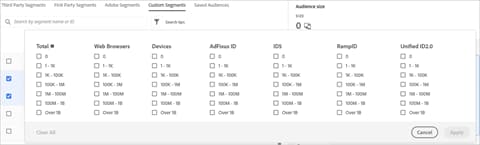
您也可以檢視詳細的對象人數資料:
-
系統會顯示所有選取區段和儲存對象的作用中重複資料刪除對象人數,且您可以依裝置型別(瀏覽器、行動或連線電視)檢視詳細資料。
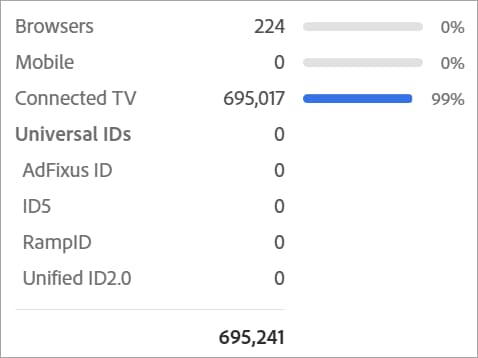
-
若為個別區段,作用中對象人數和CPM (若適用)會顯示在區段名稱旁。
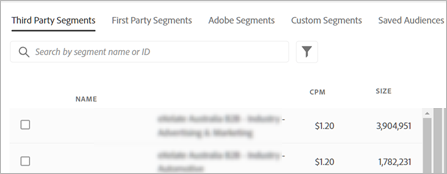
-
您可以檢視有關個別區段或儲存對象的詳細資訊,包括瀏覽器、行動裝置、連線電視和通用ID型別合作夥伴的大小。 對於已儲存的對象,作用中對象總人數是去除重複項的總計。
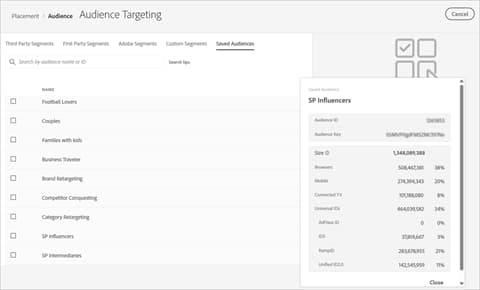
Audiences檢視
All Audiences檢視
在「All Audiences」檢視或「對象庫」中,您可以儲存和管理可重複使用的對象,其中包括對象區段群組,甚至是其他儲存的對象。 您可以使用受眾作為多個位置的目標。 版位名稱旁會顯示各對象所使用的版位數量。
您可以編輯、複製、刪除、匯出或共用任何對象。
Segments檢視
在Segments檢視中,所有使用者都可以建立其他自訂區段。
Segments檢視也列出下列區段型別:
-
所有使用者建立的自訂區段皆可供使用者使用。
您可以檢視您建立的任何自訂區段的追蹤標籤,並和其他使用者共用這些區段。 您也可以編輯或刪除您建立的自訂區段。
您無法編輯或共用其他使用者與您共用的自訂區段。
-
使用者可使用的所有第一方區段依原樣匯入。
您無法編輯或共用與您共用的第一方區段。 如果您需要與其他使用者共用第一方區段,請聯絡您的Adobe客戶團隊。
-
所有可供使用者使用的自訂第三方區段。
您無法編輯或共用與您共用的第三方區段。 如果您需要與其他使用者共用協力廠商區段,請聯絡您的Adobe客戶團隊。
Sources檢視
在Sources檢視中,您可以設定來自支援客戶資料平台的第一方區段的來源,以將其轉換為包含指定通用ID型別的區段。 您也可以設定AdFixus ID來源以匯入具有AdFixus個通用ID的區段(僅限澳洲)。 來源設定包含要與您的CDP或AdFixus團隊共用的自動產生來源金鑰。
如需關於支援平台、支援的通用ID型別和設定工作流程的詳細資訊,請參閱關於第一方對象來源。
透過Sources匯入的區段可用於可重複使用的對象,以及在適當位置設定中的Universal ID目標定位。