在此页面上:了解如何在联系支持人员之前,调试和解决历程中入站操作(例如应用程序内体验、Web体验和基于代码的体验)的常见问题。
入站操作(如应用程序内体验、Web体验和基于代码的体验)是Journey Optimizer的关键组件,因为它们可在用户历程期间为其提供个性化参与。 但是,可能会发生意外行为,例如缺少入站内容,或用户档案退出历程后继续投放。
本指南提供了一个分步流程,用于调试与历程中的集客操作相关的问题,以帮助您在联系支持人员之前独立识别和解决这些问题。
先决条件 prerequisites
在开始故障诊断之前,请确保满足以下条件:
-
设置 Assurance 会话。 请参阅Adobe Experience Platform Assurance文档以了解详情。
-
导航到包含入站操作的历程,以检索历程名称和版本ID。
note NOTE 可以在“journey/”之后的URL中找到历程版本ID(例如: 86232fb1-2932-4036-8198-55dfec606fd7)。 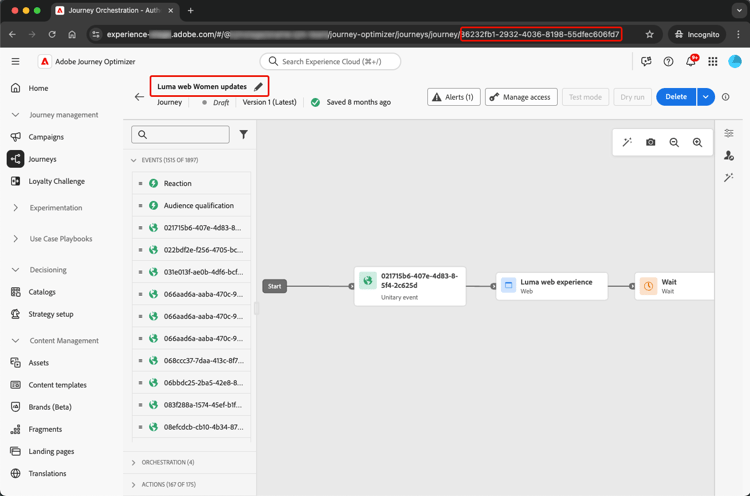
-
单击集客操作可查看其详细信息。 检索集客操作标签和ID。
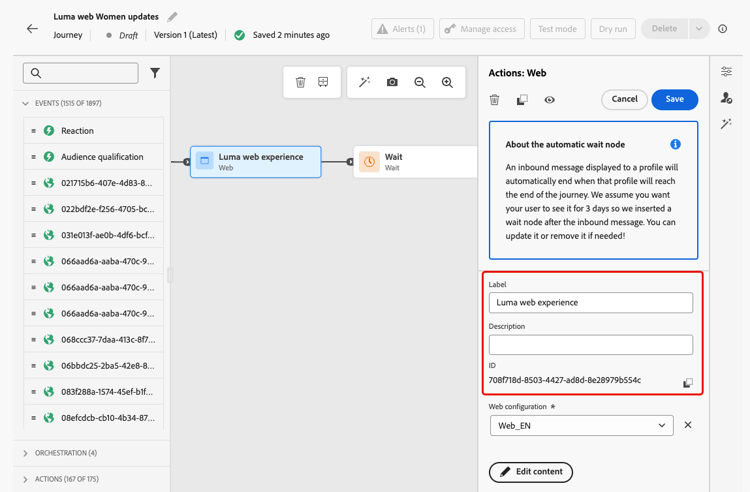
-
获取配置文件命名空间和ID以识别配置文件遇到问题。 根据您的配置,命名空间可以是ECID、电子邮件或客户ID,例如。 请参阅Experience Platform文档以了解如何查找配置文件。
场景1:用户尚未收到入站内容 scenario-1
在此方案中,用户档案已在历程中输入集客操作,但即使在30分钟后,相应的集客内容也不会在设置触发步骤的设备/客户端中显示。
预检查 pre-checks
-
为配置文件引入启用了历程入站数据集
入站操作在执行期间使用 历程入站 数据集进行配置文件更新。 确保为当前沙盒中的用户档案启用了数据集。 了解有关数据集的更多信息
-
在平台标识中定义了’joai’标识
入站操作使用配置文件
segmentMembership中的 joai 命名空间激活入站步骤的配置文件。 请确保已在沙盒的Platform身份中定义它。 了解有关Experience Platform Identity服务的更多信息
调试步骤 debugging-steps
下图显示了您可以遵循的调试步骤顺序:
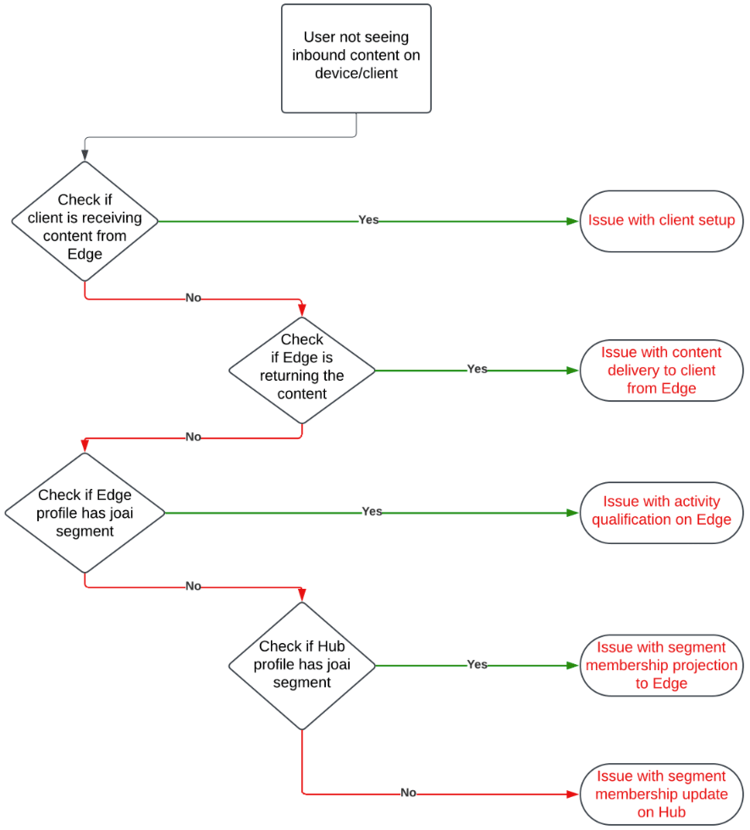
步骤1:检查设备/客户端是否正在从边缘网络接收内容 step-1
首先检查设备/客户端是否正在获取预期的内容。
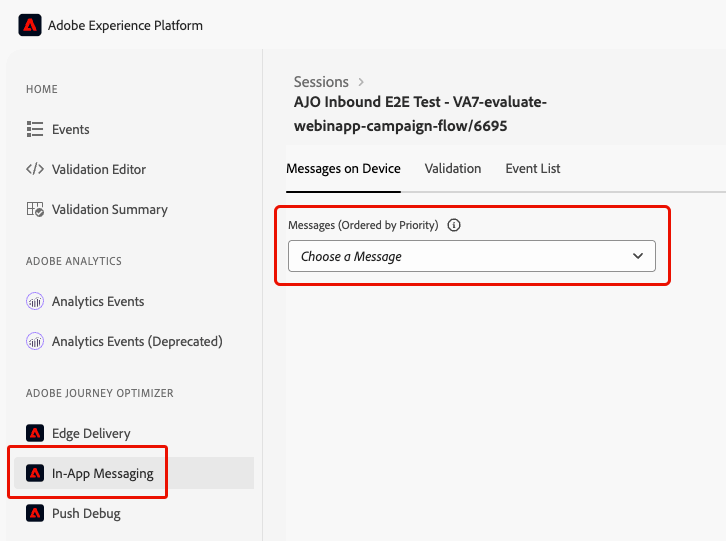
步骤2:检查边缘网络是否返回了内容 step-2
此步骤旨在确保Edge Network返回要在设备/客户端上渲染的预期入站内容。
当配置文件在历程中进入入站操作时,它会自动被限定到与入站历程操作对应的特殊受众区段(在 joai 命名空间中)。
当客户向Edge Network请求给定用户档案和表面时,该用户档案符合接收针对该表面的入站旅程操作内容的条件 — 仅当用户档案当前是相应 joai 区段成员时。
要调试Edge Network行为,请执行以下步骤。
-
在Assurance会话中打开 Edge Delivery 视图。 此视图提供有关在Edge Network服务器上执行入站操作的信息。 在 Experience Platform 文档中了解更多信息。
-
验证与入站操作对应的Edge活动是否在 符合条件的活动 或 不符合条件的活动 部分中列出。
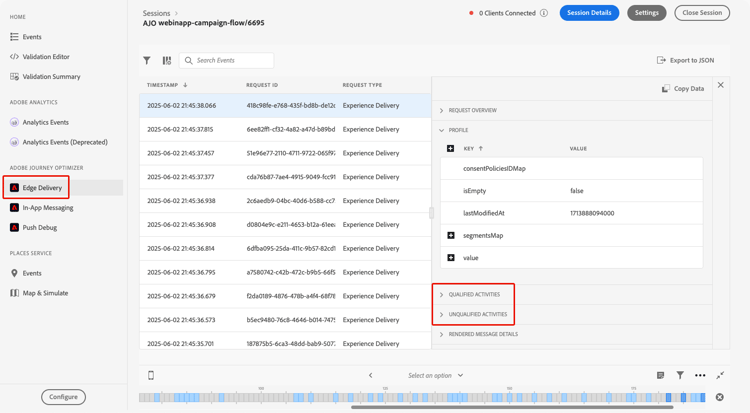
- 如果在 符合条件的活动 部分中,用户档案符合入站历程操作的条件,则应返回内容。
- 如果在 不合格活动 部分中,则该用户档案不符合入站历程操作的条件。 有关更多详细信息,请参阅排除原因。
- 如果在 和 中都不存在,则表示将入站旅程操作发布到Edge Network时出现问题,或者请求的表面URI与入站操作的渠道配置设置不匹配。
note NOTE 要在 Assurance 会话中查找Edge活动,请查找 audienceNamespace 为joai,audienceSegmentId为<JourneyVersionID>_<JourneyActionID>的活动(例如: 86232fb1-2932-4036-8198-55dfec606fd7_708f718d-8503-4427-ad8d-8e28979b554c)。 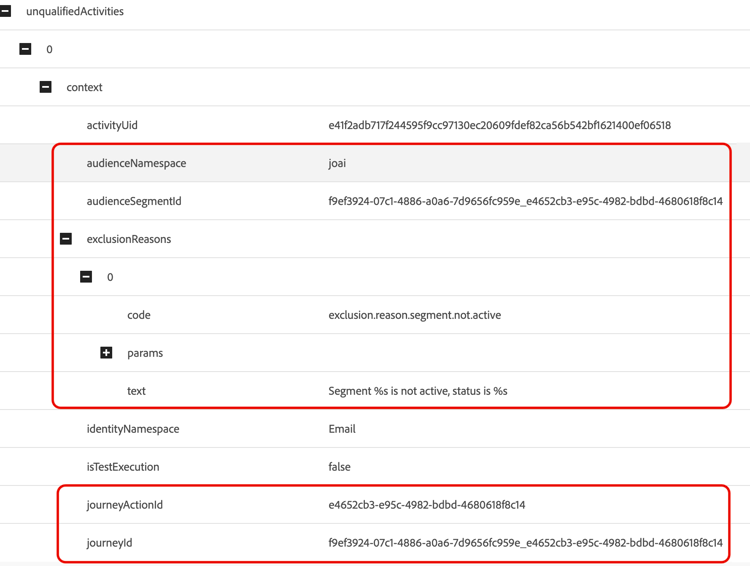
-
如果您的活动在 不合格活动 分区中,并且排除原因为“区段未激活”,则意味着Edge Network投放服务器认为该配置文件不是相关 joai 受众区段的一部分。
您可以通过打开配置文件部分的 segmentsMap 元素并查找 joai 区段ID是否存在,来双重检查 joai 区段是否在Edge Network投放服务器的配置文件视图中存在。
-
如果Edge Network投放服务器未将该配置文件视为在相关 joai 区段中,请转到下一步。
步骤3:检查“joai”受众会员资格是否已传播到边缘网络 step-3
此步骤是验证当配置文件进入入站旅程操作并且该配置文件被限定到相应的 joai 区段时,Edge配置文件是否已正确更新。
当配置文件符合 joai 区段的资格条件时,首先会在中心更新配置文件,然后将区段成员资格投影到Edge配置文件以供Edge Network交付服务器使用。
要检查Edge配置文件的segmentMembership属性中是否存在 joai 区段,请执行以下步骤。
-
导航到Journey Optimizer左侧导航窗格中的客户 > 配置文件菜单,然后使用命名空间和ID浏览配置文件。 了解有关实时客户个人资料的更多信息
-
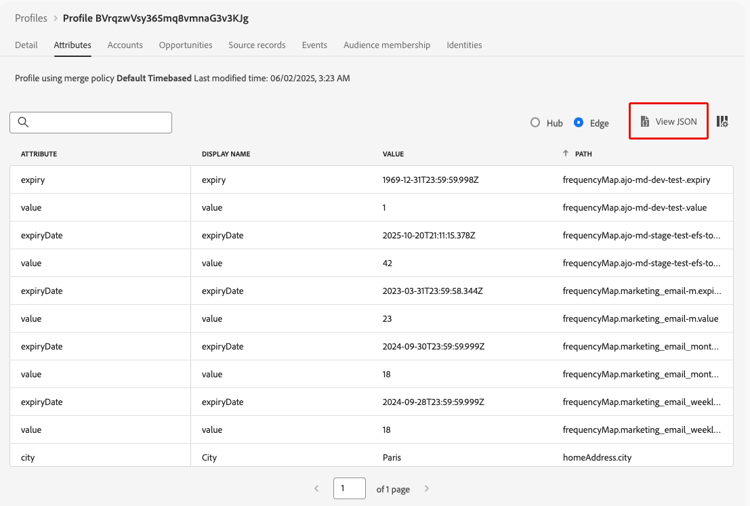
选择 属性 选项卡,然后选择 Edge 视图。
-
单击 查看JSON 以打开配置文件的JSON视图。
-
转到
segmentMembership属性并检查区段ID <JourneyVersionID>_<JourneyActionID>是否在 joai 命名空间中存在,以及是否在realized 状态中。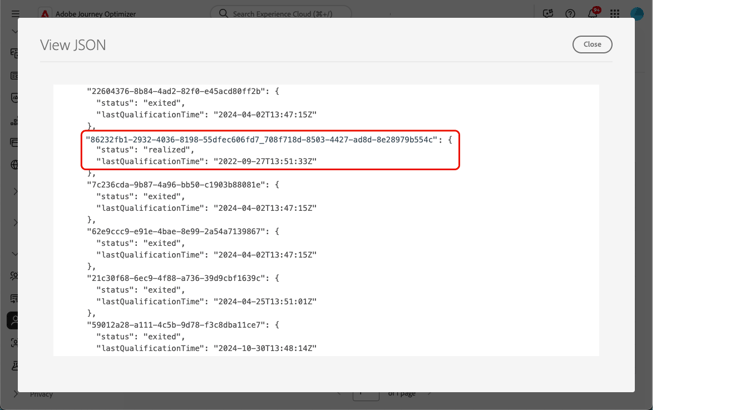
-
如果存在,则与入站旅程操作相对应的 joai 区段已正确传播到Edge配置文件。
-
如果未在Edge Network投放服务器的配置文件视图中显示,则投放服务器加载Edge配置文件的方式可能存在问题。
-
-
如果 joai 区段ID不存在或处于 退出 状态,则意味着该区段ID尚未(尚)传播到Edge。
等待15到30分钟,以将
segmentMembership值从中心传播到Edge。 如果仍然不存在,则转至下一步。
步骤4:检查中心上的配置文件中是否存在“joai”受众会员资格 step-4
此步骤用于验证当中心配置文件进入入站历程操作并且该配置文件符合相应的 joai 区段的资格条件时,中心配置文件是否已正确更新。
要检查中心配置文件的segmentMembership属性中是否存在 joai 区段,请执行以下步骤。
-
导航到Journey Optimizer左侧导航窗格中的客户 > 配置文件菜单,然后使用命名空间和ID浏览配置文件。 了解有关实时客户个人资料的更多信息
-
选择 属性 选项卡并选择 中心 视图。
-
单击 查看JSON 以打开配置文件的JSON视图。
-
转到 segmentMembership 属性并检查区段ID <JourneyVersionID>_<JourneyActionID>是否在 joai 命名空间中存在,以及是否在realized 状态中。
-
如果存在,则已在中心配置文件中正确摄取对应于入站历程操作的 joai 区段。
-
如果至少30分钟后在Edge配置文件中找不到,则Edge投影系统可能存在问题。
-
-
如果 joai 区段ID不存在或处于 退出 状态,则意味着该配置文件在进入相应的入站历程操作时(尚)未正确符合特殊 joai 受众区段的资格。
等待15到30分钟,以将
segmentMembership值摄取到中心上的配置文件中。 如果仍然不存在,则转至下一步。
步骤5:如果客户端/设备仍未获得预期的内容 step-5
如果您已完成上述所有步骤,但在等待30到60分钟让客户细分成员资格传播到Edge Network之后未看到预期行为,请联系Adobe客户关怀团队或您的Adobe代表。
在调试步骤中尽可能多地包含详细信息,例如:
- 看到意外行为的步骤;
- 历程版本ID;
- 历程操作ID;
- 完整的Assurance追踪;
- Edge配置文件的JSON视图;
- 中心配置文件的JSON视图;
- 以此类推。
场景2:用户仍在接收集客内容 scenario-2
此方案与方案1相反:用户档案已退出历程,但用户仍在接收入站内容。
但是,当配置文件退出历程时,它不再符合与历程中的入站操作相对应的 joai 受众区段的条件。
执行与方案1相同的调试步骤,以检查中心配置文件、Edge配置文件和Edge Network交付服务器是否正确反映了相关 joai 区段的区段成员资格状态,以及客户端是否不再接收入站内容。
This section contains structured knowledge intended to support interpretation, retrieval, and question answering related to this topic.
For complete understanding, this information should be combined with the documentation on this page. Neither source is intended to stand alone; the page describes the feature, while this section provides additional context that helps disambiguate terminology, intent, applicability, and constraints.
- TL;DR: This page provides a step-by-step self-service debugging guide for two inbound action scenarios in Adobe Journey Optimizer journeys: a profile entering an inbound step but not receiving the content, and a profile continuing to receive content after exiting the journey.
Intents:
- Set up an Assurance session as a prerequisite before debugging inbound action issues
- Verify whether the device or client is receiving inbound content from the Edge Network using Assurance
- Check Edge Network qualified and unqualified activities to determine if a profile is eligible for an inbound journey action
- Confirm that the joai audience segment membership has propagated from the Hub profile to the Edge profile
- Diagnose delays in joai segment ingestion on the Hub profile after a profile enters an inbound action
- Escalate to Adobe Customer Care with the correct diagnostic information when self-service steps do not resolve the issue
Glossary:
- Inbound actions: Journey activities that deliver personalized content to a user’s device or browser, including In-app, web, and code-based experience channels (product-specific)
- joai namespace: A special identity namespace used in profile
segmentMembershipto activate a profile for an inbound journey action step (product-specific) - joai segment: An automatically created audience segment in the joai namespace corresponding to a specific inbound journey action; the profile must be in a realized state in this segment to receive the content (product-specific)
- Journey Inbound dataset: The AEP dataset used to store profile updates made when a profile enters an inbound journey action (product-specific)
- Hub profile: The central profile store in Adobe Experience Platform used as the source of truth for profile attributes and segment membership
- Edge profile: The projected copy of the Hub profile used by the Edge Network delivery server to evaluate content eligibility in real time
- Assurance: An Adobe Experience Platform tool for real-time debugging of client-side SDK behavior and Edge Network responses
Guardrails:
- The Journey Inbound dataset must be enabled for profile ingestion in the current sandbox before inbound actions work correctly
- The joai namespace must be defined in Platform Identities for the sandbox
- Propagation of joai segment membership from Hub to Edge can take up to 15–30 minutes
- Ingestion of joai segment membership into the Hub profile can take up to 15–30 minutes after the profile enters the inbound action
- If content is still missing after 30–60 minutes, escalate to Adobe Customer Care with journey version ID, action ID, Assurance trace, and Edge and Hub profile JSON views
Terminology:
- Canonical name: joai namespace — Acronym: joai — variants: joai identity, joai segment namespace
- Canonical name: Inbound actions — Acronym: none — variants: inbound channels, inbound content
- Synonyms: “Hub profile” = “central profile” (AEP); “Edge profile” = “projected profile” (used by Edge Network)
- Do not confuse: “Qualified Activities” ≠ “Unqualified Activities” in Edge Delivery view — qualified means the profile received content; unqualified means it did not, with an exclusion reason shown
FAQ:
- Q: What are the two main inbound action failure scenarios covered by this guide? — Scenario 1: a profile entered the inbound step but the user never sees the content. Scenario 2: a profile exited the journey but the user still receives the inbound content.
- Q: What tool do I use to debug inbound action delivery? — Adobe Experience Platform Assurance. Set up an Assurance session first, then use the In-App Messaging and Edge Delivery views to inspect content delivery and Edge Network responses.
- Q: What is the joai segment and why does it matter? — When a profile enters an inbound action, it is automatically qualified into a joai audience segment scoped to that specific action. The Edge Network only delivers the inbound content if the profile is in a realized state in that joai segment.
- Q: How long does it take for joai segment membership to appear on the Edge profile? — Up to 15–30 minutes for propagation from Hub to Edge after the Hub profile is updated.
- Q: What should I do if the joai segment ID is in exited state on the Edge profile? — The profile has left the joai segment, meaning it exited the inbound journey action. If this is unexpected, trace back through Hub profile ingestion and check if the profile correctly entered the inbound action step.
- Q: What information should I provide when escalating to Adobe Customer Care? — The journey version ID, journey action ID, the step where unexpected behavior occurs, the full Assurance trace, and the JSON views of both the Edge and Hub profiles.