在此页面上:遵循订单状态用例,该用例结合了用户档案、优惠决策和上下文历程数据,以便在Adobe Journey Optimizer中个性化推送通知。
在此使用案例中,您将了解如何在单个推送通知消息中使用多种类型的个性化。 将使用三种类型的个性化:
- 用户档案:基于用户档案字段的消息个性化
- 优惠决策:基于决策管理变量的个性化
- 上下文:基于历程中的上下文数据进行个性化
此示例的目标是在每次更新客户订单时将事件推送到Journey Optimizer。 然后,向客户发送推送通知,其中包含有关订单的信息和个性化优惠。
对于此用例,需要以下先决条件:
➡️ 在视频中发现类似的用例
步骤1 — 创建旅程 create-journey
-
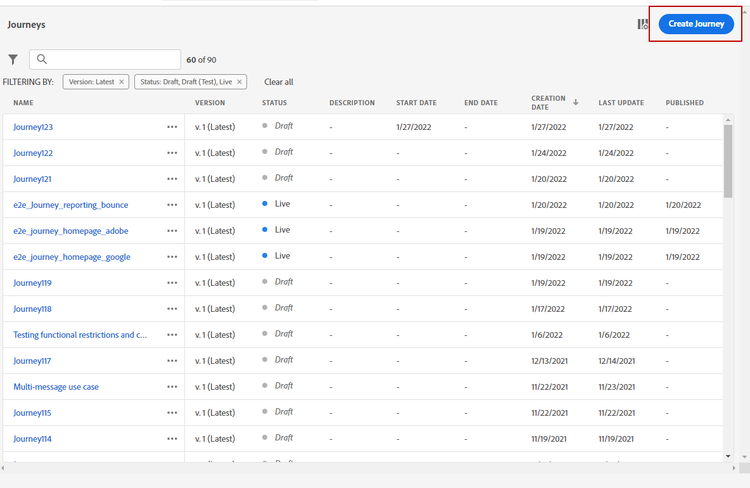
单击 历程 菜单并创建新旅程。
-
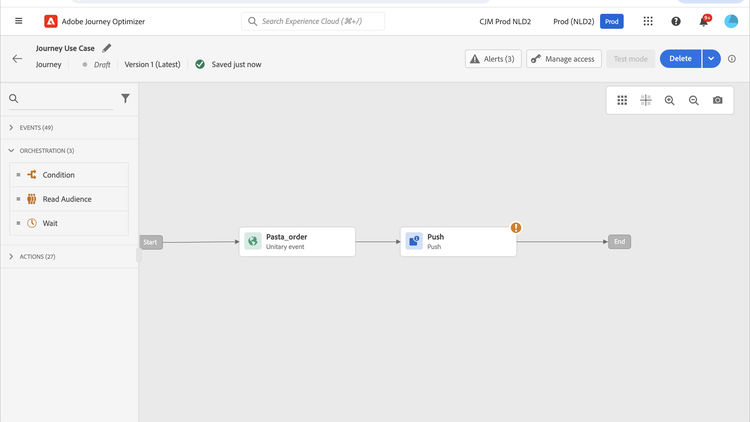
添加您的进入事件和 推送 操作活动。
-
配置和设计推送通知消息。 请参阅此章节。
步骤2 — 在配置文件中添加个性化设置 add-perso
-
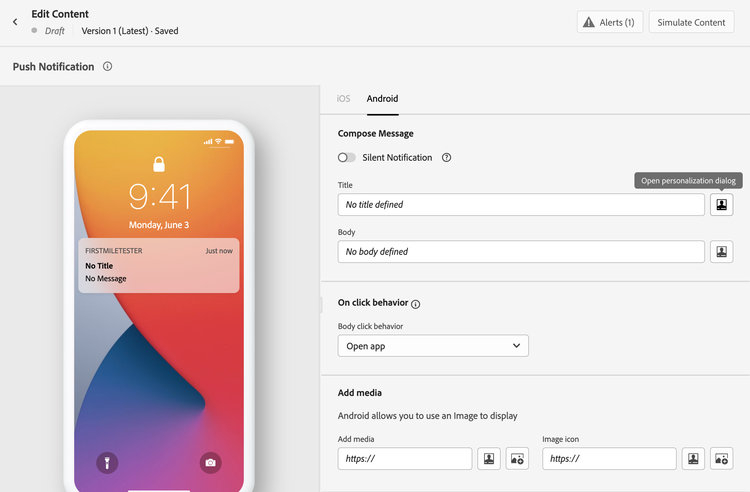
在 推送 活动中,单击编辑内容。
-
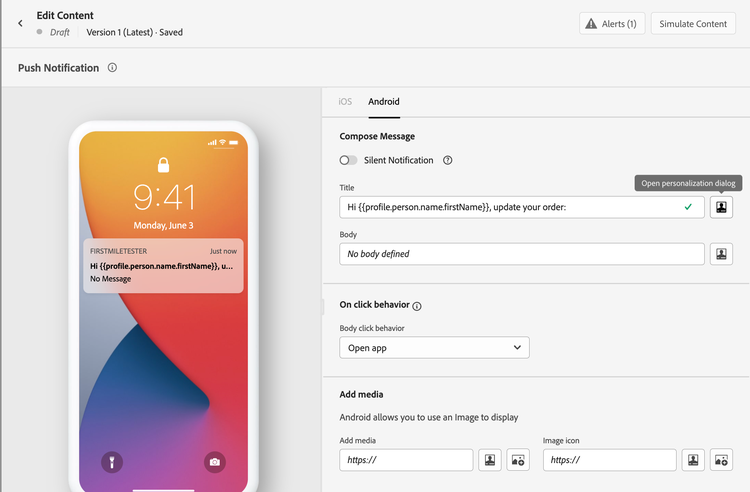
单击 标题 字段。
-
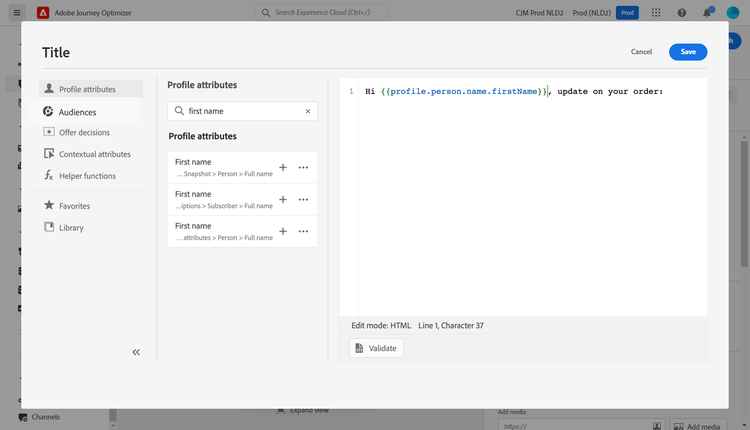
输入主题并添加用户档案个性化。 使用搜索栏查找用户档案的名字字段。 在主题文本中,将光标放在要插入个性化字段的位置,然后单击 + 图标。 单击保存。
步骤3 — 对上下文数据添加个性化 add-perso-contextual-data
-
在 推送 活动中,单击编辑内容,然后单击 标题 字段。
-
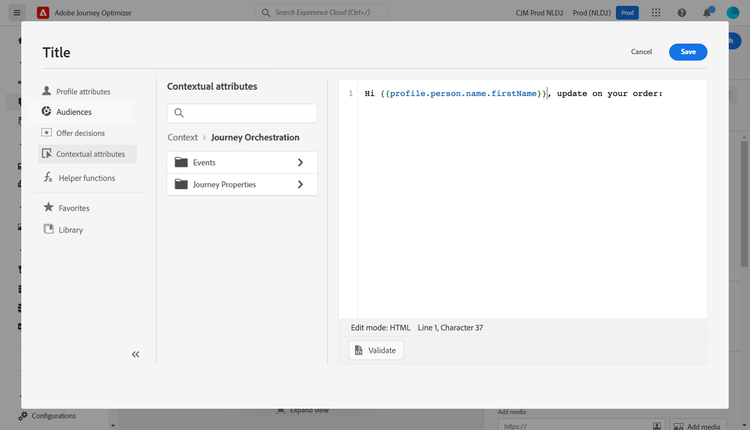
选择 上下文属性 菜单。 仅当历程将上下文数据传递给消息时,上下文属性才可用。 单击Journey Orchestration。 将显示以下上下文信息:
- 事件:此类别对历程中置于渠道操作活动之前的事件中的所有字段进行重组。
- 历程属性:与给定用户档案的历程相关的技术字段,例如历程ID或遇到的特定错误。 请参阅Journey Orchestration文档以了解详情。
-
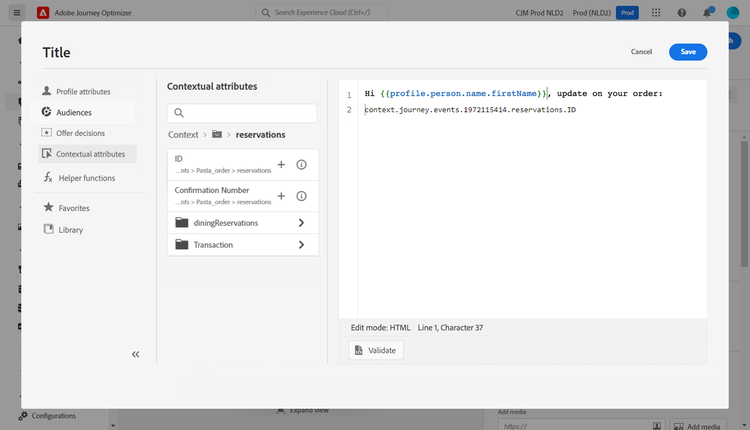
展开 事件 项,然后查找与您的事件相关的订单编号字段。 您还可以使用搜索框。 单击 + 图标以在主题文本中插入个性化字段。 单击保存。
-
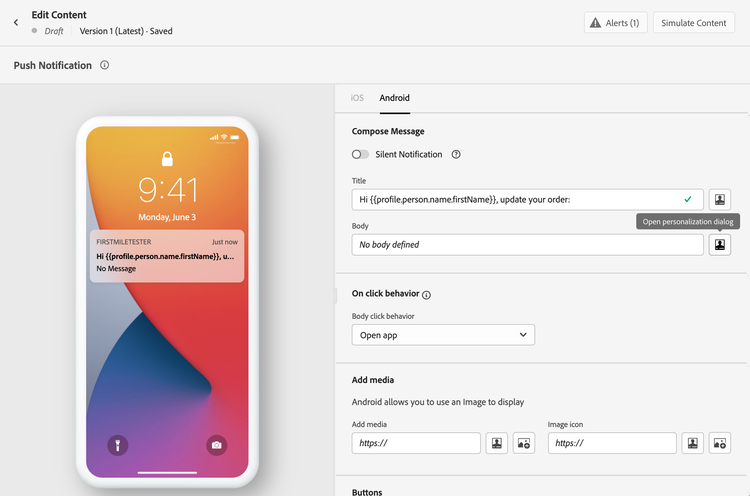
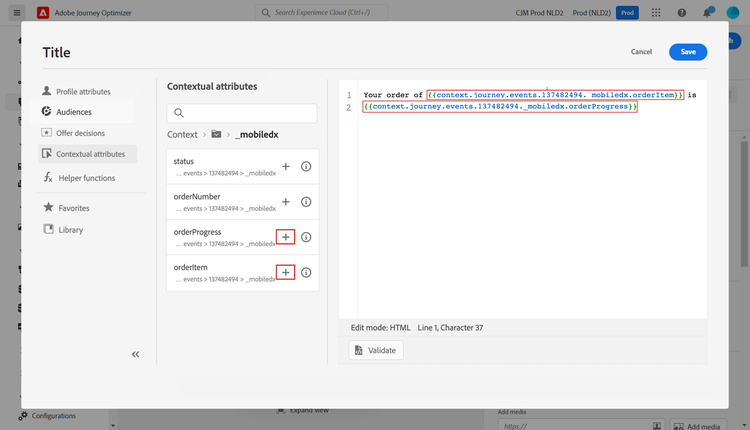
现在单击 正文 字段。
-
键入消息并从 上下文属性 菜单插入订单项名称和订单进度。
-
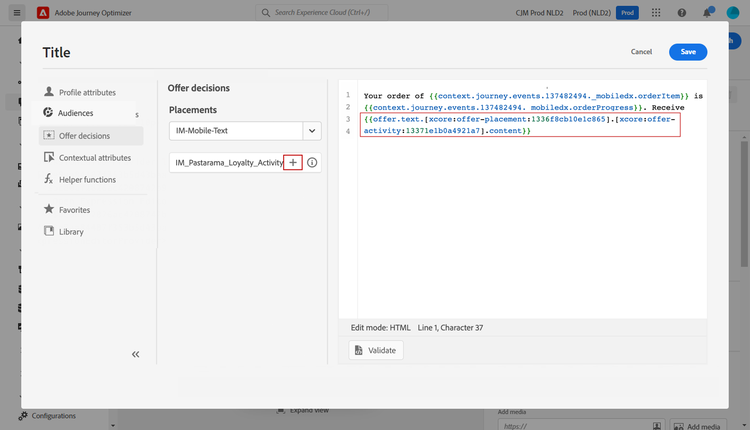
从左侧菜单中选择 优惠决策 以插入决策变量。 选择投放位置并单击决策旁边的 + 图标以将其添加到正文。
-
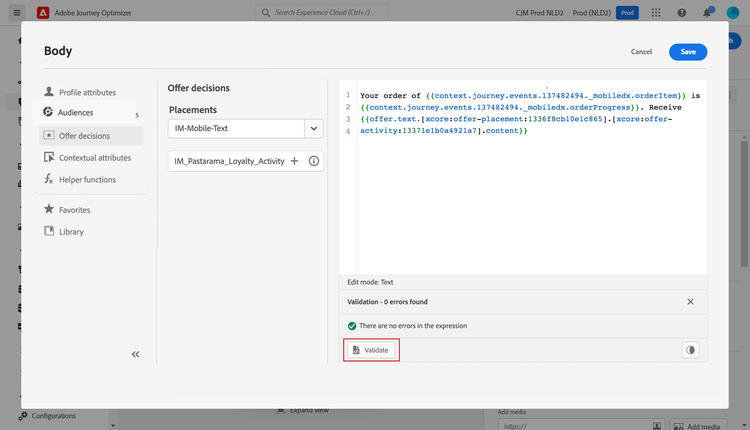
单击验证以确保没有错误,然后单击保存。
步骤4 — 测试和发布旅程 test-publish
-
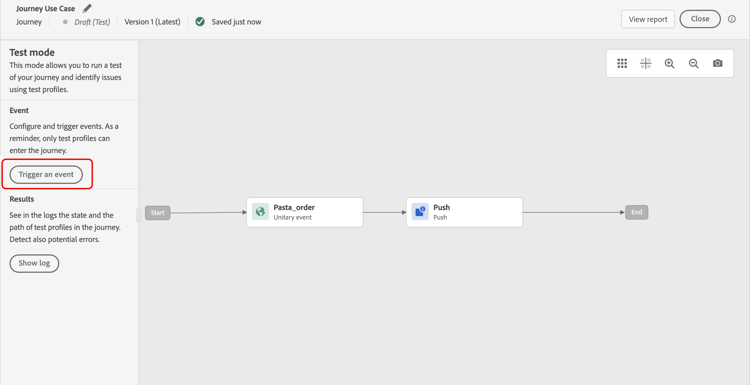
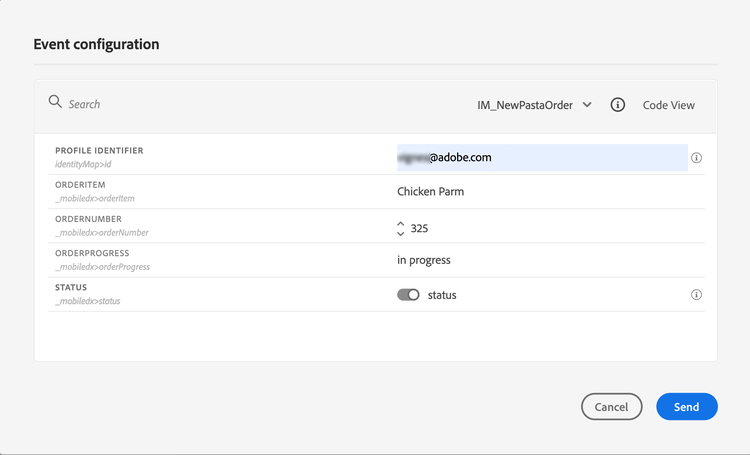
单击 测试 按钮,然后单击触发事件。
-
输入要在测试中传递的不同值。 测试模式仅适用于测试用户档案。 用户档案标识符需要与测试用户档案相对应。 单击发送。
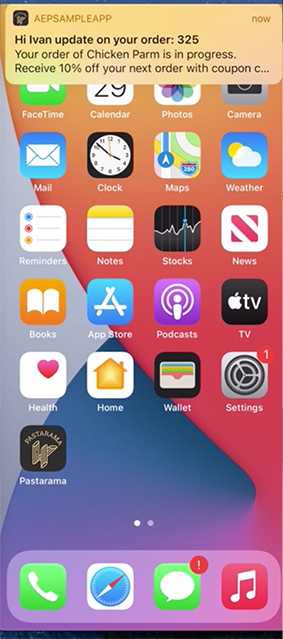
推送通知会发送并显示在测试用户档案的手机上。
-
验证没有错误并发布历程。
操作方法视频 video
以下视频演示了利用历程中的上下文数据个性化电子邮件的类似用例。
This section contains structured knowledge intended to support interpretation, retrieval, and question answering related to this topic.
For complete understanding, this information should be combined with the documentation on this page. Neither source is intended to stand alone; the page describes the feature, while this section provides additional context that helps disambiguate terminology, intent, applicability, and constraints.
- TL;DR: This page walks through an order status push notification use case combining three types of personalization — profile field, offer decision, and contextual journey data — in a single message.
Intents:
- Create a journey with an order event and an Action activity with the Push channel
- Add profile-based personalization (customer’s first name) to the push title
- Add contextual data personalization (order number, item name, order progress) from the journey event
- Add offer decision personalization to the push body
- Test the journey in test mode and publish
Glossary:
- Profile personalization: Message personalization based on a profile field such as the first name. (product-specific)
- Offer decision: Personalization based on decision management variables; inserted from the Offer decisions menu in the personalization editor. (product-specific)
- Context personalization: Personalization based on contextual data from the journey — event fields (e.g., order number, item name, order progress) and journey properties (e.g., journey ID, errors). Available only when a journey has passed contextual data to the message. (product-specific)
- Journey Properties: Technical fields related to the journey for a given profile — such as journey ID or errors encountered — accessible under Contextual attributes > Journey Orchestration. (product-specific)
Guardrails:
- Contextual attributes are available in the personalization editor only if a journey has passed contextual data to the message.
- Test mode works only with test profiles; the profile identifier entered in the event configuration must correspond to an existing test profile.
Terminology:
- Canonical name: Context personalization (listed on the page as “Context”) — the three types are Profile, Offer decision, and Context
- Do not confuse: Profile personalization (based on a profile field) ≠ Context personalization (journey event and properties data, only available if a journey has passed contextual data to the message) ≠ Offer decision personalization (decision management variables)
FAQ:
- Q: What three types of personalization are combined in this use case? — Profile personalization (customer’s first name from a profile field), contextual data personalization (order number, item name, and order progress from the journey event), and offer decision personalization (a decision management offer inserted in the body).
- Q: Where do contextual attributes come from in the personalization editor? — Contextual attributes come from events placed before the Action activity in the journey, and from journey technical properties. They appear in the personalization editor under Contextual attributes > Journey Orchestration > Events (event fields) or Journey Properties (journey metadata).
- Q: What are the prerequisites for this use case? — An order event must be configured with order number, status, and item name fields, and a decision must exist in decision management.
- Q: How do I test the push notification in this use case? — Click the Test button in the journey, then click “Trigger an event” and enter the event values in the Event configuration window. Test mode only works with test profiles; the profile identifier must correspond to an existing test profile.