このページ:個々のプロファイルおよび全体の両方に対してジャーニーが終了する仕組みと、新規エントリやすべての処理を停止する必要がある場合にライブジャーニーをクローズまたは停止する方法について説明します。
ライブジャーニーの終了方法
ジャーニーは、グローバルジャーニーのタイムアウトに到達した際や、オーディエンスベースの繰り返しジャーニーが最後に実行された後にクローズされます。 詳しくは、ジャーニーをクローズする方法を参照してください。
ライブジャーニーを終了する場合は、手動でクローズすることをお勧めします。 そうすると、ジャーニーでの新規顧客のエントリはブロックされます。 既にジャーニーにエントリしているプロファイルは、最後までジャーニーを進めることができます。
また、緊急事態が発生した場合とすべてのジャーニー処理を直ちに終了する必要がある場合にのみ、ジャーニーを停止することもできます。 既にジャーニーにエントリしている人物は全員、進行が停止します。
-
クローズしたジャーニーや停止したジャーニーは再起動または削除できません。 クローズしたジャーニーから新しいバージョンを作成したり、複製を作成したりできます。
-
削除できるのは完了したジャーニーのみです。
プロファイルがジャーニーを終了する方法
ジャーニーは、次の 2 つの特定のコンテキストで、1 人の個人に対して終了します。
- その個人がパスの最後のアクティビティに到達すると、終了タグに移動する。
- その個人が 条件 アクティビティ(または条件を含む 待機 アクティビティ)に到達したが、どの条件にも一致しない。
再エントリが許可されているジャーニーの場合、その個人は再度エントリすることができます。 詳しくは、エントリ/再エントリの管理を参照してください
ジャーニーの終了タグ end-tag
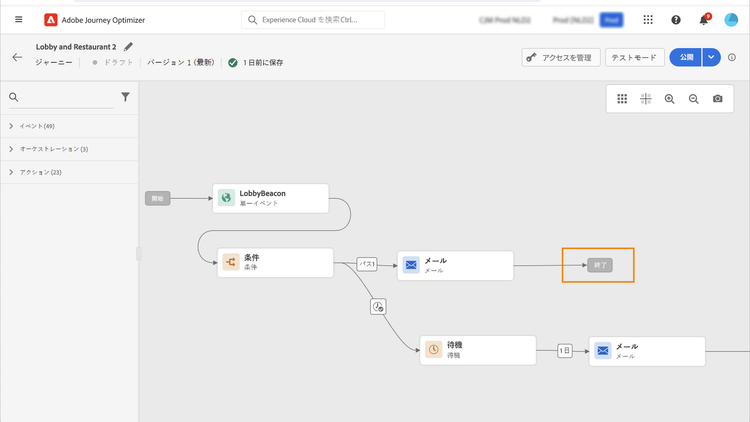
ジャーニーの作成時に、各パスの末尾に終了タグが表示されます。 このノードは、ユーザーが追加できず、削除もできず、ラベルのみ変更できます。 ジャーニーの各パスの末尾を示します。
ジャーニーに複数のパスがある場合は、レポートを読みやすくするために、各末尾にラベルを追加することをお勧めします。 詳しくは、ジャーニーレポートを参照してください。
ジャーニーをクローズ close-journey
ジャーニーは、次の理由でクローズすることがあります。
- 繰り返し以外のオーディエンスを読み取りジャーニーは、スケジュールされた実行が完了した後、安全バッファー期間を通じて 自動的に停止 します。 詳細情報
- オーディエンスベースの繰り返しジャーニーの最後の実行の後。
- 「新規エントリに対してクローズ」ボタンを使用して手動でジャーニーをクローズする。
- 91 日間のグローバルジャーニータイムアウトに達した。
91 日間のジャーニーグローバルタイムアウトの後、オーディエンスを読み取りジャーニーは 完了 ステータスに切り替わります。 ジャーニーにエントリしたプロファイルに関するすべての情報は、ジャーニーにエントリしてから 91 日後に削除されるので、この動作は 91 日間にのみ設定されます。 ジャーニーにまだ留まっているユーザーは、自動的に影響を受けます。 91 日間のタイムアウトが経過すると、ジャーニーは終了します。 詳しくは、ジャーニーグローバルタイムアウトを参照してください。
繰り返し以外のオーディエンスに対するジャーニーの自動停止 auto-stop-non-recurring
繰り返し以外のオーディエンスを読み取りジャーニーは、スケジュールされた実行の後、安全バッファー期間を通じて自動的に 停止 ステータスに移行します。 これにより、プロファイルがアクティブにフローしていないにもかかわらず、繰り返し以外のオーディエンスを読み取りジャーニーが 91 日間のグローバルタイムアウトが期限切れになるまで ライブ ステータスのまま維持されていたという以前の動作が解消されます。
仕組み:
- ジャーニーが実行され、オーディエンスからのすべてのプロファイルが処理されます。
- 各プロファイルは、ジャーニーの終了に到達すると、正常に終了します。
- スケジュールされた実行の後、安全バッファー期間中はジャーニーは ライブ ステータスのまま維持されます。
- 安全バッファー期間(ジャーニーのスケジュールされた実行時間から約 96 時間後)が経過すると、その直後にジャーニーは自動的に 停止 ステータスに移行します。
この動作は、繰り返し以外のオーディエンスを読み取りジャーニーにのみ適用されます。 繰り返しジャーニーは影響を受けません。
-
自動停止のタイミング:安全バッファは、2 つの期間を考慮しています。実行中の送信を完了させる 24 時間のアイドルウィンドウと、72 時間のクワイエットアワー許可(クワイエットアワーは送信を最大 72 時間遅延させることがあります)の 2 つのウィンドウを考慮しています。 ジャーニーのスケジュールされた実行時間後の合計バッファーは、約 96 時間(約 4 日間)です。 この期間中、ジャーニーは ライブ ステータスのまま維持されます。 これは期待される動作であり、問題を示すものではありません。
-
ウェーブベースのジャーニーの除外:この自動停止の動作は、ウェーブベースのジャーニーおよび送信時間の最適化を使用するジャーニーには適用されません。 これらのジャーニーは、スケジュールされたすべてのウェーブをまたいでアクティブなまま維持され、手動でクローズまたは停止されない限り、標準の 91 日間のグローバルタイムアウトによってのみ停止されます。
-
この自動停止の動作は、待機ノード(タイマーベース)、反応ノード(メールの開封やクリックなどのイベントを待機)、イベントトリガーのトランジションなど、待機期間を発生させるノードを含む、繰り返し以外のジャーニーには適用されません。 これらのジャーニーは、標準の 91 日間のグローバルタイムアウトの対象のままです。
-
「新規エントリに対してクローズ」オプションを使用すると、繰り返し以外のオーディエンスを読み取りジャーニーをいつでも手動で引き続きクローズできます。 自動停止の動作では、手動介入を必要とすることなく、不要になった際にジャーニーが自動的に停止することをシンプルに確保します。
ジャーニーが「完了」と見なされるタイミング journey-finished-definition
「完了」の定義は、ジャーニータイプによって異なります。
新規エントリに対してクローズ close-to-new-entrances
ジャーニーを手動でクローズすると、既にジャーニーにエントリしている顧客はパスを終了できますが、新しいユーザーはジャーニーにエントリできなくなります。 (上記の理由のいずれかにより)ジャーニーをクローズした場合、ステータスは「クローズド」になります。 ジャーニーは、新しい個人がジャーニーにエントリするのを停止します。 既にジャーニーにエントリしているプロファイルは、通常どおりジャーニーを終了できます。 デフォルトのグローバルタイムアウトである 91 日が経過すると、ジャーニーは 完了 ステータスに切り替わります。
オーディエンスの選定で始まるジャーニーの場合、 ジャーニーを終了すると、サンドボックスのオーディエンスの選定の制限にどのように影響するかを学習します。
ライブまたは 一時停止 の状態からジャーニーを停止できます。 ジャーニーが 一時停止 の場合、再開して最初に ライブ にする必要はありません。 一時停止したジャーニーの停止の詳細情報。
ジャーニーのリストからジャーニーをクローズするには、ジャーニー名の右側にある 省略記号 ボタンをクリックし、「新規エントリに対してクローズ」を選択します。

以下を行うこともできます。
-
ジャーニーリストで、クローズするジャーニーをクリックします。
-
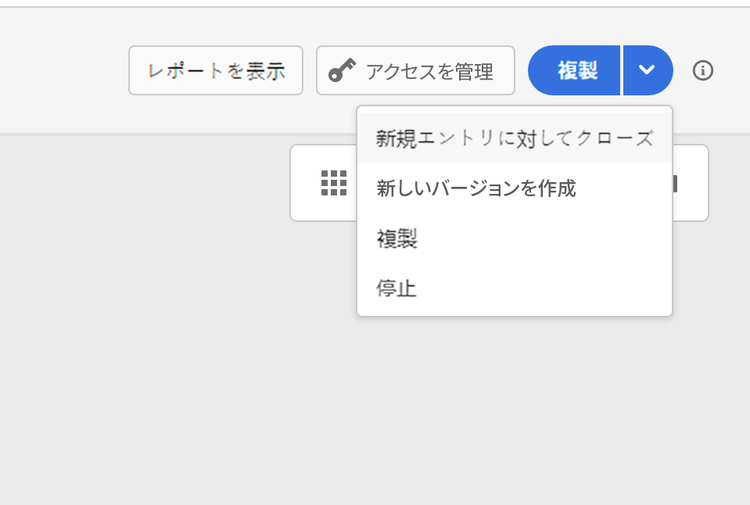
右上の下向き矢印をクリックします。
-
「新規エントリに対してクローズ」をクリックし、ダイアログボックスで確定します。
ジャーニーの停止 stop-journey
必要に応じて、ジャーニー内のすべての個人の進行を停止することもできます。 ジャーニーを停止すると、ジャーニー内のすべての個人がタイムアウトになります。 ただし、ジャーニーを停止すると、既にジャーニーにエントリしている人物は全員、進行が停止します。 ジャーニーは基本的にオフになります。 ジャーニーを終了する場合のベストプラクティスは、ジャーニーをクローズすることです。
また、一時停止のジャーニーを、再開して最初に ライブ にすることなく、直接停止させることもできます。 詳細情報。
例えば、ジャーニーが誤ったオーディエンスをターゲットにしていることをマーケターが認識した場合や、メッセージの配信に想定されるカスタムアクションが正しく機能していない場合に、ジャーニーを停止できます。 ジャーニーのリストからジャーニーを停止するには、ジャーニー名の右側にある 省略記号 ボタンをクリックし、「停止」を選択します。
以下を行うこともできます。
-
ジャーニーリストで、停止するジャーニーをクリックします。
-
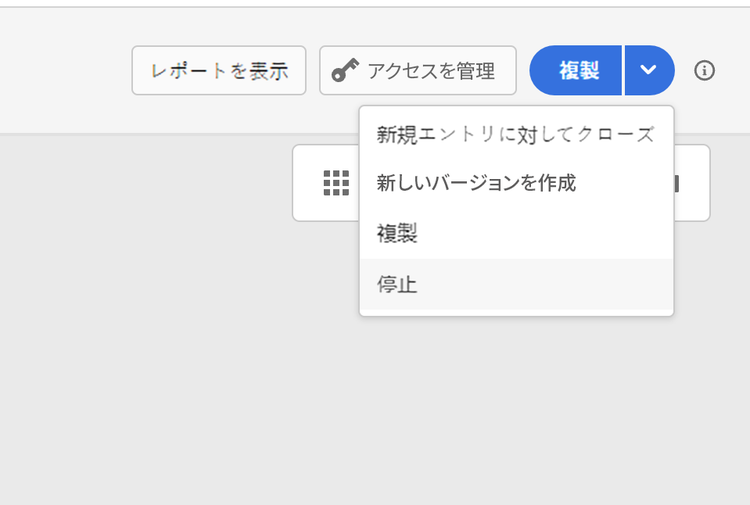
右上の下向き矢印をクリックします。
-
「停止」をクリックし、ダイアログボックスで確定します。
停止すると、ジャーニーのステータスは 停止済み に設定されます。
関連トピック
- ジャーニーのエントリ条件と終了条件ガイド - 実際の例とベストプラクティスを含む完全なガイド
- プロファイルエントリ管理 - プロファイルがジャーニーにエントリする方法を設定します
- 終了条件の設定 - ジャーニーからの自動プロファイル削除を設定します
- ジャーニーの一時停止 - ジャーニーの実行を一時的に停止します
This section contains structured knowledge intended to support interpretation, retrieval, and question answering related to this topic.
For complete understanding, this information should be combined with the documentation on this page. Neither source is intended to stand alone; the page describes the feature, while this section provides additional context that helps disambiguate terminology, intent, applicability, and constraints.
- TL;DR: This page explains the different ways a live journey can end — including the global 91-day timeout, manual closure to new entrances, and emergency stop — along with their effects on in-progress profiles.
Intents:
- Close a live journey to new entrances while allowing current profiles to complete it
- Stop a journey immediately to halt all in-progress profiles
- Understand the difference between Closed, Stopped, and Finished journey statuses
- Determine when a journey is considered “finished” based on its type and configuration
- Delete a journey once it has reached the Finished status
Glossary:
- End tag: An auto-generated, non-removable node displayed at the end of each journey path during authoring; its label can be changed (product-specific)
- Close to new entrances: A manual action that prevents new profiles from entering a journey while allowing existing profiles to complete their path (product-specific)
- Global journey timeout: The 91-day maximum duration after which a journey automatically switches to Finished status and all profile data is removed (product-specific)
- Stopped status: A journey state in which all in-progress profiles are immediately halted; the manual Stop action is used only for emergencies, though a non-recurring Read Audience journey also auto-transitions to Stopped after its run (product-specific)
Guardrails:
- Closed and Stopped journeys cannot be restarted or deleted; only a new version or duplicate can be created.
- Only journeys in Finished status can be deleted.
- Stopping a journey requires the Manage journeys permission; journeys with inline campaigns or messaging nodes also require Campaigns > Publish Campaigns permission.
- After the 91-day global timeout, all profile journey data is removed and remaining profiles are automatically exited.
- A non-recurring Read Audience journey without long-running Wait, Reaction, or event-triggered nodes automatically transitions to Stopped approximately 96 hours (~4 days) after its scheduled run. The journey remains in Live status during this buffer. Waves-based journeys, and journeys that use Send-Time Optimization, are excluded from this auto-stop and remain subject to the 91-day global timeout unless manually closed or stopped.
Terminology:
- Canonical name: Close to new entrances — Acronym: n/a — variants: close journey, manually close
- Do not confuse: “Stopped” journey ≠ “Closed” journey — stopped halts all profiles immediately; closed only blocks new entrances
- Do not confuse: “End tag” ≠ “End activity” — the End tag is auto-generated and cannot be removed; the End activity is a placeable canvas node
FAQ:
- Q: What is the difference between closing and stopping a journey? — Closing blocks new entrances but lets existing profiles finish; stopping immediately halts all profiles in their tracks.
- Q: Why does a non-recurring journey remain in Live status for several days after its run? — This is expected. AJO applies a safety buffer of ~96 hours (~4 days): 24 hours to allow in-flight sends to complete, plus 72 hours for Quiet Hours deferrals. The journey transitions to Stopped shortly after the buffer elapses.
- Q: Do waves-based journeys auto-stop after ~96 hours? — No. Waves-based journeys, and journeys that use Send-Time Optimization, are excluded from this automatic stop so they can stay active across all scheduled waves. They follow the standard 91-day journey timeout unless closed or stopped manually.
- Q: When does a Read audience journey reach Finished status? — For a non-recurring Read Audience journey: it auto-stops to Stopped approximately 96 hours (~4 days) after its scheduled run (safety buffer: 24h idle window + 72h Quiet Hours allowance). The journey remains in Live status during this buffer. If Wait, Reaction, or event nodes keep profiles active, the standard 91-day global timeout applies instead. Finished is reached when a Closed journey hits the 91-day global timeout, or per recurring-journey rules in the finished-definition table.
- Q: Can I delete a Closed journey? — No, only Finished journeys can be deleted.
- Q: What happens to profiles still in a journey when the 91-day timeout hits? — They are automatically exited from the journey at that point.
- Q: Do I need special permissions to stop a journey? — Yes, the Manage journeys permission is required, plus Campaigns > Publish Campaigns if the journey contains inline campaigns or messaging nodes.