Deploy Your App deploy-your-app
Once you have written your handler code and pushed it to your linked repository, you can deploy the app from the LLM Apps UI.
This is a shared step for every journey. After deployment, continue to test the ChatGPT plugin or test the Claude connector.
Start the deployment
Open the App Detail page and select Deploy.
Select the target environment, then select Deploy.
If your handlers use app variables, configure them for the target environment before deploying. Added, updated, or deleted variables take effect on this deployment; Stage and Production have independent values.
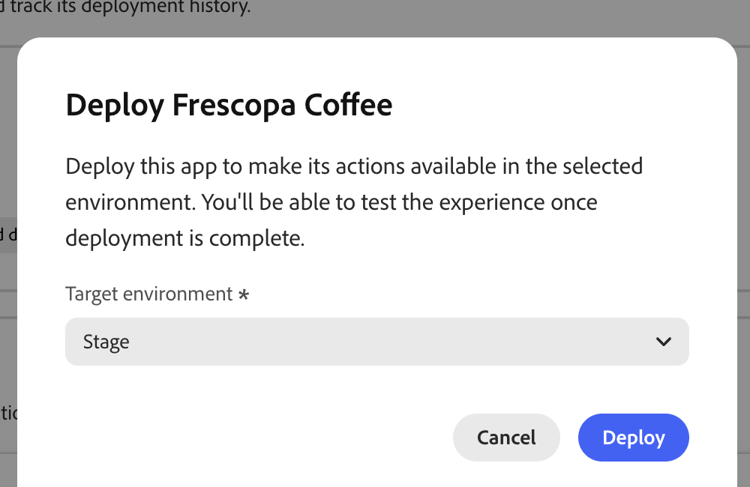
The deployment runs four steps:
- Preparing — retrieves the configuration required to deploy the app.
- Start deployment — starts the background deployment process.
- Build app — installs dependencies and builds the latest repository code.
- Publish — publishes the app to Adobe I/O Runtime.
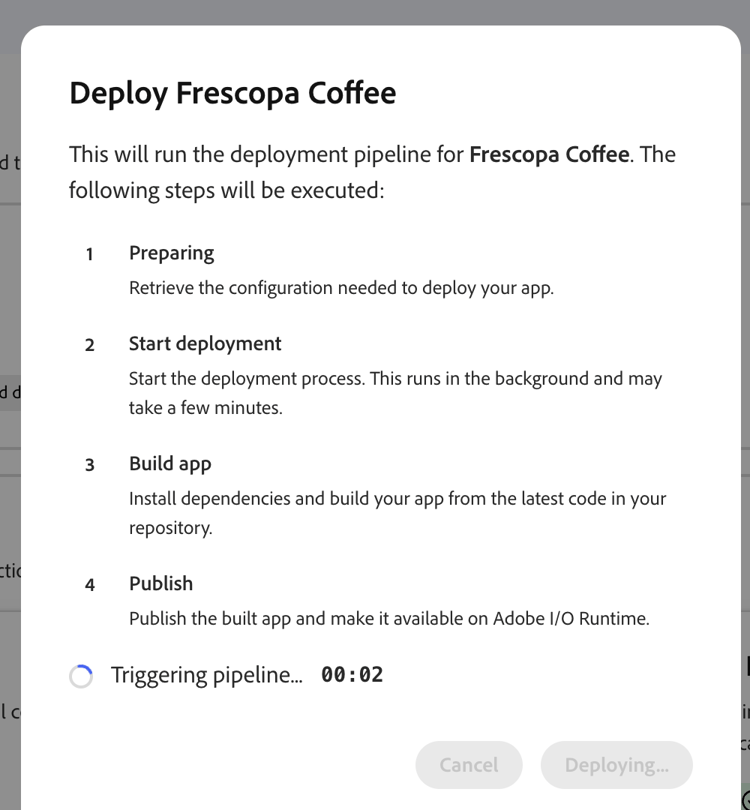
After a successful deployment
When all steps complete, the dialog shows Deploy successful.
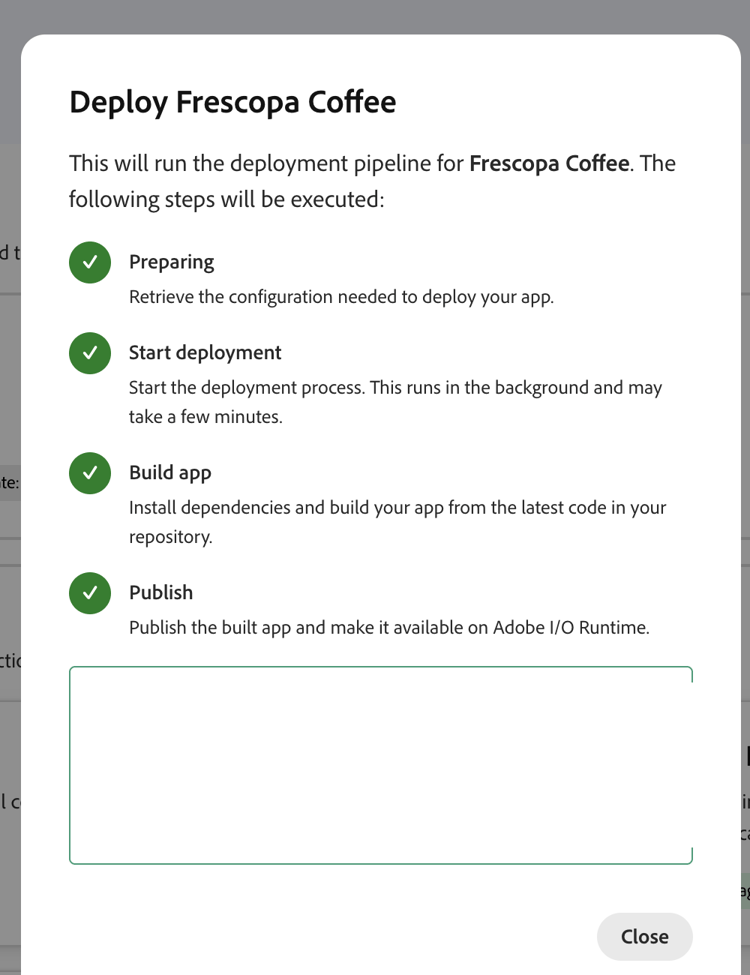
Click Close to dismiss the dialog. Scroll down to the Test the app section on the App Detail page:

Each deployed environment shows an MCP server URL. Select Copy URL and use it to create a plugin in the target LLM platform.
The Deployment history section shows the last 10 deployments:
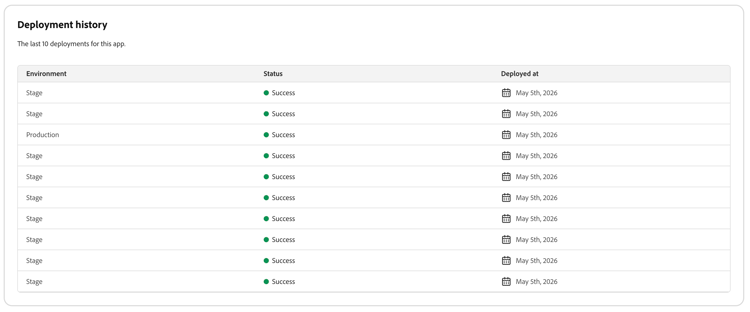
Each row shows the target Environment (Stage or Production), Status (Success or Failed), and the Deployed at date. You can use this table to track when deployments happened and verify that the
latest deployment succeeded.