Konfigurieren von A/B-Tests in Adobe Target für Advertising DSP Ads
Nur Werbetreibende mit Advertising DSP
Adobe Advertising und Adobe Target erleichtern es Marketing-Experten, ein personalisiertes und vernetztes Erlebnis über bezahlte Medien und Vor-Ort-Messaging hinweg bereitzustellen. Durch die gemeinsame Nutzung von Signalen zwischen den Produkten haben Sie folgende Möglichkeiten:
-
Verringern Sie die Fallthrough-Raten von Websites, indem Sie die Anzeigenexposition von Kundinnen und Kunden aus DSP-Kampagnen mit ihren Onsite-Erlebnissen verknüpfen.
-
Etablieren von A/B-Tests durch Spiegelung der Erlebnisse auf der Site mit Werbebotschaften mithilfe von Adobe Audience Manager-Belichtungsdaten und „Click-to-Feed“-Target.
-
Messen der Wirkung von Unified Messaging auf die objektive Steigerung der Kundenzufriedenheit vor Ort mit einfachen Visualisierungen in Adobe Analytics for Target.
In den folgenden Abschnitten finden Sie die Voraussetzungen und Anweisungen zum Einrichten von Clickthrough- und View-Through-Tracking, zum Implementieren der Signalfreigabe zwischen DSP und Target und zum Einrichten einer A/B-Testaktivität sowie zum Einrichten Analytics Analysis Workspace zum Anzeigen der Testdaten.
Wenn Sie weitere Fragen haben, wenden Sie sich an Ihr Adobe Account Team.
Voraussetzungen
Für diesen Anwendungsfall sind die folgenden Produkte und Integrationen erforderlich:
-
Target
-
Analytics for Target-Integration
-
Audience Manager (nur für Durchsichtstests erforderlich)
Schritt 1: Einrichten des Clickthrough-Frameworks click-through-framework
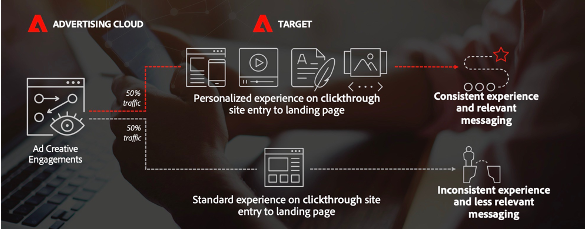
Wenn Sie DSP-Makros zu einer Clickthrough-URL hinzufügen (die URL, die angezeigt wird, wenn ein(e) Benutzende® auf eine Anzeige klickt und die Landingpage erreicht), erfasst DSP automatisch den Platzierungsschlüssel, indem ${TM_PLACEMENT_ID} in die Clickthrough-URL aufgenommen wird. Dieses Makro erfasst den alphanumerischen Platzierungsschlüssel und nicht die numerische Platzierungs-ID.

(Nur DSP) Hinzufügen von DSP-Makros zu Ihren Clickthrough-URLs
Aktualisieren Sie in Flashtalking oder Google Campaign Manager 360 die Clickthrough-URL für jede Anzeige manuell, um die Makros einzuschließen, die zur Erfassung von AMO ID-Variablen erforderlich sind. Die AMO ID-Variablen werden verwendet, um Klickdaten an Adobe Analytics zu senden und Platzierungsschlüssel für A/B-Tests freizugeben. Anweisungen finden Sie auf den folgenden Seiten:
-
Append Analytics for Advertising macros to Flashtalking ad tags. Hinweis: Dieses Verfahren ist nicht erforderlich, wenn Ihr Unternehmen eine direkte Partnerschaft mit Flashtalking unterhält und Sie in der Dokumentation zum Flashtalking-Support unter https://support.flashtalking.com/hc/en-us/articles/4409808166419-Accessing-Data-Pass-Macros Datenweiterleitungs-Makros zum Tracking der
s_kwcid- undef_idverwenden. -
Append Analytics for Advertising macros to Google Campaign Manager 360 ad tags
Wenden Sie sich an Ihr Adobe-Account-Team , um den erforderlichen Platzierungsschlüssel abzurufen und die Einrichtung abzuschließen, und um sicherzustellen, dass jede Clickthrough-URL mit dem Platzierungsschlüssel ausgefüllt ist.
Schritt 2: Einrichten des View-Through-Frameworks mithilfe von Audience Manager view-through-framework
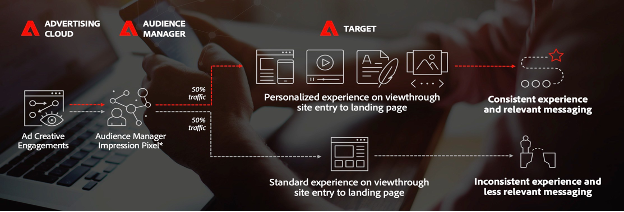
Durch Hinzufügen eines Audience Manager-Impression-Ereignis-Pixels zu Ihren Anzeigen-Tags und Platzierungseinstellungen können Sie ein Testsegment für zusätzliche Gelegenheiten zum Durchschauen erstellen.
-
Implementieren Sie ein Audience Manager Impression Event-Pixel in Ihren Anzeigentags und DSP-Platzierungseinstellungen.
Anweisungen finden Sie unter Erfassen von Medienexpositionsdaten aus Advertising DSP-Kampagnen.
Stellen Sie sicher, dass Sie DSPMakros hinzufügen, um alle Daten zu erfassen, die das Impression-Ereignispixel zurückgeben soll, einschließlich
${TM_PLACEMENT_ID_NUM}für die numerische Platzierungs-ID.note NOTE Klick-Tracking-URLs enthalten das ${TM_PLACEMENT_ID}-Makro für den alphanumerischen Platzierungsschlüssel anstelle der numerischen Platzierungs-ID${TM_PLACEMENT_ID_NUM}. -
Konfigurieren Sie ein Audience Manager-Segment aus den DSP-Impressionsdaten:
-
Überprüfen Sie, ob Segmentdaten verfügbar sind:
-
Nach dem Signal suchen nach dem Schlüssel-Wert-Paar, das bestimmt, auf welcher Ebene die Segmentbenutzer gruppiert werden.
Verwenden Sie einen unterstützten Schlüssel mit einem Wert, der einem Makro entspricht, das Sie dem Audience Manager Impression Event-Pixel hinzugefügt haben.
Um beispielsweise Benutzer für eine bestimmte Platzierung zu gruppieren, verwenden Sie den
d_placement. Verwenden Sie für den Wert eine tatsächliche numerische Platzierungs-ID (z. B. 2501853), die vom DSP-${TM_PLACEMENT_ID_NUM}erfasst wird.Wenn die Suchergebnisse Benutzerzahlen für das Schlüssel-Wert-Paar zeigen, was anzeigt, dass das Pixel korrekt platziert wurde und Daten fließen, fahren Sie mit dem nächsten Schritt fort.
-
-
Erstellen einer regelbasierten Eigenschaft für die Segmenterstellung in Audience Manager.
-
Benennen Sie die Eigenschaft, damit sie in Testaktivitäten leicht identifiziert werden kann. Speichern Sie die Eigenschaft in einem beliebigen Ordner.
-
Wählen Sie
Ad Cloudals Data Source aus. -
Verwenden Sie für den Eigenschaftsausdruck
d_eventals Key undimpals Value.
-
-
Testsegment einrichten Wählen Sie für die neue Eigenschaft in Audience Manager
Ad Cloudals Data Source aus.Audience Manager teilt das Segment automatisch in eine Kontrollgruppe auf, die das standardmäßige Landingpage-Erlebnis erhält, und in eine Testgruppe, die ein personalisiertes Onsite-Erlebnis erhalten hat.
-
Schritt 3: Einrichten einer A/B-Testaktivität in Target für DSP
In den folgenden Anweisungen werden Informationen zum DSP-Anwendungsfall hervorgehoben.
-
-
Geben Sie im Feld Enter Activity URL die Landingpage-URL für den Test ein.
note NOTE Sie können mehrere URLs verwenden, um die Viewthrough-Site-Eingabe zu testen. Weitere Informationen finden Sie unter "Mehrseitige Aktivität. Sie können die wichtigsten Einträge anhand der Seiten-URL leicht identifizieren, indem Sie einen Site-Einstiegsbericht) Analytics erstellen. -
Geben Sie im Feld Goal die Erfolgsmetrik für den Test ein.
note NOTE Stellen Sie sicher, dass Analytics als Datenquelle in Target aktiviert ist und dass die richtige Report Suite ausgewählt ist. -
Legen Sie die Priority auf
Highoder999fest, um Konflikte zu vermeiden, wenn Benutzende im Testsegment ein falsches Onsite-Erlebnis erhalten. -
Wählen Sie in Reporting Settings die Company Name und Report Suite aus, die mit Ihrem DSP-Konto verbunden sind.
Weitere Tipps zum Reporting finden Sie unter Best Practices für das Reporting und Fehlerbehebung.
-
Geben Sie im Feld Date Range das entsprechende Start- und Enddatum für den Test ein.
-
Zielgruppen zur Aktivität hinzufügen:
-
Wählen Sie das Segment“ aus, das Sie zuvor in Audience Manager erstellt haben, um Durchsichts-Zielgruppen zu testen.
-
Wählen Sie Site Pages > Landing Page > Query aus und geben Sie den DSP-Platzierungsschlüssel in das Feld Value ein, um die Target-Abfragezeichenfolgenparameter für Clickthrough-Zielgruppen zu verwenden.
-
-
Wählen Sie für die Traffic Allocation Method die Option Manual (Default) aus und teilen Sie die Zielgruppe 50/50 auf.
-
Speichern Sie die Aktivität.
-
-
Verwenden Sie Target Visual Experience ), um Design-Änderungen an der Vorlage für die A/B-Test-Landingpage vorzunehmen.
-
Erlebnis A: Nicht bearbeiten, da es sich um das standardmäßige Landingpage-Erlebnis ohne Personalisierung handelt.
-
Erlebnis B: Verwenden Sie die Target-Benutzeroberfläche, um die Landingpage-Vorlage auf der Grundlage der im Test enthaltenen Assets anzupassen (z. B. Überschriften, Kopie, Schaltflächenplatzierung und Kreative).
note NOTE Wenden Sie sich beispielsweise an Ihr Adobe-Account-Team, wenn Sie kreative Testfälle benötigen. -
Schritt 4: Einrichten der Analytics for Target Analysis Workspace in Analytics
Analytics for Target (A4T) ist eine lösungsübergreifende Integration, die es Advertisern ermöglicht, Target Aktivitäten basierend auf Analytics Konversionsmetriken und Zielgruppensegmenten zu erstellen und die Ergebnisse dann mithilfe von Analytics als Berichtsquelle zu messen. Die gesamte Berichterstellung und Segmentierung für diese Aktivität basiert auf Analytics Datenerfassung.
Weitere Informationen zu Analytics for Target, einschließlich eines Links zu Implementierungsanweisungen, finden Sie unter "Adobe Analytics als Berichtsquelle für Adobe Target (A4T).
Einrichten des Analytics for Target
Konfigurieren Sie in Analysis Workspace die Analytics for Target panel, um Ihre Target Aktivitäten und Erlebnisse zu analysieren. Beachten Sie die folgenden wichtigen Hinweise und Informationen zu Ihren Berichten.
Metriken
-
Erstellen Sie im Arbeitsbereich ein Bedienfeld, das speziell für die Adobe Advertising-Kampagne, das -Paket oder die Platzierung gilt, für die der Test ausgeführt wurde. Verwenden Sie zusammenfassende Visualisierungen, um Adobe Advertising-Metriken im selben Bericht wie die Target anzuzeigen.
-
Priorisieren Sie die Verwendung von Onsite-Metriken (z. B. Besuche und Konversionen), um die Leistung zu messen.
-
Verstehen Sie, dass aggregierte Medienmetriken aus Adobe Advertising (wie Impressionen, Klicks und Kosten) nicht mit Target Metriken abgeglichen werden können.
Dimensionen
Die folgenden Dimensionen beziehen sich auf Analytics for Target:
-
Target Activities: Name des A/B-Tests
-
Target Experiences: Namen der Landingpage-Erlebnisse, die in der Aktivität verwendet werden
-
Target Activity > Experience: Der Aktivitätsname und der Erlebnisname in derselben Zeile
Fehlerbehebung bei Analytics für Target Daten
Wenn Sie in Analysis Workspace bemerken, dass die Daten zu Aktivitäten und Erlebnissen nur minimal sind oder nicht ausgefüllt werden, gehen Sie wie folgt vor:
-
Stellen Sie sicher, dass dieselbe Supplemental Data ID (SDID) sowohl für Target als auch für Analytics verwendet wird. Sie können die SDID-Werte überprüfen, indem Sie die Adobe Experience Platform Debugger auf der Landingpage verwenden, zu der die Kampagne Benutzer führt.
-
Überprüfen Sie auf derselben Landingpage, ob a) der in der Adobe Debugger unter Solutions > Target angezeigte Hostname mit b) der in Target für die Aktivität angezeigten Tracking Server übereinstimmt (unter Goals & Settings > Reporting Settings).
Analytics For Target muss bei Aufrufen von Target an den Datenerfassungs-Server von Modstats für Analytics ein Analytics-Tracking-Server gesendet werden.


Weitere Informationen
- Target mit Analytics integrieren - Beschreibt das Einrichten von Target in Analysis Workspace.
- A/B-Test - Übersicht Beschreibt A/B-Test -Aktivitäten, die Sie mit DSP Ads verwenden können.
- Erlebnisse und Angebote - Erläutert Target Tools zur Bestimmung der Inhalte auf der Site, mit denen DSP-Testbenutzer konfrontiert werden.
- Signale, Eigenschaften und Segmente - Definiert einige der Audience Manager-Tools, die beim Durchsichtstest in DSP helfen können.
- Überblick über Analytics for Advertising - Einführung in Analytics for Advertising, mit dem Sie Clickthrough- und View-Through-Site-Interaktionen in Ihren Analytics-Instanzen verfolgen können.