在此頁面上:啟用以記錄為基礎的Adobe Experience Platform資料集以進行查詢,這樣您就可以擴充個人化、決策和歷程協調流程,並在Journey Optimizer執行階段擷取參考和異動資料。
Journey Optimizer可讓您利用來自Adobe Experience Platform個資料的個人化、決策和歷程協調功能。 若要這麼做,必須先為查詢服務啟用查詢個人化所需的記錄型資料集,如下所述。
在本節中進一步瞭解如何存取和使用資料集:開始使用資料集
必讀
護欄和指導方針 guidelines
開始之前,請檢閱下列限制和准則:
-
資料集中沒有PII — 啟用查詢的資料集不應包含任何個人識別資訊(PII)。
-
刪除風險 — 未保護個人化中使用的資料集免於刪除。 您必須追蹤哪些資料集正在使用,以確保未將其移除。
-
結構描述型別 — 資料集必須與設定檔或事件型別的 NOT 結構描述相關聯。
-
保持查詢切換開啟 — 避免重複開啟和關閉資料集。 這樣做可能會導致意外的索引行為。 最佳實務是啟用資料集,直到您打算使用它進行查詢為止。
-
Edge啟用區域 — 啟用查閱的資料集僅適用於資料集沙箱所在的區域(例如NLD2或VA7)的傳入邊緣型啟用。 您可以在UI中沙箱名稱旁邊看到沙箱區域。
-
批次資料刪除 — 從資料集移除批次資料,會從查詢服務中完全移除所有相符的索引鍵。 例如:
批次1: Sku1、Sku2、Sku3
批次2: Sku1、Sku2、Sku3、Sku4、Sku5、Sku6
批次3: Sku7、Sku8、Sku9、Sku10如果您刪除批次1,Sku1、Sku2和Sku3會從查詢存放區中移除。 然後產生的查詢資料將包含:Sku4、Sku5、Sku6、Sku7、Sku8、Sku9、Sku10。
查閱服務的權益
啟用資料集以進行資料查詢 enable
為了將資料集中的資料用於個人化,您需要啟用資料集以進行查詢。
先決條件 prerequisites-enable
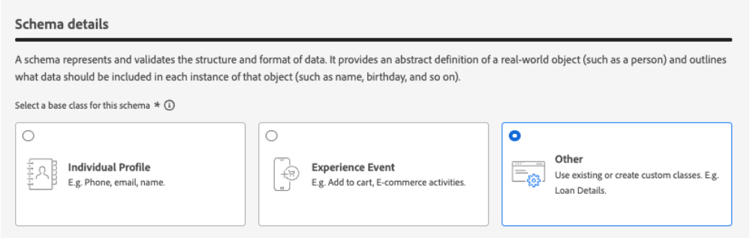
與您要啟用查詢的資料集關聯的結構描述必須是記錄型別。 結構描述不應屬於設定檔或事件類別。
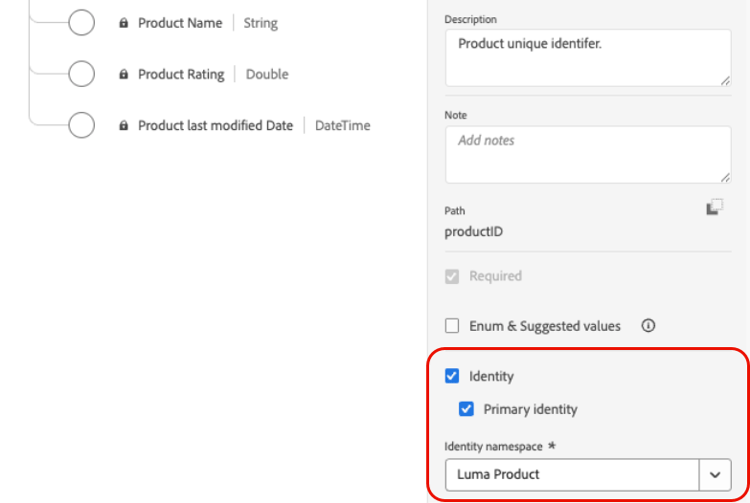
結構描述必須定義主要身分。
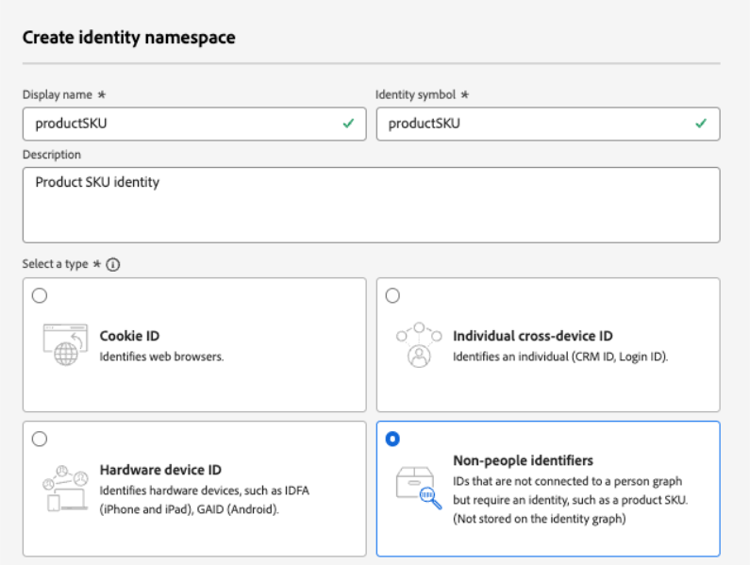
如果尚未定義自訂名稱空間,請確保身分識別碼不是人員。
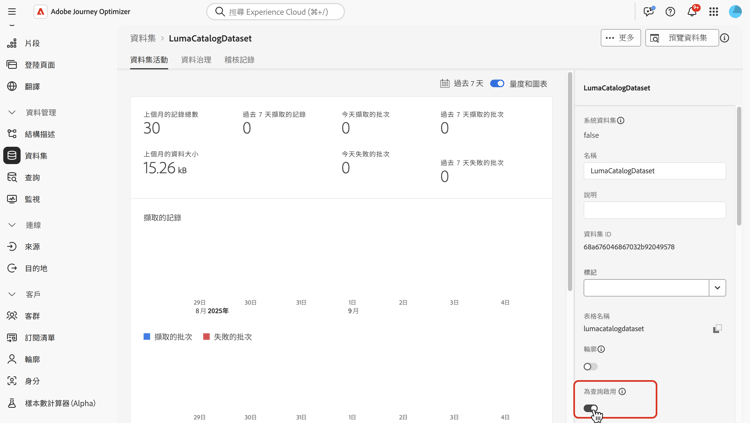
在資料集管理介面中啟用資料集以進行查詢
在資料集管理使用者介面中,使用切換開關來啟用資料集以供查閱。
API方法
依照本檔案中詳述的指示,設定您的環境以傳送API命令。
先決條件
-
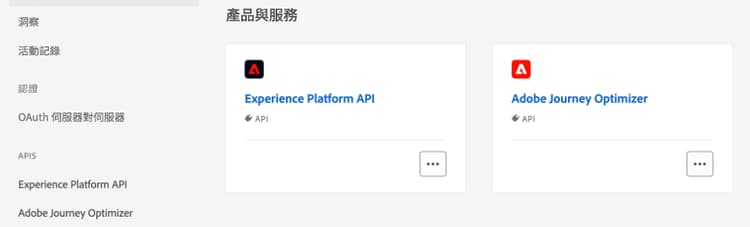
開發人員專案必須將Adobe Journey Optimizer和Adobe Experience Platform API新增至其專案。
-
您角色中必須有管理資料集許可權。
-
資料集所根據的結構描述必須包含可作為查詢金鑰的主要身分。
API呼叫結構
curl -s -XPATCH "https://platform.adobe.io/data/core/entity/lookup/dataSets/${DATASET_ID}/${ACTION}" \ -H "Authorization: Bearer ${ACCESS_TOKEN}" \ -H "x-api-key: ${API_KEY}" \ -H "x-gw-ims-org-id: ${IMS_ORG}" \ -H "x-sandbox-name: ${SANDBOX_NAME}"
其中:
- URL為
https://platform.adobe.io/data/core/entity/lookup/dataSets/${DATASET_ID}/${ACTION} - 資料集ID是您要啟用的資料集。
- 動作為啟用或停用。
- 存取權杖可從開發人員控制檯中擷取。
- API金鑰可從開發人員主控台擷取。
- IMS組織ID是您的Adobe組織。
- 「沙箱名稱」是資料集所在的沙箱名稱(即生產、開發等)。
"error_code": "403003","message": "Api Key is invalid"資料集監控
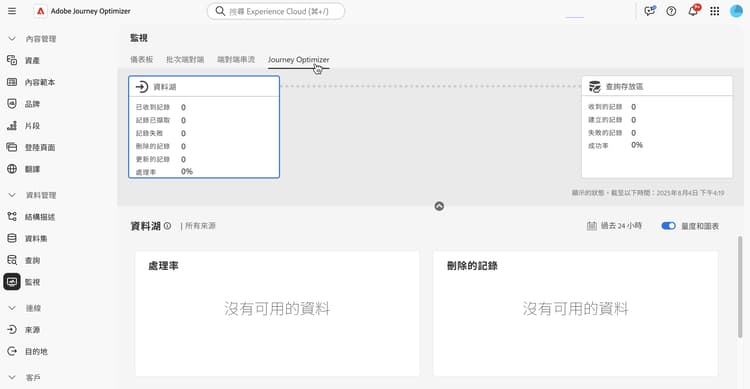
資料集啟用查閱後,您可以前往 監視 功能表並選取 Journey Optimizer 索引標籤,來檢閱擷取至查閱服務的狀態。
此程式指標有助於瞭解查閱服務中何時可使用新的資料批次。
後續步驟
使用API呼叫啟用資料集進行查閱後,您就可以將該資料與Journey Optimizer個人化和決策功能搭配使用。 如需詳細資訊,請參閱以下區段:
This section contains structured knowledge intended to support interpretation, retrieval, and question answering related to this topic.
For complete understanding, this information should be combined with the documentation on this page. Neither source is intended to stand alone; the page describes the feature, while this section provides additional context that helps disambiguate terminology, intent, applicability, and constraints.
- TL;DR: This page explains how to enable record-based Adobe Experience Platform datasets for the lookup service so their data can enrich personalization, Decisioning, and journey orchestration at runtime, including the entitlement guardrails.
Intents:
- Enable a record-based dataset for lookup using the dataset management toggle or the API.
- Meet the prerequisites (record-type schema, primary identity, non-person namespace).
- Review the lookup entitlement limits before designing a lookup strategy.
- Monitor lookup ingestion status.
- Use enabled data with personalization, Decisioning, and journey orchestration.
Glossary:
- Lookup service: the service that retrieves record-based dataset data at runtime for personalization, Decisioning, and journey orchestration (product-specific)
- Lookup dataset: a record-based dataset enabled for lookup (product-specific)
- Primary identity (lookup key): the identity, required on the schema, that acts as the lookup key (product-specific)
- Record-type schema: the required schema type for lookup — a schema that is NOT of Profile or Event class
- Edge activation region: the region (for example, NLD2 or VA7) where the dataset’s sandbox resides, for inbound edge-based activation (product-specific)
Guardrails:
- Enabled Lookup Datasets: maximum 10 per organization, combined across production and development sandboxes (default; if additional volumes are needed, contact your Adobe representative).
- Dataset Record Count: up to 2 million records per dataset, counted as the total across all batches (default; raisable by contacting your Adobe representative).
- Record Size: up to 2 KB per record (default maximum record size supported).
- Dataset Size: up to 4 GB per individual dataset; the record count and dataset size limits are independent guardrails and both must be satisfied (default; raisable by contacting your Adobe representative).
- Dataset Frequency Updates: up to 5 updates per day per dataset (default; raisable by contacting your Adobe representative).
- Datasets enabled for lookup should not contain any Personally Identifiable Information (PII).
- Datasets used in personalization are not protected from deletion; keep track of which datasets are in use.
- The schema must be record-type (NOT of Profile or Event class) and must have a primary identity defined; if a custom namespace is not defined, the identity must be a non-person identifier.
- Keep the lookup toggle on; repeatedly turning datasets on and off can lead to unexpected indexing behavior.
- Datasets enabled for lookup are available for inbound edge-based activation only in the region where the dataset’s sandbox resides.
- Removing a batch of data completely removes all matching keys from the lookup service.
- The data lookup capability is in Limited Availability.
Terminology:
- Canonical name: lookup service — variants: data lookup, enable for lookup
- API ACTION values:
enableORdisable - Do not confuse: a “lookup dataset” (record-type, NOT Profile or Event, not stored on the profile) ≠ a profile or event dataset (Profile or Event class)
- Do not confuse: enabling a dataset for “lookup” ≠ enabling a dataset for “Profile”
FAQ:
- Q: What schema type is required for a lookup dataset? — A record-type schema that is NOT of Profile or Event class, with a primary identity defined that can act as the lookup key.
- Q: How many datasets can I enable for lookup? — Up to 10 per organization, combined across production and development sandboxes; contact your Adobe representative for more.
- Q: What are the record and size limits? — Up to 2 million records and 4 GB per dataset, up to 2 KB per record, and up to 5 updates per day per dataset; the record count and dataset size are independent guardrails that must both be satisfied.
- Q: Can lookup datasets contain PII? — No; datasets enabled for lookup should not contain any Personally Identifiable Information.
- Q: What happens if I delete a batch of data? — All matching keys in that batch are completely removed from the lookup service.
- Q: Should I toggle lookup on and off frequently? — No; repeatedly turning datasets on and off can lead to unexpected indexing behavior, so keep the toggle on while the dataset is in use.