在此页面上: Adobe Journey Optimizer中的个性化操作入门,包括个性化编辑器的工作方式、可使用的配置文件数据、学习游乐场以及内联编辑。
Adobe Journey Optimizer个性化功能允许您利用有关每个特定收件人的数据和信息,根据他们调整邮件。 该信息可以是特定收件人的名字、兴趣、居住地、购买的物品等。
个性化如何工作
使用个性化编辑器,您可以选择、排列、自定义和验证所有数据来为内容创建自定义的个性化设置,并利用各种工具(如帮助程序函数或预定义表达式)来有效地定制消息。
Journey Optimizer使用基于Handlebars的内联个性化语法,允许您创建内容由双大括号 {{}} 括起来的表达式。
在处理消息时,Journey Optimizer会使用Experience Platform数据集中包含的数据替换表达式。 例如,Hello {{profile.person.name.firstName}} {{profile.person.name.lastName}}动态变为Hello John Doe。 使用此语法,您可以跨多个字段个性化消息,包括电子邮件主题行、消息正文、推送通知或URL。
用于个性化的数据
Personalization基于Adobe Experience Platform中定义的 XDM Individual Profile 架构管理的配置文件数据。 XDM Individual Profile架构是唯一可用于个性化Journey Optimizer中内容的架构。 请参阅Adobe Experience Platform数据模型(XDM)文档以了解详情。
您还可以利用 计算属性 来个性化您的内容。 计算属性允许您将各个行为事件汇总到Adobe Experience Platform上可用的计算配置文件属性中。 了解如何使用计算属性
此外,Journey Optimizer允许您在个性化编辑器中利用Adobe Experience Platform中的数据来对内容进行个性化。 为此,必须首先通过 API 调用启用查找个性化所需的数据集。 完成后,您可以使用他们的数据在Journey Optimizer中个性化您的内容。 此功能目前在Beta版中可用。 了解详情
学习和试验个性化 playground
Adobe Journey Optimizer包括一个交互式工具,旨在帮助您学习和试验个性化功能。
该游乐场提供了一个模拟环境,无需实时数据集即可使用示例数据编写和测试个性化代码。 您可以利用预定义的代码示例,编辑虚拟配置文件负载,并实时预览个性化代码的输出。
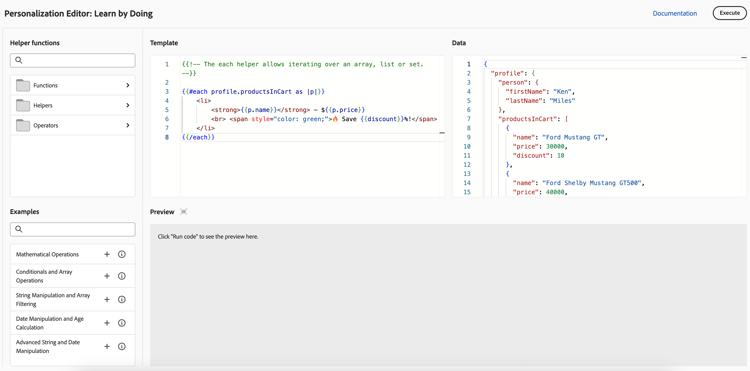
➡️ 访问个性化游乐场
为个性化表达式生成内容 ai-personalization-expressions
在 Personalization编辑器 中或从Email Designer工具栏(添加表达式)中,生成内容可帮助您从自然语言生成新表达式、说明现有代码的用途,并修复选择中的问题,然后当输出与您的意图匹配时应用输出。
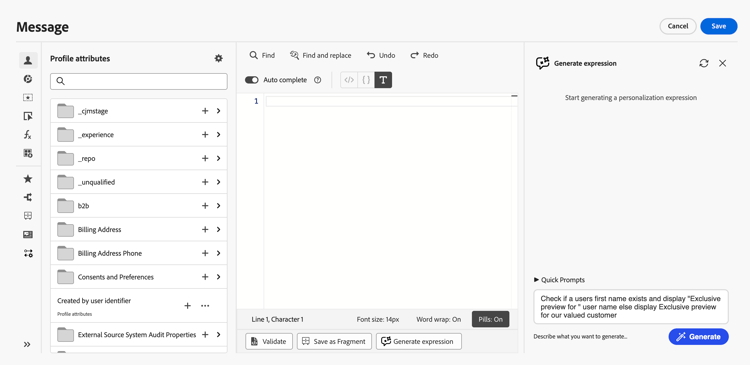
内联编辑配置文件属性 inline-personalization
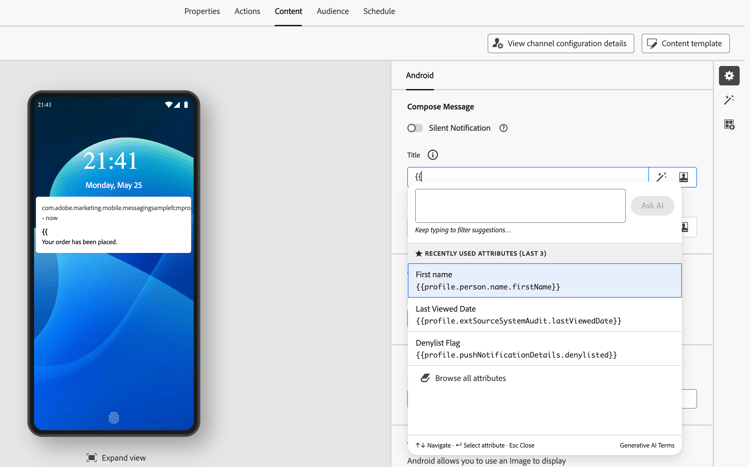
在 电子邮件Designer 或 推送渠道 编辑器中编辑内容时,您可以直接插入配置文件属性表达式,而无需打开完整的个性化编辑器。
为此,请执行以下步骤:
- 在任何文本字段中键入
{{。 在光标位置打开内联自动完成下拉列表。 - 开始键入以筛选可用的配置文件属性。
- 选择所需的属性 — 它作为个性化令牌插入光标位置。
让我们深入探究
现在您已了解 Journey Optimizer 中的个性化设置,接下来该更深入地研究这些文档部分以开始使用该功能。



操作说明视频 video-perso
了解如何使用历程中的情境式事件信息来对消息进行个性化。
了解如何在消息中添加基于轮廓的个性化推送,以及如何将受众会员资格用作个性化块的先决条件。
了解如何使用个性化编辑器游乐场,使用示例数据编写和测试个性化代码。
在Personalization教程中浏览更多有关个性化功能和最佳实践的视频教程
This section contains structured knowledge intended to support interpretation, retrieval, and question answering related to this topic.
For complete understanding, this information should be combined with the documentation on this page. Neither source is intended to stand alone; the page describes the feature, while this section provides additional context that helps disambiguate terminology, intent, applicability, and constraints.
- TL;DR: This page introduces personalization in Journey Optimizer — how the Handlebars-based personalization editor works, what data it uses, the interactive playground, Generate Content for expressions, and inline attribute editing in the Email Designer and Push editor.
Intents:
- Understand how Journey Optimizer personalization works (Handlebars syntax with double curly braces)
- Identify the data sources available for personalization (XDM Individual Profile schema, computed attributes, AEP dataset lookup in beta)
- Experiment with personalization using the interactive playground without a live sandbox
- Use AI to generate, explain, or fix personalization expressions from natural language
- Insert profile attributes inline in the Email Designer or Push editor by typing
{{
Glossary:
- Personalization editor: The full-featured tool for building, customizing, and validating personalization expressions; available in any Journey Optimizer field that supports personalization. (product-specific)
- XDM Individual Profile schema: The only schema that can be used to personalize content in Journey Optimizer; defines all profile attributes available for personalization. (product-specific)
- Computed attributes: Pre-calculated profile attributes summarizing individual behavioral events into profile-level values; available as personalization data alongside standard XDM profile fields. (product-specific)
- Personalization playground: An interactive, simulated environment on Experience League for writing and testing personalization code with sample data — no live datasets or sandbox required. (product-specific)
- Inline editing: The ability to type
{{in any text field in the Email Designer or Push channel editor to trigger an autocomplete dropdown and insert profile attributes without opening the full personalization editor. (product-specific) - Generate Content (personalization expressions): An AI tool in the personalization editor and Email Designer that generates personalization expressions from natural language, explains existing code, and fixes issues in a selection. (product-specific)
Guardrails:
- XDM Individual Profile schema is the only schema that can be used to personalize content in Journey Optimizer.
- AEP dataset lookup for personalization requires datasets to be enabled through an API call before use; this feature is currently in beta.
- Inline editing (typing
{{in Email Designer or Push editor) supports profile attributes only.
Terminology:
- Canonical name: personalization — variants: content personalization, message personalization, expression personalization
- Canonical name: personalization editor — variants: personalization capabilities
- Do not confuse: Personalization editor (used to build content expressions in messages and offers — supports both Handlebars and PQL) ≠ Advanced expression editor (used in the journey for conditions on data sources and event information, custom wait activities, and action parameters mapping — provides built-in functions and operators that differ from those in the personalization editor)
- Do not confuse: inline editing (type
{{in Email Designer or Push for quick attribute insertion without opening the full editor) ≠ personalization editor (full tool for complex expressions, helper functions, conditional rules, and fragments) - Do not confuse: XDM Individual Profile schema (the only schema usable for personalization in Journey Optimizer) ≠ other AEP schemas (not usable for personalization unless exposed via dataset lookup)
FAQ:
- Q: What data can be used for personalization in Journey Optimizer? — Profile data from the XDM Individual Profile schema, computed attributes (behavioral events summarized at the profile level), and AEP record dataset lookup (currently beta — requires datasets to be enabled via API).
- Q: What is the personalization playground? — An interactive, simulated environment on Experience League where you can write and test personalization code using sample data, without requiring a live Journey Optimizer sandbox or real datasets.
- Q: How does inline attribute editing work? — Type
{{in any text field in the Email Designer or Push channel editor to open an autocomplete dropdown at the cursor position. Start typing to filter profile attributes, then select one to insert it as a personalization token. Only profile attributes are available inline. - Q: What can Generate Content do in the personalization editor? — It can generate new personalization expressions from natural language descriptions, explain what existing code does, and fix issues in a selected expression — then apply the output when it matches your intent.