이 페이지에서: 개인화 편집기 작동 방식, 사용할 수 있는 프로필 데이터, 학습 놀이터, 인라인 편집 등 Adobe Journey Optimizer에서 개인 맞춤화를 시작하십시오.
Adobe Journey Optimizer 개인화 기능을 사용하면 보유한 데이터 및 정보를 활용하여 메시지를 각 특정 받는 사람에게 적용할 수 있습니다. 이는 이름, 관심사, 거주지, 구입한 제품 등이 될 수 있습니다.
개인화 작동 방식
개인화 편집기를 사용하면 모든 데이터를 선택하고, 정렬하고, 사용자 지정하고, 유효성을 검사하여 콘텐츠에 맞는 사용자 지정 개인화를 만들 수 있으며, 도우미 함수나 미리 정의된 표현식 등 다양한 도구를 활용하여 메시지를 효과적으로 사용자 지정할 수 있습니다.
Journey Optimizer에서는 중괄호 {{}}로 묶은 내용을 포함하는 식을 만들 수 있는 Handlebars를 기반으로 하는 인라인 개인화 구문을 사용합니다.
메시지를 처리할 때 Journey Optimizer은 표현식을 Experience Platform 데이터 세트에 포함된 데이터로 대체합니다. 예를 들어 Hello {{profile.person.name.firstName}} {{profile.person.name.lastName}}은(는) 동적으로 Hello John Doe이(가) 됩니다. 이 구문을 사용하면 이메일 제목 줄, 메시지 본문, 푸시 알림 또는 URL을 포함하여 여러 필드에 메시지를 개인화할 수 있습니다.
개인화에 사용되는 데이터
Personalization은 Adobe Experience Platform에 정의된 XDM 개인 프로필 스키마에서 관리하는 프로필 데이터를 기반으로 합니다. XDM 개인 프로필 스키마는 Journey Optimizer에서 콘텐츠를 개인화하는 데 사용할 수 있는 유일한 스키마입니다. 자세한 내용은 XDM(Adobe Experience Platform 데이터 모델) 설명서를 참조하세요.
계산된 특성을 활용하여 콘텐츠를 개인화할 수도 있습니다. 계산된 속성을 사용하면 개별 행동 이벤트를 Adobe Experience Platform에서 사용할 수 있는 계산된 프로필 속성으로 요약할 수 있습니다. 계산된 특성으로 작업하는 방법을 알아봅니다
또한 Journey Optimizer을(를) 사용하면 개인화 편집기에서 Adobe Experience Platform의 데이터를 활용하여 콘텐츠를 개인화할 수 있습니다. 이렇게 하려면 조회 개인화에 필요한 데이터 세트를 먼저 API 호출을 통해 활성화해야 합니다. 완료되면 해당 데이터를 사용하여 콘텐츠를 Journey Optimizer에 개인화할 수 있습니다. 이 기능은 현재 Beta 버전으로 제공됩니다. 자세히 알아보기
개인화 학습 및 실험 playground
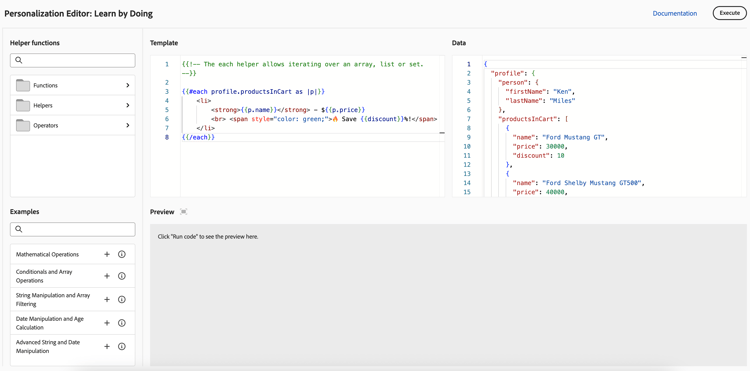
Adobe Journey Optimizer에는 개인화 기능을 학습하고 실험하는 데 도움이 되도록 설계된 대화형 도구가 포함되어 있습니다.
이 플레이스에서는 라이브 데이터 세트가 없어도 샘플 데이터를 사용하여 개인화 코드를 작성하고 테스트할 수 있는 시뮬레이션된 환경을 제공합니다. 사전 정의된 코드 샘플을 활용하고, 더미 프로필 페이로드를 편집하고, 개인화 코드의 출력을 실시간으로 미리 볼 수 있습니다.
개인화 표현식용 콘텐츠 생성 ai-personalization-expressions
Personalization 편집기 또는 전자 메일 Designer 도구 모음(식 추가)에서 콘텐츠 생성을 사용하면 자연어에서 새 식을 생성하고, 기존 코드가 수행하는 작업을 설명하고, 선택 항목의 문제를 해결한 다음 출력이 사용자의 의도와 일치할 때 출력을 적용할 수 있습니다.
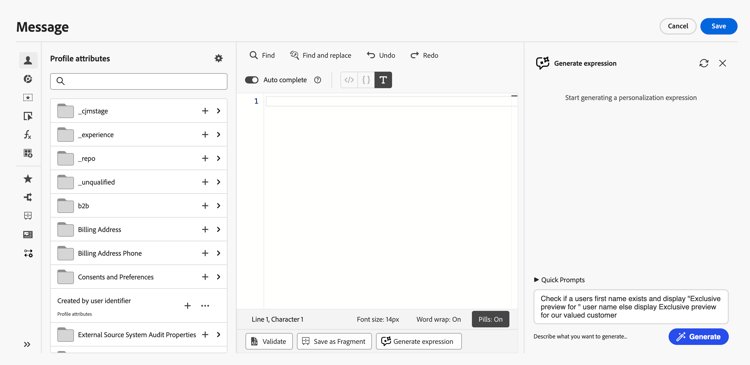
➡️ 개인화 식에 대한 콘텐츠 생성으로 작업하는 방법을 알아봅니다.
프로필 속성의 인라인 편집 inline-personalization
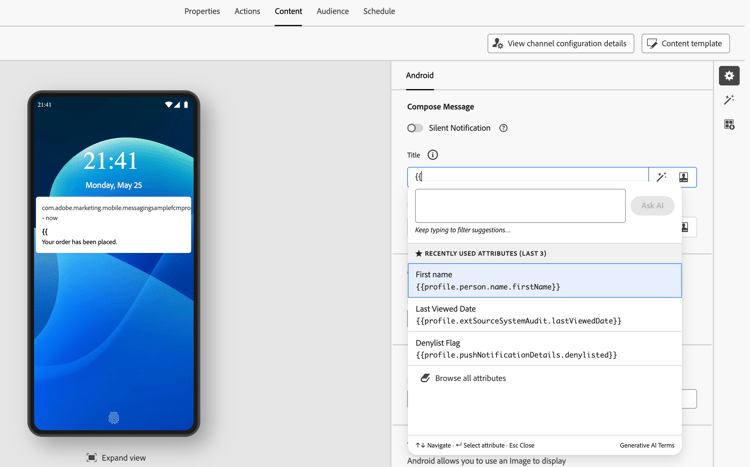
전체 개인화 편집기를 열지 않고도 이메일 Designer 또는 푸시 채널 편집기에서 콘텐츠를 편집하는 동안 프로필 특성 식을 직접 삽입할 수 있습니다.
이렇게 하려면 다음 단계를 수행합니다.
- 텍스트 필드에
{{을(를) 입력합니다. 커서 위치에서 인라인 자동 완성 드롭다운이 열립니다. - 사용 가능한 프로필 속성을 필터링하려면 입력을 시작하십시오.
- 필요한 속성을 선택합니다. 이 속성은 커서 위치에 개인화 토큰으로 삽입됩니다.
더 자세히 알아보기
이제 Journey Optimizer의 개인화에 대해 이해했으므로 이 설명서 섹션을 자세히 살펴보고 기능 작업을 시작할 차례입니다.



방법 비디오 video-perso
여정에서 얻은 컨텍스트 기반 이벤트 정보를 사용하여 메시지를 개인화하는 방법을 알아봅니다.
메시지에 프로필 기반 개인 맞춤화를 추가하는 방법과 개인 맞춤화 블록의 전제 조건으로 대상자 멤버십을 사용하는 방법에 대해 알아봅니다.
개인화 편집기 플레이그라운드를 활용하여 샘플 데이터를 사용하여 개인화 코드를 작성하고 테스트하는 방법을 알아봅니다.
Personalization 자습서에서 개인화 기능 및 모범 사례에 대한 비디오 튜토리얼을 더 살펴보십시오
This section contains structured knowledge intended to support interpretation, retrieval, and question answering related to this topic.
For complete understanding, this information should be combined with the documentation on this page. Neither source is intended to stand alone; the page describes the feature, while this section provides additional context that helps disambiguate terminology, intent, applicability, and constraints.
- TL;DR: This page introduces personalization in Journey Optimizer — how the Handlebars-based personalization editor works, what data it uses, the interactive playground, Generate Content for expressions, and inline attribute editing in the Email Designer and Push editor.
Intents:
- Understand how Journey Optimizer personalization works (Handlebars syntax with double curly braces)
- Identify the data sources available for personalization (XDM Individual Profile schema, computed attributes, AEP dataset lookup in beta)
- Experiment with personalization using the interactive playground without a live sandbox
- Use AI to generate, explain, or fix personalization expressions from natural language
- Insert profile attributes inline in the Email Designer or Push editor by typing
{{
Glossary:
- Personalization editor: The full-featured tool for building, customizing, and validating personalization expressions; available in any Journey Optimizer field that supports personalization. (product-specific)
- XDM Individual Profile schema: The only schema that can be used to personalize content in Journey Optimizer; defines all profile attributes available for personalization. (product-specific)
- Computed attributes: Pre-calculated profile attributes summarizing individual behavioral events into profile-level values; available as personalization data alongside standard XDM profile fields. (product-specific)
- Personalization playground: An interactive, simulated environment on Experience League for writing and testing personalization code with sample data — no live datasets or sandbox required. (product-specific)
- Inline editing: The ability to type
{{in any text field in the Email Designer or Push channel editor to trigger an autocomplete dropdown and insert profile attributes without opening the full personalization editor. (product-specific) - Generate Content (personalization expressions): An AI tool in the personalization editor and Email Designer that generates personalization expressions from natural language, explains existing code, and fixes issues in a selection. (product-specific)
Guardrails:
- XDM Individual Profile schema is the only schema that can be used to personalize content in Journey Optimizer.
- AEP dataset lookup for personalization requires datasets to be enabled through an API call before use; this feature is currently in beta.
- Inline editing (typing
{{in Email Designer or Push editor) supports profile attributes only.
Terminology:
- Canonical name: personalization — variants: content personalization, message personalization, expression personalization
- Canonical name: personalization editor — variants: personalization capabilities
- Do not confuse: Personalization editor (used to build content expressions in messages and offers — supports both Handlebars and PQL) ≠ Advanced expression editor (used in the journey for conditions on data sources and event information, custom wait activities, and action parameters mapping — provides built-in functions and operators that differ from those in the personalization editor)
- Do not confuse: inline editing (type
{{in Email Designer or Push for quick attribute insertion without opening the full editor) ≠ personalization editor (full tool for complex expressions, helper functions, conditional rules, and fragments) - Do not confuse: XDM Individual Profile schema (the only schema usable for personalization in Journey Optimizer) ≠ other AEP schemas (not usable for personalization unless exposed via dataset lookup)
FAQ:
- Q: What data can be used for personalization in Journey Optimizer? — Profile data from the XDM Individual Profile schema, computed attributes (behavioral events summarized at the profile level), and AEP record dataset lookup (currently beta — requires datasets to be enabled via API).
- Q: What is the personalization playground? — An interactive, simulated environment on Experience League where you can write and test personalization code using sample data, without requiring a live Journey Optimizer sandbox or real datasets.
- Q: How does inline attribute editing work? — Type
{{in any text field in the Email Designer or Push channel editor to open an autocomplete dropdown at the cursor position. Start typing to filter profile attributes, then select one to insert it as a personalization token. Only profile attributes are available inline. - Q: What can Generate Content do in the personalization editor? — It can generate new personalization expressions from natural language descriptions, explain what existing code does, and fix issues in a selected expression — then apply the output when it matches your intent.