在此頁面上:在許可權產品中指派、編輯及建立角色,這樣您就可以授與每位使用者在Journey Optimizer中完成工作所需的確切存取權。
角色是指共用相同許可權和沙箱的使用者集合。 這些角色可讓您輕鬆管理組織內不同使用者群組的存取和許可權。
透過Journey Optimizer產品,您可以從預先存在的 角色 範圍中進行選擇,每個角色都有不同的許可權層級,以便指派給您的使用者。 如需可用 角色 的詳細資訊,請參閱此頁面。
當使用者屬於 角色 時,他們將獲得產品內所包含Adobe應用程式和服務的存取權。
如果預先存在的角色不符合您組織的特定需求,您也可以建立自訂角色,以微調介面中特定功能或物件的存取許可權。 如此一來,您便可確保每位使用者僅能存取有效執行其工作所需的資源和工具。
指派角色 assigning-role
您可以將現成可用的或自訂的 角色 指派給使用者。
內建角色區段提供具有指派許可權的所有現成角色清單。
若要指派角色:
-
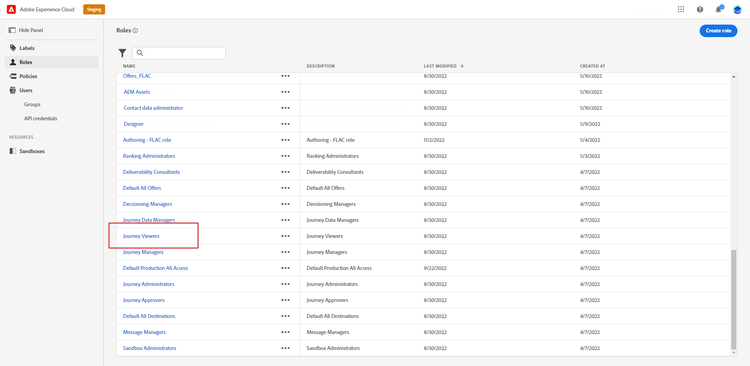
若要將角色指派給Permissions產品中的使用者,請瀏覽至 角色 索引標籤,然後選取所要的角色。
-
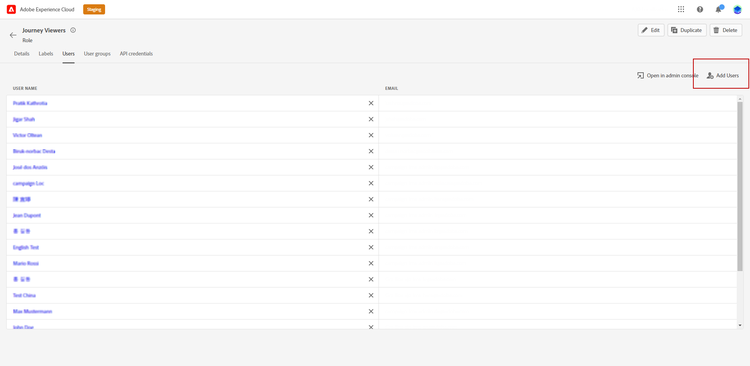
在 使用者 標籤中,按一下新增使用者。
-
輸入您的使用者名稱或電子郵件地址,或從清單中選取使用者,然後按一下[儲存]。
如果使用者先前未在Admin Console中建立,請參閱新增使用者檔案。
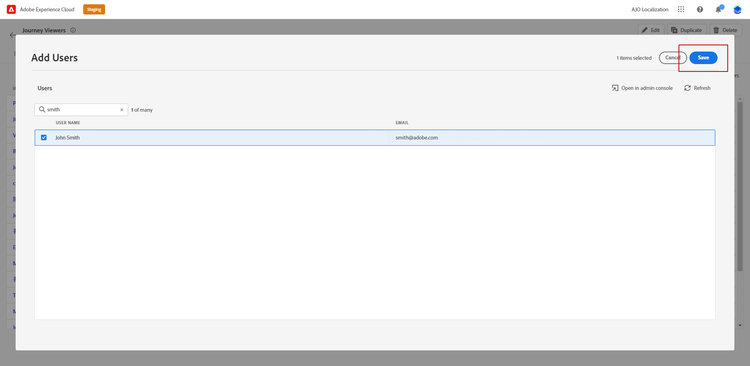
您的使用者會收到一封電子郵件,而會將他們重新導向至您的執行個體。
如需使用者管理的詳細資訊,請參閱存取控制檔案。
存取執行個體時,您的使用者會根據 角色 中的指派許可權看到特定檢視。 如果使用者沒有對功能的正確存取權,則會出現以下訊息:
You do not have permission to access this feature. Permission needed: XX.
編輯現有角色 edit-product-profile
針對內建或自訂角色,您可以隨時決定新增或刪除許可權。
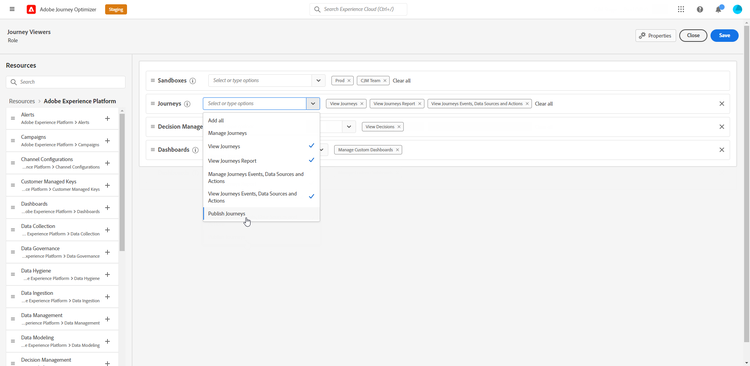
在下列範例中,我們要為指派給歷程檢視器 角色 的使用者,新增與 歷程 資源相關的許可權。 之後,使用者就可以發佈歷程。
-
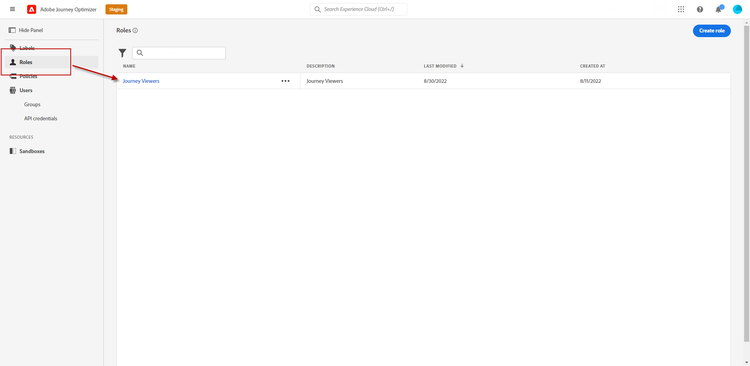
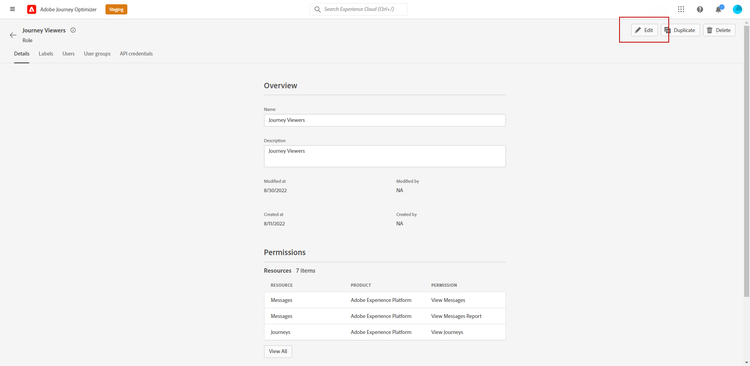
若要編輯Permissions產品中的角色,請導覽至 角色 索引標籤並選取所需的角色,這裡是歷程檢視器角色。
-
從您的 角色 儀表板,按一下編輯。
-
資源功能表會顯示套用至 Experience Cloud - Platform支援的應用程式 產品的資源清單。 拖放資源以指派許可權。
我們從 歷程 資源下拉式清單中選擇發佈歷程許可權。
-
如有需要,請在 包含的許可權專案 下,按一下X圖示以移除角色中的許可權或資源。
-
完成時,按一下儲存。
如有需要,您也可以建立具有特定許可權的新角色。
建立新角色 create-product-profile
Journey Optimizer可讓您建立自己的角色,並將一組許可權和沙箱指派給您的使用者。 透過角色,您可以授權或拒絕存取介面中的特定功能或物件。
如需如何建立和管理沙箱的詳細資訊,請參閱 Adobe Experience Platform 文件。
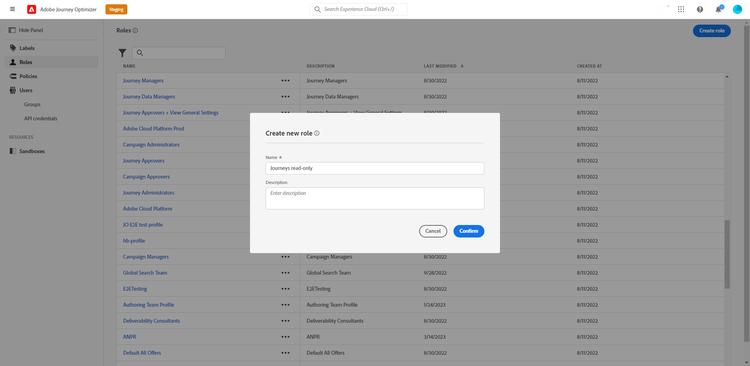
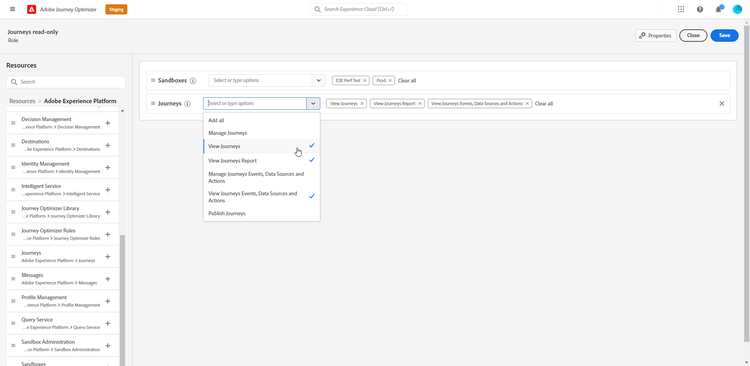
在此範例中,我們會建立名為Journeys唯讀角色,其中我們會將唯讀許可權授與歷程功能。 使用者將只能存取及檢視歷程,而且將無法存取Journey Optimizer中的其他功能,例如Decision management。
若要建立我們的唯讀歷程 角色:
-
若要將角色指派給Permissions產品中的使用者,請瀏覽至 角色 索引標籤,然後按一下建立角色。

-
為您的新 角色 新增 名稱 和描述。 然後,按一下確認。
-
從 沙箱 資源下拉式清單中,選擇要指派給您的 角色 的沙箱。 進一步瞭解 sandbox。

-
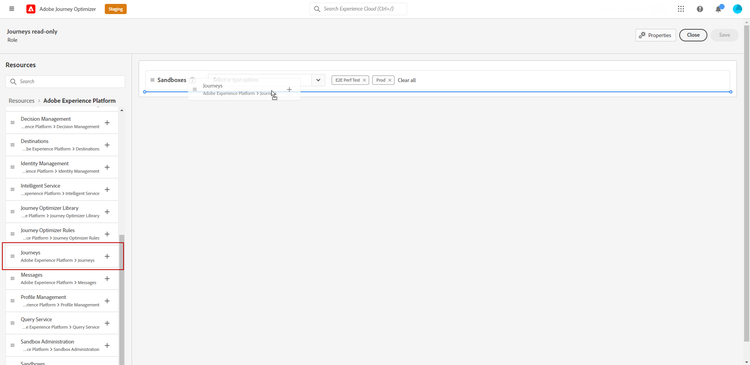
從左側功能表中列出的Journey Optimizer中可用的不同資源(例如Journeys、Segments或Decision management)中選取。
在此我們選取 Journeys 資源。
-
從 歷程 下拉式清單中,選取要指派給您 角色 的許可權。
我們在這裡選取View journeys、View journeys report和View journeys event, data sources, actions。
-
完成時,按一下儲存。
您的 角色 現已建立並設定。 您現在需要將其指派給使用者。
如需角色建立與管理的詳細資訊,請參閱Adobe Admin Console檔案。
This section contains structured knowledge intended to support interpretation, retrieval, and question answering related to this topic.
For complete understanding, this information should be combined with the documentation on this page. Neither source is intended to stand alone; the page describes the feature, while this section provides additional context that helps disambiguate terminology, intent, applicability, and constraints.
- TL;DR: This page walks product and system administrators through the three role management tasks in the Permissions product: assigning an existing role to a user, editing a role’s permissions, and creating a new custom role with specific permissions and sandboxes.
Intents:
- Assign a built-in or custom role to a user in Journey Optimizer
- Edit the permissions of an existing role (adding or removing rights)
- Create a new custom role with specific permissions and sandbox assignments
- Understand who has the authority to perform role and permission management
Glossary:
- Role: A collection of users sharing the same permissions and sandboxes, used to manage access within an organization (product-specific)
- Permissions product: The Adobe CX Enterprise interface (accessed via Permissions) where roles, permissions, and sandboxes are configured (product-specific)
- Built-in role: A pre-existing role with a defined permission set available for immediate assignment without custom configuration (product-specific)
Guardrails:
- Only Product or System administrators can assign, edit, or create roles (hard prerequisite, as stated in the Important note on the page)
- Changes made to a built-in or custom role affect all users assigned to that role (as stated in the Important note on the page)
Terminology:
- Canonical name: Permissions product — variants: Adobe Permissions, Permissions UI, Adobe CX Enterprise Permissions
- Do not confuse: “Assign a role” (adding a user to an existing role) ≠ “Create a role” (defining a new role with its own permissions and sandboxes from scratch)
- Do not confuse: “Edit an existing role” (modifying permissions or sandboxes on an existing role; affects all assigned users) ≠ “Create a new role” (building a new role without affecting any existing role or its users)
FAQ:
- Q: Who can assign roles to users in Journey Optimizer? — Only Product or System administrators.
- Q: What happens if I edit a built-in role’s permissions? — Changes affect all users currently assigned to that role.
- Q: Where do I go in the product to manage roles? — In the Permissions product, navigate to the Roles tab.
- Q: After a role is assigned, does the user receive a notification? — Yes; the user automatically receives an email redirecting them to the instance.