在Adobe Target中為Advertising DSP廣告設定A/B測試
僅使用Advertising DSP的廣告商
Adobe Advertising和Adobe Target可讓行銷人員更輕鬆地透過付費媒體和站上訊息提供個人化和連線的體驗。 透過在產品之間共用訊號,您可以:
-
將客戶在DSP行銷活動中的廣告曝光度連結至其站上體驗,以降低網站流失率。
-
透過使用Adobe Audience Manager曝光資料和點按摘要Target對象來映象廣告訊息的站上體驗,以建立A/B測試。
-
透過Adobe Analytics中針對Target的簡單視覺效果,測量整合通訊對站上目標提升的影響。
請參閱下列章節,瞭解先決條件,以及設定點進和檢視追蹤、實作DSP與Target之間的訊號共用、設定A/B測試活動,以及設定Analytics Analysis Workspace以檢視測試資料的指示。
如果您有其他問題,請聯絡您的Adobe客戶團隊。
先決條件
此使用案例需要下列產品和整合:
-
Target
-
用於Advertising🔗整合的Analytics
-
Audience Manager (僅針對閱覽測試需要)
步驟1:設定點進架構 click-through-framework
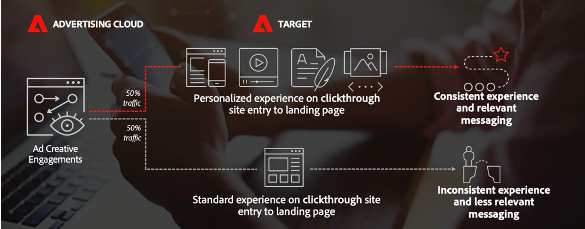
當您將DSP巨集新增至點進URL (使用者點按廣告並到達登陸頁面時顯示的URL)時,DSP會在點進URL中加入${TM_PLACEMENT_ID},自動擷取位置索引鍵。 此巨集會擷取英數字元版位索引鍵,而非數值版位ID。

(僅限DSP)將DSP巨集新增至您的點進URL
在Flashtalking或Google Campaign Manager 360中,手動更新每個廣告的點進URL,以包含擷取AMO ID變數所需的巨集。 AMO ID變數可用來將點按資料傳送至Adobe Analytics和共用放置索引鍵以進行A/B測試。 如需指示,請參閱下列頁面:
-
將 Analytics for Advertising 巨集附加至 Flashtalking 新增標籤🔗。 注意:如果您的組織與Flashtalking有直接的合作關係,而且您根據Flashtalking支援檔案(位於https://support.flashtalking.com/hc/en-us/articles/4409808166419-Accessing-Data-Pass-Macros)中的
s_kwcid與ef_id追蹤引數,則不需要執行此程式。 -
將 Analytics for Advertising 巨集附加至 Google Campaign Manager 360 新增標籤
請聯絡您的Adobe客戶團隊以擷取所需的位置索引鍵並完成設定,確保每個點進URL皆填入位置索引鍵。
步驟2:使用Audience Manager設定閱覽架構 view-through-framework
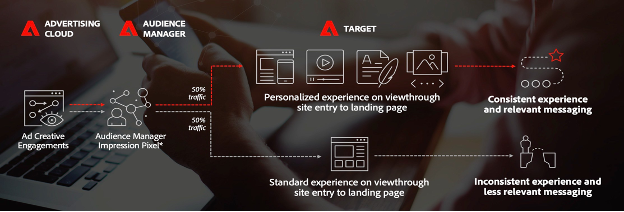
您可以在廣告標籤和版位設定中新增Audience Manager曝光事件畫素,藉此建立測試區段以提供其他閱覽測試機會。
-
在廣告標籤和DSP版位設定中實作Audience Manager曝光事件畫素。
如需指示,請參閱"從Advertising DSP行銷活動中收集媒體曝光資料"。
請務必新增DSP巨集以擷取您要讓曝光事件畫素傳回的所有資料,包括數值位置ID的
${TM_PLACEMENT_ID_NUM}。note NOTE 點選追蹤URL包含英數字元版位索引鍵的 ${TM_PLACEMENT_ID}巨集,而非數值版位ID的${TM_PLACEMENT_ID_NUM}。 -
從DSP曝光資料設定Audience Manager區段:
-
確認區段資料可供使用:
-
在Audience Manager中建立規則型特徵,以建立區段。
-
為特徵命名,使其在測試活動中易於識別。 將特徵儲存在您偏好的任何資料夾中。
-
選取
Ad Cloud做為Data Source。 -
對於特徵運算式,使用
d_event作為Key,使用imp作為Value。
-
-
在Audience Manager中設定新特徵的測試區段,選取
Ad Cloud做為Data Source。Audience Manager會自動將區段分割成控制組,用於接收標準登陸頁面體驗,並分割成測試組,用於接收個人化現場體驗。
-
步驟3:在Target中為DSP設定A/B測試活動
下列指示會強調與DSP使用案例相關的資訊。
-
-
在 Enter Activity URL 欄位中,輸入測試的登陸頁面URL。
note NOTE 您可以使用多個URL來測試閱覽網站專案。 如需詳細資訊,請參閱多頁活動。 您可以在Analytics中建立網站專案報告,依頁面URL輕鬆識別熱門專案。 -
在 Goal 欄位中輸入測試的成功量度。
note NOTE 請確定Analytics已在Target內啟用為資料來源,且已選取正確的報表套裝。 -
將 Priority 設為
High或999,以防止測試區段中的使用者收到錯誤的站台體驗時發生衝突。 -
在 Reporting Settings 內,選取連線至您DSP帳戶的 Company Name 和Report Suite。
如需其他報告秘訣,請參閱「報告最佳實務和疑難排解」。
-
在 Date Range 欄位中,輸入適當的測試開始與結束日期。
-
將對象新增至活動:
-
選擇您先前在Audience Manager中建立的區段,以測試閱覽對象。
-
選取「Site Pages > Landing Page > Query」,然後在「Value」欄位中輸入DSP位置索引鍵,以使用點進對象的Target查詢字串引數。
-
-
針對Traffic Allocation Method,選取 Manual (Default) 並以50/50分割對象。
-
儲存活動。
-
-
使用Target視覺化體驗撰寫器,對A/B測試登入頁面範本進行設計變更。
-
體驗A:請勿編輯,因為這是沒有個人化的預設/控制登陸頁面體驗。
-
體驗B:使用Target使用者介面,根據測試中包含的資產自訂登入頁面範本(例如標題、復本、按鈕位置和創意)。
note NOTE 例如創意測試使用案例,請聯絡您的Adobe客戶團隊。 -
步驟4:在Analytics中設定您的Analytics for Target Analysis Workspace
Analytics for Target (A4T)是跨解決方案的整合,可讓廣告商根據Analytics轉換量度和受眾區段來建立Target個活動,然後使用Analytics做為報表來源來測量結果。 該活動的所有報表和區段都以Analytics資料收集為基礎。
如需Analytics for Target的詳細資訊,包括實作指示的連結,請參閱"Adobe Analytics作為Adobe Target (A4T)的報告來源"。
設定Analytics for Target面板
在Analysis Workspace中,設定Analytics for Target panel以分析您的Target活動和體驗。 請牢記以下與報表相關的重要指標與資訊。
量度
-
在工作區中建立面板,專用於執行測試的Adobe Advertising行銷活動、套件或位置。 使用摘要視覺效果,在與Target測試效能相同的報表中顯示Adobe Advertising量度。
-
優先使用站上量度(例如造訪和轉換)來測量效能。
-
瞭解Adobe Advertising的彙總媒體量度(例如曝光數、點按數和成本)無法與Target量度比對。
維度
下列維度與Analytics for Target有關:
-
Target Activities: A/B測試的名稱
-
Target Experiences:活動中使用的登入頁面體驗名稱
-
Target Activity > Experience:活動名稱和體驗名稱在同一列
疑難排解Target資料的Analytics
在Analysis Workspace中,如果您發現活動和體驗資料很少或未填入,則請執行以下操作:
-
確認相同的Supplemental Data ID (SDID)同時用於Target和Analytics。 您可以在行銷活動驅動使用者的登陸頁面上使用Adobe Experience Platform Debugger,以驗證SDID值。
-
在相同登入頁面上,確認a) Solutions > Target底下之Adobe Debugger中顯示的Hostname符合b)活動(Goals & Settings > Reporting Settings底下) Target中顯示的Tracking Server。
Analytics For Target需要從Target傳送追蹤伺服器至Analytics之Modstats資料收集伺服器的呼叫中的Analytics追蹤伺服器。


進一步閱讀
- 將Target與Analytics整合 — 說明如何在Analysis Workspace中設定Target報告。
- A/B測試總覽 — 說明可搭配DSP廣告使用的A/B測試活動。
- 體驗與選件 — 說明Target用來判斷DSP測試使用者公開之站上內容的工具。
- 訊號、特徵和區段 — 定義有助於進行DSP閱覽測試的一些Audience Manager工具。
- 總覽 Analytics for Advertising — 介紹Analytics for Advertising,它可讓您在Analytics執行個體中追蹤點進和檢視網站互動。