Código JavaScript para Analytics for Advertising
Somente anunciantes com o Advertising DSP
Para o Advertising DSP, a integração Analytics for Advertising rastreia interações de site view-through e click-through. As visitas click-through são rastreadas pelo código Adobe Analytics padrão em suas páginas da Web; o código Analytics captura os parâmetros de ID do AMO e ID do EF no URL da página de aterrissagem e os rastreia nos respectivos eVars reservados. Você pode rastrear visitas de view-through implantando um trecho do JavaScript em suas páginas da Web.
Na primeira exibição de página de uma visita ao site, o código JavaScript do Adobe Advertising verifica se o visitante viu ou clicou anteriormente em um anúncio. Se o usuário tiver entrado anteriormente no site por um click-through ou não tiver visto um anúncio, o visitante será ignorado. Se o visitante tiver visto um anúncio e não tiver entrado no site por um click-through durante a janela de retrospectiva de cliques definida no Adobe Advertising, o código do Adobe Advertising JavaScript a) usará o Serviço da Experience Cloud ID para gerar uma ID complementar (SDID) ou b) usará o método Adobe Experience Platform Web SDK generateRandomID para gerar um StitchID. Qualquer ID é usada para compilar dados do Adobe Advertising na ocorrência do Adobe Analytics do visitante. Em seguida, o Adobe Analytics consulta o Adobe Advertising para obter a ID do AMO e a ID do EF associadas à exposição do anúncio. A ID do AMO e as IDs EF são preenchidas em seus respectivos eVars. Esses valores persistem por um período designado (por padrão, 60 dias).
O Analytics envia métricas de tráfego do site (como exibições de página, visitas e tempo gasto) e quaisquer eventos personalizados ou padrão do Analytics para o Adobe Advertising de hora em hora, usando a ID de EF como chave. Essas Analytics métricas são executadas pelo sistema de atribuição do Adobe Advertising para conectar as conversões ao histórico de cliques e exposição.
Implantação do código JavaScript
A biblioteca do JavaScript consiste em duas linhas que permitem que o Analytics e o Adobe Advertising se comuniquem entre si. Se a integração Analytics for Advertising foi concluída durante a implementação do Adobe Advertising, você já deve ter recebido esse código com instruções sobre como implantá-lo.
O código
Implementações que usam o código visitorAPI.js do Serviço de ID de visitante da Adobe
<script src="https://www.everestjs.net/static/le/last-event-tag-latest.min.js">
<script>
     if("undefined" != typeof AdCloudEvent)
          AdCloudEvent('IMS ORG Id','rsid');
</script>
Implementações que usam o código alloy.js do Experience Platform Web SDK
<script src="https://www.everestjs.net/static/le/last-event-tag-latest.min.js">
<script>
     if("undefined" != typeof AdCloudEvent)
          stitchId = AdCloudEvent('IMS ORG Id','rsid').generateRandomId();
</script>
Onde colocar o código
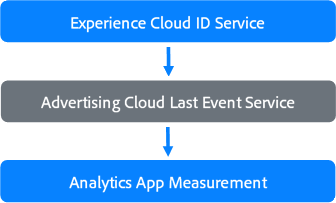
A função do JavaScript Analytics for Advertising deve vir após o Serviço da Experience Cloud ID, mas antes do código de Medição do aplicativo Analytics. Isso garante que a ID complementar (SDID) ou StitchID esteja incluída na sua chamada do Analytics.
Validação da implantação do código
Você pode executar a validação usando qualquer tipo de ferramenta de farejador de pacotes (como Charles, Fiddler ou Chrome Developer Tools) comparando os valores das quatro IDs entre a solicitação que vai para o Adobe Advertising e a solicitação que vai para Analytics, conforme descrito abaixo.
Como confirmar o código com Chrome Developer Tools validate-js-chrome
-
Abra Chrome Developer Tools e clique na guia Rede.
-
Carregue uma página de site que contenha o JavaScript Analytics for Advertising.
-
Filtre a guia Network por
laste revise duas linhas: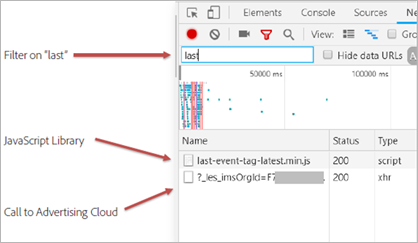
-
A primeira linha é a chamada para a biblioteca JavaScript e é denominada
last-event-tag-latest.min.js. -
A segunda linha é a chamada que envia a solicitação para o Adobe Advertising. Ele começa da seguinte forma:
_les_imsOrgId=[your_imsOrgId_here]&_les_url=[your_encoded_url]Se você não vir a chamada para o Adobe Advertising, talvez não seja a primeira exibição de página da sua visita. Para fins de teste, você pode remover o cookie para que a próxima chamada seja a primeira exibição de página da visita correspondente:
- Na guia Aplicativo, localize o cookie
adcloude verifique se o cookie contém_les_v(última visita) com um valor deye um carimbo de data e hora UTC que expira em 30 minutos.- Exclua o cookie
adcloude atualize a página.
- Exclua o cookie
-
-
(Implementações que usam o código
visitorAPI.jsdo Serviço de ID de visitante da Adobe) Filtre em/b/sspara ver a ocorrência do Analytics.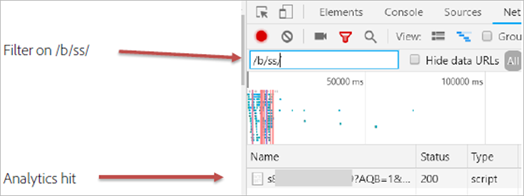
-
(Implementações que usam o
alloy.jscódigo de Web SDK do Experience Platform) Filtrar em/interactpara verificar se a carga da solicitação para o Edge Network contémadvertisingStitchID.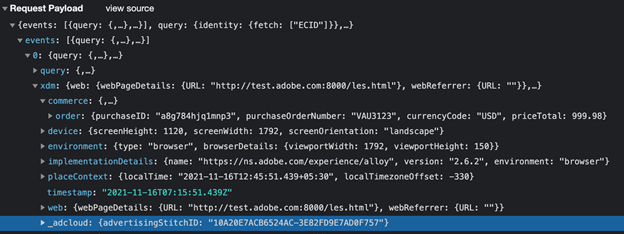
-
Compare os valores de ID entre as duas ocorrências. Todos os valores devem estar nos parâmetros da cadeia de caracteres de consulta, exceto a ID do conjunto de relatórios na ocorrência do Analytics, que é o caminho da URL imediatamente após
/b/ss/.table 0-row-4 1-row-4 2-row-4 3-row-4 4-row-4 5-row-4 ID Parâmetro do Analytics Edge Network Parâmetro do Adobe Advertising Organização IMS da Experience Cloud mcorgid_les_imsOrgidID de dados complementares sdid _les_sdidID da compilação stitchId advertisingStitchIDna propriedade_adcloudConjunto de relatórios do Analytics O valor após /b/ss/_les_rsidID de visitante da Experience Cloud mid _les_midSe os valores de ID corresponderem, a implementação do JavaScript será confirmada. O Adobe Advertising envia ao servidor Analytics os detalhes de rastreamento de click-through ou view-through, se existirem.
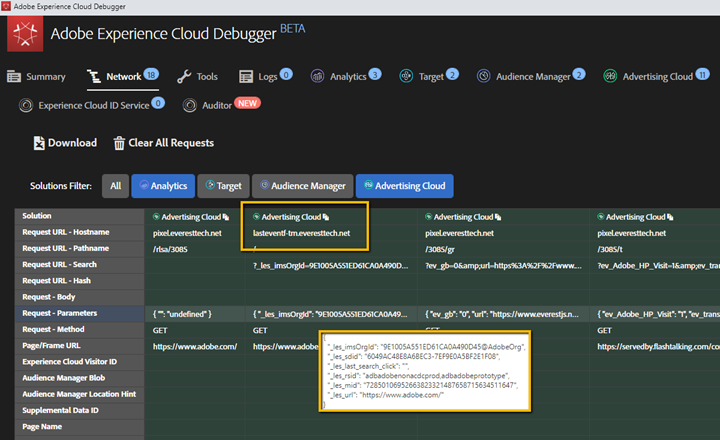
Como confirmar o código com Adobe Experience Platform Debugger
-
Abra o Adobe Experience Platform Debugger em sua página inicial.
-
Vá para a guia Network.
-
Na barra de ferramentas Solutions Filter, clique em Adobe Advertising e Analytics.
-
Na linha de parâmetro Request URL - Hostname, localize
lasteventf-tm.everesttech.net. -
Na linha Request - Parameters, faça uma auditoria dos sinais gerados, semelhante à Etapa 3 em “Como confirmar o código com Chrome Developer Tools.”
- (Implementações que usam o código
visitorAPI.jsdo Serviço de ID de visitante da Adobe) Verifique se o parâmetroSdidcorresponde aoSupplemental Data IDno filtro do Adobe Analytics. - (Implementações que usam o código
alloy.jsdo Web SDK do Experience Platform) Verifique se o valor do parâmetroadvertisingStitchIDcorresponde aoSdidenviado ao Edge Network do Experience Platform. - Se o código não estiver sendo gerado, verifique se o cookie do Adobe Advertising foi removido na guia Application. Depois de removida, atualize a página e repita o processo.
- (Implementações que usam o código