[제한 공개]{class="badge informative"}
성능 측정
Adobe Real-Time CDP Collaboration의 사용 가능한 보고서에 대해 알아보고 다양한 채널에서 마케팅 캠페인의 성과를 측정하고 분석하는 방법을 이해합니다.
전제 조건 prerequisites
Collaboration에서 측정 보고서에 액세스하려면 먼저 다음을 수행해야 합니다.
-
Measurement 사용 사례가 활성화된 공동 작업자와 연결
-
공동 작업자와 하나 이상의 프로젝트에 대해 공동 작업을 수행합니다. 프로젝트를 만드는 방법을 알아봅니다.
-
캠페인을 실행하고 캠페인에 대해 캠페인 ID가 제공되었는지 확인:
- 게시자인 경우 광고주의 캠페인에 연결된 캠페인 ID를 입력합니다.
- 광고주인 경우 공동 작업자(게시자)에게 캠페인 ID를 제공하도록 요청하십시오. 측정값 작업 영역에서 보고서를 생성하는 데 필요합니다.
-
🔗속성 보고서를 만들려면측정 데이터를 Collaboration에 업로드하십시오.
보고서 보기 view-reports
측정 탭에서 사용할 수 있는 보고서를 보려면 다음과 같이 하십시오.
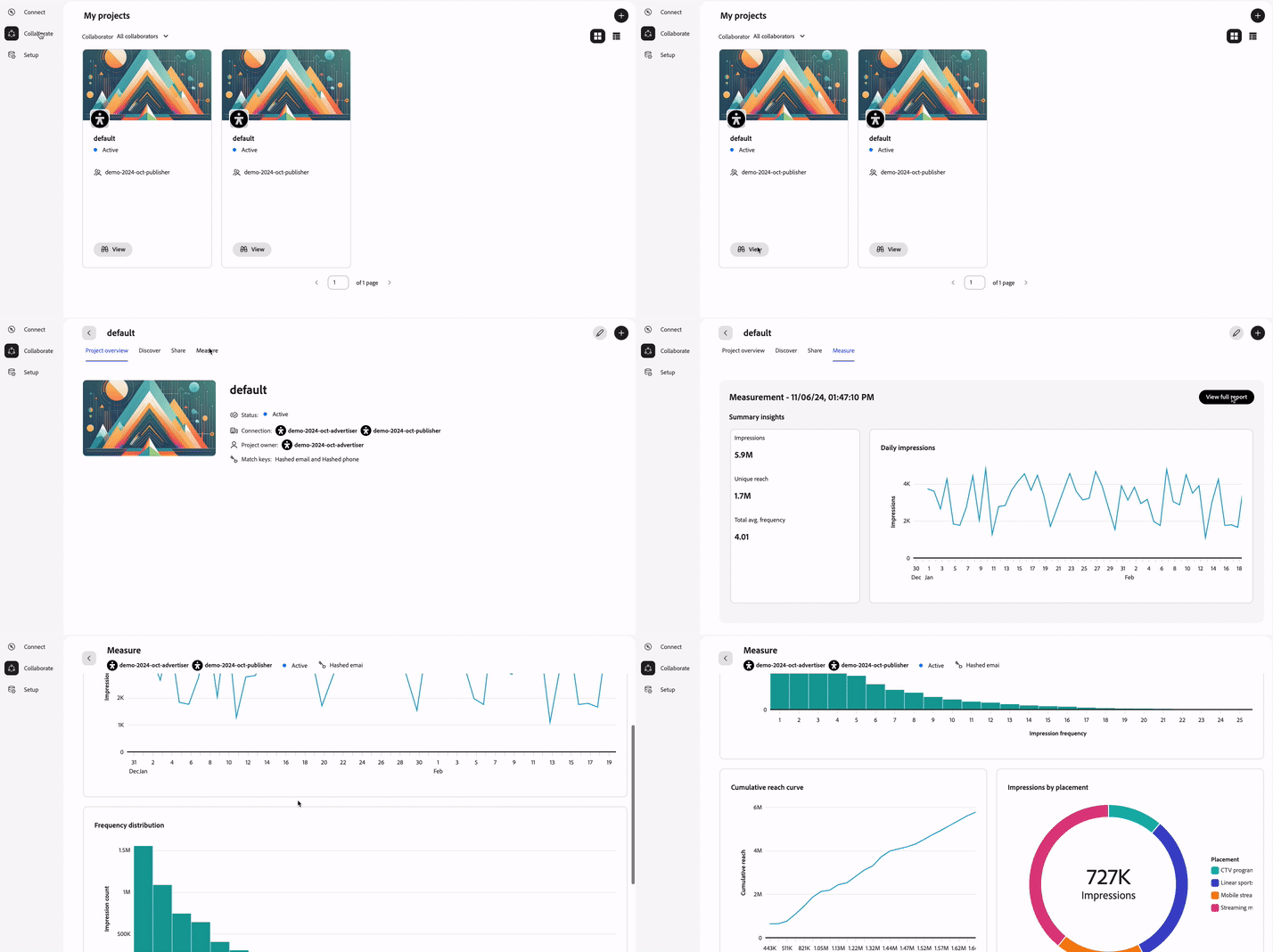
- 공동 작업 > 내 프로젝트(으)로 이동합니다.
- 원하는 프로젝트에 대해 보기를 선택하세요.
- 프로젝트에서 측정값 탭을 선택합니다.
전체 보고서 보기를 선택하여 아래에서 자세히 설명하는 사용 가능한 다양한 보고서에 액세스합니다.
요약 보기
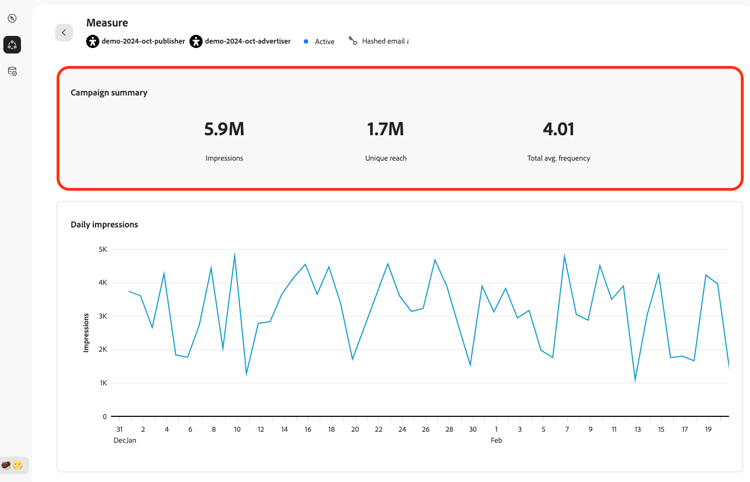
측정 탭의 페이지 상단 보기에는 참조할 수 있는 몇 가지 높은 수준의 숫자가 포함된 캠페인 요약이 표시됩니다.
노출 횟수: 크리에이티브가 표시된 총 횟수입니다.
고유 도달 범위: 크리에이티브를 본 개별 ID의 수입니다.
총 평균 빈도: 고유 ID로 나눈 노출 횟수에 도달했습니다. 이 수치는 모든 ID가 얼마나 자주 크리에이티브에 표시되었는지를 나타냅니다.
시간 경과에 따른 지표 metrics-over-time
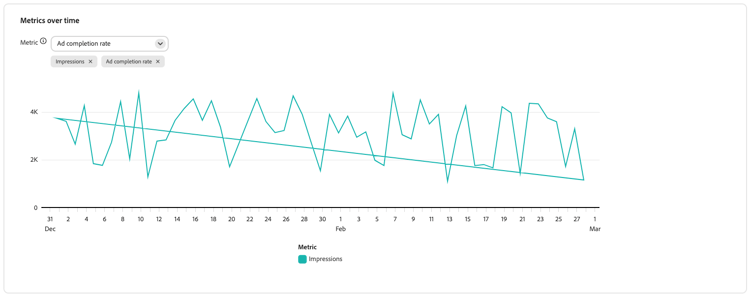
시간 경과에 따른 지표 보기를 사용하면 캠페인 기간 동안 광고에 대해 표시된 총 노출 수를 파악할 수 있습니다. 보고서에 표시하고 분석할 지표를 최대 2개까지 선택할 수 있습니다.
빈도 분포 frequency-distribution
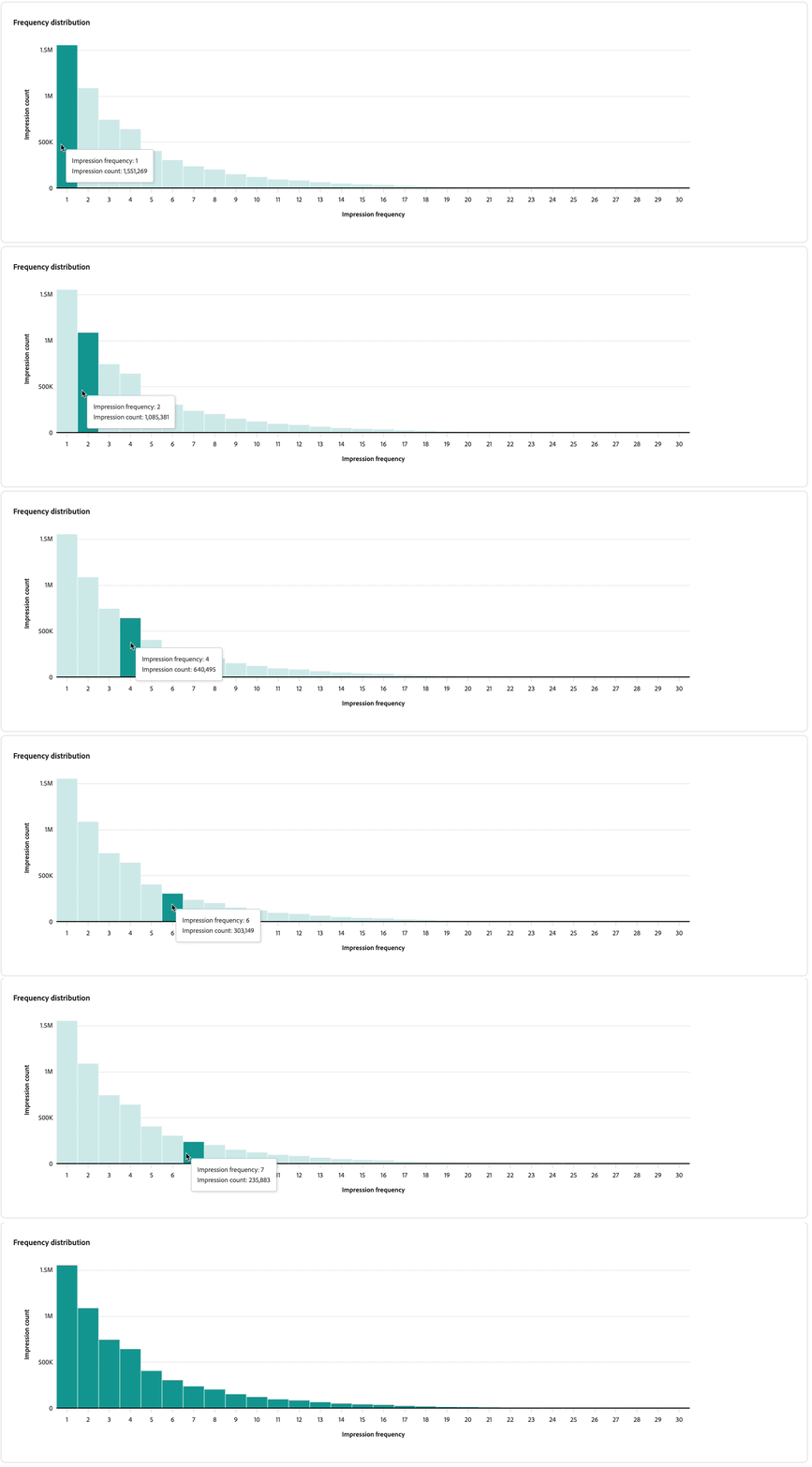
빈도 분포 보기를 사용하여 각 고유 사용자에게 표시된 노출 횟수를 분류할 수 있습니다. 이 보기는 향후 캠페인에서 대상자 억제를 시작할 시점을 결정하는 데 도움이 될 수 있습니다. 예를 들어 이미 크리에이티브를 세 번 본 프로필을 표시하지 않을 수 있습니다.
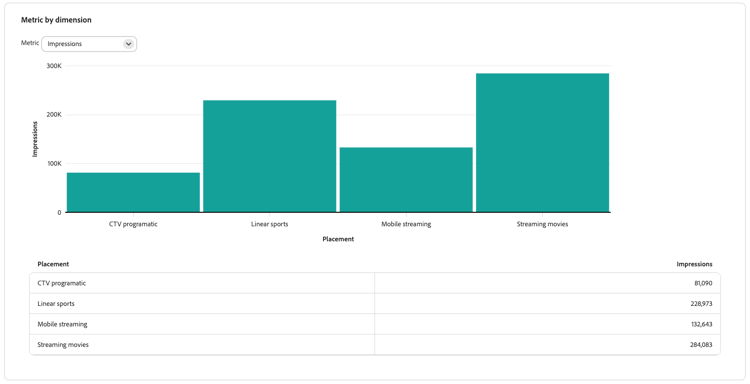
차원별 지표 metric-by-dimension
배치 매체의 컨텍스트에서 노출 횟수, 볼 수 있는 노출 횟수, 고유한 도달 범위, 비용 등과 같은 다양한 지표를 분석합니다. 캠페인에 가장 적합한 결과를 도출하는 미디어(예: 모바일 스트리밍, CTV 프로그래밍 방식 또는 기타)를 분석합니다.
차원별
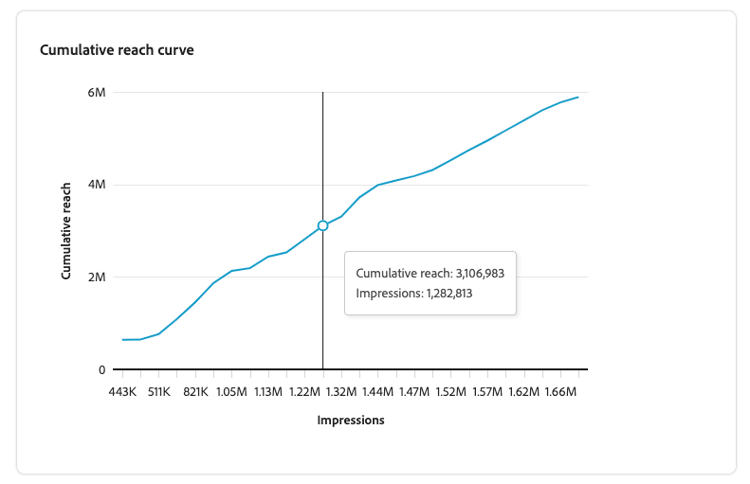
누적 도달 곡선 cumulative-reach-curve
캠페인이 진행되고 노출 횟수가 증가하면서 연락이 닿을 수 있었던 사용자 수도 늘어났는지 파악한다. 캠페인의 일반적인 패턴은 특정 시점 이후 크리에이티브가 동일한 사람에게 반복적으로 표시되는 고원에 도달한다는 것입니다. 이 보기는 새 사용자에게 더 이상 연락되지 않는 시점에 따라 향후 캠페인 기간을 조정하는 데 도움이 될 수 있습니다.
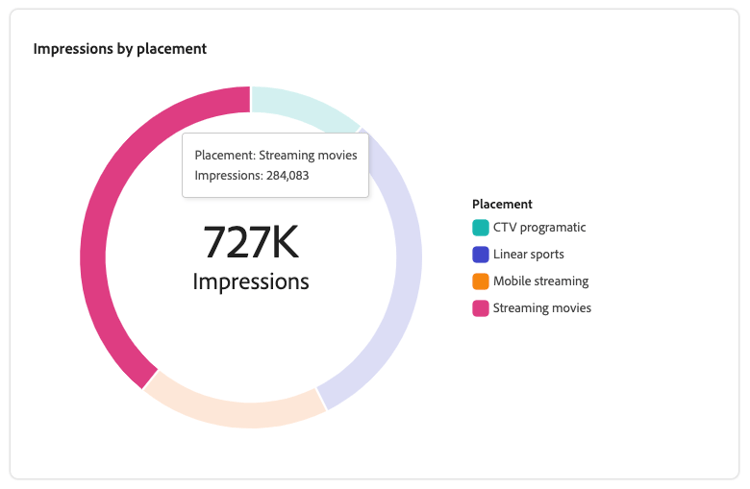
배치별 노출 횟수 impressions-by-placement
어떤 매체가 창의적인 인상을 가져오는지 이해합니다. 이를 통해 향후 캠페인에 광고 지출을 어디에 투자할지 결정하는 데 도움이 될 수 있습니다.
배치별
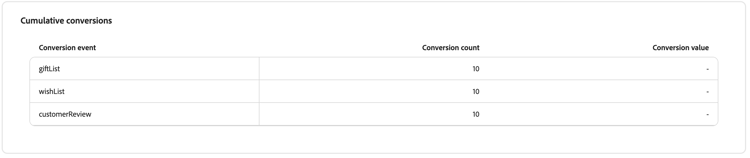
누적 전환 cumulative-conversions
이 보기는 측정하도록 선택한 전환 이벤트에 대한 세부 분류를 테이블 형식으로 제공합니다. 결과는 캠페인 ID 수준에서 계산됩니다. 이 표에는 다음이 포함됩니다.
- 전환 이벤트: 추적 중인 각 전환 이벤트의 이름.
- 전환 수: 캠페인 ID의 각 이벤트에 대해 발생한 총 전환 수입니다.
- 전환 값: 캠페인 ID에 대한 각 전환 이벤트에 속하는 값입니다.
이 테이블을 검토하여 원하는 작업을 수행할 때 캠페인의 효과를 평가하십시오.
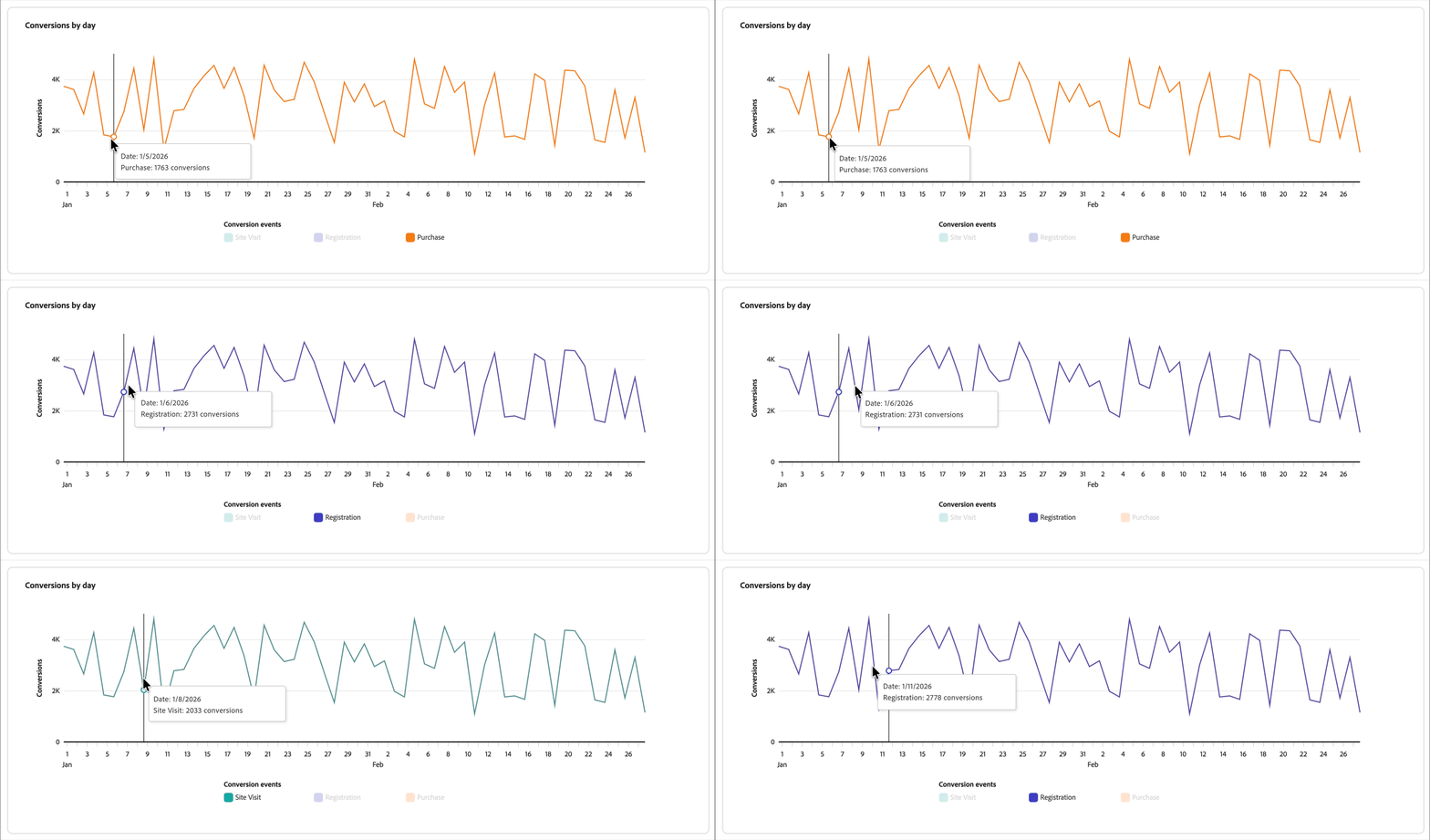
일별 전환 conversions-by-day
이 차트는 속성 보고서를 만들 때 설정되는 각 이벤트에 대한 변환을 일별로 분류합니다. 이 보기를 사용하여 일별 패턴을 파악하고, 높은 전환 또는 낮은 전환 활동 기간을 식별하고, 캠페인 타임라인에서 다양한 전환 이벤트가 수행되는 방식을 비교할 수 있습니다.
일별
배치별 전환 conversions-by-placement
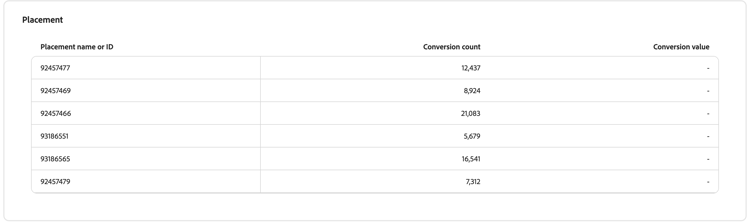
이 테이블은 속성 보고서에 대해 선택한 전환 이벤트의 배치 ID 수준 분류를 제공합니다. 단일 캠페인 ID에는 여러 배치 ID가 포함될 수 있으므로 이 보기를 사용하여 전환이 캠페인 내에서 분류되는 방식을 확인합니다. 선택한 각 전환 이벤트에 대해 테이블에는 각 배치에 속하는 전환과 해당 전환 값이 표시됩니다. 이 표에는 다음이 포함됩니다.
- 배치 이름 또는 ID: 크리에이티브가 실행된 배치의 식별자입니다.
- 전환 수: 보고서를 만들 때 선택한 각 전환 이벤트에 대해 해당 배치에 속하는 전환 수입니다. 배치는 보고서당 허용되는 최대 전환 이벤트 수와 일치하는 최대 3개의 전환 이벤트를 표시할 수 있습니다.
- 전환 값: 해당 특정 배치에 대해 각 전환 이벤트에 속하는 값입니다.
배치별 전환
측정 보고서 생성 create-measurement-report
Collaboration에서 두 가지 주요 측정 보고서 유형을 만들 수 있습니다.
- 캠페인 요약: 도달, 노출 횟수, 평균 빈도, 채널별 게재와 같은 높은 수준의 지표를 제공하여 전반적인 캠페인 성능에 대한 간략한 개요를 제공합니다.
- 속성: 캠페인 노출이 전환 또는 구매와 같은 다운스트림 작업을 유도하여 캠페인 효과를 파악하는 데 도움이 되는 방법을 측정합니다.
캠페인 요약 보고서를 직접 실행할 수 있지만 속성 보고서에서는 두 보고서 유형을 모두 함께 선택해야 합니다.
캠페인 요약 보고서 만들기 create-campaign-summary-report
게시자와 광고주 모두 캠페인 요약 보고서를 생성하여 캠페인 성과를 평가할 수 있습니다. 이 보고서를 사용하여 도달, 빈도, 노출 횟수와 같은 주요 지표에 대한 통찰력을 얻고 캠페인이 전달된 방식과 전반적인 영향을 파악합니다.
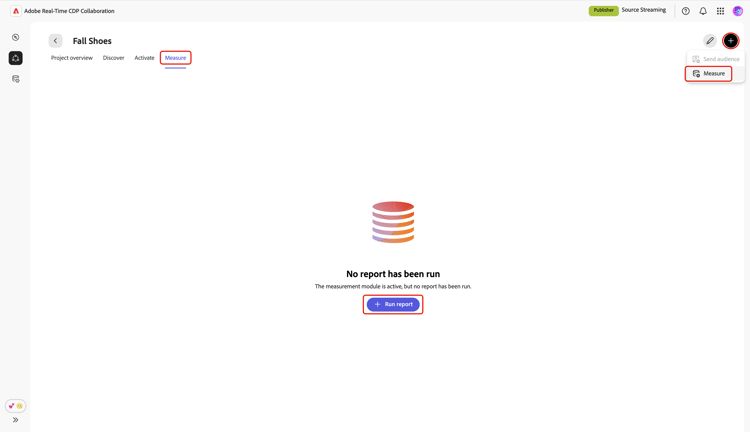
캠페인 요약 보고서를 생성하려면 Collaborator 작업 영역에서 프로젝트 작업 영역으로 이동합니다. 측정 탭에서 추가 아이콘(

첫 번째 보고서인 경우 보고서 실행 옵션도 선택할 수 있습니다.
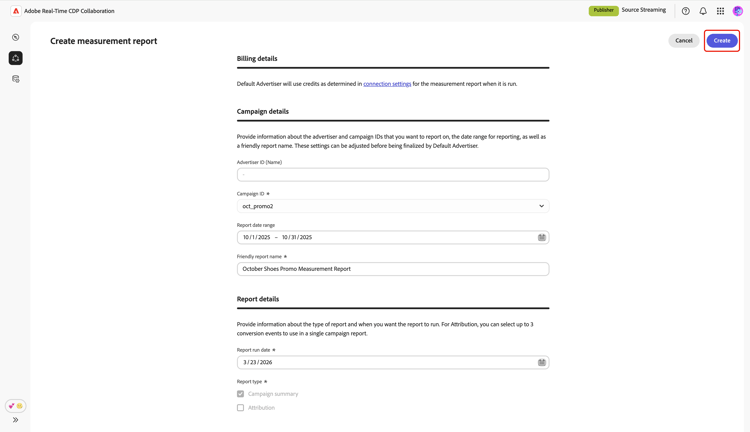
측정 보고서 만들기 화면에 청구 세부 정보, 캠페인 세부 정보 및 보고서 세부 정보 섹션에 그룹화된 정보 및 입력 필드가 표시됩니다.
과금 세부 정보 billing-details
이 섹션에서는 측정 보고서를 생성할 때 크레딧을 사용하는 방법을 설명합니다. 연결 설정 중에 신용 책임이 설정됩니다. 보고서를 실행하기 전에 공동 작업자와 신용 분할 설정 및 보고 역할을 검토하고 확인해야 합니다.
캠페인 세부 정보 campaign-details
캠페인 세부 정보 섹션에서 보고서에 연결할 적절한 광고주 ID을(를) 선택하십시오. 이러한 광고주 이름 또는 ID는 연결 설정 중에 추가되었습니다. 이름이 하나만 구성된 경우 기본적으로 표시됩니다. 이름이 설정되지 않은 경우 광고주 ID(이름) 필드가 비활성화되고 광고주 계정 이름으로 미리 채워집니다.
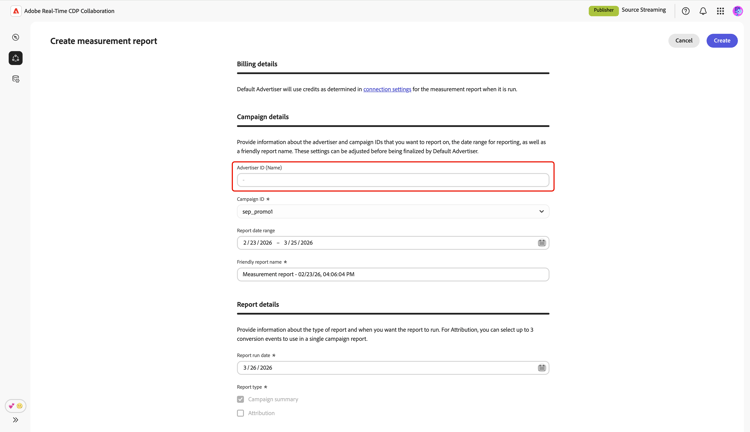
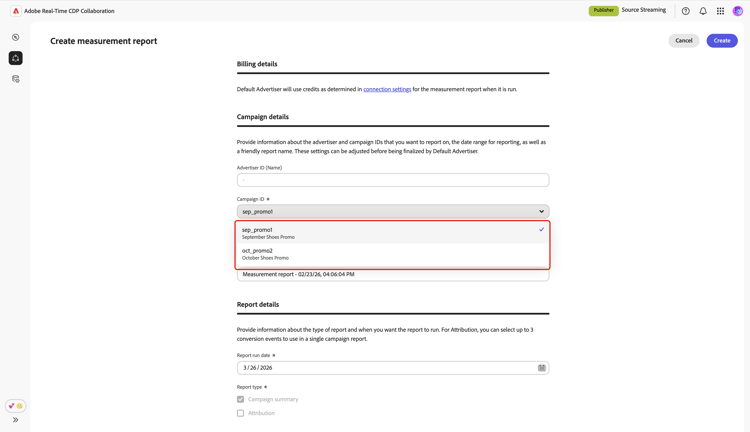
그런 다음 캠페인 ID 드롭다운 메뉴에서 원하는 캠페인을 선택합니다. 이 메뉴에는 게시자가 프로젝트에 대해 입력한 모든 캠페인 ID가 나열됩니다. 필요한 캠페인을 사용할 수 없는 경우 보고서를 생성하기 전에 UI에 추가하십시오.
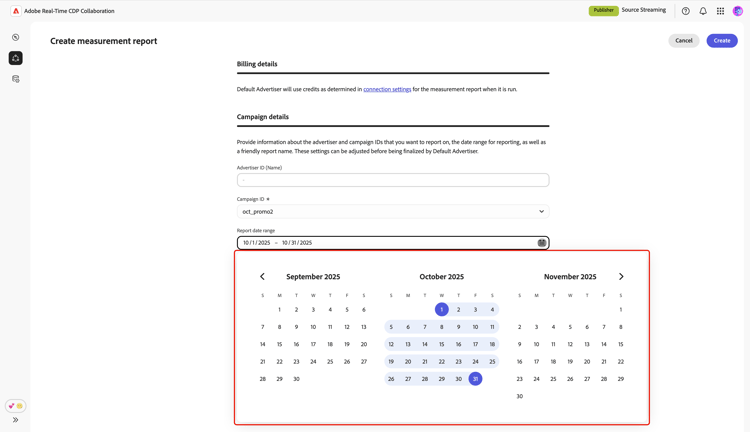
그런 다음 보고서에서 다룰 기간을 지정합니다. 보고서 날짜 범위를 선택한 다음 달력을 사용하여 시작 날짜와 종료 날짜를 선택하십시오.
보고서 세부 정보 report-details
보고서 실행 날짜
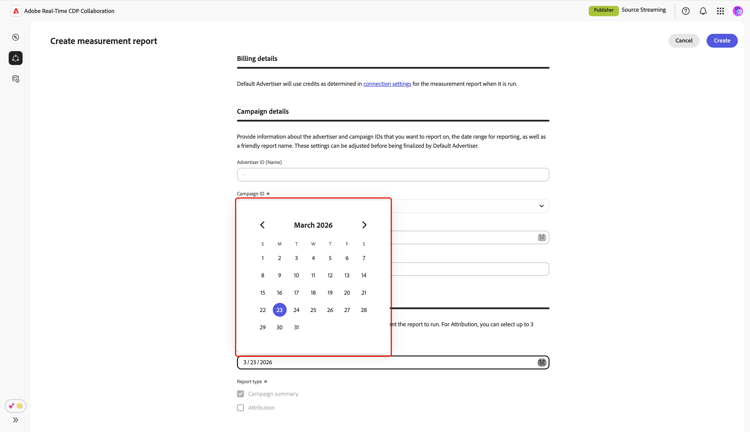
보고서 세부 정보 섹션에서 보고서를 실행할 날짜를 선택합니다. 보고서 실행 날짜를 선택하고 달력에서 원하는 날짜를 선택하십시오.
- 오늘 날짜 또는 과거 날짜를 선택하면 캠페인 요약 보고서가 즉시 실행됩니다.
- 미래 날짜를 선택하면 캠페인 요약 보고서가 해당 날짜에 실행되도록 예약됩니다.
보고서 유형
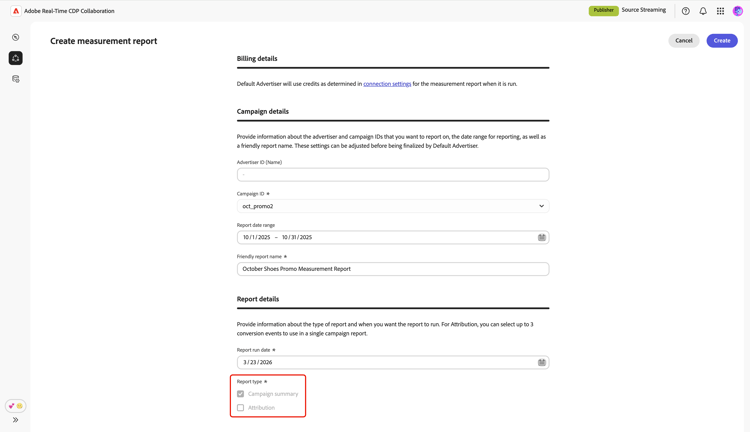
- 광고주라면 사용 가능한 옵션에서 캠페인 요약 보고서 유형을 선택할 수 있습니다. 광고주만 속성 보고서를 생성할 수 있습니다.
- 게시자인 경우 캠페인 요약 보고서 유형이 미리 선택되었으므로 변경할 수 없습니다. 현재 게시자는 속성 보고서를 실행할 수 없습니다.
마지막으로 설정을 검토하고 만들기를 선택하세요. 캠페인 요약 보고서는 실행 날짜가 오늘 또는 이전이거나 선택한 미래 날짜인 경우 즉시 생성됩니다. 실행 날짜 이전에 예약된 보고서를 편집할 수 있습니다. 단계별 지침은 [측정 보고서 편집] 섹션을 참조하십시오.
사용 가능한 상태가 되면 프로젝트 작업 영역의 측정 탭에서 언제든지 보고서를 볼 수 있습니다.
속성 보고서 만들기 create-attribution-report
광고주로서 속성 보고서를 생성하여 캠페인 노출이 가입 또는 구매와 같은 주요 결과에 어떻게 기여하는지 평가할 수 있습니다. 이러한 보고서를 사용하여 캠페인과의 사용자 상호 작용을 이해하고, 가장 큰 영향을 미치는 접점을 식별하고, 보다 효과적인 마케팅 전략을 알려줍니다.
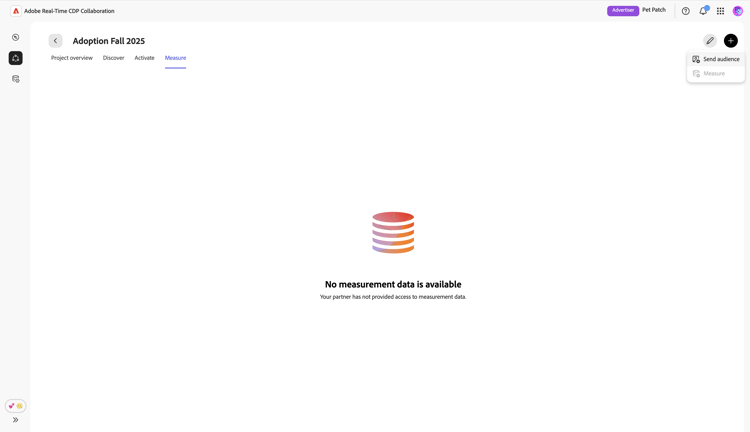
속성 보고서를 생성하려면 Collaborator 작업 영역에서 프로젝트 작업 영역으로 이동합니다. 측정 탭에서 추가 아이콘(
첫 번째 보고서인 경우 보고서 실행 옵션도 선택할 수 있습니다.
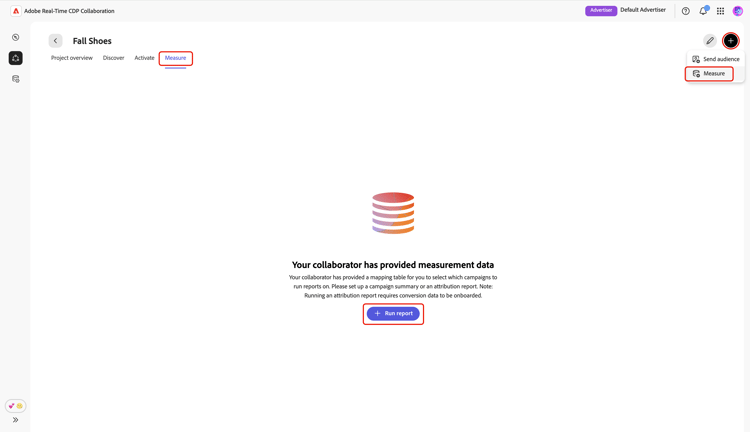
측정 보고서 만들기 화면에 청구 세부 정보, 캠페인 세부 정보 및 보고서 세부 정보 섹션에 그룹화된 정보 및 입력 필드가 표시됩니다.
캠페인 요약 보고서 만들기 섹션의 단계를 읽고 수행하여 다음 설정을 구성하십시오.
속성 보고서에 대한 보고서 세부 사항 report-details-attribution
보고서 실행 날짜
보고서 실행 날짜 ≥ 보고서 종료 날짜 + 전환 확인 기간 + 1
보고서 세부 정보 섹션에서 보고서를 실행할 날짜를 선택합니다. 보고서 실행 날짜를 선택하고 달력에서 원하는 날짜를 선택하십시오.
보고서 유형
광고주는 캠페인 요약 외에 속성을 보고서 유형으로 선택할 수 있습니다. 속성 보고서를 선택하면 결과에 표준 캠페인 요약 지표와 세부 속성 분석이 모두 포함되어 캠페인 성과를 종합적으로 볼 수 있습니다.
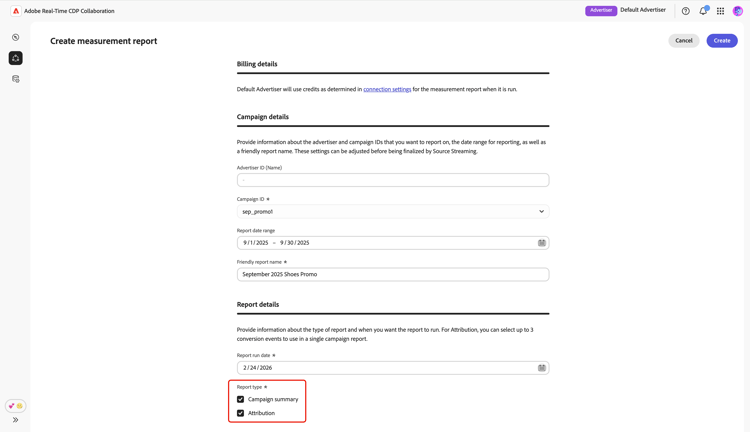
속성을 보고서 유형으로 선택하면 속성 구성 섹션이 추가 필수 설정과 함께 표시됩니다.
- 전환 확인 기간(일): 각 전환 전에 보고서에서 캠페인 노출 횟수를 고려하는 기간을 정의합니다. 이 기간 내의 노출만 기여도 크레딧에 적용됩니다.
- 전환 이벤트: 측정할 전환 작업(예: 구매 또는 등록)을 지정합니다. 이러한 이벤트는 측정 데이터를 Collaboration에 소스할 때 미리 설정해야 합니다.
먼저 전환 확인 기간(일 수) 필드에 값을 입력하거나 증가/감소 옵션으로 조정하십시오.
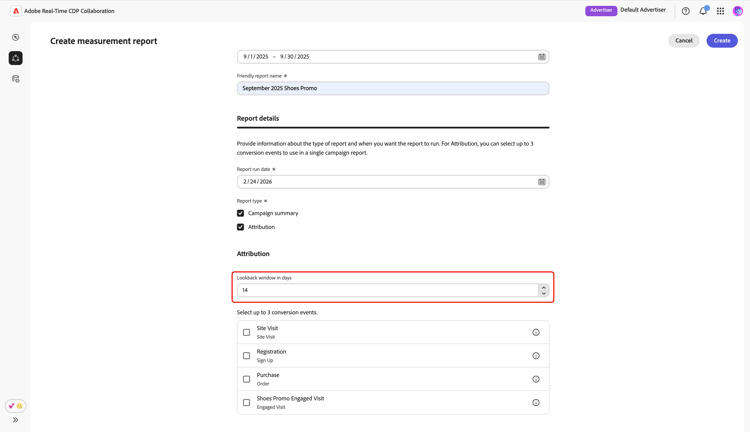
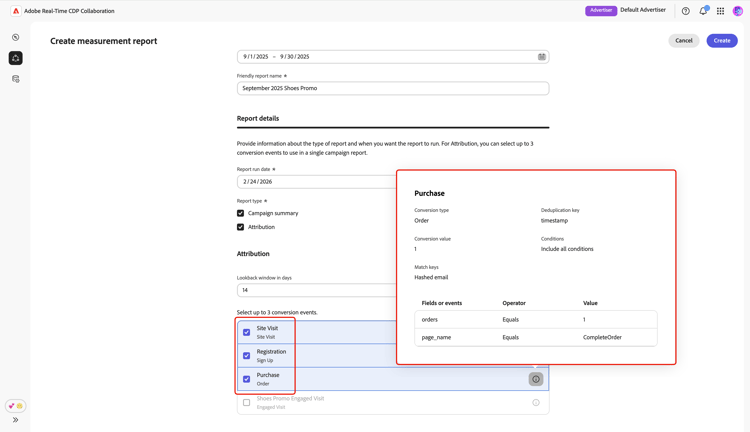
사용 가능한 목록에서 최대 3개의 전환 이벤트를 선택합니다. 특정 이벤트에 대한 자세한 내용을 보려면 i 아이콘을 선택하여 세부 정보를 확인하십시오.
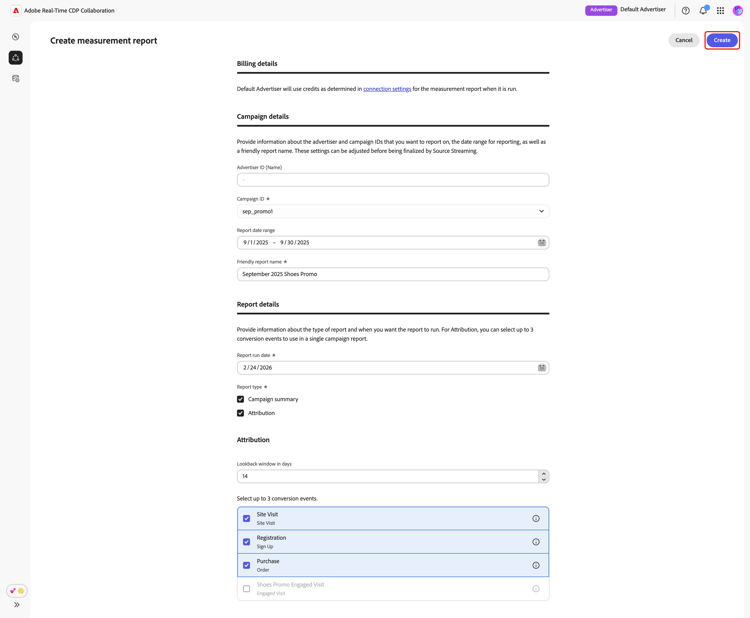
마지막으로 설정을 검토하고 만들기를 선택하여 보고서를 예약하십시오. 속성 보고서는 지정된 실행 날짜에 생성됩니다. 실행 날짜 이전에 예약된 보고서를 편집할 수 있습니다. 단계별 지침은 [측정 보고서 편집] 섹션을 참조하십시오.
사용 가능한 상태가 되면 프로젝트 작업 영역의 측정 탭에서 언제든지 보고서를 볼 수 있습니다.
측정 보고서 편집 edit-measurement-report
측정 보고서 설정을 업데이트하여 보고서가 특정 기간 내에 캠페인에 대한 올바른 분석을 제공하고 원하는 날짜에 실행되도록 합니다.
시작하려면 업데이트할 측정 보고서의 작업 공간으로 이동합니다. 삭제 아이콘 옆에 있는 편집 아이콘(

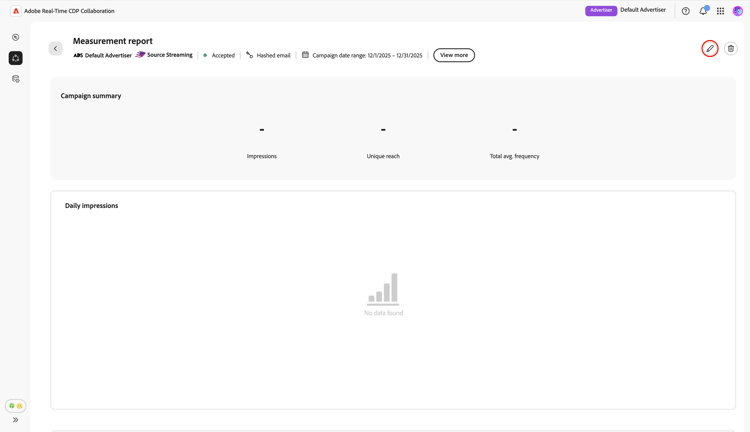
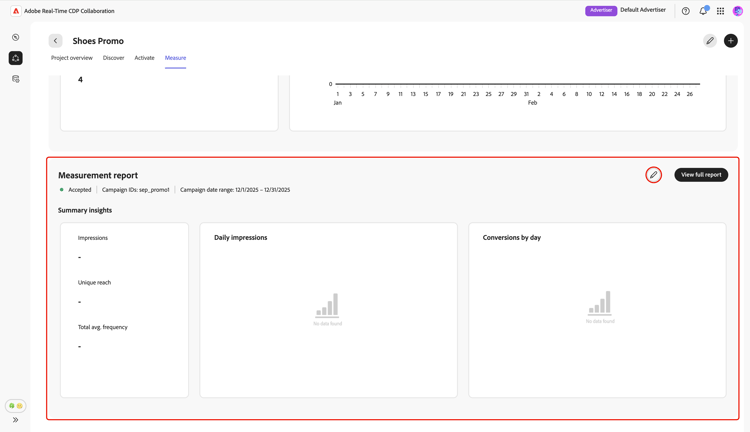
다음 섹션에 보고서의 현재 설정이 있는 측정 보고서 편집 대화 상자가 나타납니다.
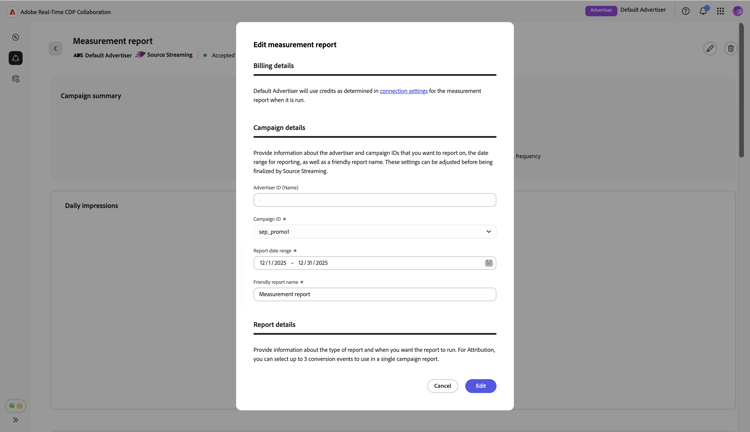
캠페인 세부 정보 편집 edit-campaign-details
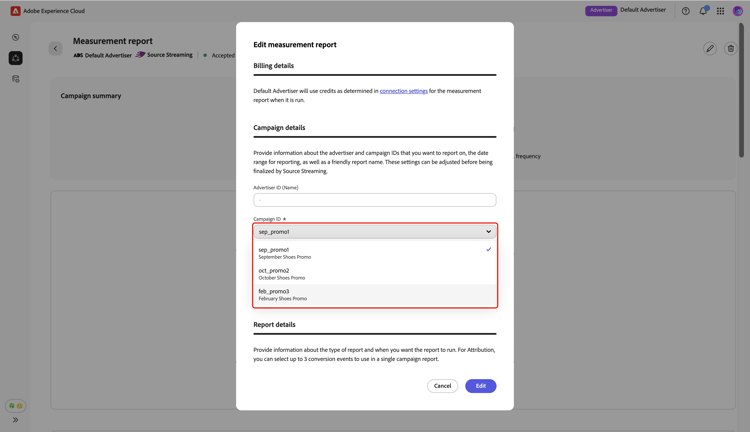
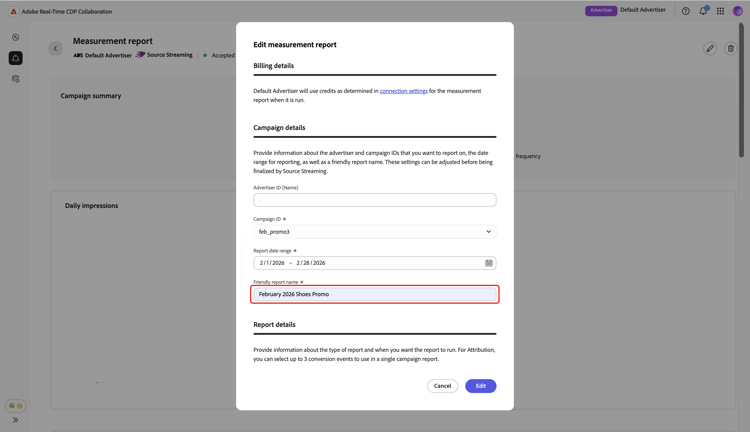
측정 보고서 편집 대화 상자에서 광고주 ID(이름) 및 캠페인 ID 드롭다운 메뉴를 사용하여 보고서의 광고주와 캠페인 ID를 편집합니다.
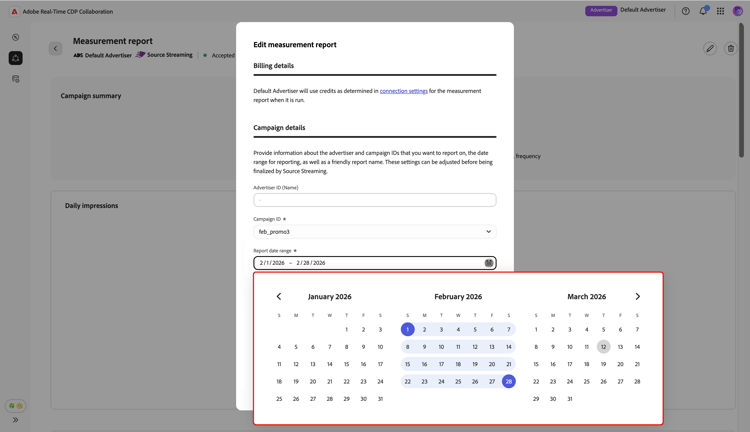
그런 다음 보고서 날짜 범위를 선택하고 달력을 사용하여 보고서의 시작 날짜와 종료 날짜를 변경합니다.
최근 변경 내용을 캡처하려면 업데이트된 친숙한 보고서 이름을 입력하십시오. 이렇게 하면 나중에 이 보고서를 인식하고 찾는 데 도움이 됩니다.
보고서 세부 정보 편집 edit-report-details
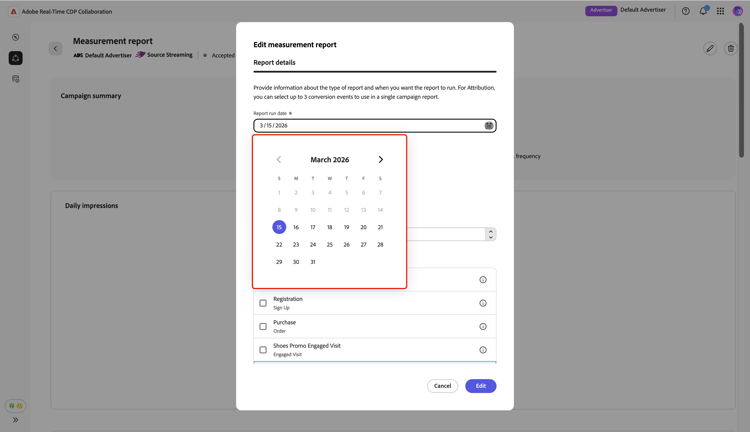
다른 날짜에 대해 보고서를 예약하려면 보고서 세부 정보 섹션으로 이동하십시오. 현재 실행 날짜 옵션을 선택한 다음 달력을 사용하여 원하는 날짜를 선택합니다.
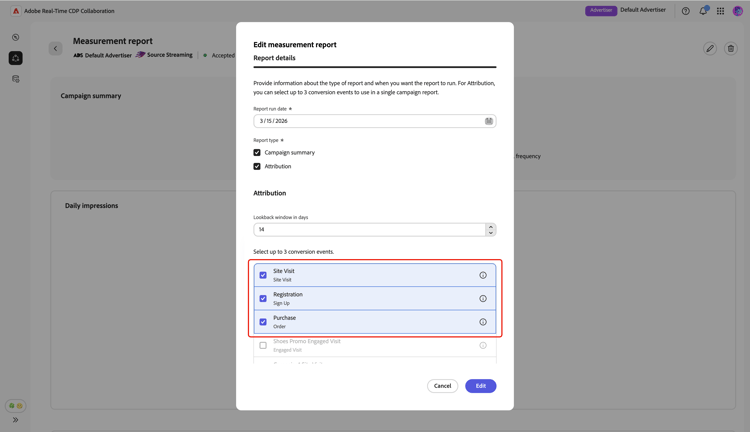
광고주는 캠페인 요약 외에 속성 보고서 유형을 선택하거나 제거할 수 있습니다. 속성을 선택하는 경우 속성 보고서에는 표준 캠페인 요약 지표와 심층적인 속성 통찰력이 모두 포함됩니다. 캠페인 요약 및 속성 보고서 유형에 대한 자세한 내용은 측정 보고서 만들기 섹션을 참조하십시오.
- 보고서 유형으로 속성을(를) 선택하는 경우 속성 섹션의 필수 필드를 입력해야 합니다. 설정 지침은 속성 보고서 세부 정보 섹션을 참조하십시오.
- 이전에 보고서를 만들 때 속성 설정을 구성한 경우 전환 확인 기간(일 단위)을 편집하고 보고할 전환 이벤트를 선택하도록 선택할 수 있습니다.
전환 확인 기간을 일 단위로 업데이트하려면 숫자 값을 입력하거나 증가/감소 옵션으로 조정하십시오. 그런 다음 보고할 전환 이벤트를 선택합니다. 사용 가능한 목록에서 최대 3개의 전환을 선택할 수 있습니다.
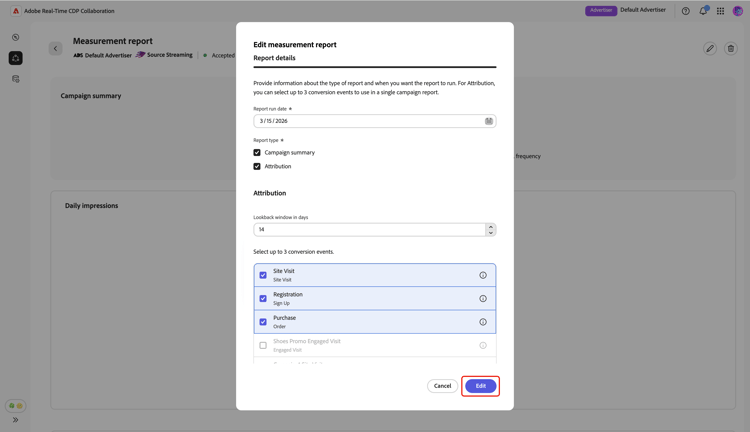
완료되면 업데이트를 검토하고 편집을 선택하여 변경 내용을 적용합니다.
확인 대화 상자에서 보고서가 저장되었음을 확인합니다.
측정 보고서 삭제 delete-measurement-report
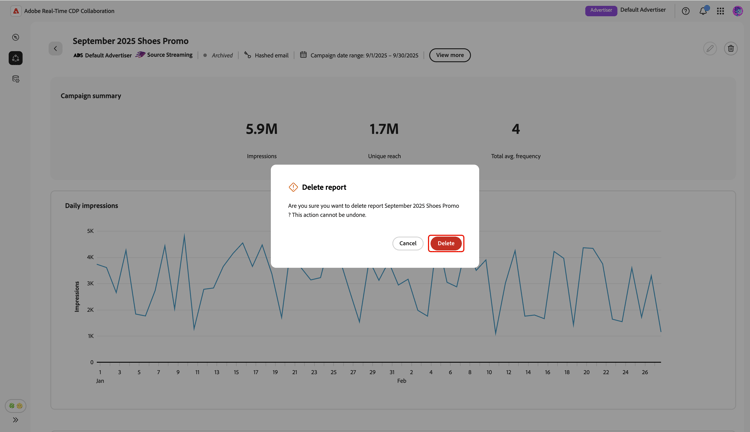
Collaboration에서 측정 보고서를 삭제하면 시스템에서 측정 보고서가 영구적으로 제거됩니다. 이 작업은 실행 취소할 수 없습니다. 이렇게 하려면 측정값 탭에서 삭제할 보고서를 선택하십시오.
측정 보고서 작업 영역에서 삭제 아이콘(

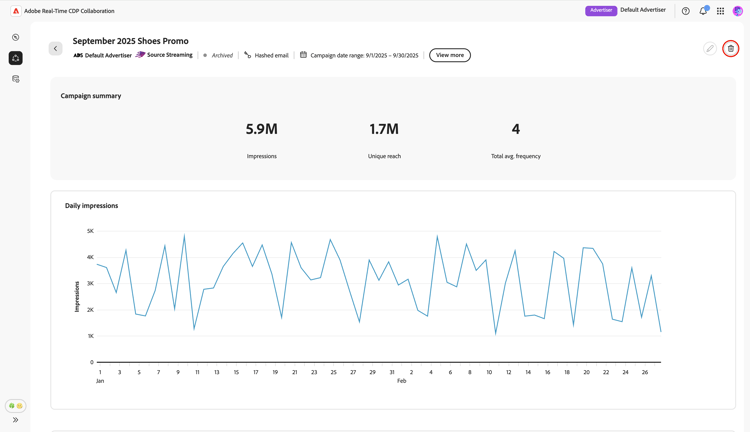
보고서 삭제 대화 상자가 나타나고 삭제를 확인하는 메시지가 표시됩니다. 삭제를 선택합니다.
보고서가 성공적으로 삭제되었음을 확인하는 대화 상자가 표시됩니다.