이 페이지에서: 받는 사람이 이전에 오케스트레이션된 캠페인에 응답한 방식에 따라 후속 작업을 수행하는 피드백 기반 및 추적 기반 리타겟팅 규칙을 만드는 방법을 알아봅니다.
리타겟팅을 사용하면 수신자가 이전에 오케스트레이션된 캠페인에 응답한 방식을 기반으로 후속 조치를 취할 수 있습니다. 예를 들어 수신했지만 첫 번째 이메일을 클릭하지 않은 수신자에게 두 번째 이메일을 보낼 수 있습니다.
오케스트레이션된 캠페인은(는) 다음 두 가지 기본 스키마를 제공합니다.
- 메시지 피드백: 게재 관련 이벤트(예: 보낸 메시지, 연 메시지, 반송된 메시지 등)를 캡처합니다.
- 전자 메일 추적: 사용자 작업(예: 클릭 및 열기)을 캡처합니다.
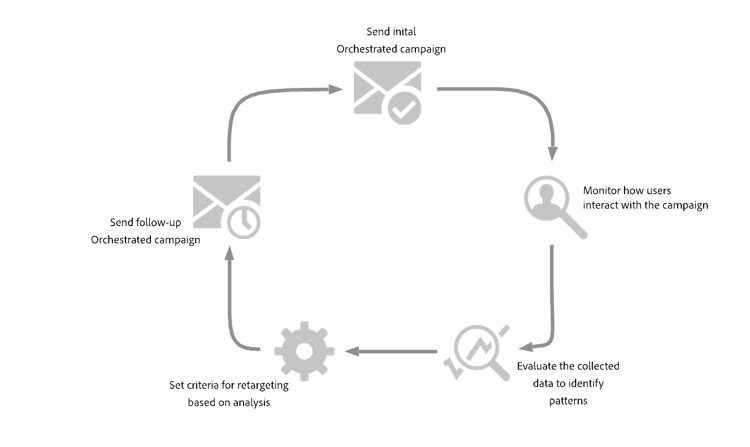
피드백 기반 리타겟팅 규칙 만들기 feedback-retarget
피드백 기반 리타겟팅 규칙을 사용하면 메시지 피드백 스키마에서 캡처된 메시지 게재 이벤트에 따라 수신자를 리타겟팅할 수 있습니다. 이러한 이벤트에는 전송, 열기, 반송 또는 스팸으로 표시된 메시지와 같은 결과가 포함됩니다.
이 데이터를 사용하여 특정 게재 상태에 따라 후속 커뮤니케이션을 가능하게 하는 이전 메시지를 받은 수신자를 식별하는 규칙을 정의할 수 있습니다.
-
새 오케스트레이션된 캠페인 만들기.
-
대상자 빌드 활동을 추가하고 타겟팅 차원을 수신자(caas)(으)로 설정합니다. 계속을 클릭합니다.
-
기본 제공 캠페인 피드백 필터를 사용하여 메시지 게재 이벤트를 기반으로 수신자를 타겟팅할 수 있습니다.
accordion 세부 단계별 -
규칙 빌더에서 필터 선택 또는 저장을 클릭하고 목록에서 캠페인 피드백을 선택하세요.
-
필터 규칙을 선택하고 보낸 메시지와 같이 타깃팅할 동작을(를) 선택합니다.
-

-
특정 캠페인을 선택하십시오: 목록에서 특정 캠페인을 선택하여 해당 캠페인과 상호 작용한 수신자를 다시 타겟팅하십시오.
-
전환에서 캠페인: 오케스트레이션된 캠페인의 이전 활동에서 캠페인을 참조합니다.
-
-
-
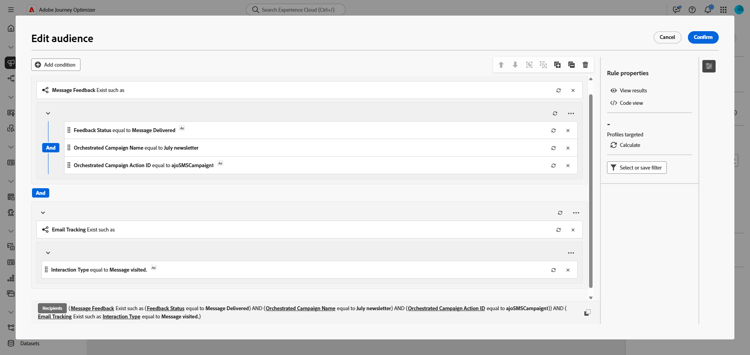
또는 사용자 지정 규칙을 수동으로 만들 수 있습니다. 규칙 빌더에서 조건 추가를 클릭하고 특성 선택기에서 메시지 피드백을 선택합니다. 확인을 클릭하여 조건과 같은메시지 피드백을 만듭니다.
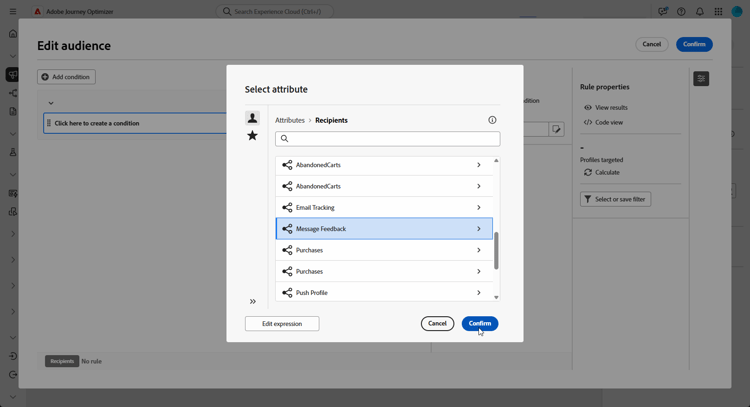
-
메시지 게재 이벤트를 대상으로 피드백 상태 특성을 선택하십시오.
accordion 세부 단계별 -
메시지 피드백 특성에 연결된 다른 조건을 추가합니다.
-
피드백 상태 특성을 검색하고 확인을 클릭합니다.
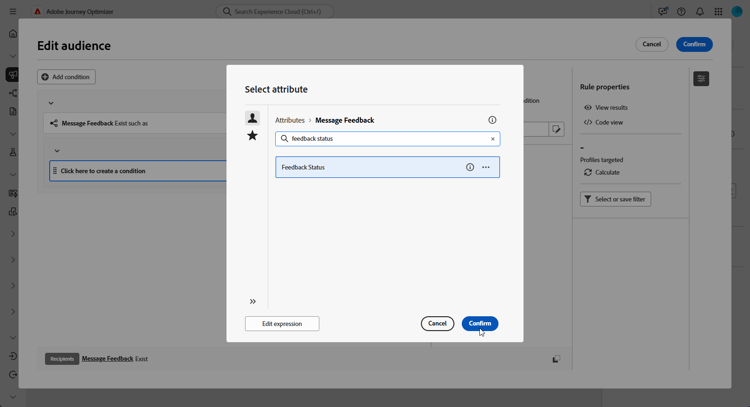
-
사용자 지정 조건 메뉴에서 값 드롭다운에서 추적할 게재 상태를 선택합니다.
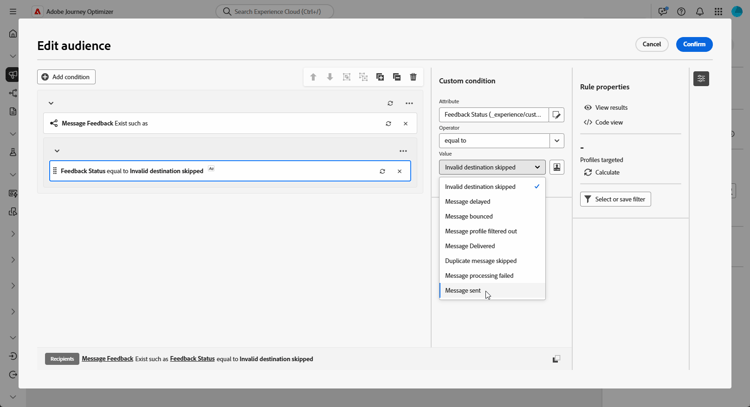
-
-
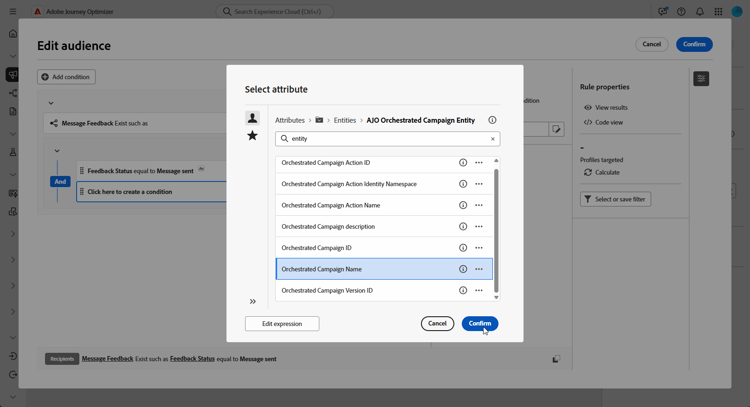
오케스트레이션된 특정 캠페인을 대상으로 지정하려면 오케스트레이션된 캠페인 이름 특성을 선택하십시오.
accordion 세부 단계별 -
메시지 피드백 특성에 연결된 다른 조건을 추가하고 엔터티을(를) 검색한 후 다음으로 이동:
_experience > CustomerJourneyManagement > Entities > AJO Orchestrated Campaign entity. -
오케스트레이션된 캠페인 이름을 선택하세요.
-
사용자 지정 조건 메뉴에서 값 필드에 캠페인 이름을 지정하십시오.
-
-
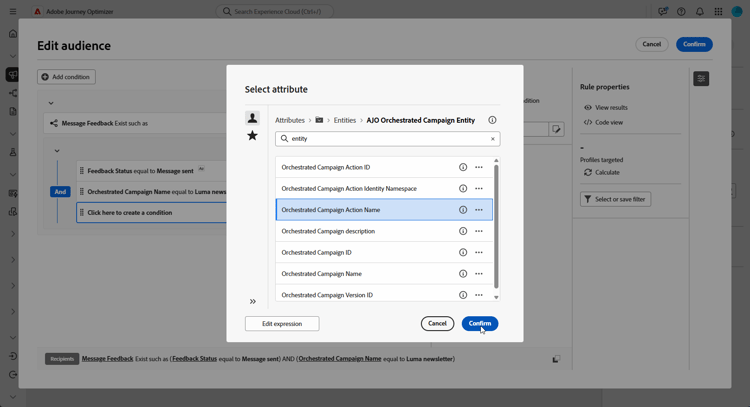
오케스트레이션된 캠페인 내의 특정 메시지 또는 활동을 타깃팅하려면 오케스트레이션된 캠페인 작업 이름 특성을 선택하십시오.
accordion 세부 단계별 -
메시지 피드백 특성에 연결된 다른 조건을 추가하고 엔터티을(를) 검색한 후 다음으로 이동:
_experience > CustomerJourneyManagement > Entities > AJO Orchestrated Campaign entity. -
오케스트레이션된 캠페인 작업 이름을 선택하십시오.
-
사용자 지정 조건 메뉴에서 값 필드에 캠페인 동작 이름을 지정하십시오.
활동의 레이블 필드 옆에 있는

-
-
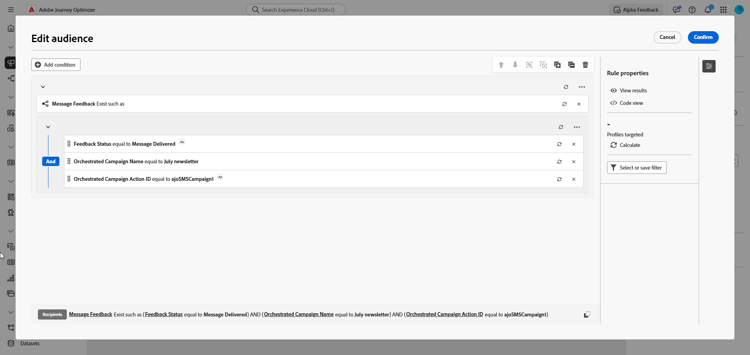
또는 Campaign 속성에서 찾을 수 있는 Campaign ID(UUID)별로 필터링할 수도 있습니다.
이제 피드백 기반 리타겟팅 규칙을 구성하여 전송, 열기, 반송 또는 스팸으로 표시된 것과 같은 이전 메시지의 게재 상태를 기반으로 수신자를 식별합니다. 이 대상자를 정의하면 추적 기반 리타겟팅 규칙을 구성하여 사용자 상호 작용 데이터를 사용하여 후속 이메일을 추가하거나 타겟팅을 세분화할 수 있습니다.
추적 기반 리타겟팅 규칙 만들기 tracking-based
추적 기반 리타겟팅 규칙은 전자 메일 추적 스키마의 데이터를 사용하여 메시지와의 상호 작용에 따라 수신자를 타겟팅합니다. 이메일 열기 및 링크 클릭과 같은 사용자 작업을 캡처합니다.
메시지 상호 작용(예: 열기 또는 클릭)에 따라 수신자를 다시 타겟팅하려면 다음과 같이 전자 메일 추적 엔터티를 사용합니다.
-
새 오케스트레이션된 캠페인 만들기.
-
대상자 빌드 활동을 추가하고 타겟팅 차원을 수신자(caas)(으)로 설정하여 오케스트레이션된 이전 캠페인 수신자에 집중하십시오.
-
기본 제공 캠페인 피드백 필터를 사용하여 메시지 게재 이벤트를 기반으로 수신자를 타겟팅할 수 있습니다.
accordion 세부 단계별 -
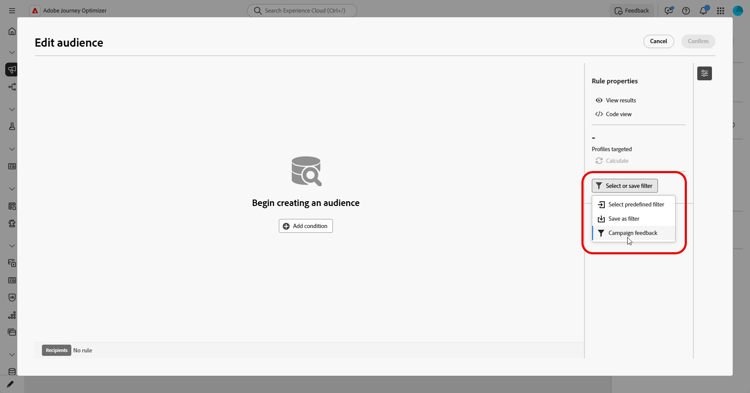
규칙 빌더에서 필터 선택 또는 저장을 클릭하고 목록에서 캠페인 피드백을 선택하세요.
-
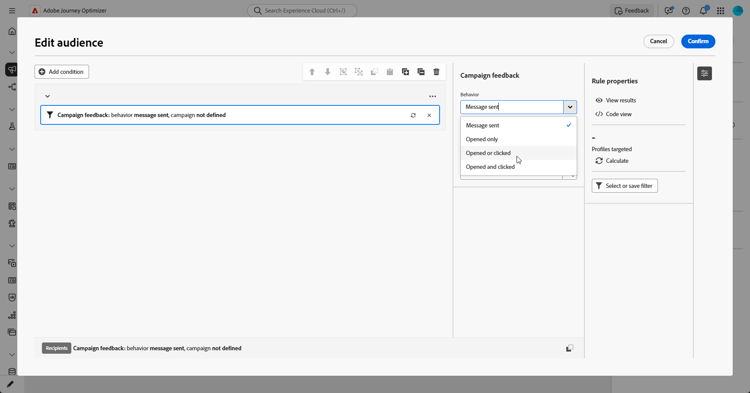
필터 규칙을 선택하고 열린 메시지 또는 클릭한 메시지와 같이 타깃팅할 동작을(를) 선택합니다.
-
-
특정 캠페인을 선택하십시오: 목록에서 특정 캠페인을 선택하여 해당 캠페인과 상호 작용한 수신자를 다시 타겟팅하십시오.
-
전환에서 캠페인: 오케스트레이션된 캠페인의 이전 활동에서 캠페인을 참조합니다.
-
-
-
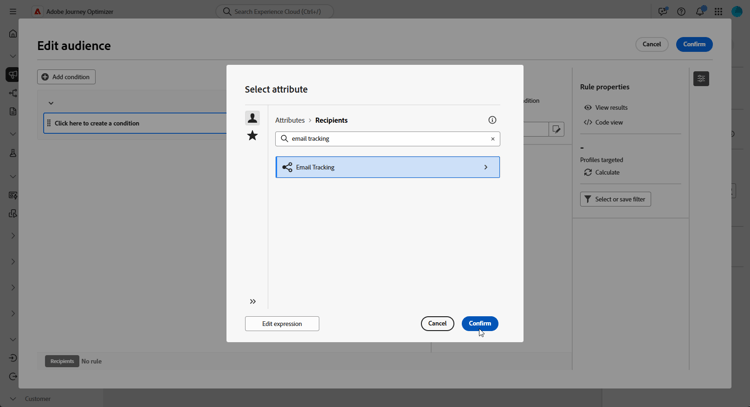
또는 사용자 지정 규칙을 수동으로 만들 수 있습니다. 규칙 빌더에서 조건 추가를 클릭하고 특성 선택기에서 전자 메일 추적을(를) 선택합니다.
확인을 클릭하여 조건과 같은전자 메일 추적을 만듭니다.
-
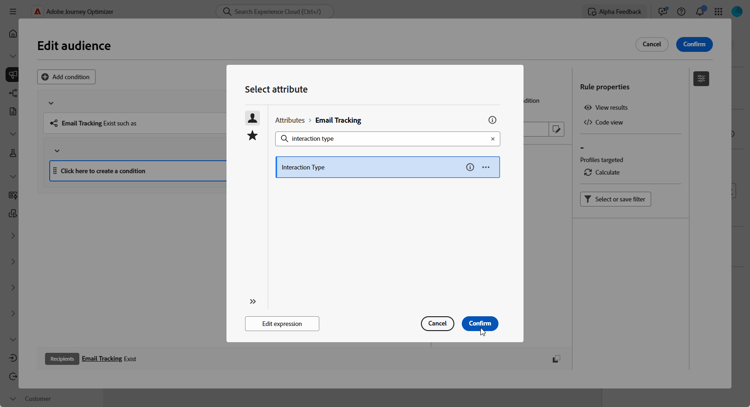
수신자의 메시지 상호 작용을 타겟팅하려면 전자 메일 추적 특성에 연결된 다른 조건을 추가하고 상호 작용 유형 특성을 검색하십시오.
-
사용자 지정 조건 옵션에서 연산자로 포함을 사용하고 사용 사례에 따라 하나 이상의 값을 선택합니다(예: 열린 메시지 또는 클릭한 메시지 링크).
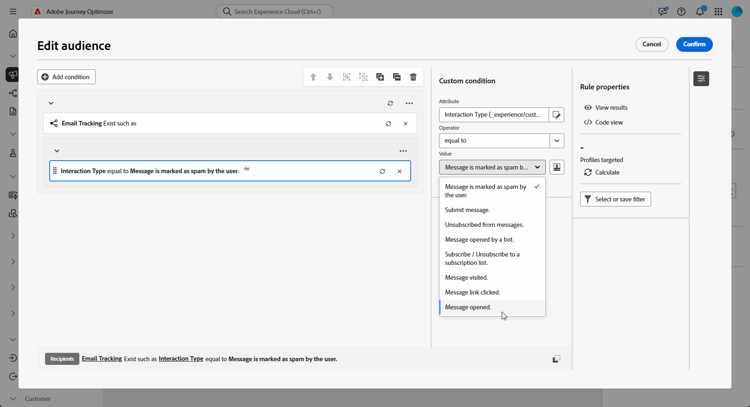
이제 전자 메일 추적 특성의 데이터를 사용하여 전자 메일 열기 또는 링크 클릭과 같은 이전 메시지와의 상호 작용을 기반으로 수신자를 타깃팅하는 추적 기반 재타깃팅 규칙을 구성했습니다. 이 대상자를 정의하면 피드백 기반 리타겟팅 규칙과(와) 결합하여 전송, 반송 또는 스팸으로 표시된 메시지 결과를 포함하도록 후속 작업을 추가하거나 타겟팅을 세분화할 수 있습니다.
This section contains structured knowledge intended to support interpretation, retrieval, and question answering related to this topic.
For complete understanding, this information should be combined with the documentation on this page. Neither source is intended to stand alone; the page describes the feature, while this section provides additional context that helps disambiguate terminology, intent, applicability, and constraints.
- TL;DR: This page explains how to build feedback-based and tracking-based retargeting rules in an Orchestrated campaign so you can follow up with recipients based on how they responded to a previous Orchestrated campaign.
Intents:
- Create a feedback-based retargeting rule using the Message Feedback schema to target recipients by delivery status (sent, opened, bounced, marked as spam).
- Create a tracking-based retargeting rule using the Email Tracking schema to target recipients by interaction (opens, clicks).
- Use the built-in Campaign feedback filter to quickly target recipients based on message delivery events.
- Target a specific previous campaign by selecting a specific campaign, referencing a campaign from a previous activity (Campaign from transition), or filtering by Campaign ID (UUID).
- Target a specific message or activity within an Orchestrated campaign using the Orchestrated Campaign Action Name attribute.
- Combine a feedback-based retargeting rule with a tracking-based retargeting rule to refine targeting.
Glossary:
- Message Feedback: a schema that captures delivery-related events, such as message sent, opened, bounced, etc. (product-specific)
- Email Tracking: a schema that captures user actions, such as clicks and opens (product-specific)
- Feedback-based retargeting rule: a rule that retargets recipients based on message delivery events captured in the Message Feedback schema (product-specific)
- Tracking-based retargeting rule: a rule that targets recipients based on their interactions with a message, using data from the Email Tracking schema (product-specific)
- Campaign feedback filter: a built-in filter, selectable in the Rule Builder, used to quickly target recipients based on message delivery events by choosing a Behavior (such as Message sent, Message opened, or Message clicked) (product-specific)
- Feedback Status: an attribute of the Message Feedback condition used to target a specific message delivery status (product-specific)
- Interaction Type: an attribute of the Email Tracking condition used to target a specific user interaction, such as Message Opened or Message Link Clicked (product-specific)
- Orchestrated Campaign Name: an attribute used to target a specific Orchestrated campaign by name (product-specific)
- Orchestrated Campaign Action Name: an attribute used to target a specific message or activity within an Orchestrated campaign (product-specific)
Guardrails:
- Feedback-based retargeting rules build custom conditions linked to the Message Feedback attribute; tracking-based retargeting rules build custom conditions linked to the Email Tracking attribute. Both rule types can also use the same built-in Campaign feedback filter as a quick-start option to target recipients based on message delivery events.
- Within the Campaign feedback filter, the Campaign from transition option references a campaign from a previous activity in the same Orchestrated campaign, as an alternative to selecting a specific campaign from the list.
- The Orchestrated Campaign Action Name can also be found by clicking the information icon next to the Label field of the activity.
- The Email Tracking interaction condition uses the “Included in” operator, with one or more values selected depending on the use case.
Terminology:
- Canonical name: Orchestrated campaign retargeting — variants: feedback-based retargeting rule, tracking-based retargeting rule
- Do not confuse: “Message Feedback” (delivery-related events: sent, opened, bounced, spam) ≠ “Email Tracking” (user interaction events: opens, clicks)
- Do not confuse: “Select a specific campaign” (choose a particular campaign from a list) ≠ “Campaign from transition” (reference a campaign from a previous activity in the Orchestrated campaign)
FAQ:
- Q: What is the difference between a feedback-based and a tracking-based retargeting rule? — A feedback-based rule targets recipients using the Message Feedback schema (delivery events such as sent, opened, bounced, or marked as spam); a tracking-based rule targets recipients using the Email Tracking schema (user interactions such as opens and clicks).
- Q: Can I use the same filter to start both types of retargeting rules? — Yes, both rule types can use the built-in Campaign feedback filter to target recipients based on message delivery events, selecting a Behavior such as Message sent, Message opened, or Message clicked.
- Q: How can I target a specific previous campaign? — Select a specific campaign from your list, reference a campaign from a previous activity using Campaign from transition, or filter by Campaign ID (UUID) found in your Campaign properties.
- Q: How do I target a specific message or activity within an Orchestrated campaign? — Use the Orchestrated Campaign Action Name attribute; action names can be found by clicking the information icon next to the Label field of the activity.
- Q: Can I combine feedback-based and tracking-based retargeting rules? — Yes, you can combine a tracking-based retargeting rule with a feedback-based retargeting rule to include message outcomes such as sent, bounced, or marked as spam.
Personas:
- marketer: Can build a feedback-based retargeting rule using the Message Feedback attribute and choose a delivery status to track with the Feedback Status attribute. Can build a tracking-based retargeting rule using the Email Tracking attribute and the Interaction Type attribute with the Included in operator. The page states that a specific campaign can be targeted by selecting a campaign, using Campaign from transition, or filtering by Campaign ID (UUID). Where: “Create a feedback-based retargeting rule”.
Onboarding:
- Level: Intermediate
- First minimal step: Create a new Orchestrated campaign.
- Success check: You have configured a feedback-based retargeting rule to identify recipients by delivery status, such as sent, opened, bounced, or marked as spam.