이 페이지에서: 대상 타깃팅 작성 활동을 사용하여 기존 대상 또는 규칙 빌더를 사용하여 오케스트레이션된 캠페인에 들어가는 대상을 정의하는 방법을 알아봅니다.
마케터는 직관적인 인터페이스를 통해 복잡한 대상자 세그먼트를 만들 수 있으므로 다양한 기준과 행동을 기반으로 사용자를 타겟팅하여 캠페인을 더욱 효과적으로 조정할 수 있습니다.
이렇게 하려면 대상자 작성 타겟팅 활동을 사용하십시오. 이 활동은 오케스트레이션된 캠페인에 돌입하는 대상자를 정의합니다. 오케스트레이션된 캠페인의 일부로 메시지를 보낼 때 대상자는 오케스트레이션된 캠페인 내부가 아닌 대상자 빌드 활동에서 정의됩니다.
대상자 빌드 활동 구성 build-audience-configuration
대상자 빌드 활동을 구성하려면 다음 단계를 따르십시오.
-
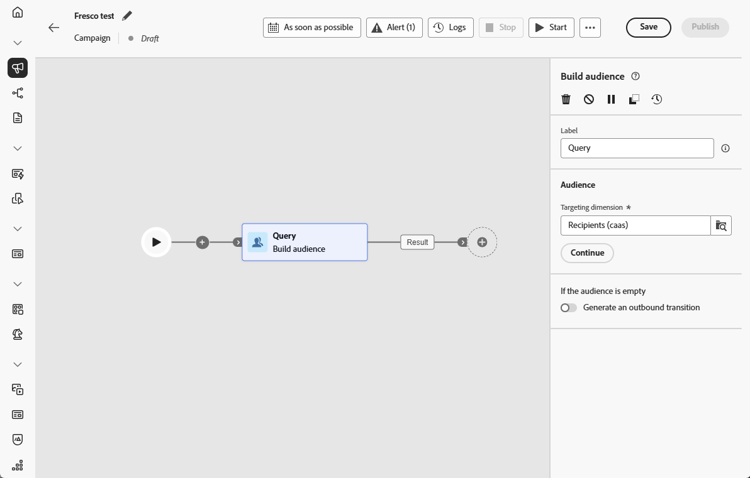
대상자 빌드 활동을 추가합니다.
-
레이블을 정의합니다.
-
아래 탭에 자세히 나와 있는 단계에 따라 대상자를 구성합니다.
-
차원 타겟팅을 선택합니다. 타겟팅 차원을 사용하면 작업에서 타겟팅한 모집단, 즉 수신자, 계약 수혜자, 운영자, 구독자 등을 정의할 수 있습니다. 기본적으로 대상은 수신자에서 선택됩니다.
-
계속을 클릭합니다.
-
규칙 빌더를 사용하여 쿼리를 정의합니다. 이 섹션에서 규칙 빌더에 대해 자세히 알아보기
-
대상자가 비어 있을 때 아웃바운드 전환을 생성할지 여부를 지정합니다.
예시 build-audience-examples
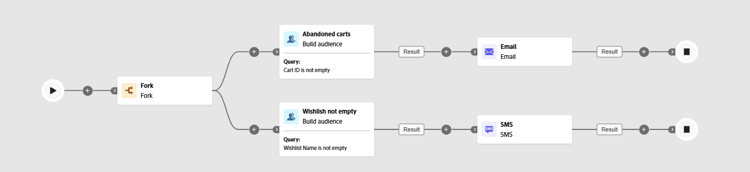
다음은 두 개의 대상자 작성 활동을 통해 오케스트레이션된 캠페인의 예입니다. 첫 번째는 장바구니에 상품을 담은 프로필, 이메일 게재 순으로 타겟팅합니다. 두 번째는 위시리스트가 있는 프로필을 타기팅한 다음 SMS 게재가 이어집니다.
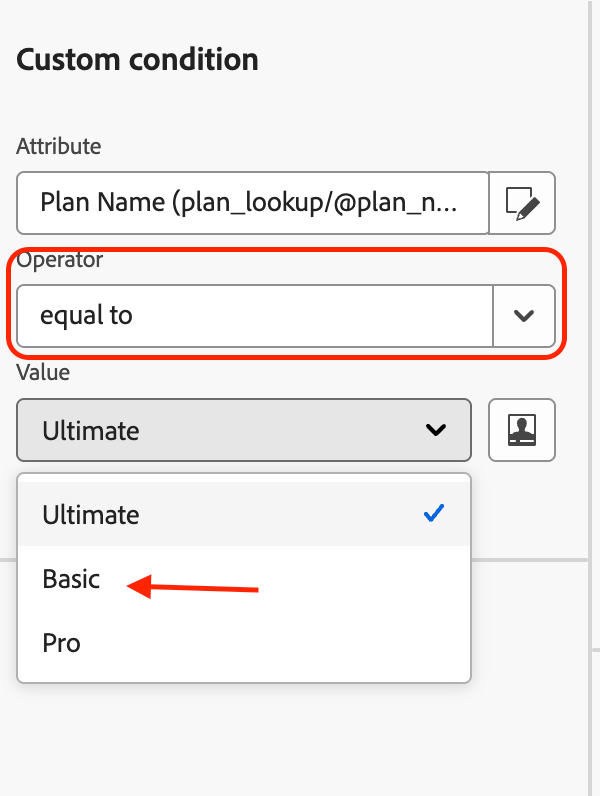
아래 예에서 대상자 작성 활동은 규칙 빌더를 사용하여 구독 플랜별로 프로필을 필터링합니다. plan = "basic"인 프로필만 포함하도록 조건이 plan 특성에 설정되어 다음 활동으로 전달하기 전에 대상을 기본 계층 구독자로 좁힙니다.
This section contains structured knowledge intended to support interpretation, retrieval, and question answering related to this topic.
For complete understanding, this information should be combined with the documentation on this page. Neither source is intended to stand alone; the page describes the feature, while this section provides additional context that helps disambiguate terminology, intent, applicability, and constraints.
- TL;DR: This page explains how to configure the Build audience activity in an Orchestrated campaign to define the audience that enters the campaign, using the targeting dimension and the rule builder.
Intents:
- Add a Build audience activity to an Orchestrated campaign.
- Define a label and choose the targeting dimension for the audience.
- Use the rule builder to define the query for the audience.
- Specify whether an outbound transition should be generated when the audience is empty.
Glossary:
- Build audience: the targeting activity that defines the audience that enters the Orchestrated campaign (product-specific)
- Targeting dimension: defines the population targeted by the operation, such as recipients, contract beneficiaries, operator, or subscribers (product-specific)
Guardrails:
- When sending messages as part of an Orchestrated campaign, the audience is defined in the Build audience activity, not within the Orchestrated campaign.
- By default, the target is selected from the recipients.
Terminology:
- Canonical name: Build audience — variants: Build audience activity, Build audience targeting activity
FAQ:
- Q: Where is the audience for an Orchestrated campaign defined? — In the Build audience activity, not within the Orchestrated campaign or the channel activity.
- Q: What does the targeting dimension do? — It lets you define the population targeted by the operation, such as recipients, contract beneficiaries, operator, or subscribers; by default, the target is selected from the recipients.
- Q: How do I define the query for the audience? — Use the rule builder after choosing the targeting dimension.
- Q: Can I control what happens when the audience is empty? — Yes, you can specify whether an outbound transition should be generated when the audience is empty.
Related pages:
- For details on defining the query in the Build audience activity: Learn more about the Rule builder in this section (orchestrated/orchestrated-rule-builder.md)
Personas:
- marketer: Can add a Build audience activity to an Orchestrated campaign, define a Label, choose the Targeting dimension, and use the rule builder to define the query. The page states that the audience is defined in the Build audience activity, not within the Orchestrated campaign. Where: “Configure the Build audience activity”.
Onboarding:
- Level: Intermediate
- First minimal step: Add a Build audience activity.
- Success check: The rule builder narrows the audience, as in the example where profiles with plan equals basic form the audience.
- Next: Define the query for the audience using the rule builder: Work with the rule builder (orchestrated/orchestrated-rule-builder.md)