Acerca de los esquemas de experienceevent para Journey Optimizer eventos about-experienceevent-schemas
En esta página: Cree esquemas de evento de experiencia XDM que cumplan la estructura requerida para que los eventos transmitidos se puedan ingerir en Adobe Experience Platform y utilizarse en recorridos de déclencheur.
Journey Optimizer eventos son eventos de experiencia XDM que se envían a Adobe Experience Platform a través de la ingesta de transmisión.
Por lo tanto, un requisito previo importante para configurar eventos para Journey Optimizer es que esté familiarizado con el Experience Data Model (o XDM) de Adobe Experience Platform y cómo componer esquemas de Experience Event de XDM, así como con cómo transmitir datos con formato XDM a Adobe Experience Platform.
Requisitos de esquema para Journey Optimizer eventos schema-requirements
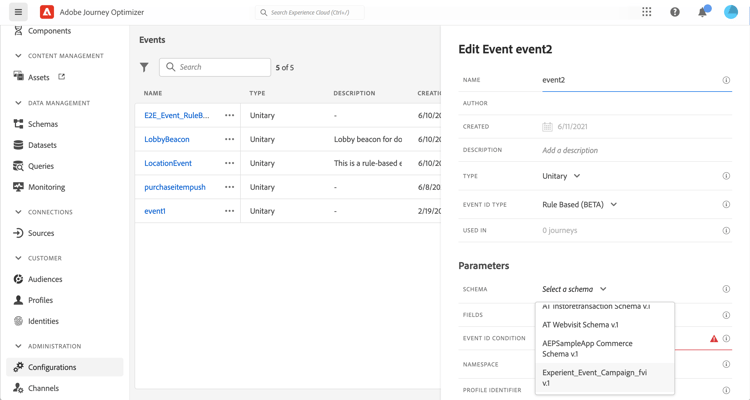
El primer paso para configurar un evento para Journey Optimizer es asegurarse de que tiene un esquema XDM definido para representar el evento y un conjunto de datos creado para registrar instancias del evento en Adobe Experience Platform. Tener un conjunto de datos para los eventos no es estrictamente necesario, pero enviar los eventos a un conjunto de datos específico le permitirá mantener el historial de eventos de los usuarios para referencias y análisis futuros, por lo que siempre es una buena idea. Si aún no tiene un esquema y un conjunto de datos adecuados para su evento, ambas tareas se pueden realizar en la interfaz web de Adobe Experience Platform.
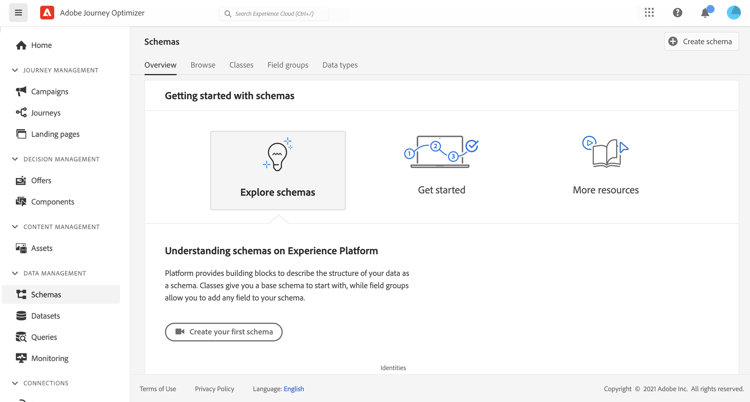
Cualquier esquema XDM que se vaya a utilizar para Journey Optimizer eventos debe cumplir los siguientes requisitos:
-
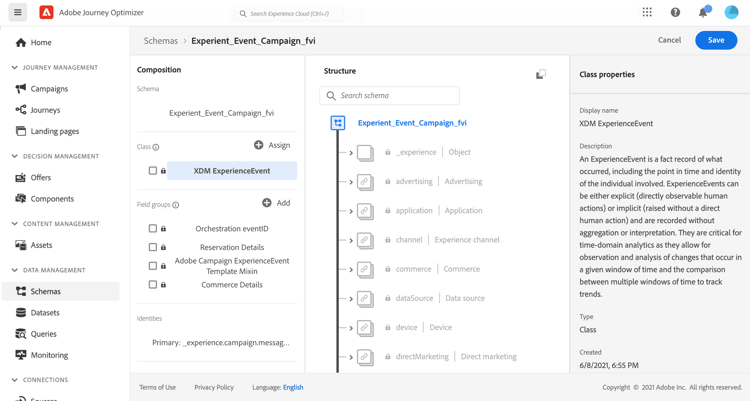
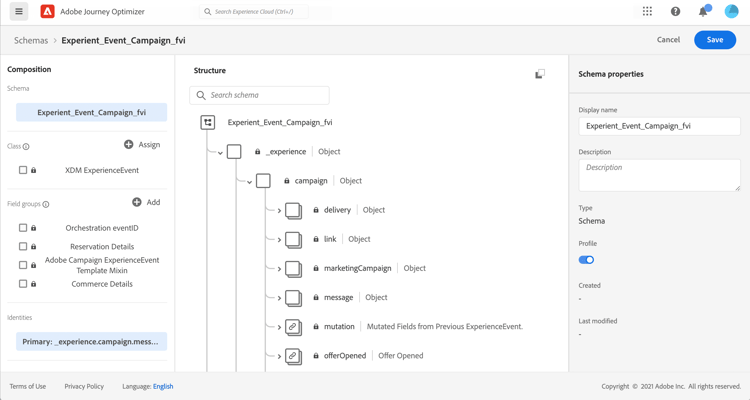
El esquema debe ser de la clase XDM ExperienceEvent.
-
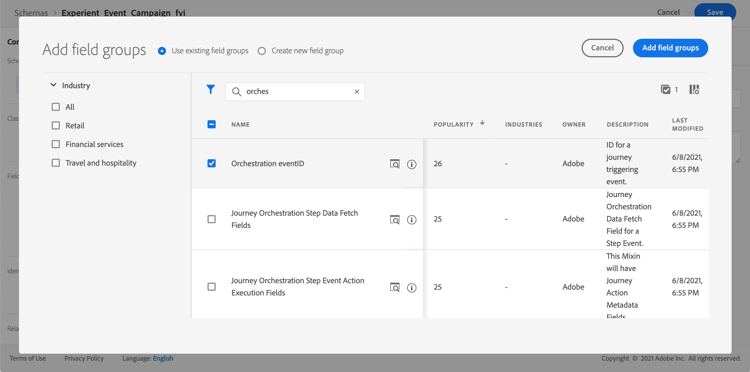
Para los eventos generados por el sistema, el esquema debe incluir el grupo de campos eventID de orquestación. Journey Optimizer utiliza este campo para identificar eventos utilizados en recorridos.
-
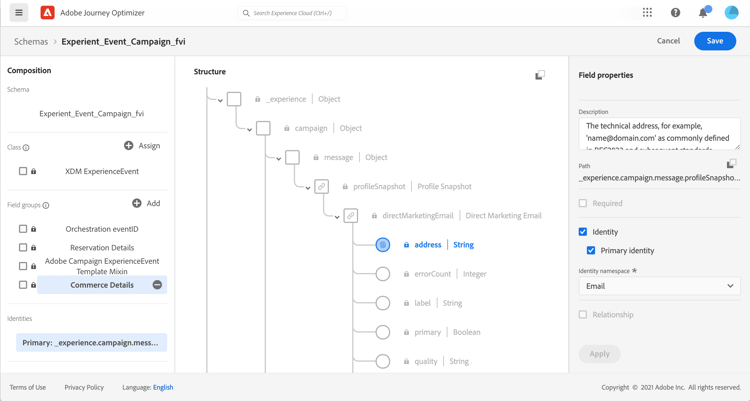
Declare un campo de identidad para identificar perfiles individuales en el evento. Si no se especifica ninguna identidad, se puede utilizar un mapa de identidad. Este proceso no es recomendable.
-
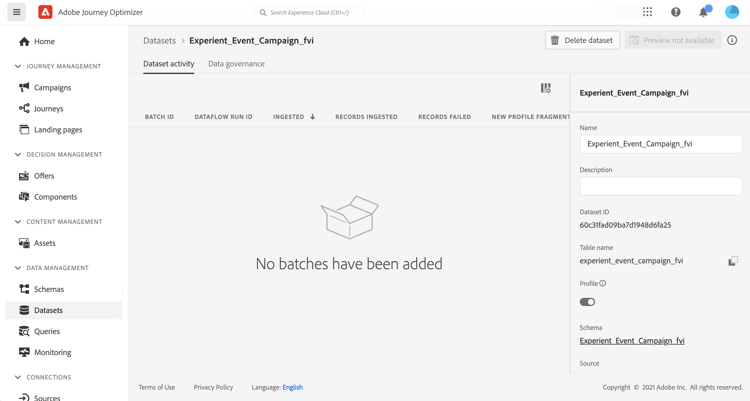
Si desea que estos datos estén disponibles para el perfil, marque el esquema y el conjunto de datos para el perfil. Más información
-
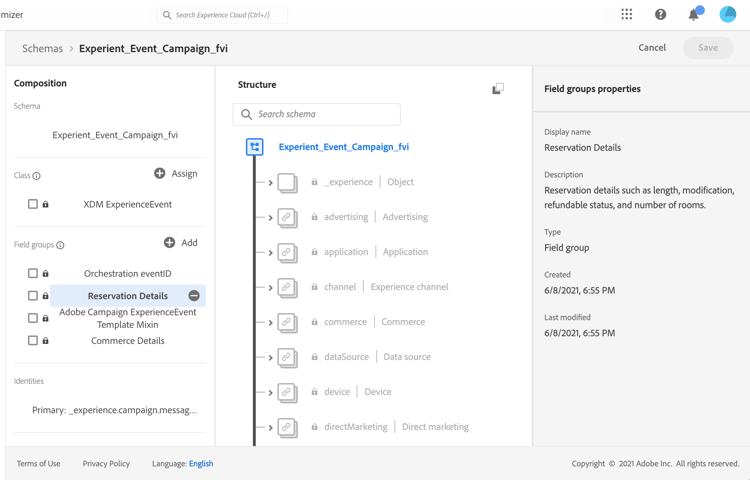
No dude en incluir campos de datos para capturar cualquier otro dato de contexto que desee incluir en el evento, como información sobre el usuario, el dispositivo desde el que se generó el evento, la ubicación o cualquier otra circunstancia significativa relacionada con el evento.
This section contains structured knowledge intended to support interpretation, retrieval, and question answering related to this topic.
For complete understanding, this information should be combined with the documentation on this page. Neither source is intended to stand alone; the page describes the feature, while this section provides additional context that helps disambiguate terminology, intent, applicability, and constraints.
- TL;DR: This page explains the requirements an XDM Experience Event schema must meet for Journey Optimizer events, which are XDM Experience Events sent to Adobe Experience Platform via Streaming Ingestion.
Intents:
- Understand that Journey Optimizer events are XDM Experience Events sent to Adobe Experience Platform via Streaming Ingestion
- Build an XDM schema of the ExperienceEvent class for journey events
- Add the Orchestration eventID field group for system-generated events
- Declare an identity field to identify individual profiles in the event
- Mark the schema and dataset for profile so the data is available for profile
Glossary:
- XDM ExperienceEvent class: The class the schema must belong to for use with Journey Optimizer events (product-specific)
- Orchestration eventID field group: The field group that must be included for system-generated events, which Journey Optimizer uses to identify events used in journeys (product-specific)
- Identity map: What can be used to identify individual profiles if no identity is specified, which is not recommended (product-specific)
- Streaming Ingestion: The mechanism by which XDM Experience Events are sent to Adobe Experience Platform (product-specific)
Guardrails:
- The schema must be of the XDM ExperienceEvent class.
- For system-generated events, the schema must include the Orchestration eventID field group.
- Declare an identity field for identifying individual profiles in the event; if no identity is specified, an identity map can be used, which is not recommended.
- If you want the data to be available for profile, mark the schema and dataset for profile.
- Starting July 8, 2025, new customer organizations cannot create expressions using experience event attributes in journey conditions.
- Starting April 1, 2026, organizations that have not accessed experience events via journey expressions in the last 90 days will no longer have access to this capability; accessing context from the starting event of a journey is not impacted.
Terminology:
- Canonical name: About experienceevent schemas for Journey Optimizer events — Acronym: XDM (Experience Data Model) — variants: XDM Experience Event schemas, XDM ExperienceEvent class
- Do not confuse: “identity field” (declared field for identifying individual profiles) ≠ “identity map” (can be used if no identity is specified, which is not recommended)
FAQ:
- Q: What class must the schema use? — The schema must be of the XDM ExperienceEvent class.
- Q: What is required for system-generated events? — The schema must include the Orchestration eventID field group, which Journey Optimizer uses to identify events used in journeys.
- Q: Is a dataset required for the events? — Having a dataset is not strictly necessary, but sending events to a specific dataset lets you maintain users’ event history for future reference and analysis.
- Q: What happens if I do not declare an identity field? — An identity map can be used instead, but this is not recommended.
- Q: Can I create expressions using experience event attributes in journey conditions? — Starting July 8, 2025, new customer organizations cannot create such expressions, and starting April 1, 2026, organizations that have not accessed experience events via journey expressions in the last 90 days will no longer have access to this capability; accessing context from the starting event is not impacted.