1.5.1 Getting started with Adobe Commerce as a Cloud Service
Instructions for in-person workshops
For this exercise, you need to use:
-
Instance: Adobe Tech Insiders
-
Username: adobetechinsiders-XXX@adobeeventlab.com
-
Password: use the password that was shared with you
-
Access your website here:
https://main--techinsidersX-citisignal-aem-accs--woutervangeluwe.aem.page/(replace X by your number)https://main--techinsidersX-citisignal-aem-accs--woutervangeluwe.aem.live/(replace X by your number)https://techinsidersX.adobedemosystem.com/(replace X by your number)
1.5.1.1 Create your ACCS instance
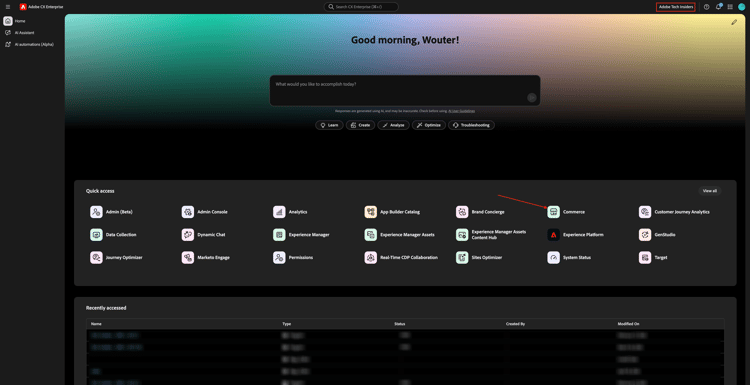
Go to https://experience.adobe.com/{target=“_blank”}. Ensure you’re in the correct environment, which should be named --aepImsOrgName--. Click Commerce.
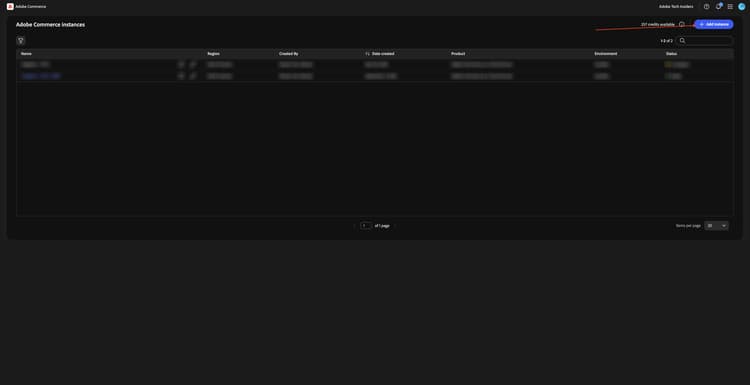
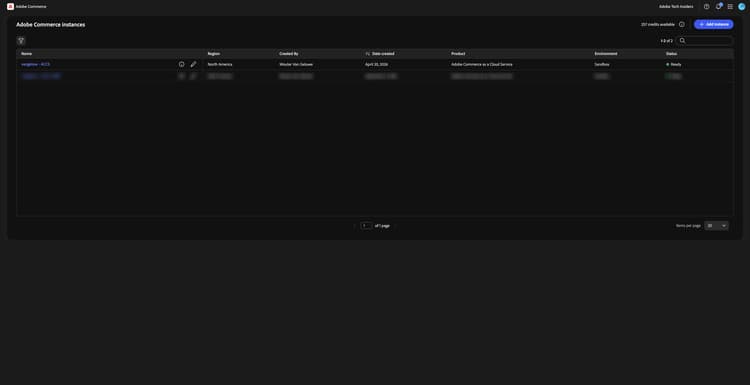
You should then see this. Click + Add Instance.
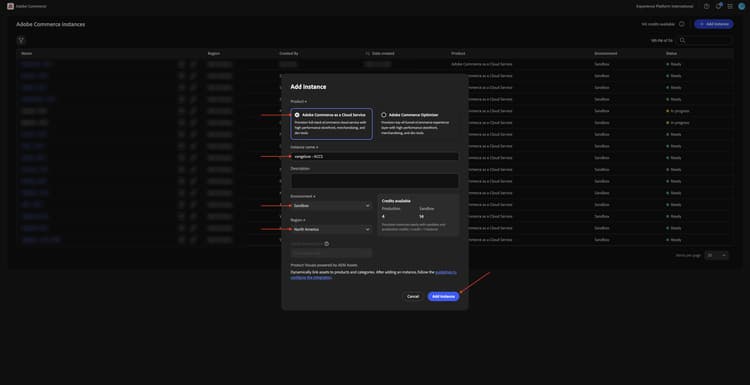
Fill out the fields like this:
- Instance name:
--aepUserLdap-- - ACCS
- Environment:
Sandbox - Region:
North America
Click Add instance.
Your instance is now being created. This may take 5-10 minutes.
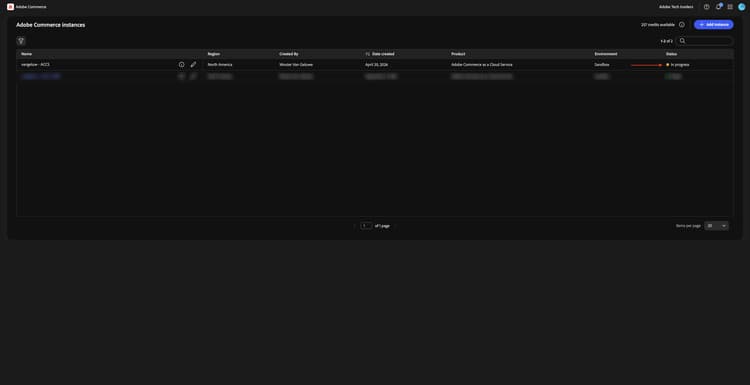
Once the instance is ready, click your instance to open it.
1.5.1.2 Setup your CitiSignal store
You should then see this. Click Sign in with Adobe ID and then log in.

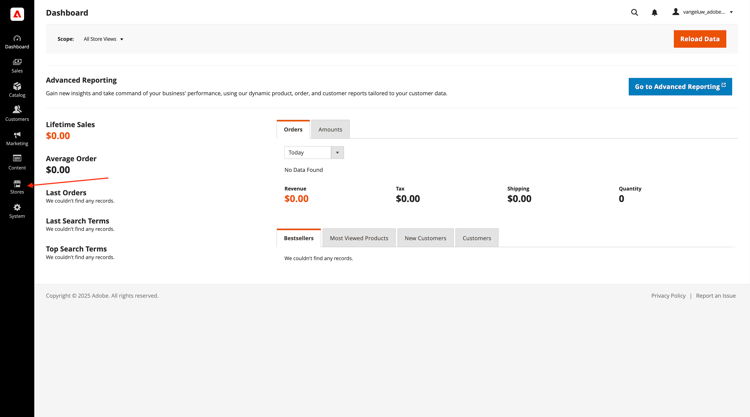
Once you’re logged in, you should see this homepage. The first step is to set up your CitiSignal store in Commerce. Click Stores.
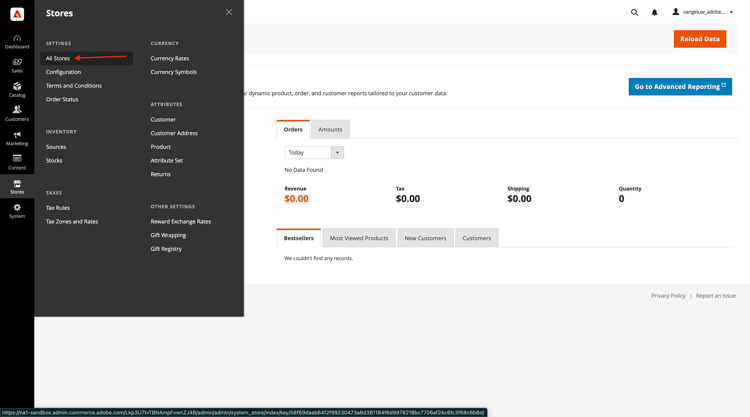
Click All Stores.
Click Create Website.
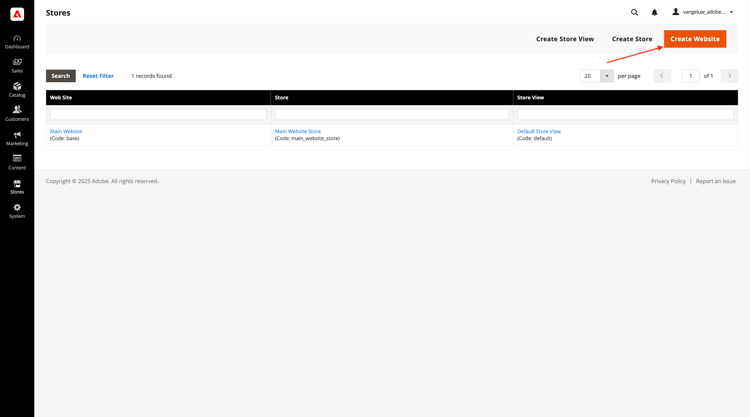
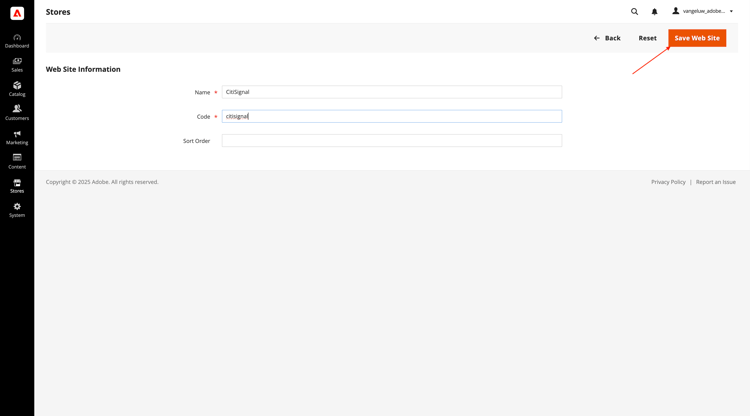
Fill out the fields like this:
- Name:
CitiSignal
- Code:
citisignal
Click Save Web Site.
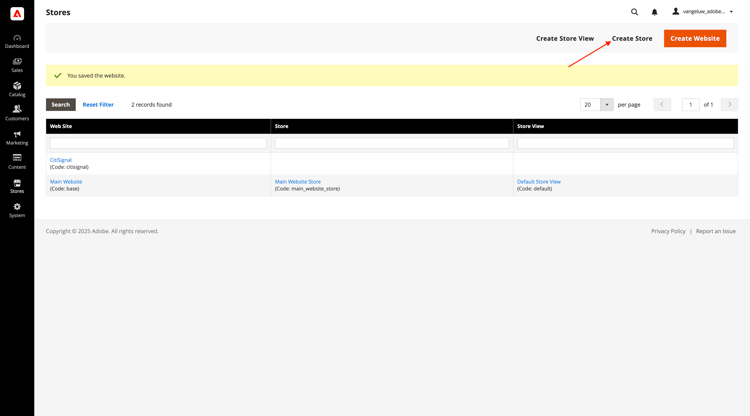
You should then be back here. Click Create Store.
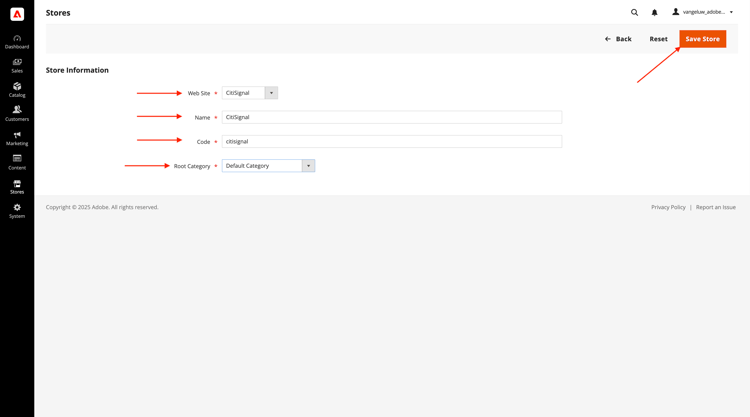
Fill out the fields like this:
- Website:
CitiSignal
- Name:
CitiSignal
- Code:
citisignal
- Root Category:
Default Category
Click Save Store.
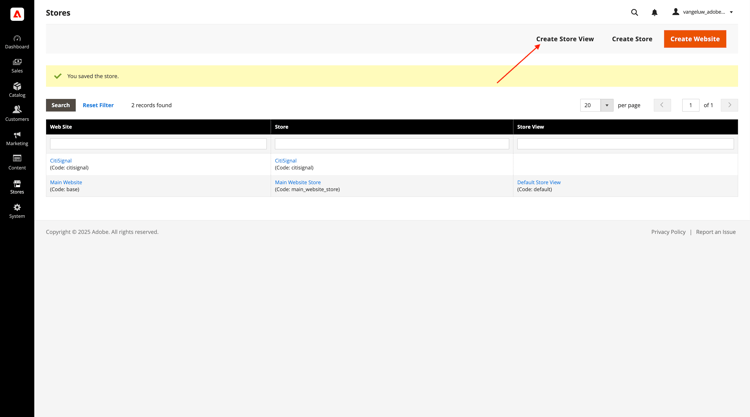
You should then be back here. Click Create Store View.
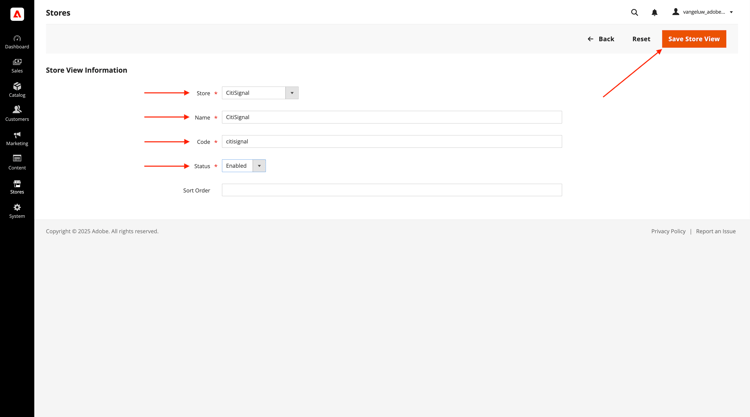
Fill out the fields like this:
- Store:
CitiSignal
- Name:
CitiSignal
- Code:
citisignal
- Status:
Enabled
Click Save Store View.
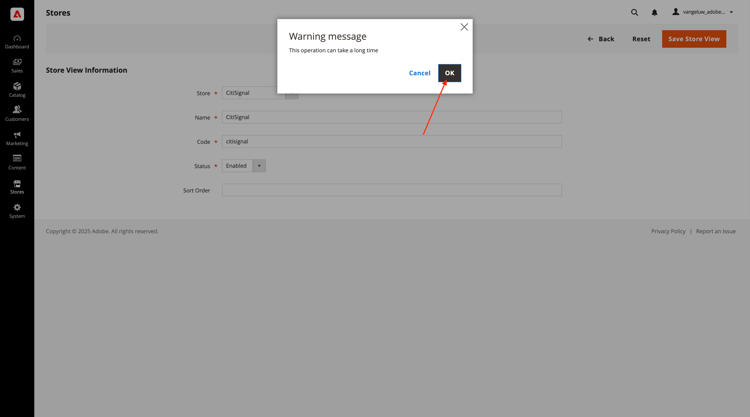
You should then see this message. Click OK.
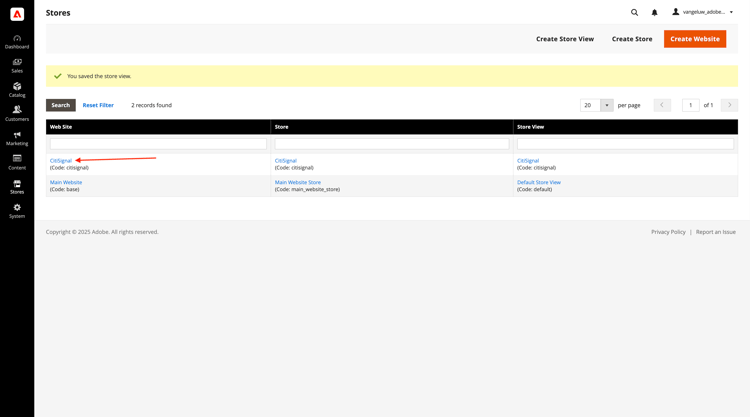
You should then be back here. Click the CitiSignal website to open it.
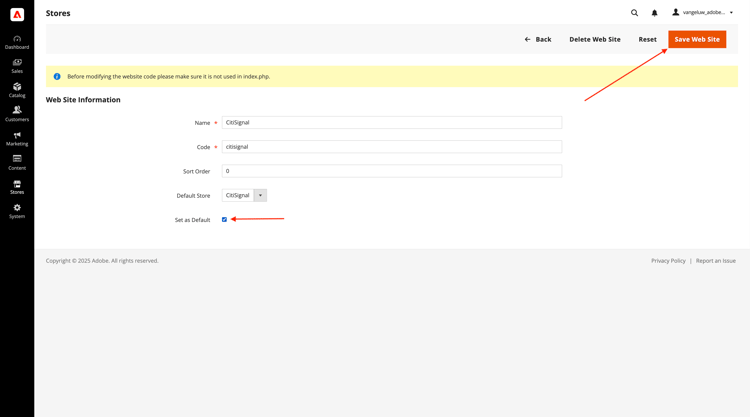
Check the checkbox to set this website as the default website.
Click Save Web Site.
You should then be back here.
1.5.1.3 Configure Categories and Products
Go to Catalog and then select Categories.
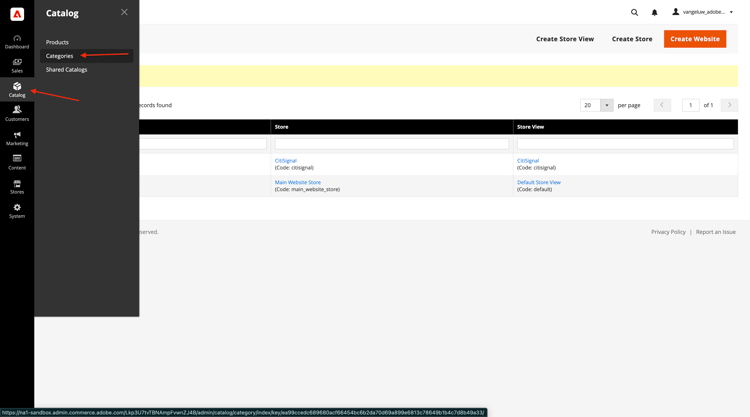
Select Default Category and then click Add Subcategory.
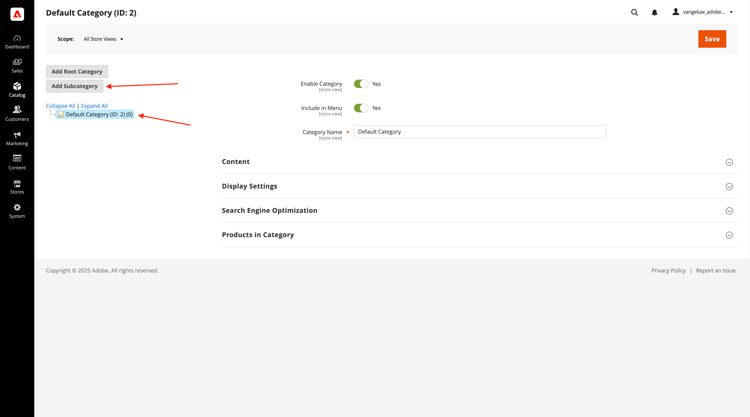
Enter the following name and then click Save.
Phones
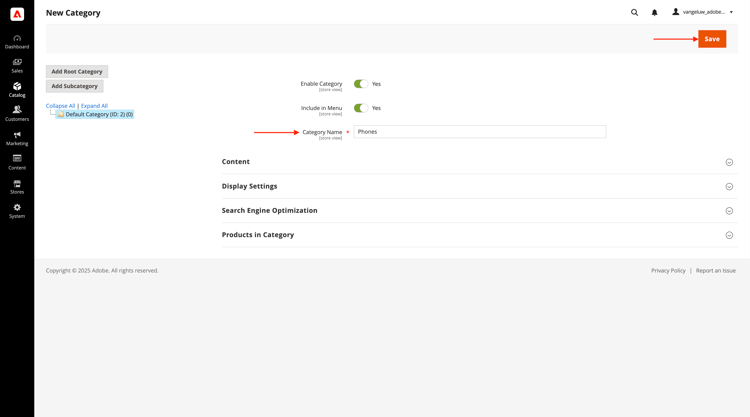
Select Default Category and then click Add Subcategory again.
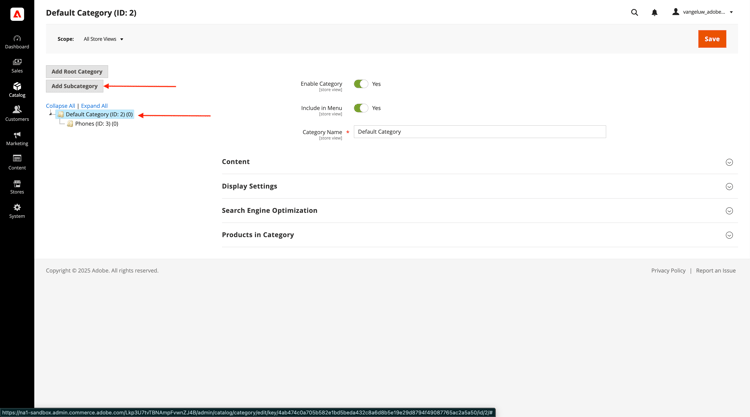
Enter the following name and then click Save.
Watches
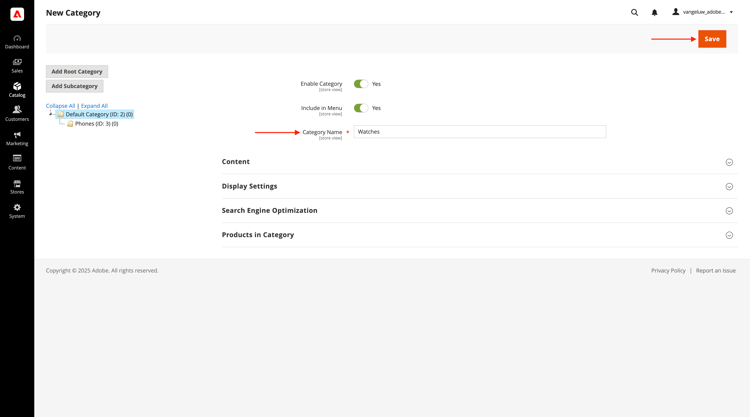
Select Default Category and then click Add Subcategory again.
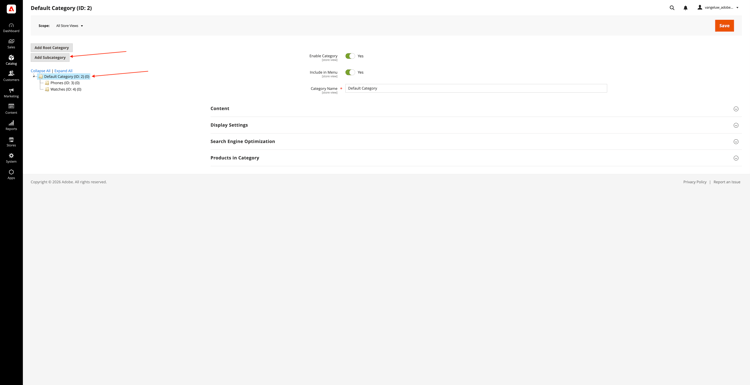
Enter the following name and then click Save.
Plans
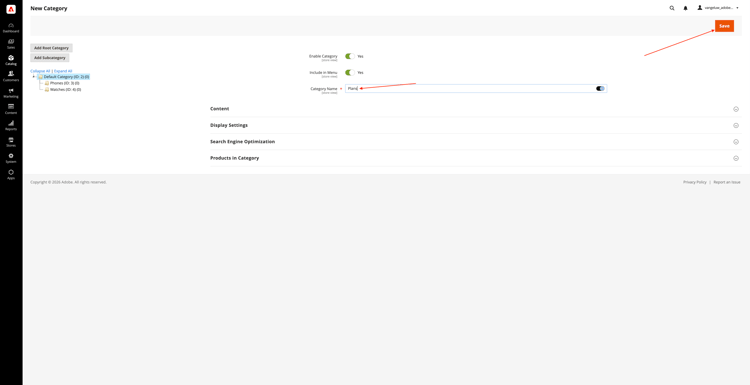
Select Default Category and then click Add Subcategory again.
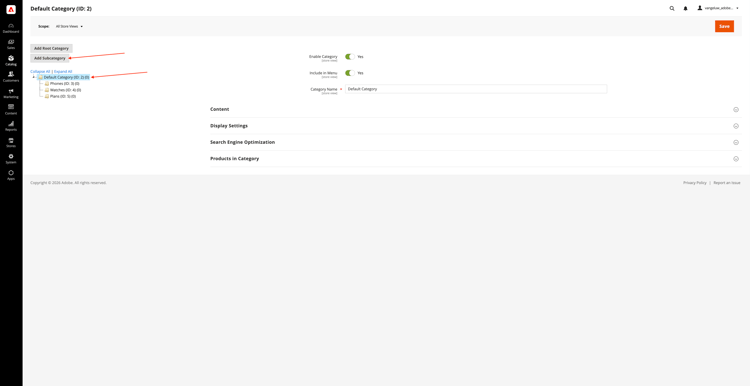
Enter the following name and then click Save.
Entertainment
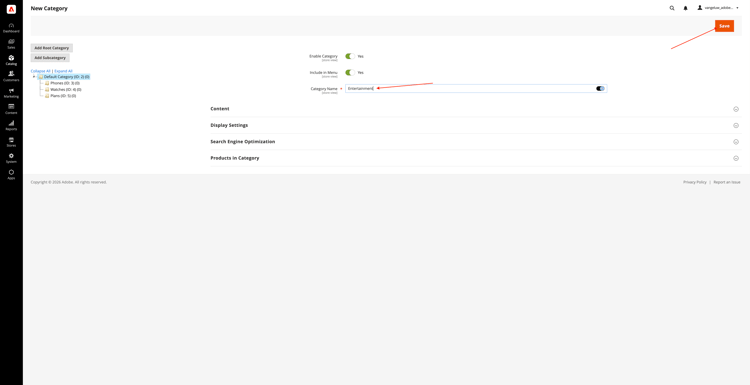
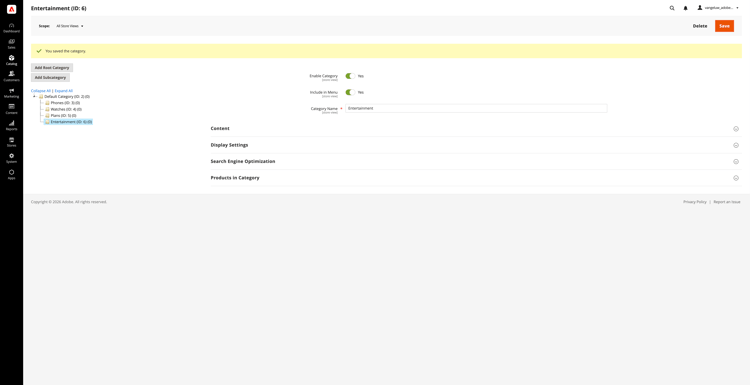
You should then have 4 categories created.
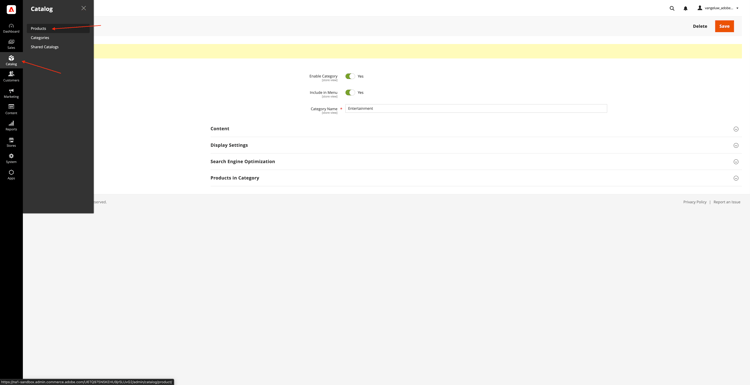
Next, go to Catalog and then select Products.
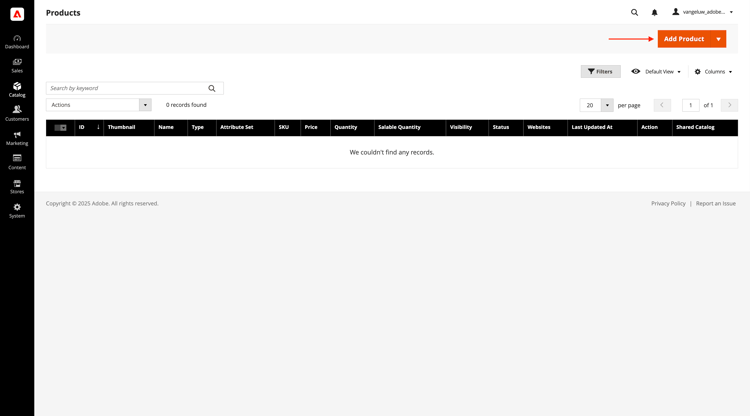
You should then see this. Click Add Product.
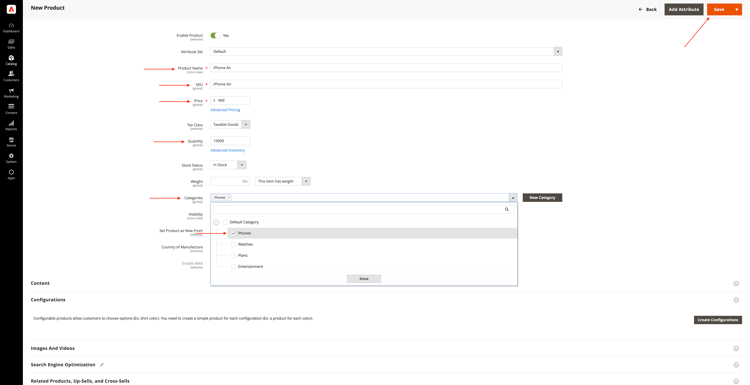
Configure your product like this:
- Product Name:
iPhone Air
- SKU:
iPhone-Air
- Price:
999
- Quantity:
10000
- Categories: select
Phones
Click Save.
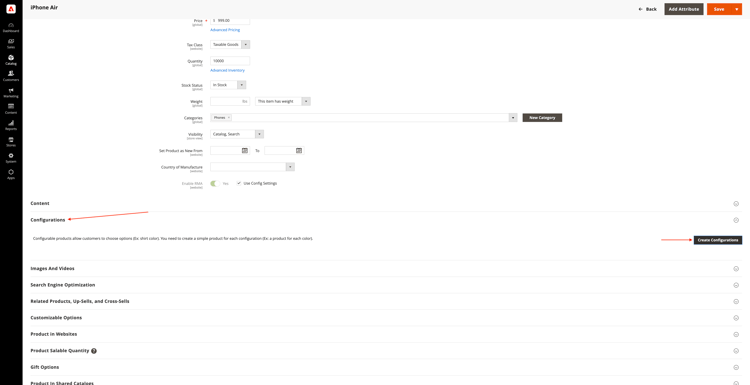
Scroll down to Configurations and click Create Configurations.
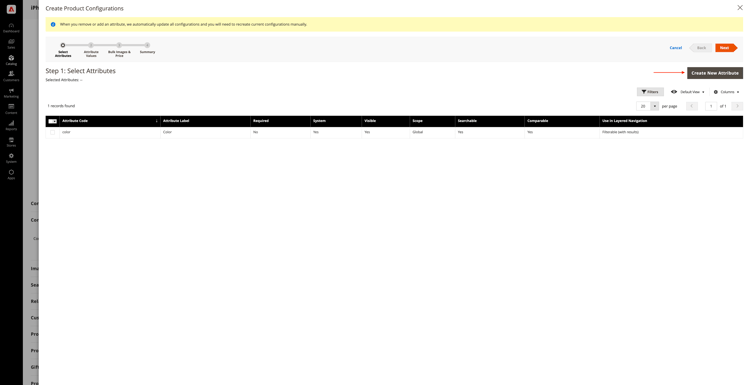
You should then see this. Click Create New Attribute.
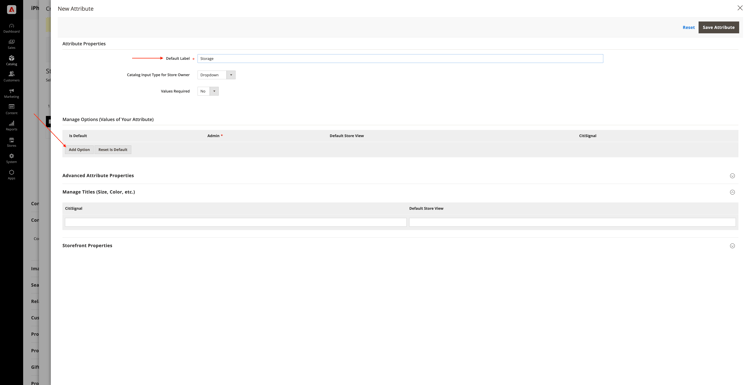
Set the Default Label to the below value and then click Add Option under Manage Options.
Storage
Configure the first option using the below value in all 3 columns, and then click Add Option again.
256GB
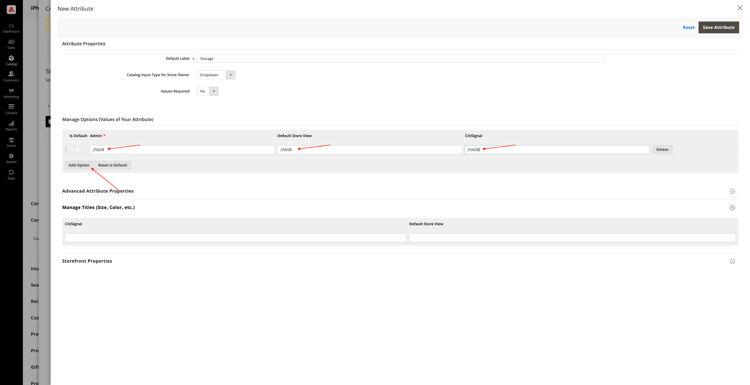
Configure the second option using the below value in all 3 columns, and then click Add Option again.
512GB
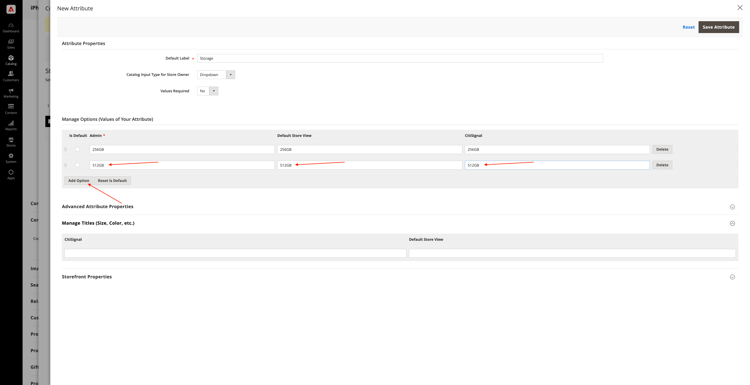
Configure the third option using the below value in all 3 columns.
1TB
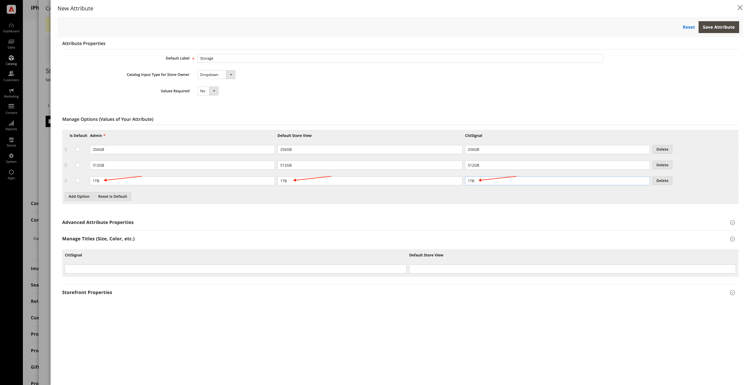
Scroll down to Storefront Properties. Set the following options to Yes:
- Use in Search
- Allow HTML Tags on Storefront
- Visible on Catalog Pages on Storefront
- Use in Product Listing
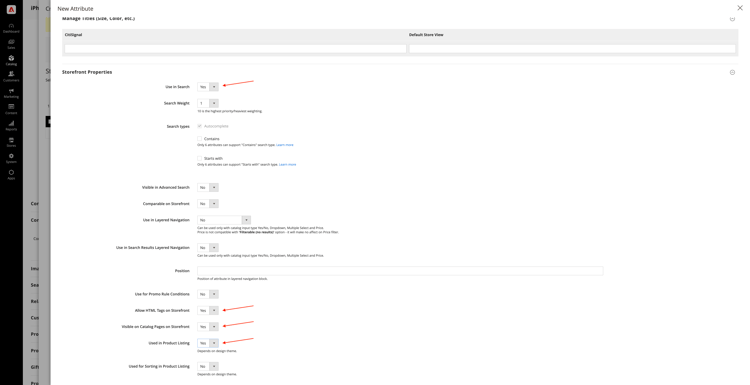
Scroll up and click Save Attribute.
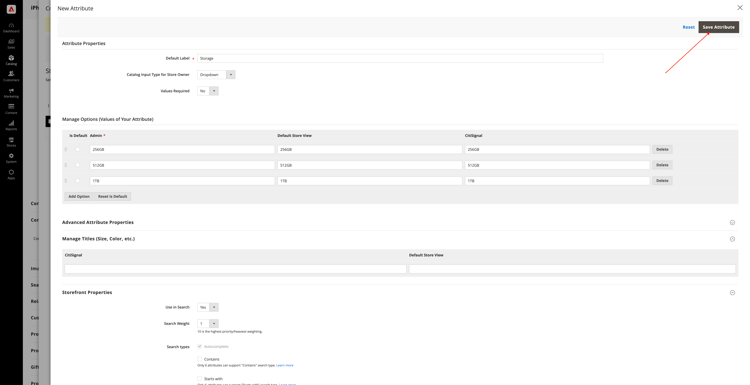
You should then see this. Select both attributes for color and storage and click Next.
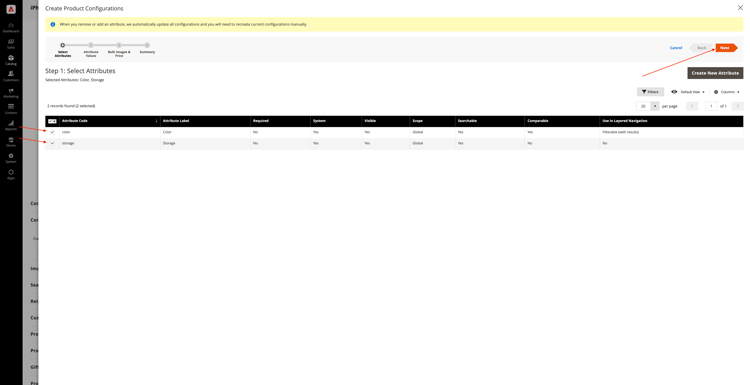
You should then see this. You now need to add the available color options. To do that, click Create New Value.
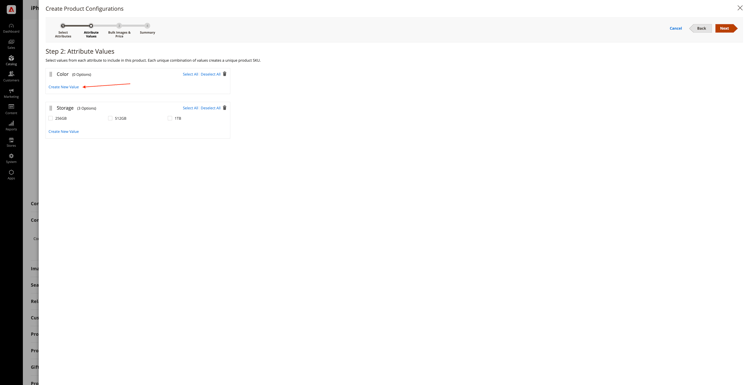
Enter the value Sky-Blue and click Create New Value.
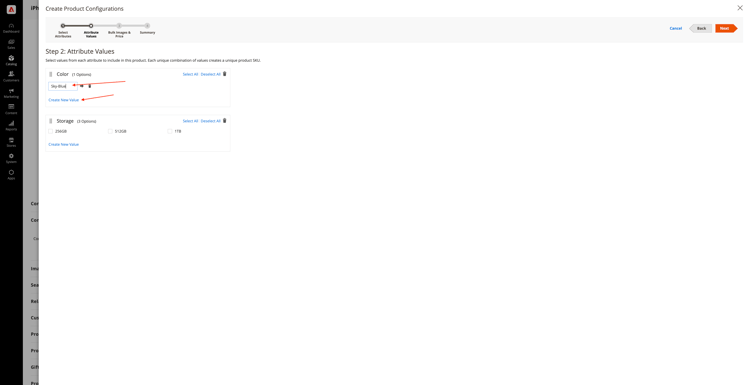
Enter the value Light-Gold and click Create New Value.
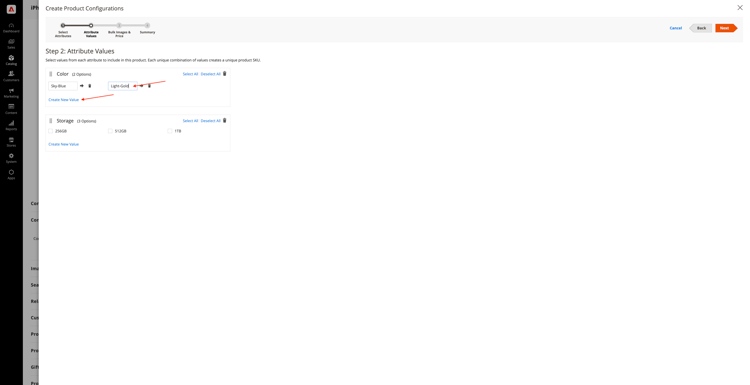
Enter the value Cloud-White and click Create New Value.
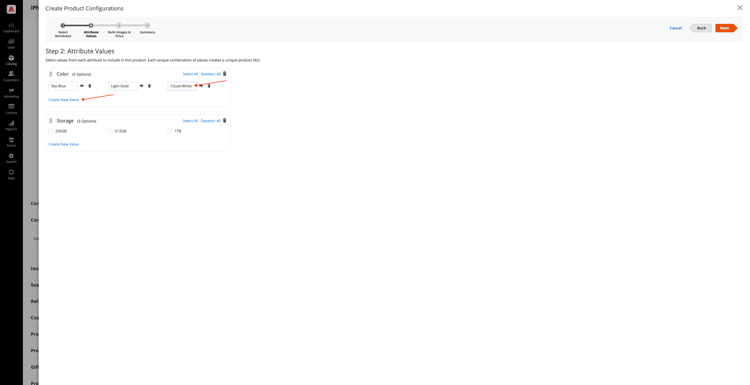
Enter the value Space-Black. Click Select all
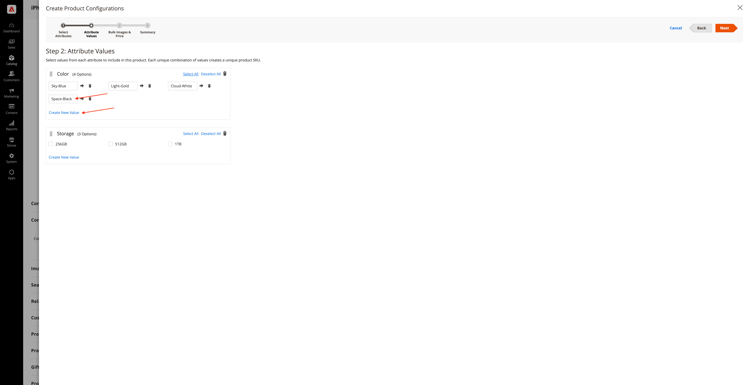
Select all 3 options under Storage and click Next.
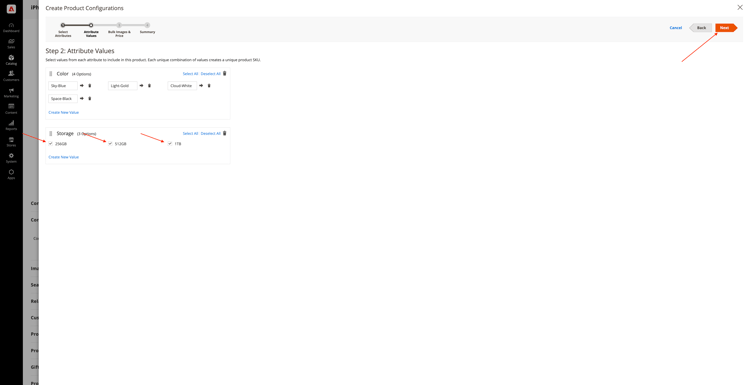
Leave the default settings and click Next.
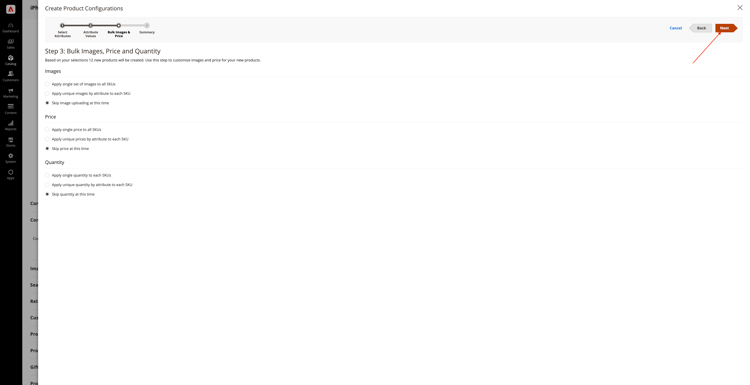
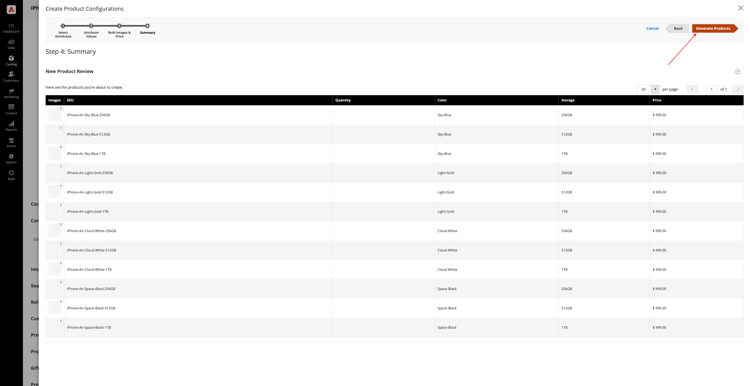
You should then see this. Click Generate Products.
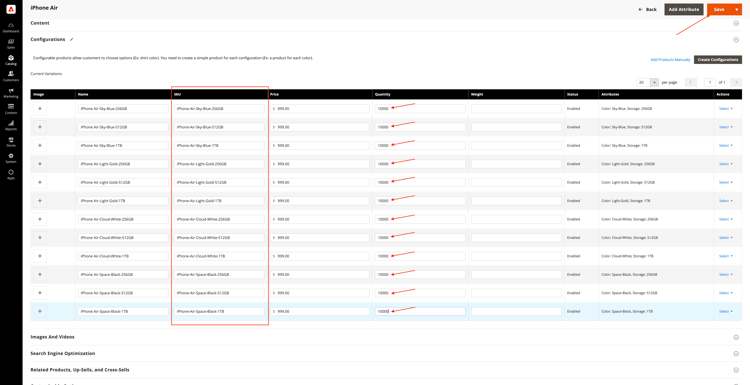
Set the Quantity of each product to 10000. Also, ensure that the column SKU doesn’t have any spaces in any of the SKU’s.
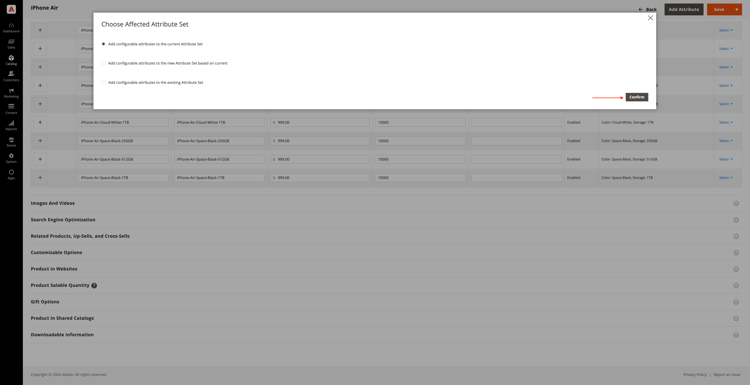
Click Save.
Click Confirm.
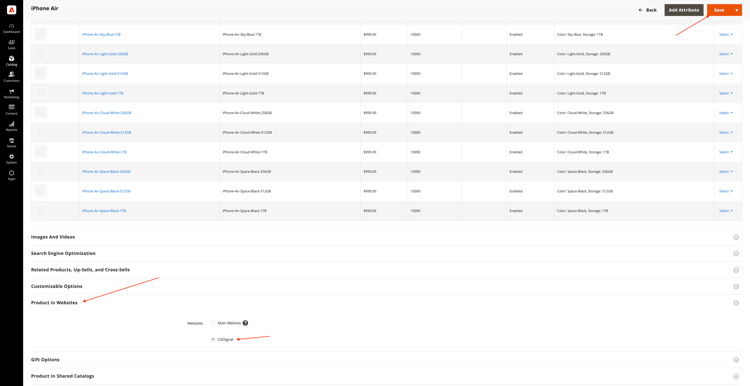
Scroll down to Product in Websites and check the checkbox for CitiSignal.
Click Save.
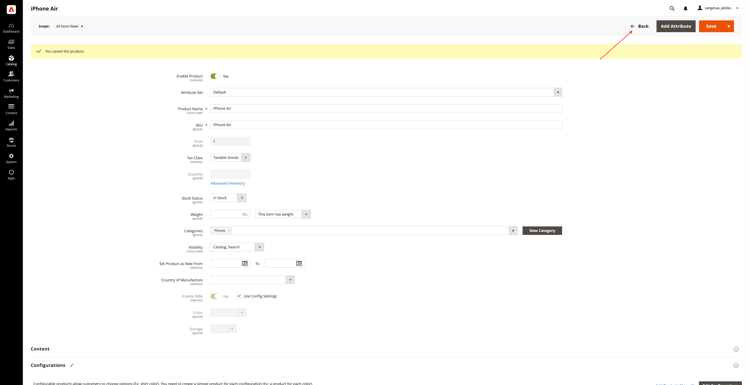
You should then see this. Click Back.
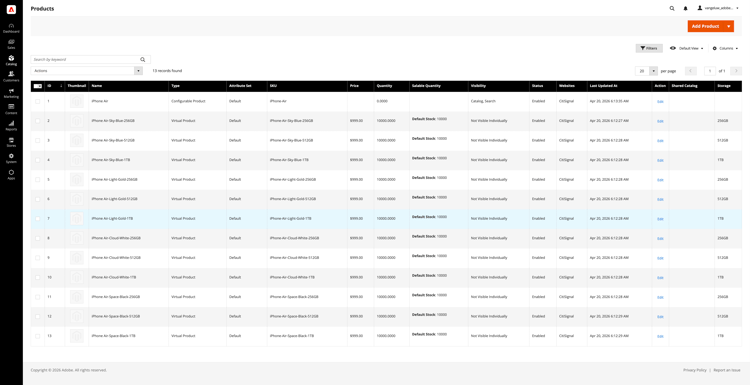
You now see the product iPhone Air and its variations in the Product Catalog.
1.5.1.4 Import Products
CitiSignal sells more products, so to create the remaining products in the product catalog, you now need to import those.
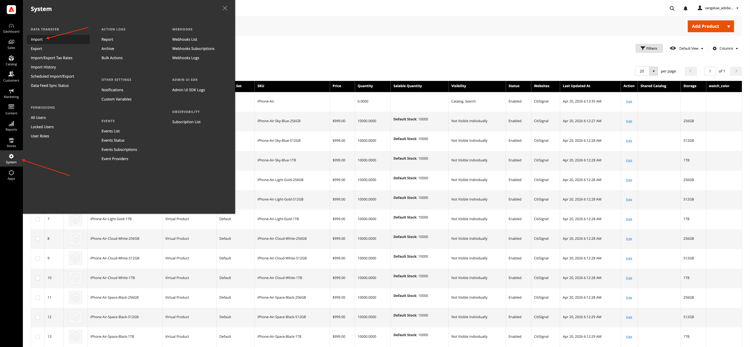
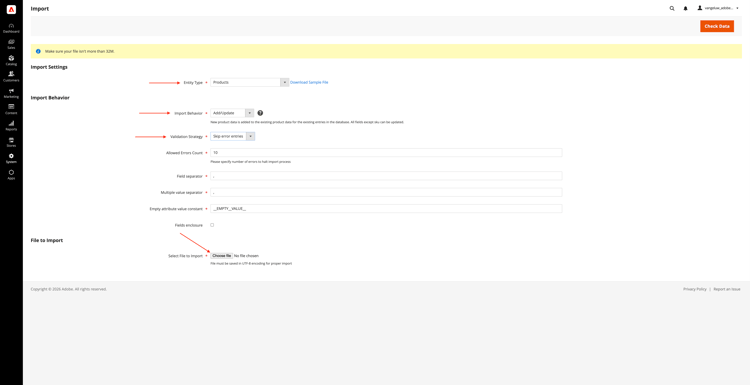
Go to System and then to Import.
Select the following values:
- Entity Type:
Products - Import Behavior:
Add/Update - Validation Strategy:
Skip error entries
Click Choose file.
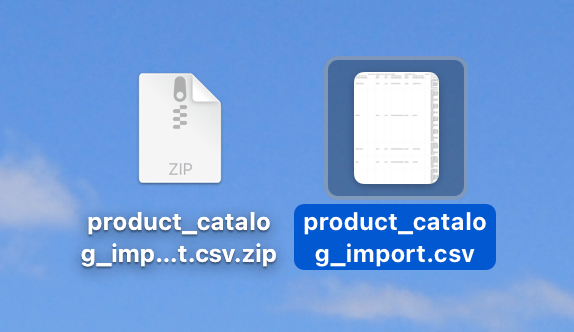
Download this file to your computer: product_catalog_import.csv.zip. Extract the file on your desktop.
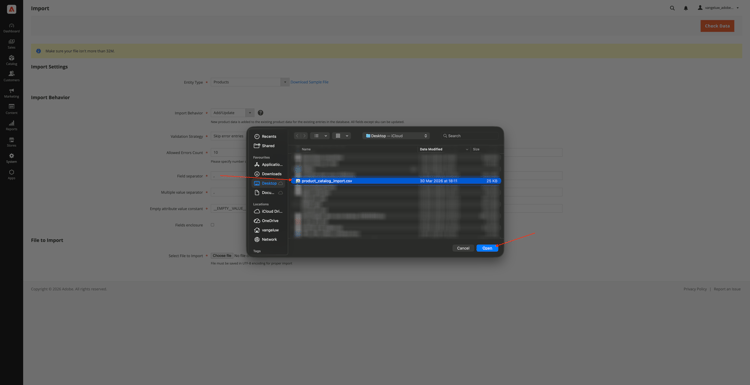
Select the file product_catalog_import.csv and click Open.
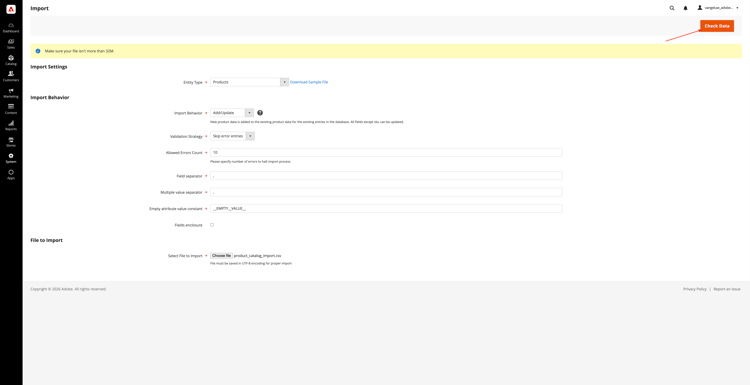
You should then see this. Click Check Data.
You should then see this. Click Import.
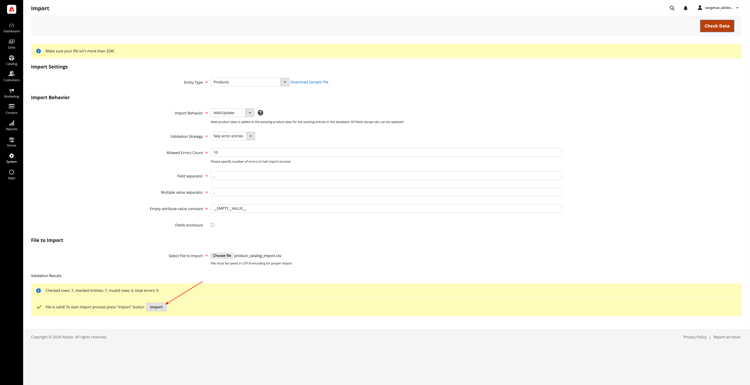
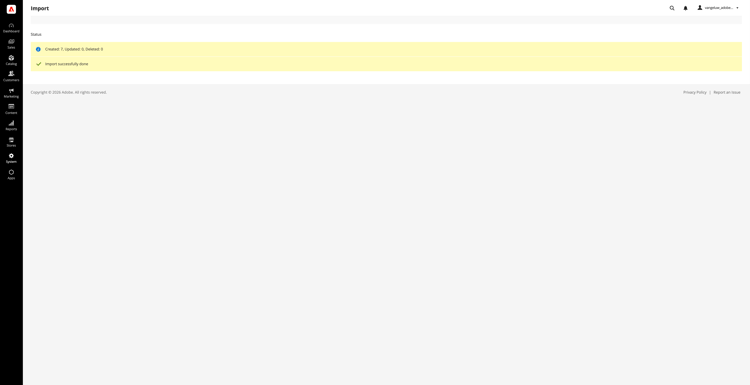
You should then see this.
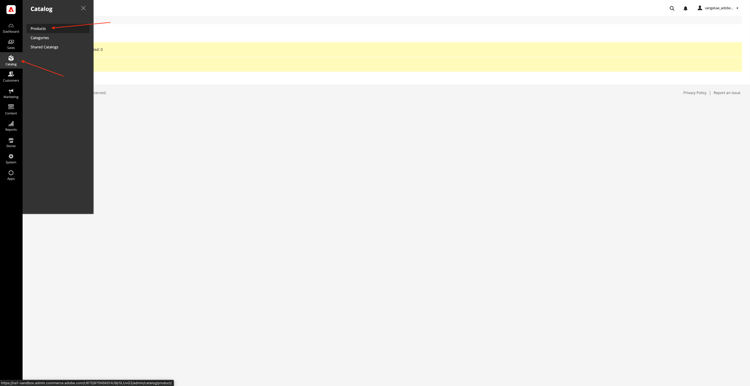
Go to Catalog and then to Products.
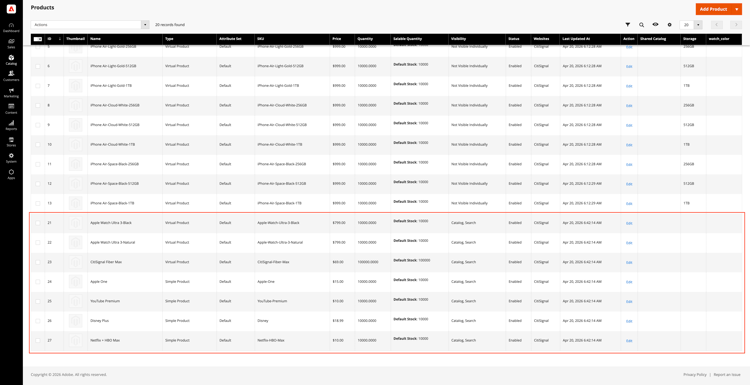
Scroll down to find the products that you just imported.
Next Step: Connect ACCS to AEM Sites CS/EDS Storefront
Go Back to Adobe Commerce as a Cloud Service