Job Aids
Job Aids is a repository of training content that is accessible to learners without any enrollment or completion criteria. Learners can refer to these job aids to get assistance for performing any activity or task in an organization.
Job Aids can be consumed independently or along with course consumption in Learning Manager.
Authors can create Job Aids for learners. Use Job Aids to provide learners with reference material like tips, checklists, guides that they can use on an ongoing basis to complete their tasks.
Create job aid createjobaid
-
In author login, select Job Aids at the left pane.
-
Select Create at the upper-right corner of the page that appears.
-
Type the name, description, and tags. Choose the skills and associated levels. Select the content as private if you do not want the job aid to be accessed by any other authors for assigning to their respective courses.
Only existing skills can be used for job aids. Skills are not mandatory.
-
Upload the job aid content at the content section.
Videos, pdf, pptx and docx are the supported file formats for upload. Project zip files or any interactive content is not supported for upload.
-
Enter the duration, in minutes, for the job aid.
-
Click Save.
The Job Aid is published.
Add job aid in different languages addcontentfordifferentlanguages
-
To add the job aid in different languages, select the Add New Language tab, and choose the required languages. Using this approach, you can add multi-lingual support for your content.
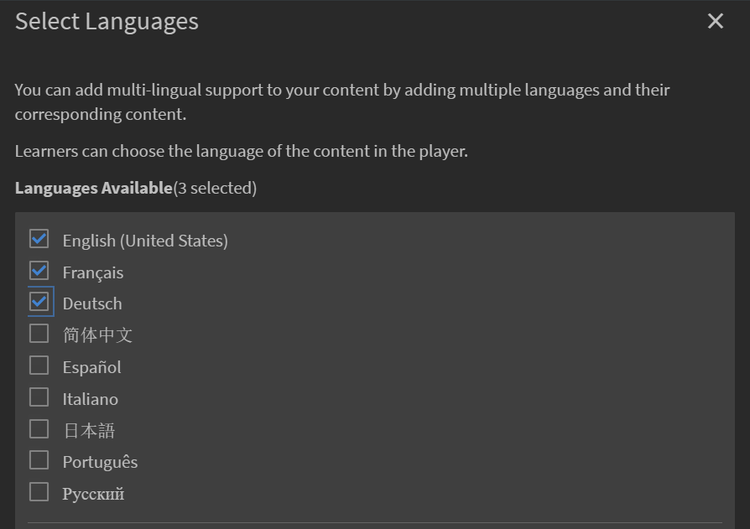
Add new language for a content
-
Repeat the job aid upload process for the new languages.
-
If you want to remove a language, select the Add New Language tab, and clear your selection.
After you’ve made the changes, select Save.
Types of supported job aids typesofsupportedjobaids
The following are the file formats supported for job aids.
- PPT
- PPTX
- XLS
- XLSX
- DOC
- DOCX
- All video file formats
Multi-lingual job aids
Multilingual Job Aids in Adobe Learning Manager (ALM) let authors and administrators provide supporting documents, guides, or resources in multiple languages within a single job aid entry. Learners across different regions can access relevant materials in their preferred language, which improves comprehension, compliance, and user experience.
Use cases
- Global workforce enablement: Deliver safety manuals, process guides, or reference documents in multiple languages to a diverse workforce.
- Regulatory compliance: Ensure all employees receive the same compliance documentation in their native language.
- Consistent onboarding: Provide onboarding checklists or FAQs in local languages for new hires worldwide.
- Reduced duplication: Manage all language versions of a job aid in a single entry, which simplifies updates and reporting.
Key features
- Multiple language support: Attach a unique file or URL for each supported language within a single job aid.
- Localized name and description: Enter the job aid’s name and description in each language.
- Unified management: Edit, update, and report on all language versions from one place.
- Backward compatibility: Existing single-language job aids are automatically replicated across all added languages until new files are uploaded.
Create a multilingual job aid
- Go to the Author role and select Job Aids.
- Select Create Job Aid.
- Enter the job aid’s name and description in the default language.
- Add the primary content file or URL for the default language.
- Save the job aid.
Add additional languages
-
In the job aid editor, select Add Language.
-
Select the desired language(s) from the list.
-
For each added language:
- Enter the localized name and description.
- Upload the corresponding content file or provide a language-specific URL.
-
Repeat for all required languages.
Edit and manage languages
- To update a file or description for a specific language, select the language tab and make changes as needed.
- If a language is added after the job aid is published, the original file is automatically assigned to the new language until a unique file is uploaded.
- Remove or replace files for any language as required.
Publish and learner experience
- After all languages and files are added, publish the job aid.
- Learners see the job aid in their selected content language, with the appropriate file or URL.
- If a learner’s language is not available, the default language file is shown.
Reporting
- Download job aid reports to view details of all files and languages associated with each job aid.
- Reports include language, file name, and usage data for tracking.
Best practices
- Provide accurate translations for names, descriptions, and content files.
- Review and update files regularly to ensure consistency across languages.
- Use clear naming conventions to distinguish files for different languages.
- Test the learner experience by switching content languages to verify correct file delivery.
Multi-lingual Job Aids let you deliver supporting resources to a global audience in a single entry, reduce duplication, and ensure every learner receives the right information in their preferred language. This feature improves accessibility, compliance, and administrative efficiency in Adobe Learning Manager.
Withdraw/re-publish job aids withdrawrepublishjobaids
You can withdraw the published job aid by clicking settings icon adjacent to the job aid and choosing withdraw.
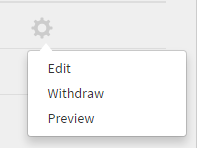
Edit, withdraw, or preview a published Job Aid
View withdrawn job aids by clicking the withdrawn tab. You can re-publish the withdrawn jobs by clicking settings icon and choosing Publish.
Support for HTML packages in Job Aids
Job Aids now support standard HTML packages as a new type of content. With this enhancement, learners can open view and download the HTML package from within the Job Aid player.
When creating a Job Aid, an Author can upload a standard HTML package along with other supported file formats.
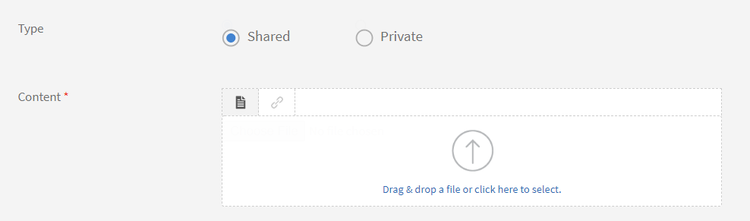
Support for HTML packages
An HTML package must have the following:
- An Index.html file.
- The Index.html file must reside in the root folder of a zip file.
Specify the content to be uploaded as a zip file, within which the Index.html file is located.
All the contents, resources and assets must be referenced within the HTML package and be accessible through Index.html.
Frequently Asked Questions frequentlyaskedquestions
As an author, on the Job Aid page, click Create. Add the required details and save the Job Aid.
After you create the Job Aid, you can add the Job Aid to a course, while creating the course.