Generate images generative-image
Use AI in Adobe Campaign Web to create compelling visual content that enhances your messages across email, landing pages, and push notifications. AI helps you generate and optimize images, ensuring your content is visually engaging and aligned with your brand.
For Email and Landing Pages email-web-channels
Use AI to generate complete visual experiences for your email deliveries and landing pages. This capability allows you to produce on-brand, attention-grabbing images that resonate with your audience across digital touchpoints.
Access and configure access-configure
To start generating images with AI, first set up your delivery and open the content editor. Follow the steps below to prepare your workspace and access the Generate Content panel.
-
Create and configure your delivery:
- Email: After creating and configuring your email delivery, click Edit content. Learn more
- Landing Page: After creating and configuring your landing page, click Edit content. Learn more
-
Select the asset you want to change, and access the Generate Content menu.
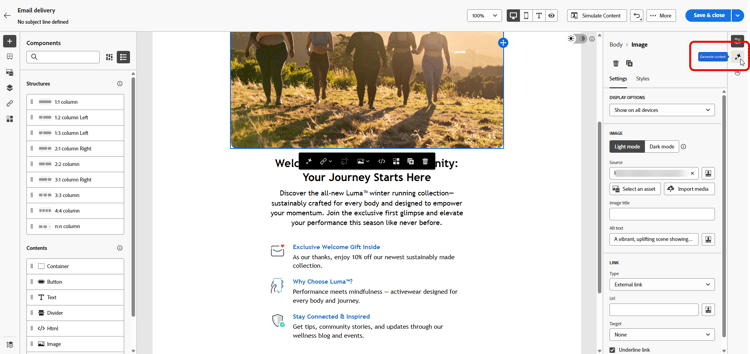
Generate image generate-content
Learn how to craft effective prompts and configure image settings to generate visually compelling images using AI. Customize parameters such as aspect ratio, visual intensity, and lighting to create images that align with your brand and campaign objectives.
-
Enable the Reference style option to use AI to personalize new content based on the selected content.
-
Select your Brand to ensure AI-generated content aligns with your brand specifications. Learn more on Brands.
-
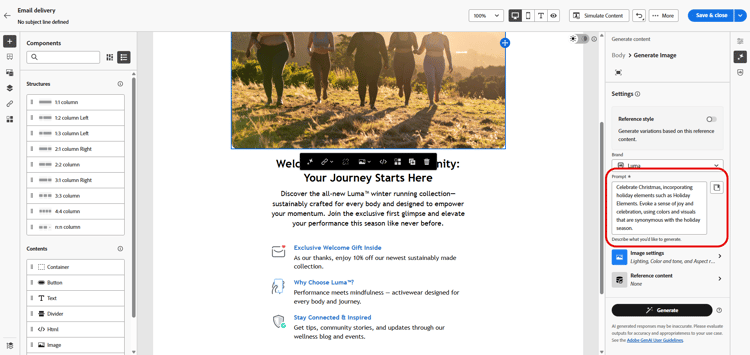
Fine-tune the content by describing what you want to generate in the Prompt field.
If you need assistance crafting your prompt, access the Prompt Library, which provides a diverse range of prompt ideas to improve your deliveries. Learn more on prompt best practices
-
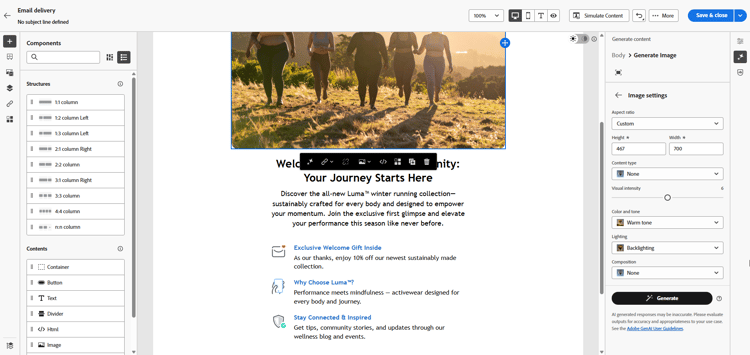
Tailor your prompt using the Image settings option:
-
Generative model: Select from the ready-to-use Adobe model, the Partner model for specialized capabilities, or Custom models trained on your brand assets. Learn more
-
Aspect ratio: Determine the width and height of the asset. Choose from common ratios such as 16:9, 4:3, 3:2, or 1:1, or enter a custom size.
-
Content type: Categorize the nature of the visual element, distinguishing between different forms of visual representation such as photos, graphics, or art.
-
Visual intensity: Control the image’s impact by adjusting its intensity. A lower setting (2) creates a softer appearance, while a higher setting (10) makes the image more vibrant.
-
Color & tone: Adjust the overall appearance of the colors and the mood or atmosphere conveyed.
-
Lighting: Modify the lighting in the image to shape its atmosphere and highlight specific elements.
-
Composition: Arrange elements within the frame of the image.
-
-
From the Reference content menu, click Upload file to add any brand asset which contains content that can provide additional context AI or select a previously uploaded one.
Previously uploaded files are available in the Uploaded reference content drop-down. Simply toggle the assets you wish to include in your generation.
-
Once you are satisfied with your prompt configuration, click Generate.
Refine and finalize refine-finalize
After generating image variations, you can review the results, check brand alignment, and select the best option for your content.
-
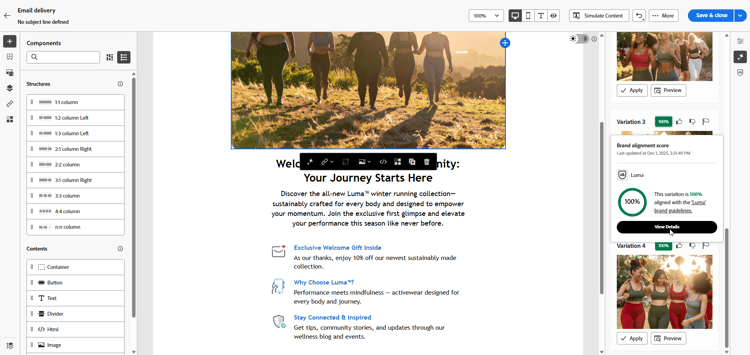
Browse through the generated Variations.
-
Click the percentage icon to view your Brand Alignment Score and identify any misalignments with your brand.
Learn more on Brand alignment score.
-
Click Preview to view a full-screen version of the selected variation or Apply to replace your current content.
-
Choose Generate Similar if you want to view related images to this variant.
-
Open the Brand Alignment tab to see how your content aligns with your brand guidelines.
-
Click Select once you find the appropriate content.
-
After defining your message content, click the Simulate content button to control the rendering and check personalization settings with test profiles. Learn more
-
Review and activate your content:
- Email: When you have defined your content, audience and schedule, you are ready to prepare your email delivery. Learn more
- Landing Page: Once your landing page is ready, you can publish it to make it available for use in a message. Learn more
For Mobile Channels mobile-channels
Use AI to generate engaging images for push notifications, helping you create visually compelling mobile communications that capture attention and resonate with your audience.
Access and configure mobile-access-configure
To begin generating images for push notifications with AI, first set up your delivery and open Generate Content.
-
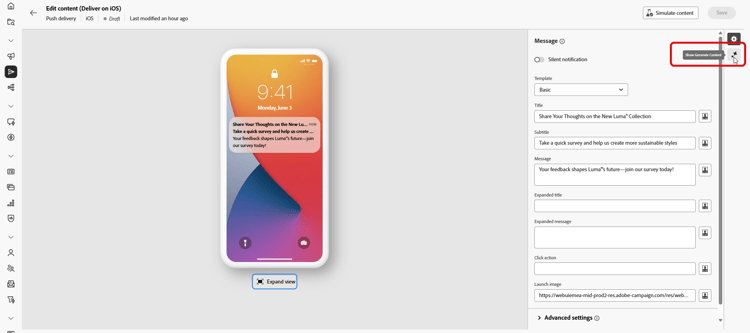
After creating and configuring your push notification delivery, click Edit content. Learn more
-
Access the Show Generate Content menu.
Generate image mobile-generate-content
After accessing Generate Content, you can adjust the generation settings to create images that align with your brand and support your push notification objectives. Configure the prompt and image parameters to generate visuals optimized for mobile displays.
-
Select your Brand to ensure AI-generated content aligns with your brand specifications. Learn more on Brands.
-
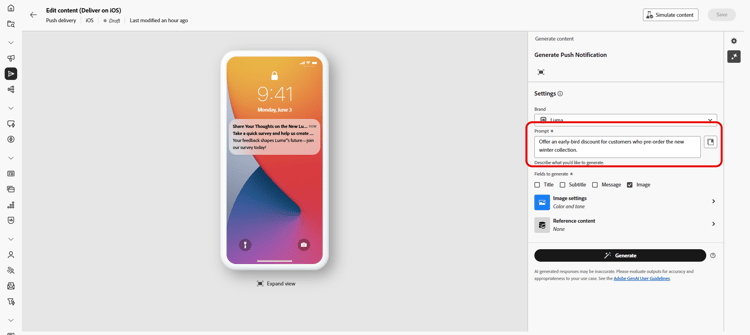
Fine tune the content by describing what you want to generate in the Prompt field.
If you are looking for assistance in crafting your prompt, access the Prompt Library which provides a diverse range of prompt ideas to improve your campaigns. Learn more on prompt best practices
-
Select Image to only generate assets.
-
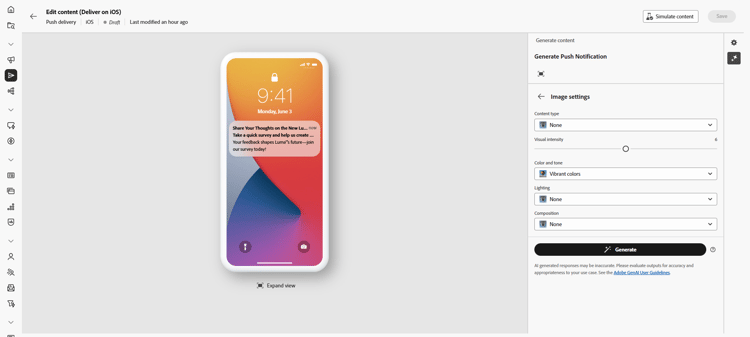
Choose your Image settings:
-
Generative model: Select from the ready-to-use Adobe model, the Partner model for specialized capabilities, or Custom models trained on your brand assets. Learn more
-
Content type: Categorize the nature of the visual element, distinguishing between different forms of visual representation such as photos, graphics, or art.
-
Visual intensity: Control the image’s impact by adjusting its intensity. A lower setting (2) creates a softer, more restrained appearance, while a higher setting (10) makes the image more vibrant and visually powerful.
-
Lighting: Adjust the lighting in the image to shape its atmosphere and highlight specific elements.
-
Composition: Arrange elements within the frame of the image.
-
-
From the Reference content menu, click Upload file to add any brand asset which contains content that can provide additional context AI or select a previously uploaded one.
Previously uploaded files are available in the Uploaded reference content drop-down. Simply toggle the assets you wish to include in your generation.
-
Once your prompt is ready, click Generate.
Refine and finalize mobile-refine-finalize
After generating image variations for your mobile messages, you can fine-tune the results to ensure they meet your exact requirements.
-
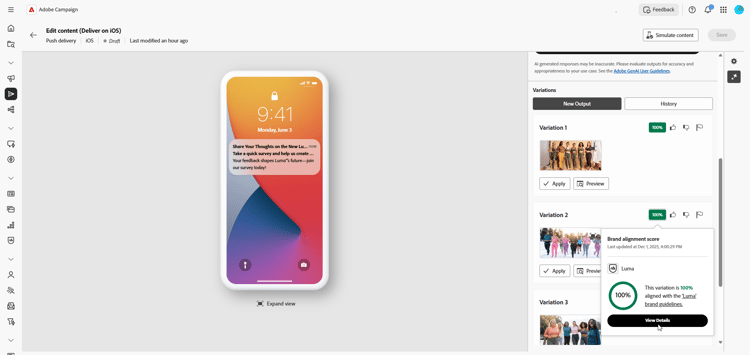
After generation, browse through the Variations.
-
Click the percentage icon to view your Brand Alignment Score and identify any misalignments with your brand.
Learn more on Brand alignment score.
-
Click Preview to browse through the Variations.
-
Open the Brand Alignment tab to see how your content aligns with your brand guidelines.
-
Click Select once you found the appropriate content.
Once you have defined your content, audience, and schedule, prepare your push delivery. Learn more