Labels, policies, and marketing actions
When you create a dataset in Experience Platform, you can create data usage labels for some or all elements in the dataset. You can view these labels and policies in Customer Journey Analytics.
The following labels and marketing actions are of special interest to Customer Journey Analytics:
C2C3C8C9C12Labeling in itself does not mean that these data usage labels are enforced. That’s what policies are used for. You can create your policies using the Experience Platform UI or via the Policy Service API in Experience Platform.
Five Adobe-defined policies are available in Experience Platform that can surface in Customer Journey Analytics and affect reporting and data export:
C2C3C8C9C12View data labels in Customer Journey Analytics data views
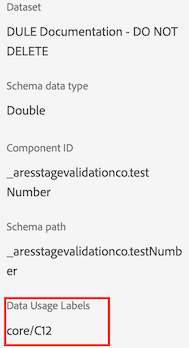
Data labels that you or others created in Experience Platform are shown in three locations in the data views user interface:
Clicking this button indicates which Data Usage Labels currently apply to a field:
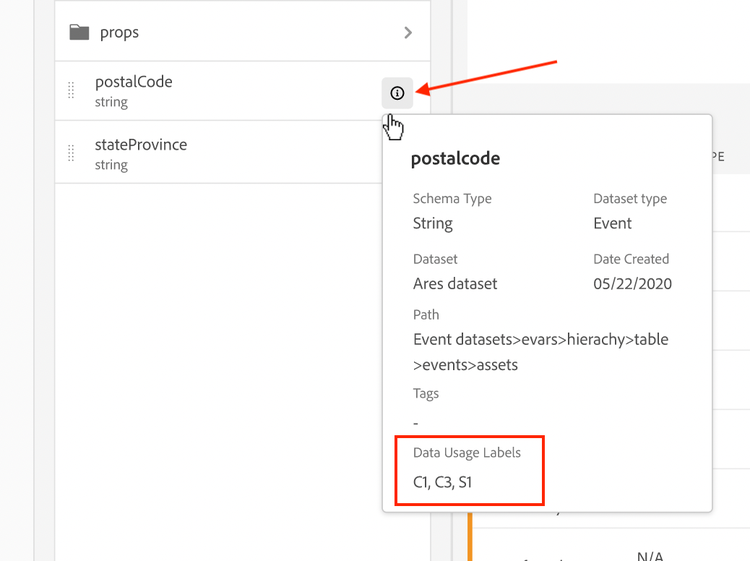
Any Data Usage Labels are listed here:
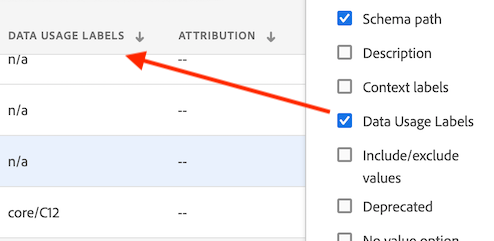
You can add Data Usage Labels as a column to the Included Components columns in data views. Just select the column selector icon and select Data Usage Labels:
Filter on Data Governance labels in data views
In the data views editor, select the filter icon in the left trail and filter the data views components by Data Governance and type of Label:
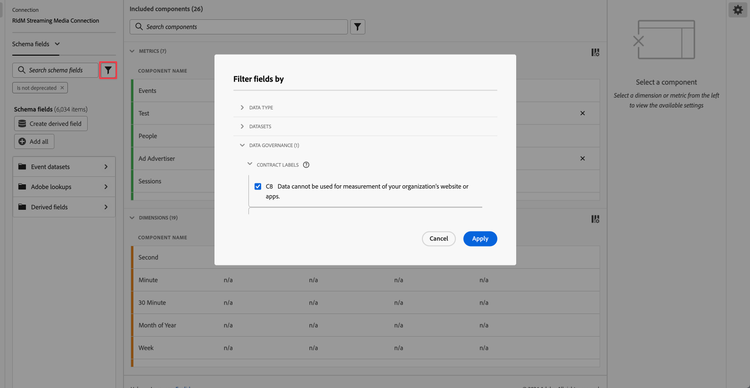
Click Apply to see which components have labels attached to them.
Filter on Data Governance policies in data views
You can check to see if a policy (for example, a policy you created, named Enforce Analytics) is turned on. And whether that policy blocks the use of certain Customer Journey Analytics data view elements for analytics or data export.
Again, select the filter icon in the left rail and under Data Governance, select Policies:
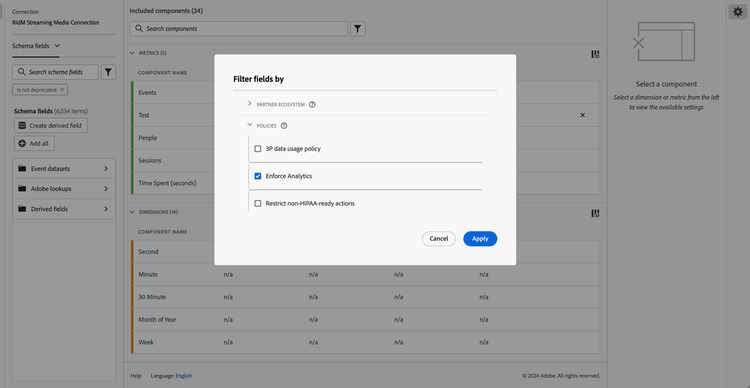
Click Apply to see which policies are enabled.
How enabled policies affect data views
If one or more policies are turned on with C3 or C8, those schema components that have certain data labels applied cannot be added to data views.
If one or more policies are turned on with C9, any schema components labelled with C9 will be unavailable for use with Analytics MCP servers.
These components are grayed out in the left rail Schema fields list:
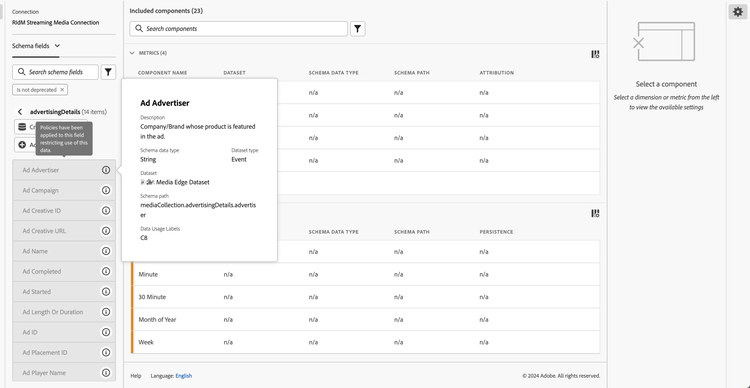
You also cannot save a data view that has blocked fields in it.
Be cautious to try to apply access and data governance labels (through policies) on fields or field groups in Experience Platform, for which you already have components defined in your data view. You might see this dialog.
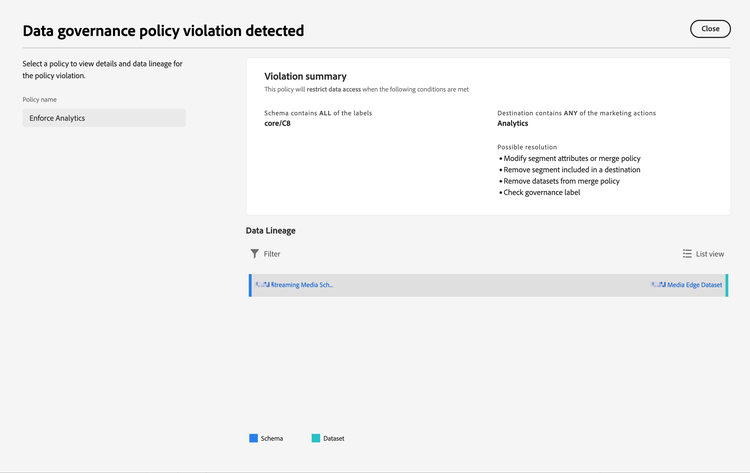
You first need to resolve the violation (for example remove the components from the data view).