管理影片資產 manage-video-assets
視訊格式是組織數位資產的重要一環。 Adobe Experience Manager提供成熟的產品和功能,可在建立視訊資產後管理其整個生命週期。
瞭解如何在Adobe Experience Manager Assets中管理和編輯視訊資產。 可以使用Dynamic Media整合進行視訊編碼與轉碼(例如FFmpeg轉碼)。
上傳和預覽視訊資產 upload-and-preview-video-assets
Adobe Experience Manager Assets會產生副檔名為MP4之視訊資產的預覽。 如果資產的格式不是MP4,請安裝FFmpeg套件以產生預覽。 FFmpeg會建立OGG和MP4型別的視訊轉譯。 您可以在Assets使用者介面中預覽轉譯。
-
在數位資產資料夾或子資料夾中,導覽至您要新增數位資產的位置。
-
若要上傳資產,請按一下工具列中的[建立],然後選擇[檔案]。 或者,在使用者介面上拖曳檔案。 如需詳細資訊,請參閱上傳資產。
-
若要在卡片檢視中預覽視訊,請按一下視訊資產上的播放

-
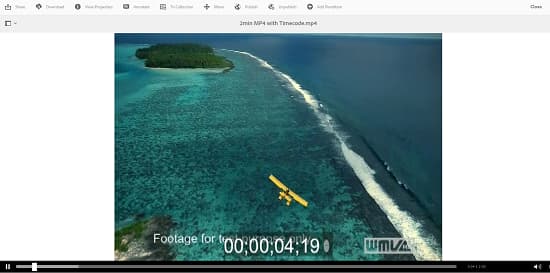
若要在資產詳細資訊頁面中預覽視訊,請按一下卡片上的編輯。 視訊會在瀏覽器的原生視訊播放器中播放。 您可以播放、暫停、控制音量,以及將視訊縮放至全熒幕。
上傳大於2 GB之資產的設定 configuration-to-upload-assets-that-are-larger-than-gb
根據預設,Assets不允許您上傳任何因檔案大小限制而大於2 GB的資產。 不過,您可以前往CRXDE Lite並在/apps目錄下建立節點,覆寫此限制。 節點必須具有相同的節點名稱、目錄結構和順序的可比較節點屬性。
除了Assets設定外,請變更下列設定以上傳大型資產:
- 增加權杖到期時間。 在
https://[aem_server]:[port]/system/console/configMgr的Web主控台中檢視Adobe Granite CSRF Servlet。 如需詳細資訊,請參閱CSRF保護。 - 在Dispatcher設定中增加
receiveTimeout。 如需詳細資訊,請參閱Experience Manager Dispatcher設定。
若要設定較高的檔案大小限制,請在/apps目錄中執行下列步驟。
-
在Experience Manager中,按一下工具 > 一般 > CRXDE Lite。
-
在CRXDE Lite中導覽至
/libs/dam/gui/content/assets/jcr:content/actions/secondary/create/items/fileupload。 若要檢視目錄視窗,請按一下>>。 -
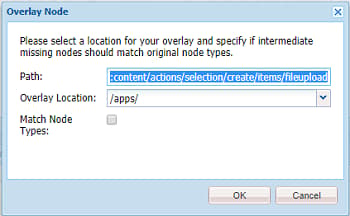
在工具列中按一下覆蓋節點。 或者,從上 下文選單選取 「覆蓋節點」。
-
在 覆蓋節點 對話方塊中,按一下確定。
-
重新整理瀏覽器。 已選取覆蓋節點
/apps/dam/gui/content/assets/jcr:content/actions/secondary/create/items/fileupload。 -
在 屬性 索引標籤中,輸入適當的值(位元組),將大小限制增加到所需的大小。 例如,若要將大小限制增加到30 GB,請輸入
32212254720值。 -
在工具列中按一下儲存全部。
-
在Experience Manager中,按一下工具 > 作業 > 網頁主控台。
-
在Adobe Experience Manager Web主控台組合頁面上,在表格的「名稱」欄下,找到並按一下Adobe Granite工作流程外部程式工作處理常式。
-
在Adobe Granite工作流程外部處理作業處理常式頁面上,將 預設逾時 和 最大逾時 欄位的秒數設定為
18000(5小時)。 按一下儲存。 -
在Experience Manager中,按一下工具 > 工作流程 > 模型。
-
在工作流程模型頁面上,選取Dynamic Media編碼視訊,然後按一下編輯。
-
在工作流程頁面上,連按兩下 Dynamic Media視訊服務處理序 元件。
-
在「步 驟屬性 」對話框的「常用」頁籤下,展開「 高級設定」。
-
在 逾時 欄位中,指定值
18000,然後按一下 確定 以返回 Dynamic Media編碼視訊 工作流程頁面。 -
在頁面頂端附近,Dynamic Media編碼視訊頁面標題下方,按一下儲存。
發佈視訊資產 publish-video-assets
發佈後,您可以將視訊資產以URL形式納入網頁中,或直接內嵌資產。 如需詳細資訊,請參閱發佈Dynamic Media資產。
將視訊發佈至YouTube publishing-videos-to-youtube
您可以將內部部署Experience Manager視訊資產直接發佈至您先前建立的YouTube頻道。
若要將視訊資產發佈至YouTube,請使用標籤設定Experience Manager Assets。 您可以將這些標籤與YouTube頻道建立關聯。 如果視訊資產的標籤符合YouTube頻道的標籤,則視訊會發佈至YouTube。 只要使用關聯的標籤,發佈至YouTube就會與視訊的正常發佈同時發生。
YouTube會自行編碼。 因此,上傳至Experience Manager的原始視訊檔案會發佈至YouTube,而不會發佈至Dynamic Media編碼所建立的任何視訊轉譯。 雖然視訊不需要使用Dynamic Media來處理,但如果播放需要檢視器預設集,預計會予以處理。
當您略過視訊處理設定檔並直接發佈至YouTube時,這僅代表您在Experience Manager資產中的視訊資產沒有取得可檢視的縮圖。 這也表示如果您以dynamicmedia或dynamicmedia_scene7執行模式執行,未編碼的視訊將無法與任何動態媒體資產型別搭配使用。
若要將視訊資產發佈至YouTube伺服器,必須完成下列工作,以確保使用YouTube進行安全無虞的伺服器對伺服器驗證:
您也可以取消發佈視訊,以從YouTube中移除這些視訊。
配置Google雲端設定 configuring-google-cloud-settings
若要發佈至YouTube,您需要Google帳戶。 如果您有GMAIL帳戶,表示您已經擁有Google帳戶;如果您沒有Google帳戶,可以輕鬆建立帳戶。 您需要帳戶,因為您需要憑證才能將視訊資產發佈到YouTube。 如果您已建立帳戶,請略過此工作並直接繼續進行建立YouTube管道。
Google Cloud所用的帳戶與YouTube所用的Google帳戶不必相同。
Google會定期變更其使用者介面。 因此,將視訊發佈至YouTube的步驟可能會與以下說明略有不同。 此警告也適用於您嘗試檢查是否將視訊上傳到YouTube的。
若要設定Google雲端設定:
-
建立Google帳戶。
如果您已有Google帳戶,請跳至下一步。
-
在Google cloud頁面的右上角,按一下「主控台」 。
如有必要,請使用您的Google帳戶認證 登入 以檢視 主控台 選項。
-
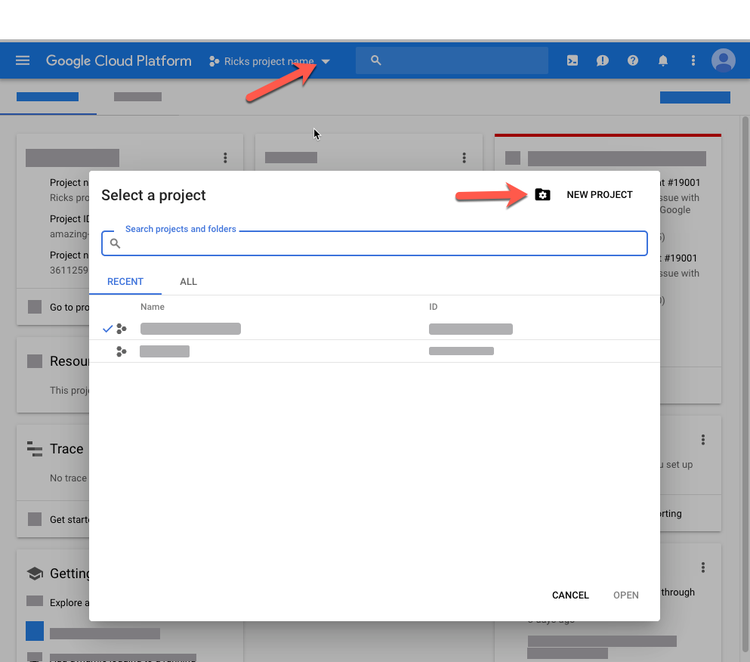
在「控制面板」頁面的 Google Cloud Platform 右側,按一下「專案」下拉式清單以開啟「選取專案」對話方塊。
-
在「選取專案」對話方塊中,選取新增專案。
-
在「新專案」對話方塊的「專案名稱」欄位中,輸入新專案的名稱。
您的專案ID是以專案名稱為基礎。 因此,請謹慎選擇專案名稱;專案建立後即無法變更。 此外,當您稍後在Experience Manager中設定YouTube時,必須再次輸入相同的專案ID;請考慮將其寫下。
-
按一下「建立」。
-
執行下列其中一項:
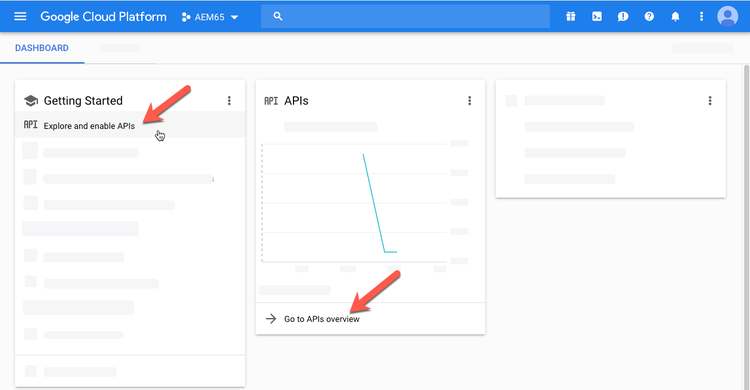
- 在您的專案的[儀表板]上,在[快速入門]卡中,選取[探索並啟用API]。
- 在您的專案的「儀表板」上,在API卡中,選取「前往API總覽」。
-
在[API與服務]頁面頂端附近,選取[啟用API與服務]。
-
在「API程式庫」頁面的左側,類別下方選取YouTube。 在頁面右側,選取YouTube Data API。
-
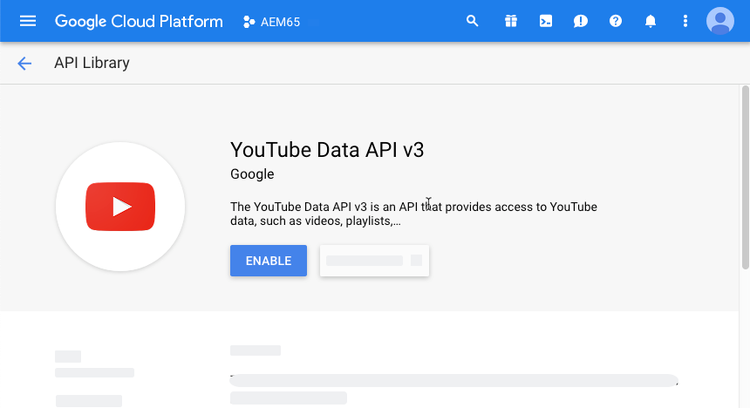
在YouTube Data API v3頁面上,選取啟用。
-
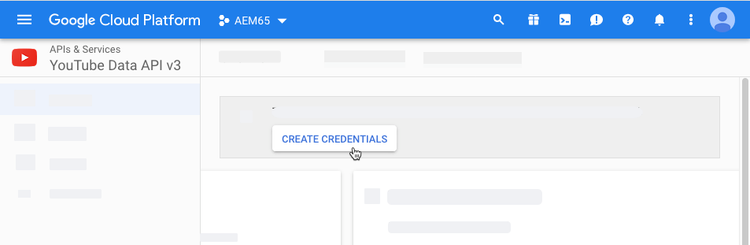
若要使用API,您需要憑證。 如有必要,請按一下建立認證。
-
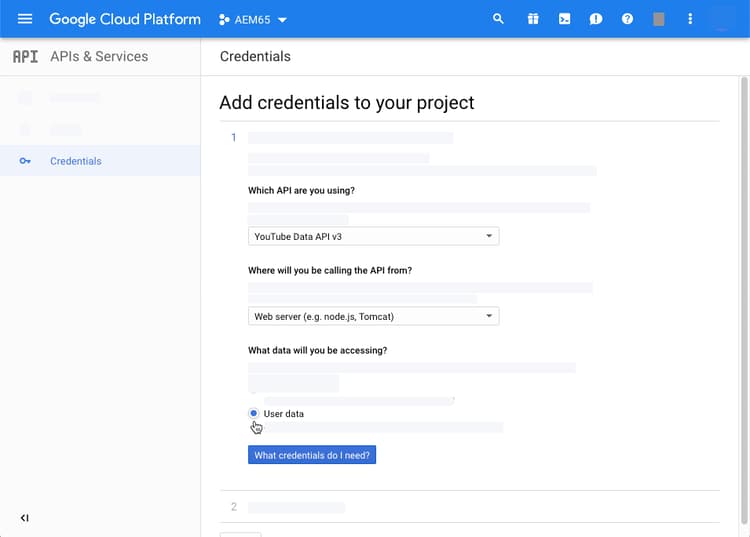
在 新增認證至您的專案 頁面上的步驟1,執行下列動作:
-
從您使用哪個API? 下拉式清單,選取YouTube Data API v3。
-
從您從哪裡呼叫API? 下拉式清單,選取網頁伺服器(例如node.js、Tomcat)
-
從您正在存取哪些資料? 下拉式清單,選取使用者資料。
-
-
選取我需要什麼認證?
-
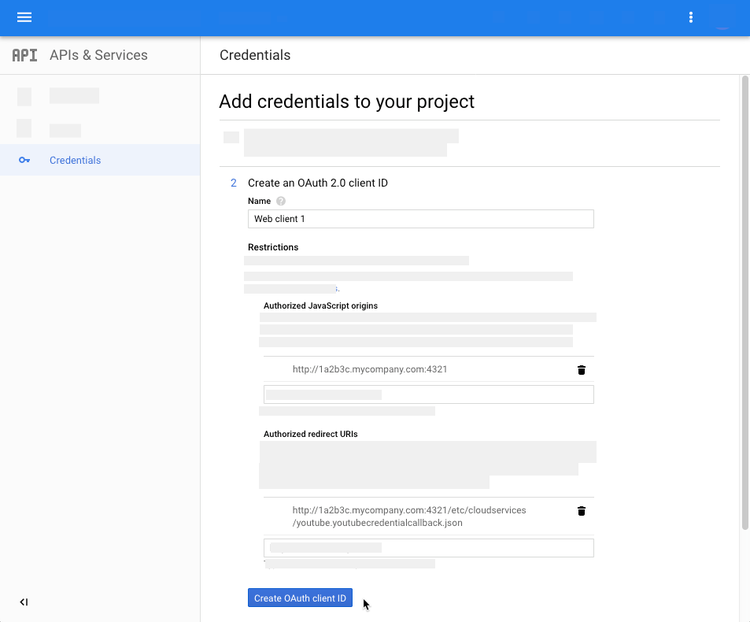
在「 新增認證至您的專案 」頁面的「建立OAuth 2.0用戶端ID 」標題下,視需要在「名稱」欄位中輸入唯一名稱。 或者,您可以使用Google指定的預設名稱。
-
在 授權的JavaScript來源 標題下,在文字欄位中輸入以下路徑,在路徑中取代您自己的網域和連線埠號碼,然後按 Enter 將路徑新增至清單:
https://<servername.domain>:<port_number>例如
https://1a2b3c.mycompany.com:4321注意:上述路徑範例僅供示範之用。
-
在 授權的重新導向URI 標題下,在文字欄位中輸入以下路徑,取代路徑中您自己的網域和連線埠號碼,然後按 Enter 將路徑新增至清單:
https://<servername.domain>:<port_number>/etc/cloudservices/youtube.youtubecredentialcallback.json例如
https://1a2b3c.mycompany.com:4321/etc/cloudservices/youtube.youtubecredentialcallback.json注意:上述路徑範例僅供示範之用。
-
按一下建立OAuth使用者端識別碼。
-
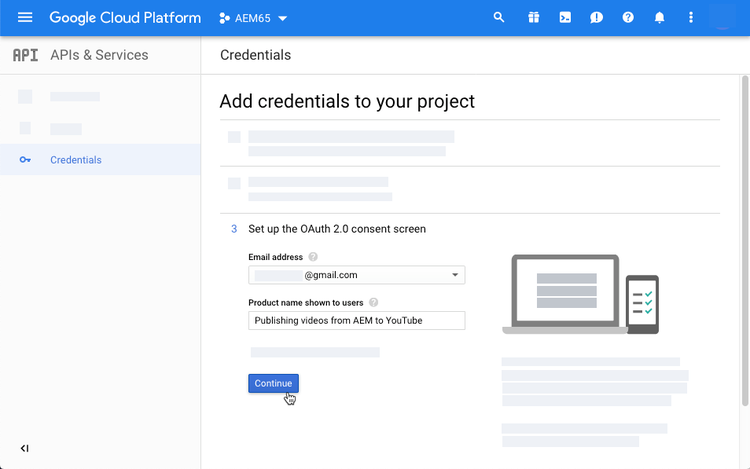
在「 新增認證至您的專案 」頁面的「設定OAuth 2.0同意書」畫面標題下方,選取您目前使用的Gmail電子郵件地址。
-
在顯示給使用者的 產品名稱 標題下,在文字欄位中輸入您要在同意畫面上顯示的內容。
Experience Manager管理員向YouTube驗證時,會顯示同意畫面;Experience Manager會聯絡YouTube以取得許可權。
-
按一下「繼續」。
-
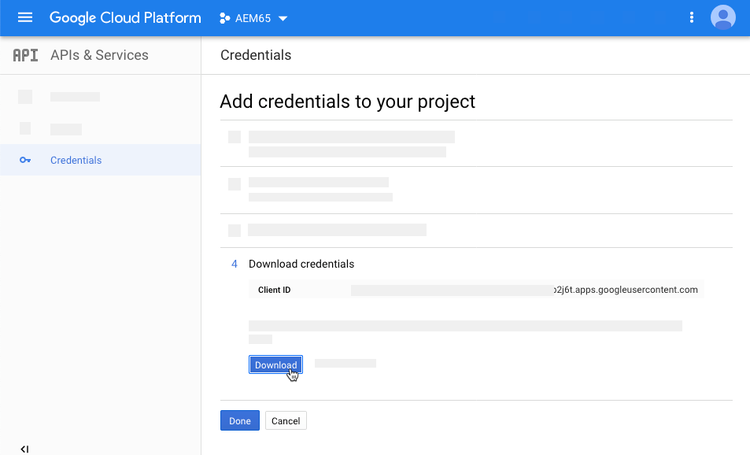
在[新增認證至您的專案]頁面的[下載認證] 標題下,選取[下載],步驟4。
-
儲存
client_id.json檔案。您稍後在Adobe Experience Manager中設定YouTube時,需要此下載的json檔案。
-
按一下完成。
登出您的Google帳戶。 現在建立YouTube管道。
建立YouTube管道 creating-a-youtube-channel
若要將影片發佈至YouTube,您必須具備一或多個管道。 如果您已建立YouTube管道,則可以略過此工作,並移至新增標籤以進行發佈。
若要建立YouTube頻道:
-
移至https://www.youtube.com並使用您的Google帳戶認證登入。
-
在YouTube頁面的右上角,按一下您的個人資料圖片(也可以顯示為實色圓圈中的字母),然後按一下YouTube設定 (圓形齒輪圖示)。
-
在「概觀」頁面的「其他功能」標題下,按一下「檢視我的所有管道」或建立管道。
-
在[頻道]頁面上,按一下[建立新頻道]。
-
在「品牌帳戶」頁面的「品牌帳戶名稱」欄位中,輸入您要發佈視訊資產的商業名稱或任何其他管道名稱,然後按一下「建立」。
請記住您在這裡輸入的名稱,因為當您在Experience Manager中設定YouTube時,必須再次輸入此名稱。
-
(選用)如有需要,請新增更多管道。
現在新增標籤以供發佈。
新增標籤以供發佈 adding-tags-for-publishing
若要將影片發佈至YouTube,Experience Manager會將標籤與一個或多個YouTube管道建立關聯。 若要新增標籤以進行發佈,請參閱管理標籤。
或者,如果您想要使用Experience Manager中的預設標籤,可以略過此工作並移至啟用YouTube發佈復寫代理程式。
啟用YouTube發佈復寫代理程式 enabling-the-youtube-publish-replication-agent
啟用YouTube發佈復寫代理程式後,如果要測試與Google Cloud帳戶的連線,請選取測試連線。 瀏覽器標籤會顯示連線結果。 如果您已新增YouTube管道,測試期間會顯示管道清單。
-
在Experience Manager的左上角,按一下Experience Manager標誌,然後在左側邊欄中,按一下工具 > 部署 > 復寫 > 作者代理程式。
-
在作者代理程式頁面上,按一下YouTube發佈。
-
在工具列的[設定]右側,按一下[編輯]。
-
選取 已啟用 核取方塊,以便您開啟復寫代理程式。
-
按一下「確定」。
現在請在Experience Manager中設定YouTube。
在Experience Manager中設定YouTube setting-up-youtube-in-aem
從Experience Manager 6.4開始,引進了全新的觸控使用者介面方法,以在Experience Manager中設定YouTube發佈。 根據您所使用的Experience Manager安裝例項,執行下列任一項作業:
- 若要在6.4之前的Experience Manager中設定YouTube,請參閱在6.4之前的Experience Manager中設定YouTube 。
- 若要在Experience Manager 6.4或更新版本中設定YouTube,請參閱在Experience Manager 6.4及更新版本中設定YouTube。
在Experience Manager 6.4和更新版本中設定YouTube setting-up-youtube-in-aem-and-later
-
請確定您以管理員身分登入您的Dynamic Media執行個體。
-
在左上角選取Experience Manager標誌,然後在左側導軌中選取工具 (槌子圖示) > 雲端服務 > YouTube發佈設定。
-
選取全域 (不要選取它)。
-
在全域頁面的右上角附近,選取建立。
-
在「建立YouTube設定」頁面的「Google cloud 平台設定」下方的「應用程式名稱」欄位 中 ,輸入Google專案ID。
您已在先前設定Google Cloud設定時指定專案ID。
讓「建立YouTube設定」頁面保持開啟;稍後,您將會返回該頁面。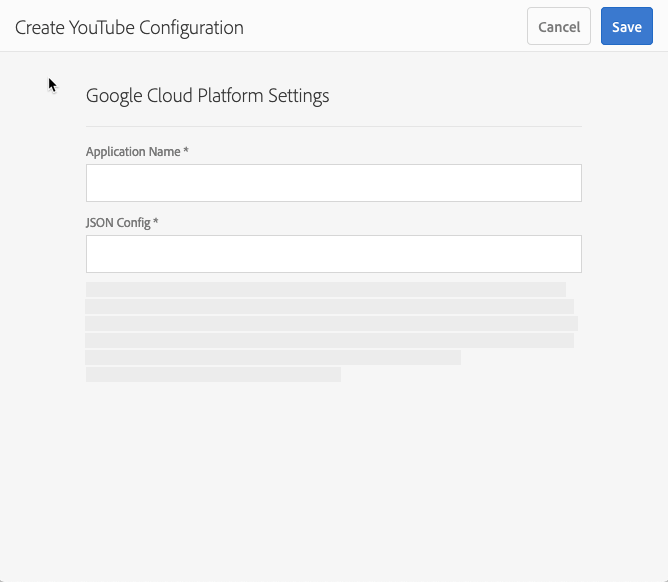
-
使用純文字編輯器,開啟您先前在設定Google雲端設定工作中下載並儲存的JSON檔案。
-
選取並複製整個JSON文字。
-
返回YouTube帳戶設定對話方塊。 在「 JSON設定」欄位中 ,貼上JSON文字。
-
在頁面的右上角附近,選取儲存。
現在請在Experience Manager中設定YouTube管道。
-
選取新增頻道。
-
在「頻道名稱」欄位中,輸入您在 先前新增一或多個頻道至YouTube 工作中建立的頻道名稱。
如有需要,您可以選擇新增說明。
-
選取「新增」。
-
隨即顯示YouTube/Google驗證。 如果您尚未登入Google Cloud帳戶,請略過此步驟。
- 輸入與Google專案ID及上述JSON文字相關聯的Google使用者名稱和密碼。
- 視您的帳戶有多少個管道會顯示兩個或更多專案而定。 選取管道。 請勿選取電子郵件地址;此地址不是管道。
- 在下一頁,選取 接受 以允許存取此頻道。
-
選取允許。
現在設定標籤以供發佈。
-
設定標籤以進行發佈 — 在Cloud Services > YouTube頁面上,選取鉛筆圖示以編輯您要使用的標籤清單。
-
選取下拉式清單圖示(上下顛倒的插入號),讓您能夠顯示Experience Manager中的可用標籤清單。
-
選取一或多個標籤,以便新增。
若要刪除您已新增的標籤,請選取標籤,然後選取X。
-
完成新增您想要的標籤後,請選取儲存。
現在您可將視訊發佈至YouTube頻道。
在6.4之前的Experience Manager中設定YouTube setting-up-youtube-in-aem-before
-
請確定您以管理員身分登入您的Dynamic Media執行個體。
-
在左上角選取Experience Manager標誌,然後在左側導軌中選取工具 (槌子圖示) > 部署 > 雲端服務。
-
在「協力廠商服務」標題的「YouTube」下方,選取立即設定。
-
在「建立組態」對話方塊的個別欄位中,輸入標題(必要)和名稱(選用)。
-
選取「建立」。
-
在「YouTube帳戶設定」對話方塊的「應用程式名 稱」欄位中 ,輸入Google專案ID。
您已在最初設定Google雲端設定時指定專案ID。
保留YouTube帳戶設定對話方塊開啟;您稍後將返回該對話方塊。 -
使用純文字編輯器,開啟您先前在「設定Google雲端設定」工作中下載並儲存的JSON檔案。
-
選取並複製整個JSON文字。
-
返回YouTube帳戶設定對話方塊。 在「 JSON設定」欄位中 ,貼上JSON文字。
-
選取確定。
現在請在Experience Manager中設定YouTube管道。
-
在 可用頻道 的右側,選取+ (加號圖示)。
-
在「YouTube頻道設定」對話方塊的「標題」欄位中,輸入您在「先前新增一或多個頻道至YouTube」工作中建立的頻道名稱 。
如有需要,您可以選擇新增說明。
-
選取確定。
-
隨即顯示YouTube/Google驗證。 如果您尚未登入Google Cloud帳戶,請略過此步驟。
- 輸入與Google專案ID及上述JSON文字相關聯的Google使用者名稱和密碼。
- 視您的帳戶有多少個管道會顯示兩個或更多專案而定。 選取管道。 請勿選取電子郵件地址;此地址不是管道。
- 在下一頁,選取 接受 以允許存取此頻道。
-
選取允許。
現在設定標籤以供發佈。
-
設定標籤以進行發佈 — 在Cloud Services > YouTube頁面上,選取鉛筆圖示以編輯您要使用的標籤清單。
-
選取下拉式清單圖示(上下顛倒的插入號),讓您能夠顯示Experience Manager中的可用標籤清單。
-
選取一或多個標籤,以便新增。
若要刪除您已新增的標籤,請選取標籤,然後選取X。
-
完成新增您想要的標籤後,請選取確定。
現在您可將視訊發佈至YouTube頻道。
(可選)為您上傳的視訊自動設定預設YouTube屬性 optional-automating-the-setting-of-default-youtube-properties-for-your-uploaded-videos
您可以選擇在Experience Manager中建立中繼資料處理設定檔,在上傳視訊時自動設定YouTube屬性。
若要建立中繼資料處理設定檔,您必須先從「欄位標籤 」、「對應至屬性 」和「選擇」欄位複製值,這些全都可在視訊的中繼資料結構中找到。 然後,您可以新增這些值,以建立您的YouTube視訊中繼資料處理設定檔。
若要針對您上傳的視訊自動設定預設YouTube屬性:
-
在左上角選取Experience Manager標誌,然後在左側導軌中,按一下「工具 (槌子圖示) > Assets > 中繼資料結構描述」。
-
按一下預設。 (請勿在「預設」左側的選取方塊中新增核取記號。)
-
在 預設 頁面上,勾選 影片 左側的方塊,然後選取編輯。
-
在「中繼資料結構編輯器」頁面上,選取 進階 標籤。
-
在「YouTube發佈」標題下,按一下「 YouTube類別」。
-
在頁面右側的 設定 標籤下方,執行下列動作:
-
在 對應至屬性 文字欄位中,選取並複製值。
將複製的值貼到開啟的文字編輯器中。當您稍後建立中繼資料處理設定檔時,會需要此值。讓文字編輯器保持開啟狀態。 -
在 選擇 下,選取並複製您要使用的預設值(例如「人員與部落格」或「科學與技術」)。
將複製的值貼到開啟的文字編輯器中。當您稍後建立中繼資料處理設定檔時,會需要此值。讓文字編輯器保持開啟狀態。
-
-
在「YouTube發佈」標題下,選取YouTube隱私權。
-
在頁面右側的 設定 標籤下方,執行下列動作:
-
在 對應至屬性 文字欄位中,選取並複製值。
將複製的值貼到開啟的文字編輯器中。當您稍後建立中繼資料處理設定檔時,會需要此值。讓文字編輯器保持開啟狀態。 -
在 選擇 下,選取並複製您要使用的預設值。請注意,「選擇」會組成兩個選項組。配對中的底部欄位是您要複製的預設值,例如public、unlisted或private。
將複製的值貼到開啟的文字編輯器中。當您稍後建立中繼資料處理設定檔時,會需要此值。讓文字編輯器保持開啟狀態。
-
-
在「中繼資料結構描述編輯器」頁面的右上角附近,按一下取消。
-
在Experience Manager的左上角,選取Experience Manager標誌,然後在左側導軌中,按一下工具 (槌子圖示) > Assets > 中繼資料設定檔。
-
在「中繼資料描述檔」頁面的右上角,按一下「建立」。
-
在「新增中繼資料設定檔」對話方塊的「設定檔標題 」文字欄位中,輸入名稱, 然後按一下「
YouTube Video建立 」。 -
在中繼資料設定檔編輯器頁面上,按一下 進階 標籤。
-
執行下列操作,將複製的YouTube發佈值新增至設定檔:
-
在頁面右側,按一下 建置表單 標籤。
-
(可選)將標示為 Section Header 的元件拖曳至左側,並將它拖放到表單區域中。
-
(選擇性)按一下 欄位標籤 以選取元件。
-
(選擇性)在頁面右側的「設定」標籤下方,於「欄位標籤」文字欄位中輸入
YouTube Publishing。 -
按一下 建置表單 標籤,然後拖曳標示為 多值文字 的元件,並將它拖曳至您建立的 YouTube發佈 標題下方。
-
按一下「欄位標籤」以選取元件。
-
在頁面右側的「設定」標籤下方,將您先前複製的YouTube發佈值(「欄位標籤」值和「對應至屬性值」)貼入表單上各自的欄位中。 將選擇值貼到「預設值」欄位中。
-
-
執行下列操作,將複製的YouTube隱私權值新增至設定檔:
-
在頁面右側,按一下 建置表單 標籤。
-
(可選)將標示為 Section Header 的元件拖曳至左側,並將它拖放到表單區域中。
-
(選擇性)按一下 欄位標籤 以選取元件。
-
(選擇性)在頁面右側的「設定」標籤下方,於「欄位標籤」文字欄位中輸入
YouTube Privacy。 -
按一下 建置表單 標籤,然後拖曳標示為 多值文字 的元件,並將它拖曳至您建立的 YouTube隱私權 標題下方。
-
按一下「欄位標籤」以選取元件。
-
在頁面右側的「設定」標籤下方,將您先前複製的YouTube發佈值(「欄位標籤」值和「對應至屬性值」)貼入表單上各自的欄位中。 將選擇值貼到「預設值」欄位中。
-
-
在頁面的右上角附近,按一下「儲 存」。
-
將YouTube發佈中繼資料設定檔套用至您要上傳影片的資料夾。 您必須同時設定中繼資料設定檔和視訊設定檔。
將影片發佈至您的YouTube頻道 publishing-videos-to-your-youtube-channel
現在,您將先前新增的標籤關聯至視訊資產。 此程式可讓Experience Manager知道要將哪些資產發佈至您的YouTube頻道。
若要將視訊發佈至您的YouTube頻道:
-
在Experience Manager中,導覽至您要發佈至YouTube頻道的視訊資產。
-
選取視訊資產(最適化視訊集)。
-
在工具列上,按一下屬性。
-
在「基本」標籤的「中繼資料」標題下,按一下「標籤」欄位右側的「開啟選取範圍對話方塊」。
-
在「選取標籤」頁面上,導覽至您要使用的標籤,然後選取一或多個標籤。
請記住,標籤必須與YouTube管道相關聯。
-
在頁面的右上角,按一下選取。
-
在視訊屬性頁面的右上角,按一下[儲存並關閉]。
-
在工具列上,按一下快速發佈。
另請參閱搭配Experience Manager Sites使用出版物管理。
您可以選擇驗證在YouTube頻道上發佈的影片。
(選用)驗證YouTube上的已發佈影片 optional-verifying-the-published-video-on-youtube
您可以選擇監視YouTube發佈(或取消發佈)的進度。
發佈時間可能會因多項因素而有很大的差異,包括主要來源視訊格式、檔案大小和上傳流量。 發佈程式可能需要幾分鐘到幾小時的時間。 此外,解析度較高的格式呈現得也比較慢。 例如,720p和1080p需要比480p更長的時間。
八小時後,如果您仍然看到顯示 已上傳(正在處理,請稍候) 的狀態訊息,請嘗試從Adobe網站移除視訊,然後再次上傳。
將YouTube URL連結至您的網頁應用程式 linking-youtube-urls-to-your-web-application
您可以取得Dynamic Media在發佈視訊後產生的YouTube URL字串。 當您複製YouTube URL時,它會貼到剪貼簿,以便您視需要將其貼到網站或應用程式中的頁面。
若要將YouTube URL連結至您的Web應用程式:
-
導覽至您要複製其URL的 YouTube已發佈 視訊資產,然後選取該資產。
請記住,YouTube URL僅可在您首次 發佈 視訊資產至YouTube 後複製。
-
在工具列上,按一下屬性。
-
按一下「進階」標籤。
-
在「YouTube發佈」標題下方的「YouTube URL清單」中,選取URL文字,並將URL文字複製到網頁瀏覽器,以預覽資產或新增至網頁內容頁面。
取消發佈影片,以便從YouTube中將其移除 unpublishing-videos-to-remove-them-from-youtube
在Experience Manager中取消發佈視訊資產時,會從YouTube中移除視訊。
若要取消發佈視訊以從YouTube移除它們:
- 導覽至您要從YouTube頻道取消發佈的視訊資產。
- 在資產選擇模式中,選取一或多個已發佈的視訊資產。
- 在工具列上,按一下管理出版物。 選取三個點的圖示(. . .) 工具列上,因此 管理出版物 會開啟。
- 在[管理出版物]頁面上,選取[取消發佈]。
- 在頁面的右上角,選取下一步。
- 在頁面的右上角,選取取消發佈。
監視視訊編碼和YouTube發佈進度 monitoring-video-encoding-and-youtube-publishing-progress
當您將新視訊上傳至已套用視訊編碼的資料夾,或您將視訊發佈至YouTube時,您可以監視視訊編碼/Youtube發佈的進度。 您只能透過記錄檔取得實際YouTube發佈進度。 但是,其失敗或成功會以其他方式列出,如下列程式所述。 此外,當YouTube發佈工作流程或視訊編碼完成或中斷時,您會收到電子郵件通知。
監視進度 monitoring-progress
-
在您的資產資料夾中檢視視訊編碼進度:
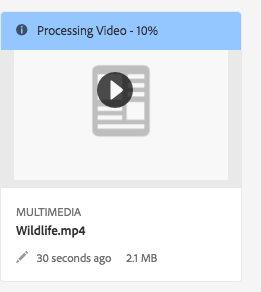
- 在卡片檢視中,視訊編碼進度會依百分比顯示在資產上。 如果發生錯誤,資產上也會顯示此資訊。
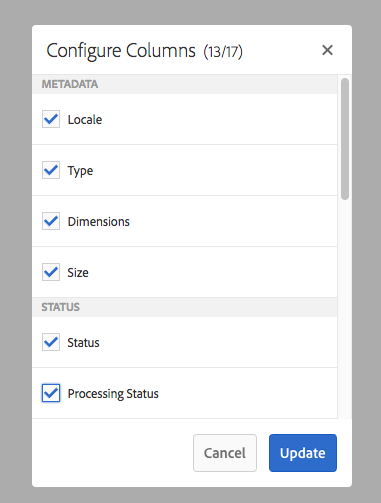
- 在清單檢視中,視訊編碼進度會顯示在 處理狀態 欄中。 如果出現錯誤,則該欄會顯示此訊息。

預設不會顯示此欄。 若要啟用欄,請從檢視下拉式功能表中選取檢視設定,然後新增 處理狀態 欄,然後按一下更新。
-
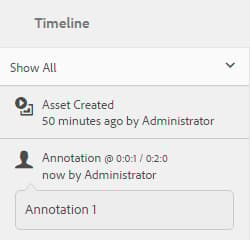
在資產詳細資料中檢視進度。 當您按一下資產時,請開啟下拉式功能表,然後選取時間軸。 若要將其縮小至工作流程活動,例如編碼或YouTube發佈,請選取工作流程。
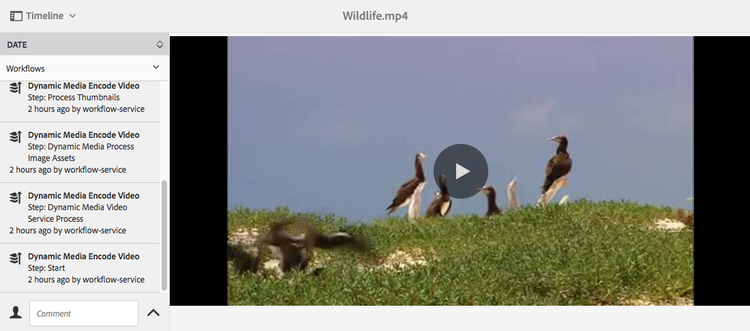
任何工作流程資訊(例如編碼)都會顯示在時間軸中。 就YouTube發佈而言,工作流程時間軸也包含YouTube頻道名稱和YouTube影片URL。 此外,發佈完成後,您會在工作流程時間軸中看到任何失敗通知。
note NOTE 由於來自https://localhost:4502/system/console/configMgr的重試、重試延遲及 逾時 有多個工作流程設定,因此最終記錄失敗/錯誤訊息可能需要較長時間,例如: - Apache Sling工作佇列設定
- Adobe Granite工作流程外部程式工作處理常式
- Granite工作流程逾時佇列
您可以調整這些組態中的重試、重試延遲和 逾時 屬性。 -
如需進行中的工作流程,請參閱「工具 >工作流程 >例項」中的「工作流程例 項」。
note NOTE 您需要管理許可權才能存取 工具 功能表。 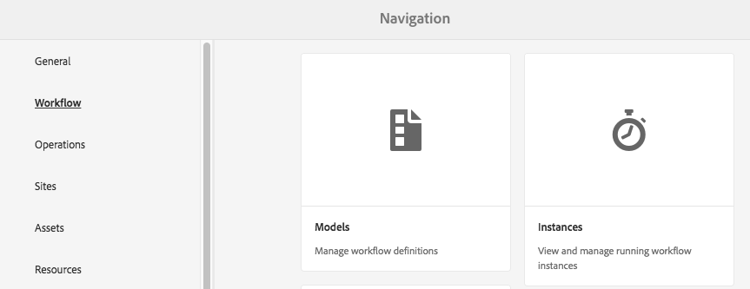
選取執行個體並選取開啟歷程記錄。
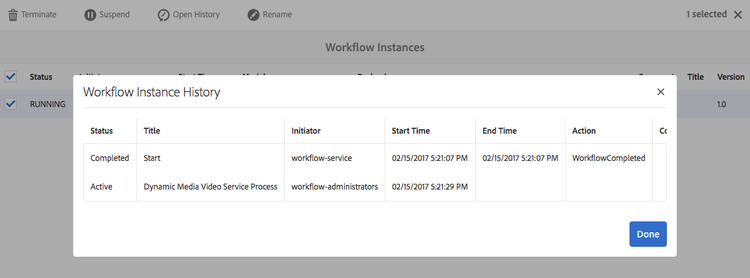
您也可以從「工作流程例證」區域暫停、終止或重新命名工作流程。 如需詳細資訊,請參閱管理工作流程。
-
有關失敗的作業,請參閱「工具」>「工作流 程」 > 「失敗 」中的「工 作流失敗 」。 「工作 流失敗 」(Workflow Failure)列出所有失敗的工作流活動。
note NOTE 您需要管理許可權才能存取 工具 功能表。 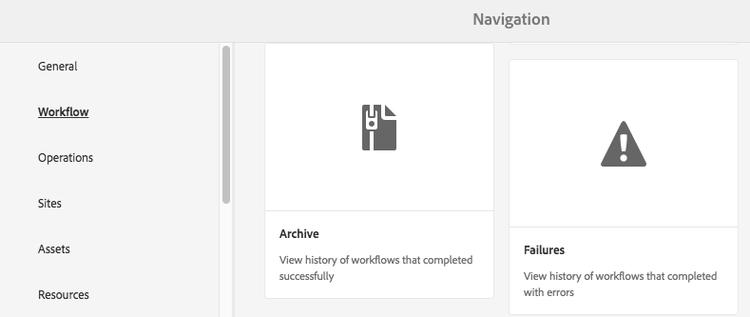
note NOTE 由於來自https://localhost:4502/system/console/configMgr的重試、重試延遲及 逾時 有多個工作流程組態,最終記錄錯誤訊息可能需要較長時間,例如: - Apache Sling工作佇列設定
- Adobe Granite工作流程外部程式工作處理常式
- Granite工作流程逾時佇列
您可以調整這些組態中的重試、重試延遲和 逾時 屬性。 -
如需完成的工作流程,請參閱「工具 >工作流程 >封存 」中的「工作流程封存」。 「工作 流程存檔 」會列出所有已完成的工作流活動。
note NOTE 您需要管理許可權才能存取 工具 功能表。 
-
您會收到有關已中止或失敗的工作流程作業的電子郵件通知。 這些電子郵件通知可由管理員設定。 請參閱設定電子郵件通知。
設定電子郵件通知 configuring-e-mail-notifications
通知的設定方式取決於您是要接收編碼作業還是YouTube發佈作業的通知:
-
針對編碼工作,您可以在工具 > 作業 > Web主控台以及搜尋Day CQ工作流程電子郵件通知服務,存取所有Experience Manager工作流程電子郵件通知的設定頁面。 請參閱在Experience Manager中設定電子郵件通知。 您可以選取或清除 中止時通知 或 完成時通知 的核取方塊。
-
針對YouTube發佈工作,請執行以下作業:
-
在Experience Manager中,選取工具 > 工作流程 > 模型。
-
在[工作流程模型]頁面上,選取[發佈至YouTube] ,然後在工具列上選取[編輯]。
-
在「發佈至YouTube」工作流程頁面的右上角附近,選取編輯。
-
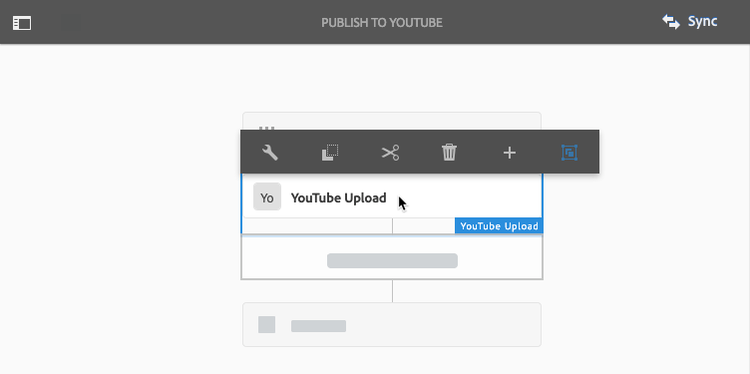
將滑鼠指標暫留在YouTube上傳元件上,然後選取一次,以顯示內嵌工具列。
-
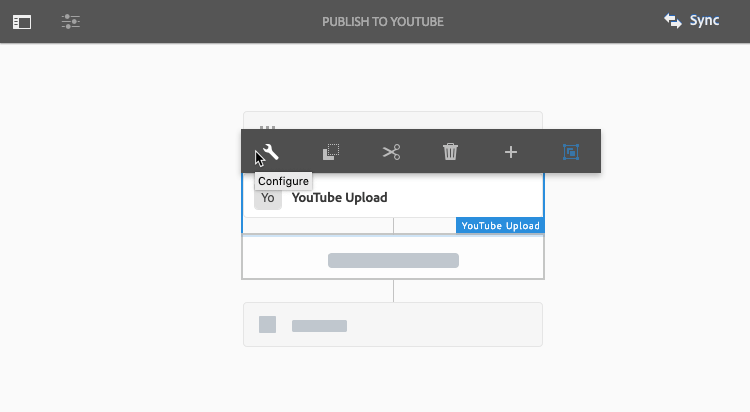
在內嵌工具列上,選取「組態」(Configuration)圖示(扳手)。 按一下 引數 標籤。
-
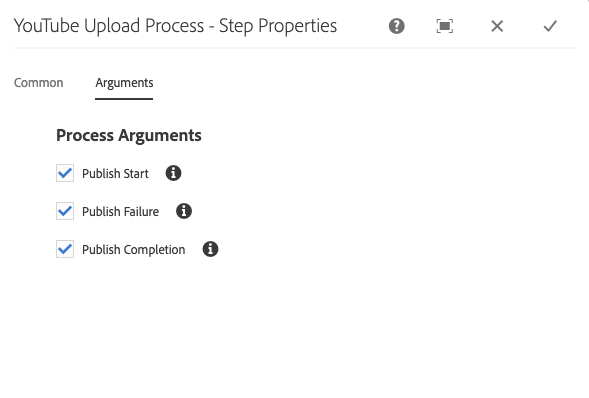
在YouTube上傳程式 — 步驟屬性對話方塊中,選取 引數 索引標籤。
-
您可以選取或清除下列核取方塊:
- 發佈開始
- 發佈失敗
- 發佈完成 — 包含管道和URL的相關資訊
清除核取方塊表示您不會從YouTube發佈工作流程收到指定的電子郵件通知。
note NOTE 這些電子郵件是特定於YouTube的,並且是一般工作流程電子郵件通知的補充。 因此,您可以收到兩組電子郵件通知 — Day CQ工作流程電子郵件通知服務中可用的通用通知,以及一組特定於YouTube的通知(視您的組態設定而定)。 -
完成後,在對話方塊的右上角附近,選取 完成 圖示(核取記號)。
-
在「發佈至YouTube」工作流程頁面的右上角,選取「同步」。
為視訊資產加上註釋 annotate-video-assets
-
從Assets主控台,選取資產卡上的 編輯 以顯示資產詳細資訊頁面。
-
若要播放視訊,請按一下[預覽]。
-
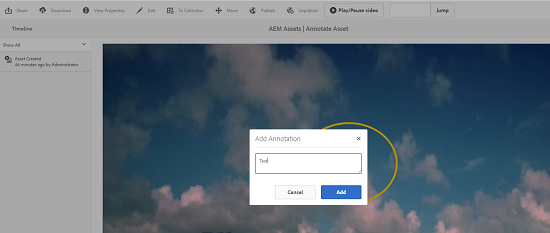
若要為視訊加上註解,請按一下加上註解。 註解會新增至視訊中的特定時間(影格)。 在註解時,您可以在畫布上繪圖,並在繪圖中包含註解。 註解會自動儲存。 若要結束註解精靈,請按一下關閉。
-
尋找視訊中的特定點,在 「文字」 欄位中指定時間 (以秒為單位),然後按一下「跳至」。 例如,若要略過前 20 秒的視訊,請在文字欄位中輸入 20。

-
若要在時間軸中檢視註釋,請按一下註釋。 若要從時間表刪除附註,請按一下刪除。