資產報表 asset-reports
資產報告可讓您評估Adobe Experience Manager Assets部署的公用程式。 透過Assets,您可以為您的數位資產產生各種報告。 這些報表提供關於您系統使用情況、使用者如何與資產互動,以及哪些資產已下載和共用的有用資訊。
使用報告中的資訊取得關鍵成功度量,以測量企業內和客戶對Assets的採用程度。
Assets報告架構使用Sling個工作,以循序方式非同步處理報告要求。 其可擴展至大型存放庫。 非同步報表處理可提高報表產生的效率和速度。
報表管理介面是直覺式的,並包含存取已封存報表和檢視報表執行狀態(成功、失敗和已排入佇列)的細微選項和控制項。
產生報表時,系統會透過電子郵件(選用)和收件匣通知來通知您。 您可以從報告清單頁面檢視、下載或刪除報告,該頁面會顯示所有先前產生的報告。
必備條件 prerequisite-for-reporting
若要產生報表,請執行下列動作:
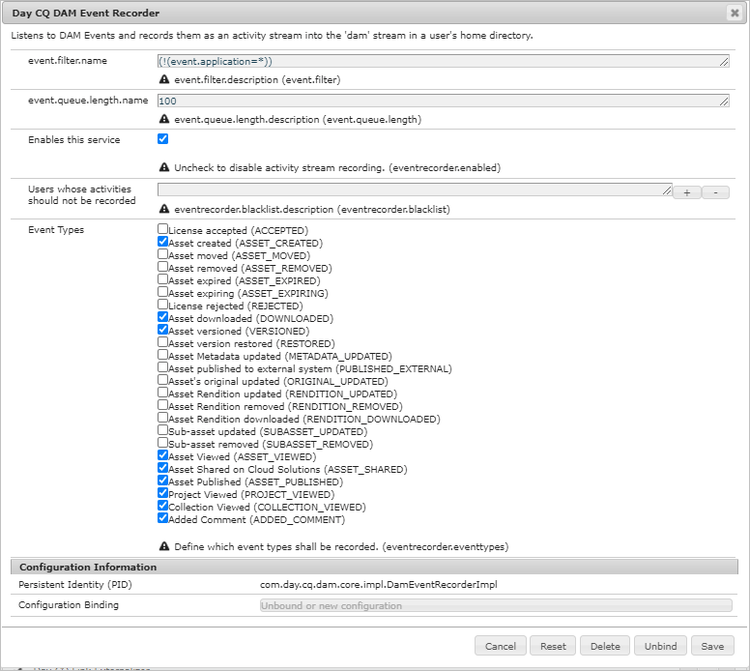
- 從工具 > 作業 > 網頁主控台啟用Day CQ DAM事件記錄器服務。
- 選取您要報告的活動或事件。 例如,若要產生已下載資產的報表,請選取已下載資產(已下載)。
產生報表 generate-reports
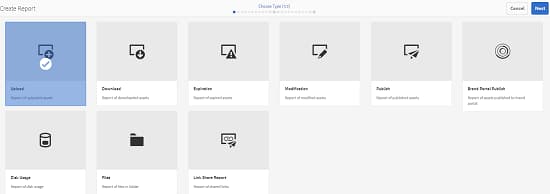
Experience Manager Assets為您產生下列標準報表:
- 上傳
- 下載
- 過期
- 修改
- 發佈
- Brand Portal發佈
- 磁碟使用情況
- 檔案
- 連結共用
Adobe Experience Manager管理員可針對您的實作輕鬆產生和自訂這些報表。 管理員可以依照下列步驟產生報表:
-
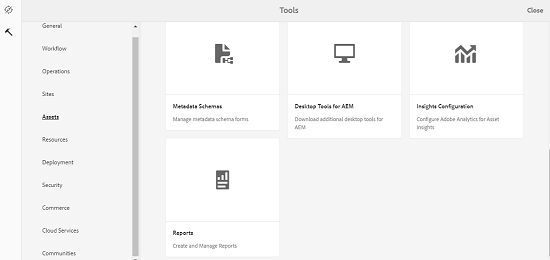
在Experience Manager介面中,按一下工具 > Assets > 報表。
-
在資產報表頁面上,按一下工具列中的建立。
-
從 建立報告 頁面,選擇要建立的報告並按一下下一步。
note NOTE 依照預設,內容片段和連結共用會包含在資產下載報表中。 選取適當的選項以建立連結共用報表,或從下載報表中排除內容片段。 note NOTE 「下載」報表只會顯示個別選取後下載的資產,或使用「快速動作」下載的資產的詳細資料。 但不包含下載資料夾內資產的詳細資訊。 -
在儲存報表的CRX存放庫中設定報表詳細資訊,例如:標題、說明、縮圖和資料夾路徑。 預設的資料夾路徑為
/content/dam。 您可以指定不同的路徑。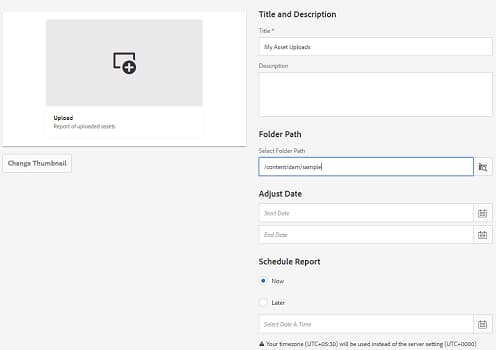
選擇報表的日期範圍。
您可以選擇現在產生報表,或在未來的日期和時間產生報表。
note NOTE 如果您選擇稍後排程報表,請務必在「日期」和「時間」欄位中指定日期和時間。 如果您未指定任何值,報表引擎會將其視為要立即產生的報表。 設定欄位可能會因您建立的報告型別而異。 例如,「磁碟使用量」報表提供選項,可在計算資產使用的磁碟空間時包含資產轉譯。 您可以選擇在子資料夾中包含或排除資產以計算磁碟使用量。
note NOTE 「磁 碟使用情況 」報表不包含日期範圍欄位,因為它僅表示目前的磁碟空間使用情況。 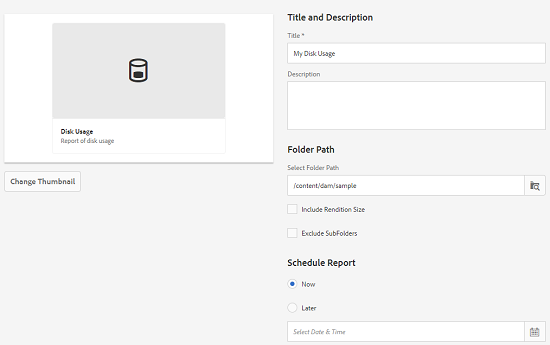
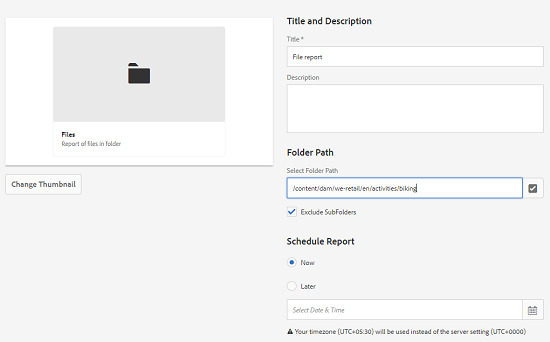
建立 檔案 報告時,您可以包含/排除子資料夾。 不過,您無法包含此報表的資產轉譯。
「連結共用」報表會顯示資產的URL,這些資產是從Assets內與外部使用者共用的。 它包含共用資產之使用者的電子郵件ID、共用資產之使用者的電子郵件ID、連結的共用日期和過期日。 欄無法自訂。
連結共用報告不包含子資料夾和轉譯的選項,因為它只會發佈顯示在
/var/dam/share下的共用URL。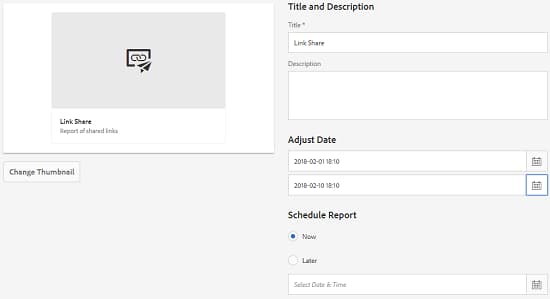
-
按一下工具列中的下一步。
-
在 設定資料行 頁面中,預設會選取報表中顯示的某些資料行。 您可以選取更多欄。 取消選取欄以在報告中將其排除。
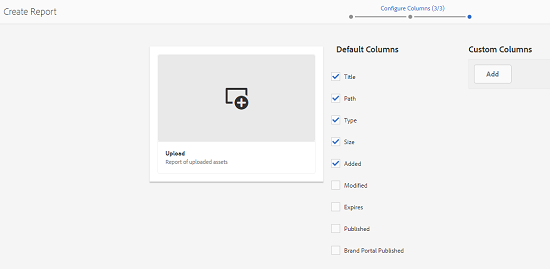
若要顯示自訂欄名稱或屬性路徑,請在CRX的
jcr:content節點下設定資產二進位檔的屬性。 或者,透過屬性路徑選擇器新增路徑。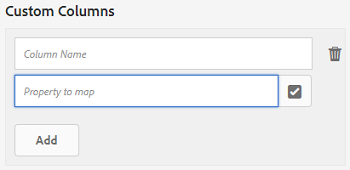
-
從工具列按一下「建立」。 訊息會通知已啟動報表產生作業。
-
在資產報表頁面上,報表產生狀態是以報表工作的目前狀態為基礎,例如成功、失敗、已排入佇列或已排程。 通知收件匣中會顯示相同的狀態。若要檢視報表頁面,請按一下報表連結。 或者,選取報告,然後按一下工具列中的檢視。
按一下工具列中的「下載」,以CSV格式下載報表。

新增自訂欄 add-custom-columns
您可以將自訂欄新增到以下報表,以顯示更多符合自訂需求的資料:
- 上傳
- 下載
- 過期
- 修改
- 發佈
- Brand Portal發佈
- 檔案
若要新增自訂欄到這些報表,請執行下列步驟:
-
在Manager interface中,按一下工具 > Assets > 報表。
-
在資產報表頁面上,按一下工具列中的建立。
-
從 建立報告 頁面,選擇要建立的報告並按一下下一步。
-
視情況設定標題、說明、縮圖、資料夾路徑和日期範圍等報表詳細資訊。
-
要顯示自定義列,請在「自定義列」下指定列 的名稱。
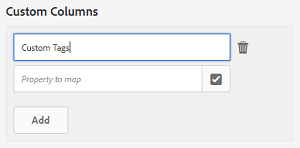
-
使用屬性路徑選擇器,在CRXDE中的
jcr:content節點下新增屬性路徑。 或者,在屬性路徑欄位中輸入路徑。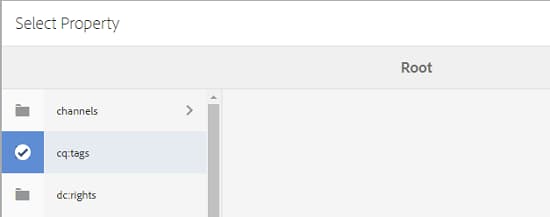
若要新增更多自訂欄,請按一下[新增] 並重複步驟5和6。
-
從工具列按一下「建立」。 訊息會通知已啟動報表產生作業。
設定清除服務 configure-purging-service
若要移除您不再需要的報表,請從Web主控台設定「DAM報表清除」服務,以根據其數量和年齡清除現有報表。
- 從
https://[aem_server]:[port]/system/console/configMgr存取Web主控台(組態管理員)。 - 開啟 DAM報告清除服務 設定。
- 在
scheduler.expression.name欄位中指定清除服務的頻率(時間間隔)。 您也可以設定報表的年齡和數量臨界值。 - 儲存變更。
疑難排解資訊、提示和限制 best-practices-and-limitations
-
如果報表中的某些報表或數字無法使用或無法如預期使用,請確定已啟用Day CQ DAM Event Recorder服務。
-
移除不再需要的報表。 使用DAM報告清除服務中的設定選項來設定清除報告的條件。
-
如果未產生「磁碟使用情況報表」,而您使用的是Dynamic Media,請確定所有資產皆已正確處理。 若要解決,請重新處理資產,然後再次產生報表。