[有限发布版]{class="badge informative"}
通过权限管理用户访问 manage-user-access
通过Experience Cloud 权限界面管理对Adobe Real-Time CDP Collaboration中各个组件的权限和用户访问权限。 权限允许系统和产品管理员定义角色来管理用户对特定功能和资源的访问权限。
配置对权限的访问 permissions-access
要获得访问权限,您必须同时拥有产品管理员和用户对Adobe Experience Platform产品的访问权限。 系统管理员需要配置产品管理员权限,而用户权限可由系统管理员或产品管理员配置。 有关管理角色的更多信息,请阅读访问控制层次结构指南。
系统管理员:配置产品管理员访问权限 admin-access
授予用户产品管理员访问权限,以便他们可通过以下步骤在Experience Platform产品中授予管理权限:
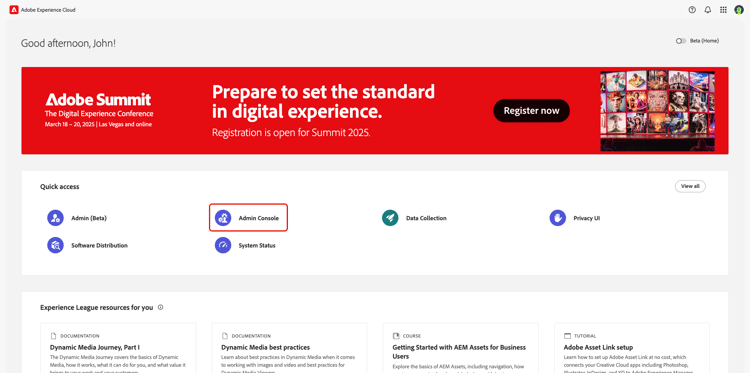
使用您的凭据登录到Adobe Experience Cloud。 主视图显示在 快速访问 部分中,其中包含可用产品的列表。 选择Admin Console。
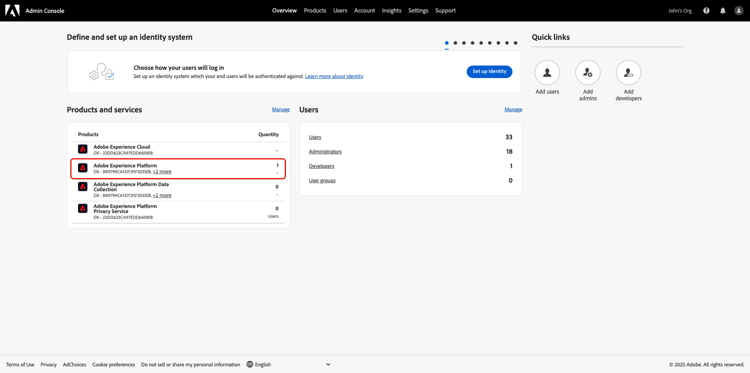
将显示Adobe Admin Console概述仪表板。 从 产品和服务 下的 产品 列表中选择Adobe Experience Platform。
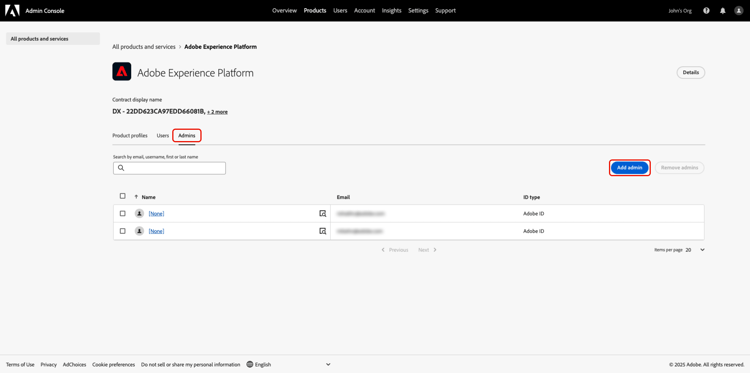
此时将显示Adobe Experience Platform功能板。 选择 管理员 选项卡,然后选择添加管理员。
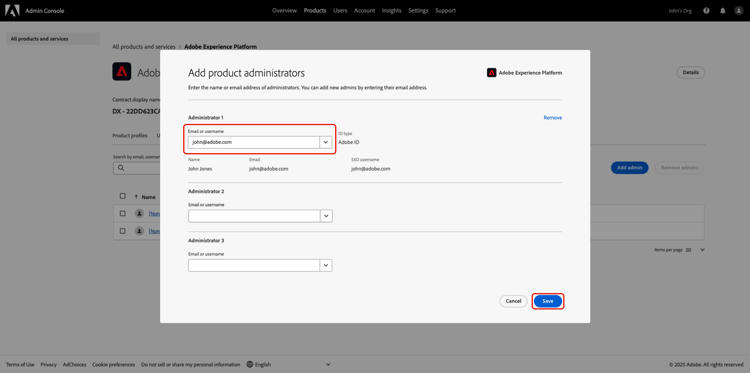
出现 添加产品管理员 对话框。 在 电子邮件或用户名 文本字段中输入用户电子邮件或用户名,然后从下拉列表中选择正确的帐户。 选择 保存 以完成将用户添加为产品管理员。
用户现在具有产品管理员权限,并且可以在Admin Console中执行管理功能,例如将用户或其他管理员添加到产品。 接下来,他们需要用户对Experience Platform产品的访问权限,才能在权限内访问和执行功能。
管理员:配置用户对Experience Platform的访问权限 user-access
现在您已授予用户产品管理员访问权限,您需要向他们提供对Experience Platform产品的用户访问权限。 作为访问配置的一部分,您将分配特定于用户的产品配置文件。
导航到Admin Console,并从 产品和服务 下的 产品 列表中选择Adobe Experience Platform。
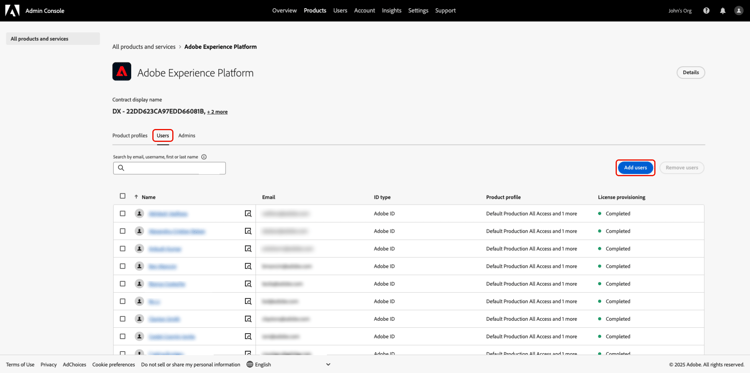
选择 用户 选项卡,然后选择添加用户。
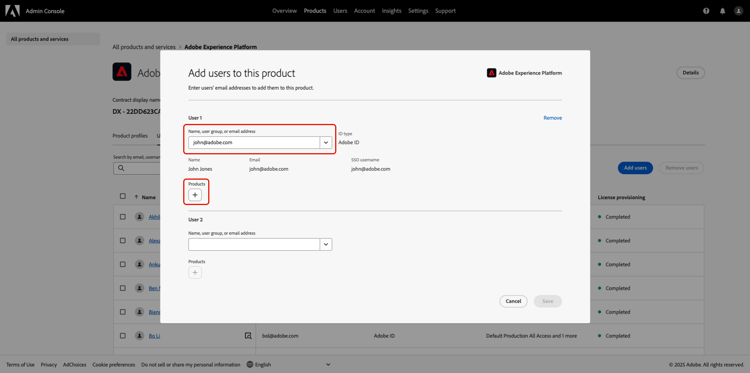
出现 将用户添加到此产品 对话框。 在 名称、用户组或电子邮件地址 文本字段中输入用户名或电子邮件,然后从下拉列表中选择正确的帐户。 接下来,选择 产品 添加选项。
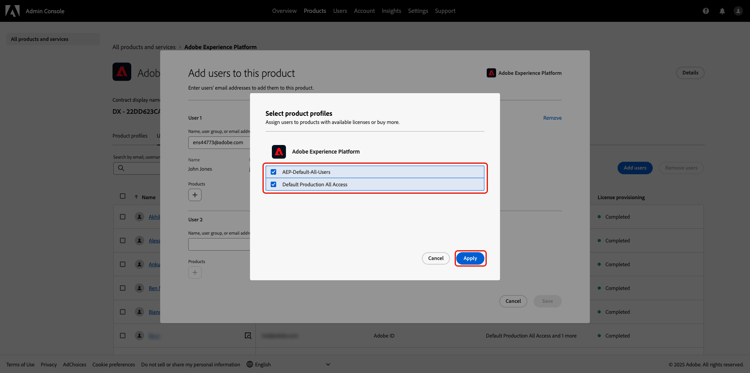
将显示 选择产品配置文件 对话框。 选择 AEP-Default-All-Users 和Default Production All Access,然后选择应用。
确认信息正确,然后选择保存。
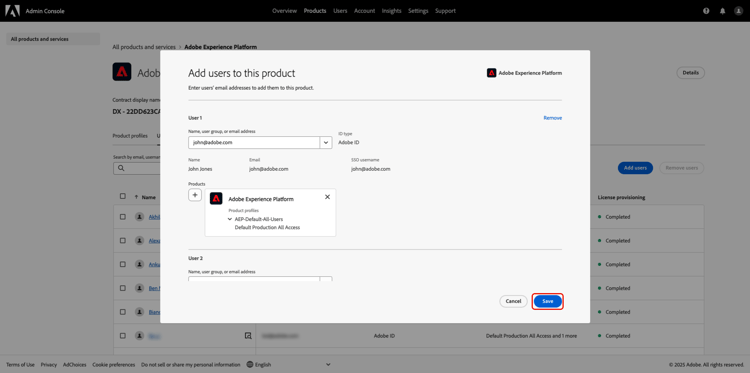
用户现在应具有产品管理员和产品对Experience Platform的访问权限,从而授予他们权限访问权限。 接下来,您需要为用户分配两个基本角色,以授予他们访问Experience Platform UI的权限。
管理员:配置Experience Platform UI访问权限 product-access
在Real-Time CDP Collaboration中,管理员和最终用户将使用Experience Platform中的数据,如受众和审核日志。 此数据保存在称为沙盒的Experience Platform实例中。 为确保用户可以与此数据交互,您需要将默认角色分配给用户。
要开始,请导航到Adobe Experience Cloud。 您现在应该会在 快速访问 中看到 Experience Platform 和权限。
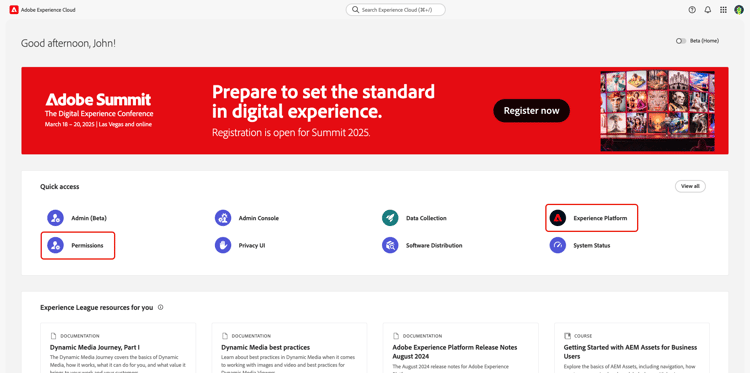
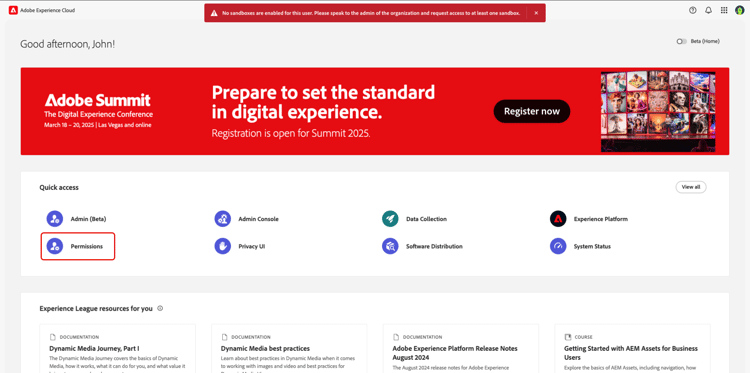
在此阶段,您现在可以访问权限。 如果尝试访问Experience Platform,您将收到一条警告,指出没有启用沙盒,如下所示。 要解决此问题,您需要为用户分配默认角色。 要开始,请选择权限。
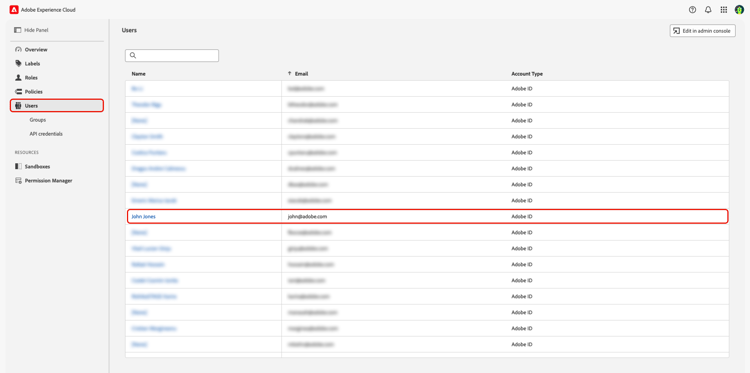
将显示 权限 仪表板。 从左侧面板中选择用户,然后选择用户的名称。
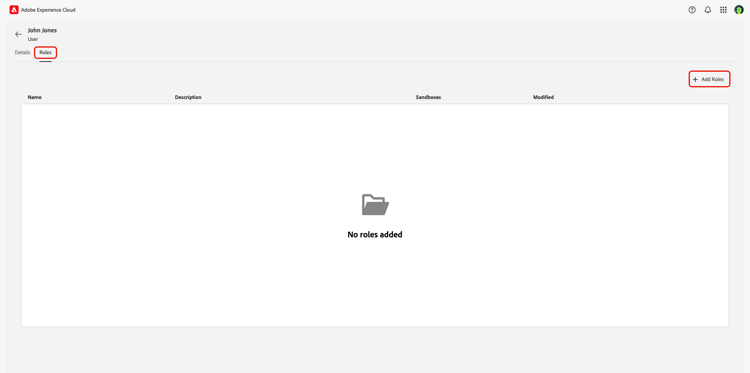
选择 角色 选项卡,然后选择添加角色。
出现 添加角色 对话框。 选择 默认的生产所有访问 和沙盒管理员,然后选择保存。
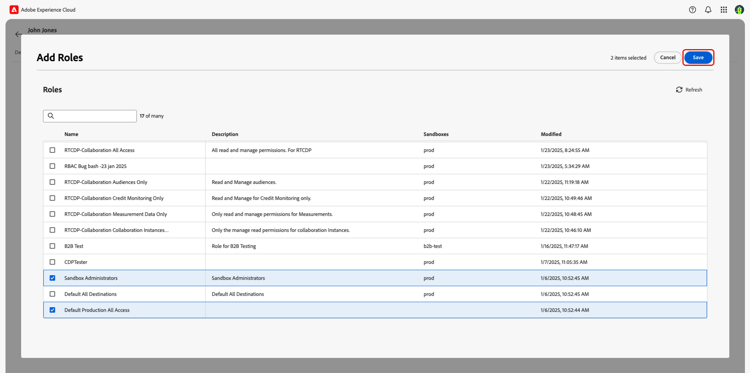
You now have access to Experience Platform and Permissions. In the final step, you’ll grant access to Real-Time CDP Collaboration.
管理员:配置 Real-Time CDP Collaboration 访问权限 RTCDP-collaboration-access
To grant users access to Collaboration, you’ll use an access control concept called roles. Roles define the level of access a administrator or user has to resources in your organization.
When configuring individual access to Collaboration, you’ll assign users’ roles containing permissions from the Collaborations resource. You can use the manage roles guide to find out information on:
- the two standard roles and the levels of access they grant to Collaboration
- creating custom roles using the Collaboration resource
- the list of permissions included in the Collaborations resource
Once you’ve chosen or created a role that encompasses the level of access your user needs, you need to assign the user to that role.
Assign a role
You may assign multiple roles to a single user or assign multiple users to a single role. The first case was covered earlier when assigning the default roles to give a user access to Experience Platform. In the next steps, you’ll assign users directly to the role you’ve selected.
In Permissions select Roles from the left panel and then select your role from the list.
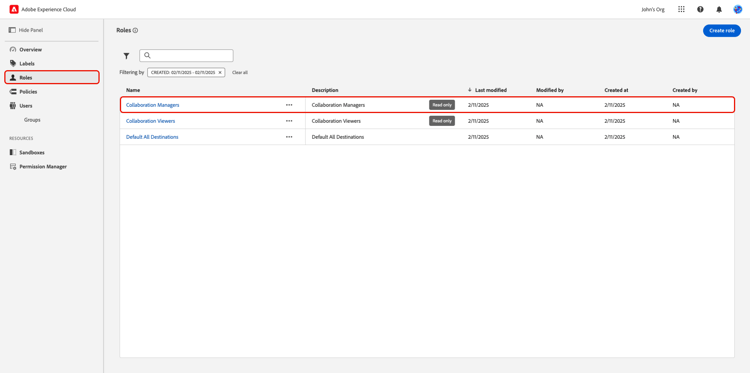
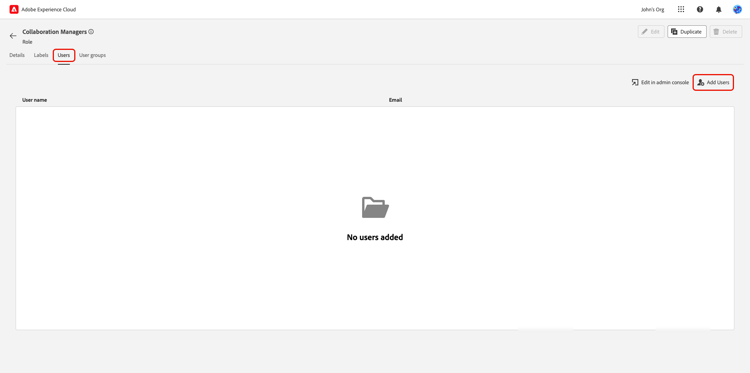
The role’s detail page displays. Select the Users tab and then select Add Users.
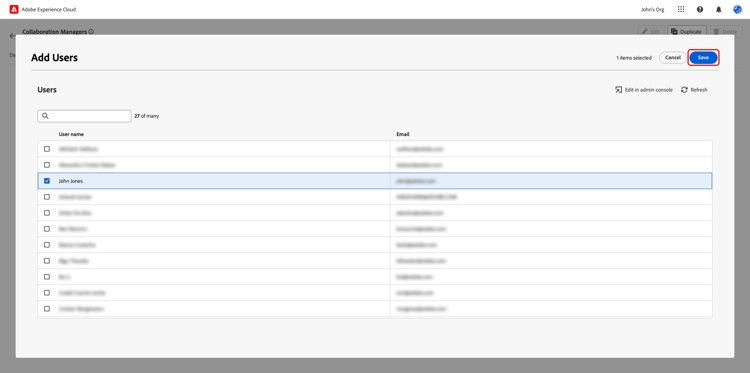
The Add Users dialog appears. Select the user(s) from the list and then select Save.
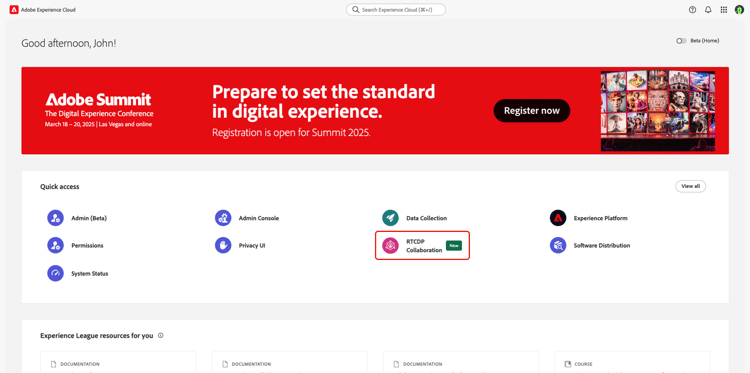
The user should now see RTCDP Collaboration listed as a product under Quick Access in Experience Cloud.
后续步骤
Now that users have access to Real-Time CDP Collaboration, they can begin using the product. To learn more about the product as a whole, read the overview guide.