在此页面上:了解如何使用Jump活动将个人从一个历程推送到另一个历程,从而简化复杂的设计和构建可重用的通用历程模式。
跳转操作活动允许您将个人从一个历程推送到另一个历程。 此功能允许您:
- 通过将非常复杂的历程分成若干个历程来简化其设计
- 基于通用且可重用的历程模式构建历程
在起源历程中,添加 跳转 活动并选择目标历程。 当个人进入 跳转 步骤时,内部事件将发送到目标历程的第一个事件。 如果 跳转 操作成功,个人将继续在历程中前进。 该行为与其他操作类似。
在目标历程中,跳转活动在内部触发的第一个事件在历程中生成单个流。
生命周期 jump-lifecycle
假设您在历程A中为历程B添加了 跳转 活动。历程A是起源历程,历程B是目标历程。
以下是执行过程的不同步骤:
历程A是从外部事件触发的:
- 历程A接收与个人相关的外部事件。
- 个人达到 跳转 步骤。
- 个人将被推送到历程B,并在 跳转 步骤后进入历程A中的后续步骤。
在历程B中,第一个事件通过历程A中的 跳转 活动在内部触发:
- 历程B接收来自旅程A的内部事件。
- 个人开始在历程B中流动。
跳转期间的配置文件行为 jump-profile-behavior
当个人资料到达 跳转 步骤时,它在原始历程(历程A)中继续前进,同时进入目标历程(历程B)。 因此,用户档案在两个历程中同时处于活动状态。
这意味着:
- 在“跳转”活动后,用户档案将完成历程A中的所有剩余步骤(例如,跟进等待或关闭操作)。
- 该配置文件还开始从历程B的第一事件开始流过历程B,而不依赖于事件A。
- 执行跳转时,如果配置文件在历程B中处于 活动 状态,则它将 不会 再次进入历程B。 历程A正常继续;未报告错误。
最佳实践和限制 jump-limitations
使用这些准则可保证跳转活动行为的可预测性和安全性。
创作 jump-limitations-authoring
-
命名空间要求: 跳转活动仅适用于使用命名空间的历程。 您只能跳转到使用与起源历程相同的命名空间的历程。
-
目标历程约束:您无法跳转到以 受众资格 事件或 读取受众 开始的历程。
-
受众资格支持(渐进式转出):如果历程以受众资格开始,并且跳转重定向到基于事件的开始历程,则可以在同一历程中具有 跳转 活动和 受众资格 事件。 此功能正在逐步推出。 如果您在环境中没有看到此内容,可能是因为您仍在受众资格中使用批量受众。
-
读取受众限制:您无法在同一历程中拥有 跳转 活动和 读取受众 事件。
-
多个跳转:您可以在历程中包含所需数量的跳转 跳转 活动。 执行 跳转 后,您可以添加任何需要的活动。 您可以根据需要设置任意数量的跳转级别(例如,历程A跳转到历程B,然后跳转到历程C)。 目标历程还可以包含所需数量的跳转 跳转 活动。
-
循环防止:不支持循环模式。 无法将两个或更多历程链接在一起,从而导致无限循环。 跳转活动配置屏幕阻止您执行此操作。
执行 jump-limitations-exec
- 执行 跳转 活动时,将触发目标历程的最新版本。
- 同一个历程中只能出现一次独特个人。 因此,如果从起源历程推送的个人已在目标历程中,则该个人将不会进入目标历程。 跳转活动不会报告任何错误,因为这是正常行为。
设计策略:小型子历程 jump-strategy
复杂的客户历程可能会迅速变得难以构建和维护,尤其是在引入其他渠道或接触点的情况下。 即使是具有几个里程碑的历程,也可能暴露客户可以采用的20个或更多独特路径,并且复杂性会随着每次添加呈指数增长。
管理此问题的实用方法是将大型历程分解为更小、更集中的子历程(每个业务阶段或里程碑一个),并使用 跳转 活动将其连接。 这使得每个历程都可以读取、测试和独立维护。
步骤1 — 可视化端到端历程
绘制整个客户历程并确定其高级阶段。 例如,忠诚度入门培训历程可能包括三个不同的阶段:下载移动应用程序、进行第一次交易、进行第二次交易。
步骤2 — 为阶段添加注释并定义子历程
标记每个阶段的边界并定义其业务目标。 每个阶段都成为具有明确进入条件和目标的候选子历程。
步骤3 — 生成并连接子历程
在Journey Optimizer中将每个阶段构建为单独的历程,然后使用 跳转 活动将配置文件从一个子历程传递到下一个子历程。 结果是形成一组更简单、可重用的历程,这些历程结合起来产生完整的端到端体验,并降低出现错误的风险。
配置跳转活动 jump-configure
-
设计您的起源历程。
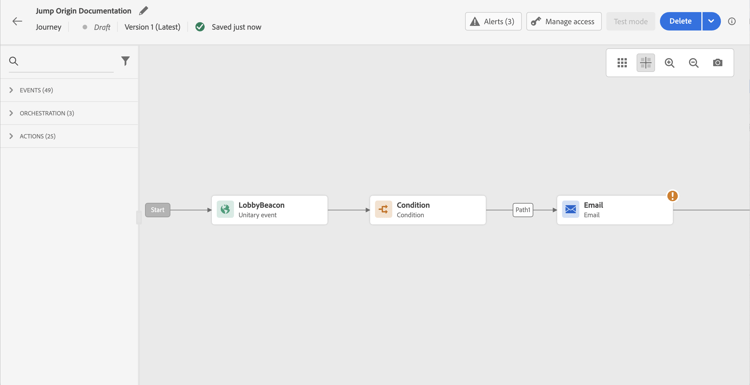
-
在历程的任何步骤,从 ACTIONS 类别添加 跳转 活动。 添加标签和描述。
跳转活动配置中的
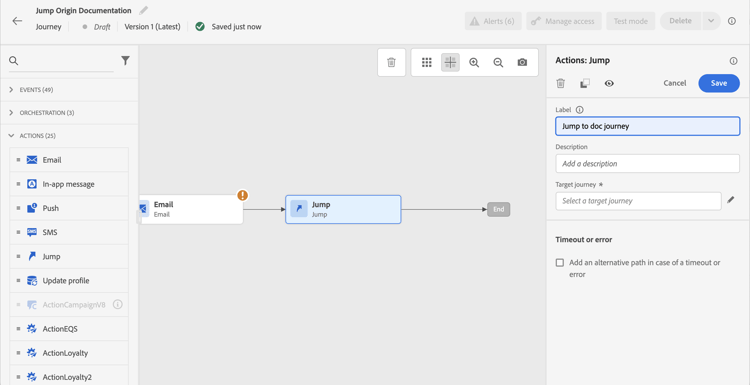
-
在 目标历程 字段中单击。
列表会显示草稿、实时或测试模式中的所有历程版本。 使用其他命名空间或以 读取历程 事件开头的受众不可用。 以 受众资格 事件开始的历程仅在您的原始历程也以Audience Qualification开始时才可用(贵组织中新的Audience Qualification节点已弃用批量受众)。 还会过滤掉会创建循环模式的目标历程。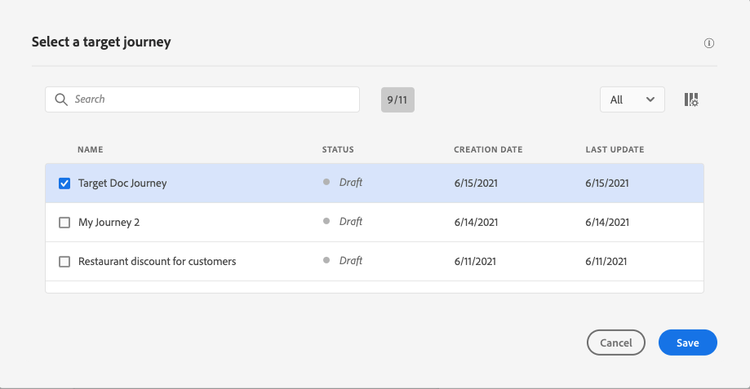
note NOTE 您可以单击右侧的 打开目标历程 图标,以在新选项卡中打开目标历程。 -
选择要跳转到的目标历程。
First event字段已使用目标历程第一个事件的名称预填充。 如果您的目标历程包含多个事件,则仅在第一个事件上允许跳转。使用表达式编辑器为跳转活动配置
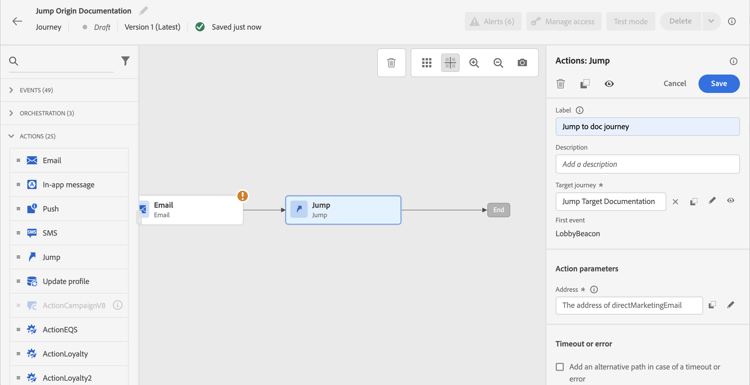
-
操作参数部分显示目标事件的所有字段。 使用来自源事件或数据源的字段映射每个字段,与其他类型的操作一样。 此信息将在运行时传递到目标历程。
-
添加后续活动以完成您的起源历程。
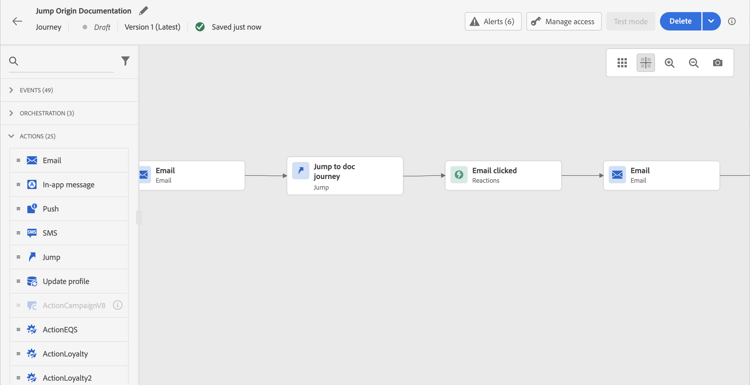
note NOTE 个人身份会自动映射。 此信息在界面中不可见。
您的 跳转 活动已配置。 一旦您的历程处于实时或测试模式,达到 跳转 步骤的个人将被推送到目标历程。
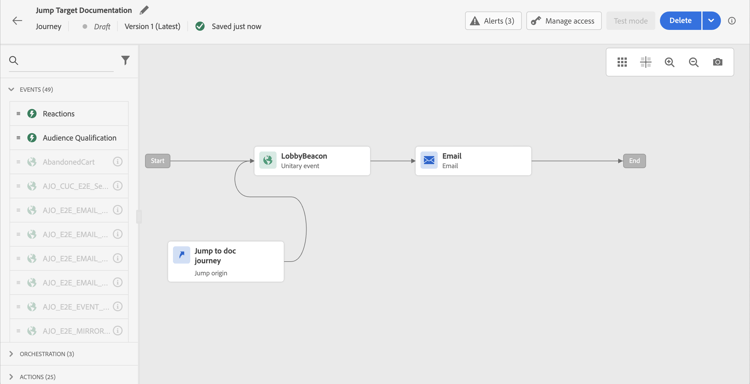
当在历程中配置 跳转 活动时,将在目标历程的开头自动添加 跳转 条目图标。 这有助于您确定历程既可以从外部触发,也可以从内部从 跳转 活动触发。
疑难解答 jump-troubleshoot
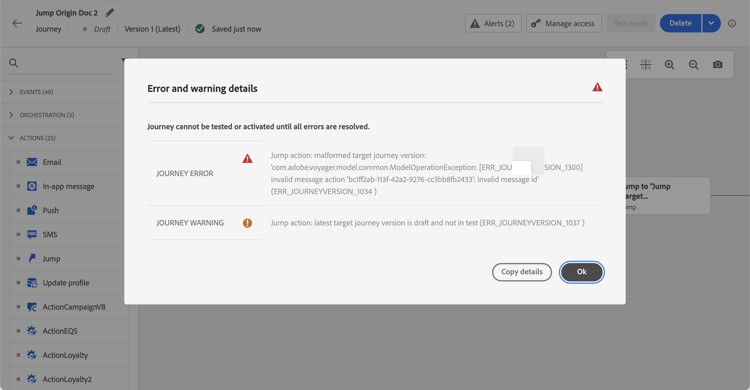
配置错误
以下问题会导致跳转无法正常工作,并在历程画布中显示为错误:
- 目标历程不再存在。
- 目标历程是草稿、已关闭或已停止。
- 目标历程的第一个事件已更改,映射已损坏。
运行时失败
在以下情况下,跳转步骤在历程A中视为失败的操作。历程A应用标准的操作错误处理并继续:
- 现有目标历程实例已终止,并且目标历程不可重入。
- 目标历程上配置了重新进入时段。 即使原则上允许重新进入,在期间过去之前,配置文件也无法重新进入(跳转失败并显示“期间的非重新进入”状态)。
- 找不到目标历程版本、该版本已被删除、处于完成状态或已停止。
本节包含结构化知识,用于支持与本主题相关的解释、检索和问答。
要全面了解相关信息,应将此信息与本页上的文档相结合。 这两个源都不是独立的;页面描述了功能,而本节提供了其他上下文来帮助消除术语、意图、适用性和约束条件的歧义。
- TL;DR:本页介绍了“跳转”活动,该活动可将配置文件从一个历程推送到另一个历程,以通过可重用的子历程模式来简化复杂的历程设计。
意图:
- 使用跳转活动将用户档案从起源历程传输到目标历程
- 将复杂历程分解为通过Jump活动连接的更小的、可管理的子历程
- 通过选择目标历程和映射操作参数来配置跳转活动
- 了解执行跳转时的用户档案行为(两个历程中的用户档案同时处于活动状态)
- 排除Jump配置错误和运行时故障
- 将多个历程与跳转活动链接时,避免出现循环模式
术语表:
- 跳转活动:操作活动,它将内部事件发送到目标历程的第一个事件,从而导致配置文件开始流经该历程。 (产品特定)
- 起源历程:包含跳转活动并启动将用户档案传输到另一个历程的历程。 (产品特定)
- 目标历程:通过跳转活动的内部事件触发器接收配置文件的历程。 (产品特定)
- 静默跳过:跳转时配置文件在目标历程中处于活动状态时的行为 — 跳转无错误跳过,并且起源历程正常继续。 (产品特定)
护栏:
- 跳转活动仅适用于使用命名空间的历程;源历程和目标历程必须共享相同的命名空间
- 无法跳转到以受众资格事件或读取受众开始的历程
- 无法在同一历程中使用跳转活动和读取受众事件
- 仅当历程以受众资格开始并跳转到基于事件的历程(取决于功能标志转出)时,才能在同一历程中使用跳转活动和受众资格事件
- 不支持循环模式(循环历程链),配置UI会阻止这些模式
- 在运行时,触发目标历程的最新实时版本
- 同一历程中一次只能出现一次用户档案;如果在目标历程中已经处于活动状态,则会自动跳过跳转
- 如果目标历程是草稿、已关闭、已停止、已删除或其第一个事件映射已损坏,则跳转会导致配置错误
术语:
- 规范名称:跳转活动 — 缩写:none — 变体:跳转操作,历程跳转
- 同义词: “origin journey” = “source journey”; “target journey” = “destination journey”
- 请勿混淆:“静默跳过”≠“运行时失败” — 当配置文件已在目标历程中时,会发生静默跳过(未引发错误);当目标历程不可到达或不可重入时,会发生运行时失败(被视为失败的操作)
常见问题解答:
- 问:跳转后原始历程中的用户档案会发生什么情况? — 在跳转步骤之后,用户档案在同时进入目标历程的同时继续完成起源历程中的剩余步骤;它在两个历程中同时处于活动状态。
- 问:我是否可以跳转到“读取”受众历程? — 否;您无法跳转到以读取受众事件开始的历程。 您也无法跳转到以受众资格事件开始的历程。 但是,如果您的起源历程以受众资格事件开始,则可以跳转到基于事件的历程(此功能正在逐步推出,可能尚未在所有组织中提供)。
- 问:执行跳转时触发目标历程的是什么? — 跳转活动将内部事件发送到目标历程的第一个事件;然后,用户档案从该第一个事件流过目标历程。
- 问:将历程与跳转链接时,我如何防止无限循环? — 跳转活动配置UI阻止了循环模式,该UI会过滤掉会创建循环链的目标旅程。
- 问:跳转触发了目标历程的哪个版本? — 目标历程的最新实时(或测试模式)版本在运行时触发。