Analytics for Advertising的JavaScript代码
仅使用Advertising DSP的广告商
对于Advertising DSP,Analytics for Advertising集成跟踪显示到达和点进网站交互。 点进访问由您网页上的标准Adobe Analytics代码进行跟踪;Analytics代码捕获登陆页面URL中的AMO ID和EF ID参数,并在它们各自的保留eVars中跟踪它们。 您可以通过在网页中部署JavaScript代码片段来跟踪浏览访问。
在访问网站后的第一个页面查看中,Adobe Advertising JavaScript代码会检查访客以前是否查看过或点击过广告。 如果用户之前通过点进进入网站或者没有看到广告,则会忽略该访客。 如果访客在Adobe Advertising中设置的点击回顾窗口期间看到广告而没有通过点进进入网站,则Adobe Advertising JavaScript代码a)使用Experience Cloud ID服务生成补充ID (SDID),或b)使用Adobe Experience Platform Web SDK generateRandomID方法生成StitchID。 其中任一ID都用于将来自Adobe Advertising的数据拼接到访客的Adobe Analytics点击。 然后,Adobe Analytics查询Adobe Advertising以了解与广告曝光度相关的AMO ID和EF ID。 随后,AMO ID和EF ID将填充到它们各自的eVars中。 这些值会在指定的时间段内保留(默认情况下,为60天)。
Analytics使用EF ID作为键,每小时将网站流量量度(例如页面查看次数、访问次数和逗留时间)和任何Analytics自定义或标准事件发送到Adobe Advertising。 然后,这Analytics个量度将通过Adobe Advertising归因系统运行,以将转化连接到点击和曝光历史记录。
部署JavaScript代码
JavaScript库由两行组成,允许Analytics和Adobe Advertising相互通信。 如果Analytics for Advertising集成已在Adobe Advertising实施期间完成,则您应该已经收到此代码,其中包含有关如何部署此代码的说明。
代码
使用Adobe访客ID服务visitorAPI.js代码的实施
<script src="https://www.everestjs.net/static/le/last-event-tag-latest.min.js">
<script>
     if("undefined" != typeof AdCloudEvent)
          AdCloudEvent('IMS ORG Id','rsid');
</script>
使用Experience Platform Web SDK alloy.js代码的实施
<script src="https://www.everestjs.net/static/le/last-event-tag-latest.min.js">
<script>
     if("undefined" != typeof AdCloudEvent)
          stitchId = AdCloudEvent('IMS ORG Id','rsid').generateRandomId();
</script>
代码放置位置
Analytics for Advertising JavaScript函数必须在Experience Cloud ID服务之后、Analytics App Measurement代码之前。 这可以确保在您的Analytics调用中包含补充ID (SDID)或StitchID。
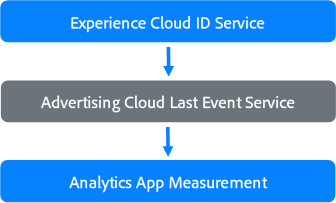
验证代码部署
您可以使用任何数据包探查器类型的工具(如Charles、Fiddler或Chrome Developer Tools)执行验证,方法是比较发往Adobe Advertising的请求和发往Analytics的请求之间的四个ID的值,如下所述。
如何使用Chrome Developer Tools确认代码 validate-js-chrome
-
打开Chrome Developer Tools并单击 网络 选项卡。
-
加载包含Analytics for Advertising JavaScript的网站页面。
-
按
last筛选Network选项卡并查看两行: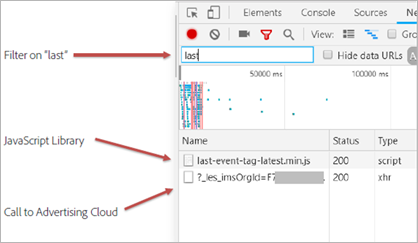
-
第一行是对JavaScript库的调用,标题为
last-event-tag-latest.min.js。 -
第二行是将请求发送到Adobe Advertising的调用。 其开头如下:
_les_imsOrgId=[your_imsOrgId_here]&_les_url=[your_encoded_url]如果您没有看到对Adobe Advertising的调用,则该调用可能不是您访问的第一个页面查看。 出于测试目的,您可以删除Cookie,以便下次调用是相应访问的第一个页面查看:
- 在“应用程序”选项卡上,找到
adcloudCookie,并验证Cookie是否包含值为y的_les_v(上次访问)以及30分钟后过期的UTC纪元时间戳。- 删除
adcloudCookie并刷新页面。
- 删除
-
-
(使用Adobe访客ID服务
visitorAPI.js代码的实施)筛选/b/ss以查看Analytics点击。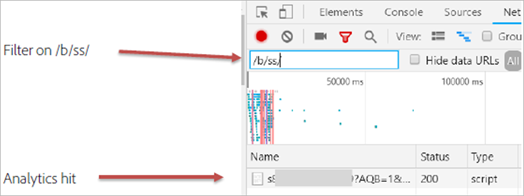
-
(使用Experience Platform Web SDK
alloy.js代码的实施)在/interact上筛选以验证发送到Edge Network的请求有效负载是否包含advertisingStitchID。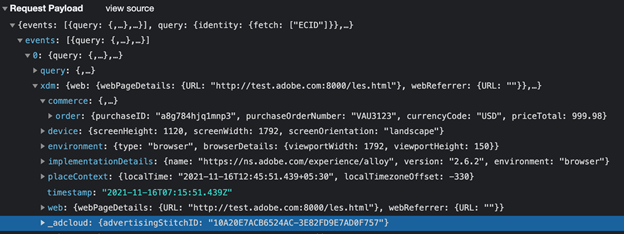
-
比较两次点击之间的ID值。 所有值都应位于查询字符串参数中,但Analytics点击中的报表包ID(紧接
/b/ss/之后的URL路径)除外。table 0-row-4 1-row-4 2-row-4 3-row-4 4-row-4 5-row-4 ID Analytics参数 Edge Network Adobe Advertising参数 Experience Cloud IMS组织 mcorgid_les_imsOrgid补充数据ID sdid _les_sdid拼接ID stitchId _adcloud属性下的advertisingStitchIDAnalytics报表包 /b/ss/之后的值_les_rsidExperience Cloud访客ID mid _les_mid如果ID值匹配,则会确认JavaScript实施。 Adobe Advertising向Analytics服务器发送任何点进或浏览跟踪详细信息(如果存在)。
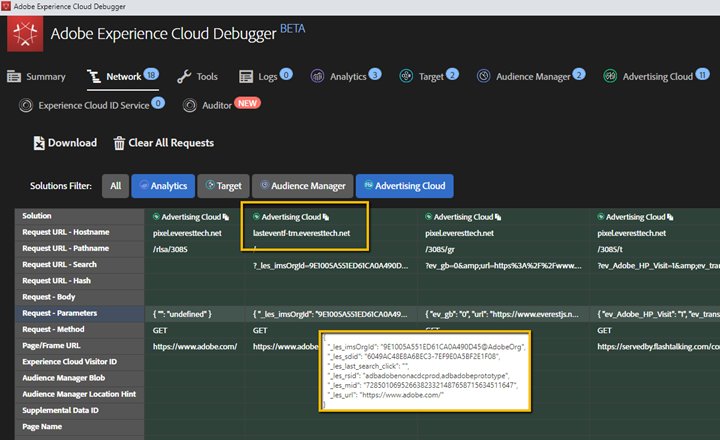
如何使用Adobe Experience Platform Debugger确认代码
-
转到Network选项卡。
-
在Solutions Filter工具栏中,单击Adobe Advertising和Analytics。
-
在Request URL - Hostname参数行中,找到
lasteventf-tm.everesttech.net。 -
在Request - Parameters行中,审核生成的信号,类似于“如何使用 Chrome Developer Tools确认代码”中的步骤3。
- (使用Adobe访客ID服务
visitorAPI.js代码的实施)确保Sdid参数与Adobe Analytics筛选器中的Supplemental Data ID匹配。 - (使用Experience Platform Web SDK
alloy.js代码的实施)确保advertisingStitchID参数的值与发送到Experience Platform Edge Network的Sdid匹配。 - 如果代码未生成,则检查以确保已在Application选项卡中删除Adobe Advertising Cookie。 删除页面后,请刷新页面并重复此过程。
- (使用Adobe访客ID服务