SPA 통합 integrate-spa
- Headless 콘텐츠를 시각적으로 편집하기 위한 범용 편집기
- Headless 콘텐츠의 양식 기반 편집을 위한 콘텐츠 조각 편집기
Angular으로 작성된 단일 페이지 애플리케이션(SPA)의 소스 코드를 Adobe Experience Manager(AEM) 프로젝트와 통합하는 방법에 대해 알아봅니다. Webpack 개발 서버와 같은 최신 프론트엔드 도구를 사용하여 AEM JSON 모델 API에 대해 SPA를 신속하게 개발하는 방법에 대해 알아봅니다.
목표
- SPA 프로젝트가 클라이언트측 라이브러리와 함께 AEM과 통합되는 방법을 이해합니다.
- 전용 프론트엔드 개발을 위해 로컬 개발 서버를 사용하는 방법을 알아봅니다.
- AEM JSON 모델 API에 대한 개발을 위해 프록시 및 정적 mock 파일의 사용을 살펴봅니다
빌드 결과물
이 장에서는 간단한 Header 구성 요소를 SPA에 추가합니다. 이 정적 Header 구성 요소를 빌드하는 과정에서 AEM SPA 개발에 대한 몇 가지 접근 방식이 사용됩니다.
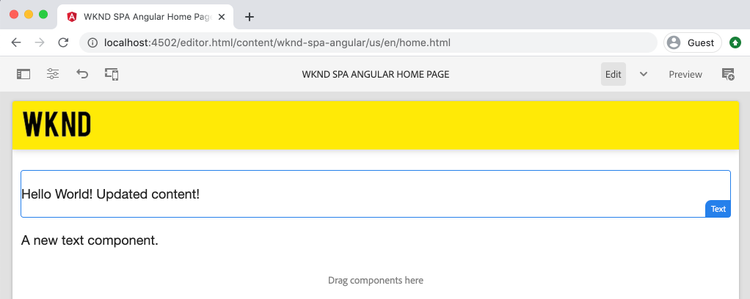
SPA가 확장되어 정적 Header 구성 요소를 추가합니다
사전 요구 사항
로컬 개발 환경을 설정하는 데 필요한 도구와 지침을 검토합니다.
코드 가져오기
-
Git을 통해 이 자습서의 시작점을 다운로드하십시오.
code language-shell $ git clone git@github.com:adobe/aem-guides-wknd-spa.git $ cd aem-guides-wknd-spa $ git checkout Angular/integrate-spa-start -
Maven을 사용하여 로컬 AEM 인스턴스에 코드 베이스를 배포합니다.
code language-shell $ mvn clean install -PautoInstallSinglePackageAEM 6.x을(를) 사용하는 경우
classic프로필을 추가하십시오.code language-shell $ mvn clean install -PautoInstallSinglePackage -Pclassic
GitHub에서 완성된 코드를 항상 보거나 Angular/integrate-spa-solution 분기로 전환하여 로컬에서 코드를 확인할 수 있습니다.
통합 접근 방식 integration-approach
두 개의 모듈이 AEM 프로젝트의 일부로 만들어졌습니다. ui.apps 및 ui.frontend.
ui.frontend 모듈은 모든 SPA 소스 코드를 포함하는 webpack 프로젝트입니다. SPA 개발 및 테스트의 대부분은 Webpack 프로젝트에서 수행됩니다. 프로덕션 빌드가 트리거되면 SPA가 Webpack을 사용하여 빌드되고 컴파일됩니다. 컴파일된 아티팩트(CSS 및 Javascript)는 ui.apps 모듈에 복사된 다음 AEM 런타임에 배포됩니다.
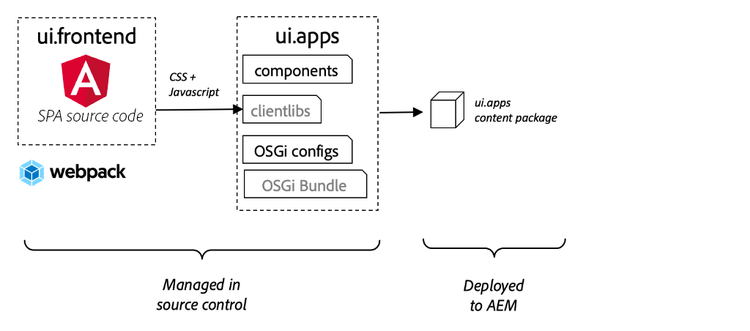
SPA 통합에 대한 높은 수준의 설명입니다.
프론트엔드 빌드에 대한 추가 정보는 여기에서 찾을 수 있음.
SPA 통합 검사 inspect-spa-integration
그런 다음 ui.frontend 모듈을 검사하여 AEM Project Archetype에서 자동으로 생성된 SPA를 이해합니다.
-
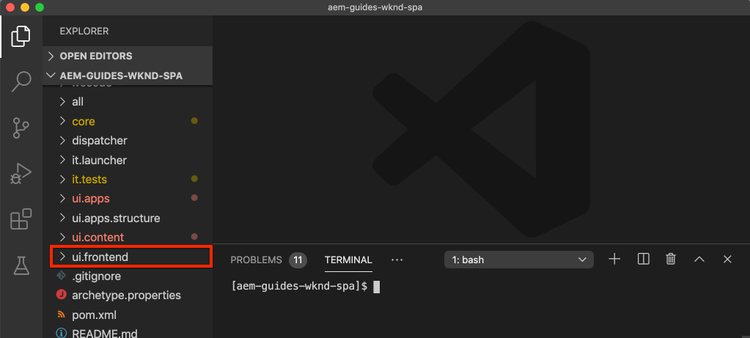
선택한 IDE에서 WKND SPA에 대한 AEM 프로젝트를 엽니다. 이 자습서에서는 Visual Studio 코드 IDE를 사용합니다.
-
ui.frontend폴더를 확장하고 검사합니다.ui.frontend/package.json파일을 엽니다. -
dependencies에서@angular과(와) 관련된 몇 가지 항목을 볼 수 있습니다.code language-json "@angular/animations": "~9.1.11", "@angular/common": "~9.1.11", "@angular/compiler": "~9.1.11", "@angular/core": "~9.1.11", "@angular/forms": "~9.1.10", "@angular/platform-browser": "~9.1.10", "@angular/platform-browser-dynamic": "~9.1.10", "@angular/router": "~9.1.10",ui.frontend모듈은 라우팅이 포함된 Angular CLI 도구를 사용하여 생성된 Angular 응용 프로그램입니다. -
@adobe접두사가 있는 세 개의 종속성도 있습니다.code language-json "@adobe/cq-angular-editable-components": "^2.0.2", "@adobe/cq-spa-component-mapping": "^1.0.3", "@adobe/cq-spa-page-model-manager": "^1.1.3",위의 모듈은 AEM SPA Editor JS SDK을(를) 구성하고 SPA 구성 요소를 AEM 구성 요소에 매핑할 수 있는 기능을 제공합니다.
-
package.json파일에 여러scripts이(가) 정의되어 있습니다.code language-json "scripts": { "start": "ng serve --open --proxy-config ./proxy.conf.json", "build": "ng lint && ng build && clientlib", "build:production": "ng lint && ng build --prod && clientlib", "test": "ng test", "sync": "aemsync -d -w ../ui.apps/src/main/content" }이러한 스크립트는 일반적인 Angular CLI 명령을 기반으로 하지만 좀 더 큰 AEM 프로젝트에서 작동하도록 약간 수정되었습니다.
start- 로컬 웹 서버를 사용하여 로컬로 Angular 앱을 실행합니다. 로컬 AEM 인스턴스의 콘텐츠를 프록시하도록 업데이트되었습니다.build- 프로덕션 배포를 위해 Angular 앱을 컴파일합니다.&& clientlib을(를) 추가하면 빌드 중에 컴파일된 SPA를 클라이언트측 라이브러리로ui.apps모듈에 복사됩니다. 이 작업을 용이하게 하기 위해 npm 모듈 aem-clientlib-generator을(를) 사용합니다.사용 가능한 스크립트에 대한 자세한 내용은 여기를 참조하세요.
-
ui.frontend/clientlib.config.js파일을 검사합니다. 이 구성 파일은 aem-clientlib-generator에서 클라이언트 라이브러리를 생성하는 방법을 결정하는 데 사용됩니다. -
ui.frontend/pom.xml파일을 검사합니다. 이 파일은ui.frontend폴더를 Maven 모듈(으)로 변환합니다. Maven 빌드 중 SPA에서 frontend-maven-plugin을(를) test 및 build하도록pom.xml파일이 업데이트되었습니다. -
ui.frontend/src/app/app.component.ts에서app.component.ts파일 검사:code language-js import { Constants } from '@adobe/cq-angular-editable-components'; import { ModelManager } from '@adobe/cq-spa-page-model-manager'; import { Component } from '@angular/core'; @Component({ selector: '#spa-root', // tslint:disable-line styleUrls: ['./app.component.css'], templateUrl: './app.component.html' }) export class AppComponent { ... constructor() { ModelManager.initialize().then(this.updateData); } private updateData = pageModel => { this.path = pageModel[Constants.PATH_PROP]; this.items = pageModel[Constants.ITEMS_PROP]; this.itemsOrder = pageModel[Constants.ITEMS_ORDER_PROP]; } }app.component.js은(는) SPA의 진입점입니다.ModelManager은(는) AEM SPA Editor JS SDK에서 제공합니다.pageModel(JSON 콘텐츠)을(를) 호출하고 애플리케이션에 주입하는 역할을 합니다.
헤더 구성 요소 추가 header-component
그런 다음 새 구성 요소를 SPA에 추가하고 변경 사항을 로컬 AEM 인스턴스에 배포하여 통합을 확인합니다.
-
새 터미널 창을 열고
ui.frontend폴더로 이동합니다.code language-shell $ cd aem-guides-wknd-spa/ui.frontend -
전체적으로 Angular CLI를 설치하십시오. 이 옵션은 Angular 구성 요소를 생성하고 ng 명령을 통해 Angular 응용 프로그램을 빌드하고 제공하는 데 사용됩니다.
code language-shell $ npm install -g @angular/clinote caution CAUTION 이 프로젝트에서 사용하는 @angular/cli의 버전은 9.1.7입니다. Angular CLI 버전을 계속 동기화하는 것이 좋습니다. -
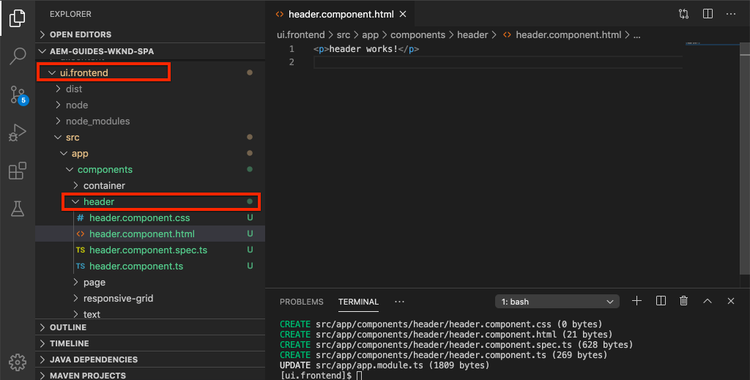
ui.frontend폴더 내에서 Angular CLIng generate component명령을 실행하여 새Header구성 요소를 만듭니다.code language-shell $ ng generate component components/header CREATE src/app/components/header/header.component.css (0 bytes) CREATE src/app/components/header/header.component.html (21 bytes) CREATE src/app/components/header/header.component.spec.ts (628 bytes) CREATE src/app/components/header/header.component.ts (269 bytes) UPDATE src/app/app.module.ts (1809 bytes)ui.frontend/src/app/components/header에 새 Angular 헤더 구성 요소에 대한 뼈대가 만들어집니다. -
선택한 IDE에서
aem-guides-wknd-spa프로젝트를 엽니다.ui.frontend/src/app/components/header폴더로 이동합니다.IDE의
-
header.component.html파일을 열고 내용을 다음과 같이 바꿉니다.code language-html <!--/* header.component.html */--> <header className="header"> <div className="header-container"> <h1>WKND</h1> </div> </header>이 옵션은 정적 콘텐츠를 표시하므로 이 Angular 구성 요소에서는 기본 생성된
header.component.ts을(를) 조정할 필요가 없습니다. -
ui.frontend/src/app/app.component.html에서 app.component.html 파일을 엽니다.app-header추가:code language-html <app-header></app-header> <router-outlet></router-outlet>모든 페이지 콘텐츠 위에
header구성 요소가 포함됩니다. -
새 터미널을 열고
ui.frontend폴더로 이동한 다음npm run build명령을 실행합니다.code language-shell $ cd ui.frontend $ npm run build Linting "angular-app"... All files pass linting. Generating ES5 bundles for differential loading... ES5 bundle generation complete. -
ui.apps폴더로 이동합니다.ui.apps/src/main/content/jcr_root/apps/wknd-spa-angular/clientlibs/clientlib-angular아래에 컴파일된 SPA 파일이ui.frontend/build폴더에서 복사되었습니다.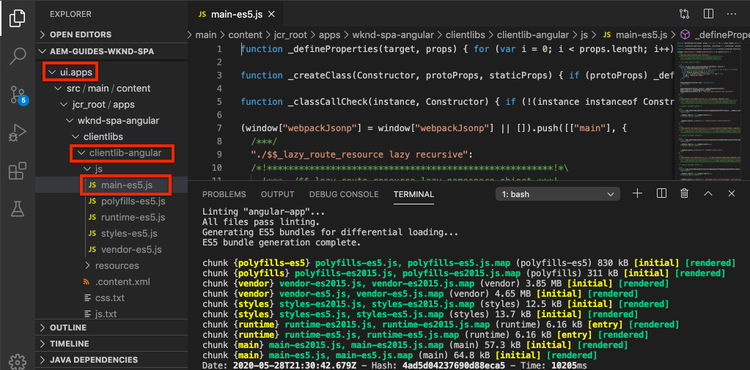
-
터미널로 돌아가서
ui.apps폴더로 이동합니다. 다음 Maven 명령을 실행합니다.code language-shell $ cd ../ui.apps $ mvn clean install -PautoInstallPackage ... [INFO] ------------------------------------------------------------------------ [INFO] BUILD SUCCESS [INFO] ------------------------------------------------------------------------ [INFO] Total time: 9.629 s [INFO] Finished at: 2020-05-04T17:48:07-07:00 [INFO] ------------------------------------------------------------------------ui.apps패키지가 AEM의 로컬 실행 인스턴스에 배포됩니다. -
브라우저 탭을 열고 http://localhost:4502/editor.html/content/wknd-spa-angular/us/en/home.html(으)로 이동합니다. 이제 SPA에
Header구성 요소의 콘텐츠가 표시됩니다.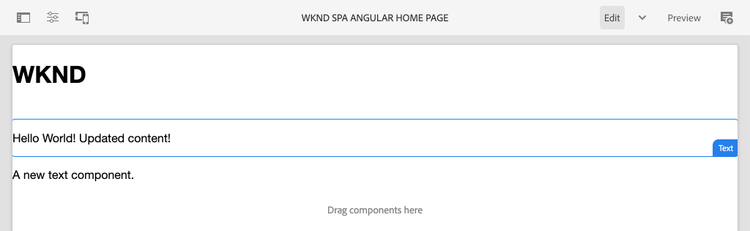
프로젝트 루트(즉,
mvn clean install -PautoInstallSinglePackage)에서 Maven 빌드를 트리거할 때 7-9 단계가 자동으로 실행됩니다. 이제 SPA와 AEM 클라이언트측 라이브러리 간의 통합에 대한 기본 사항을 이해해야 합니다. AEM에서Text구성 요소를 편집하고 추가할 수 있지만Header구성 요소는 편집할 수 없습니다.
Webpack 개발 서버 - JSON API 프록시 proxy-json
이전 연습에서 보듯이 빌드를 수행하고 클라이언트 라이브러리를 AEM의 로컬 인스턴스와 동기화하는 데 몇 분이 소요됩니다. 이는 최종 테스트에 사용할 수 있지만, 대부분의 SPA 개발에는 적합하지 않습니다.
Webpack 개발 서버를 사용하여 SPA를 신속하게 개발할 수 있습니다. SPA는 AEM에서 생성한 JSON 모델에 의해 구동됩니다. 이 연습에서는 실행 중인 AEM 인스턴스의 JSON 콘텐츠를 Angular 프로젝트에 의해 구성된 개발 서버로 프록시합니다.
-
IDE로 돌아가서
ui.frontend/proxy.conf.json에 proxy.conf.json 파일을 엽니다.code language-json [ { "context": [ "/content/**/*.(jpg|jpeg|png|model.json)", "/etc.clientlibs/**/*" ], "target": "http://localhost:4502", "auth": "admin:admin", "logLevel": "debug" } ]Angular 앱은(는) API 요청을 프록시하기 쉬운 메커니즘을 제공합니다.
context에 지정된 패턴은 로컬 AEM 빠른 시작인localhost:4502을(를) 통해 프록시됩니다. -
ui.frontend/src/index.html에서 index.html 파일을 엽니다. 개발 서버에서 사용하는 루트 HTML 파일입니다.base href="/"에 대한 항목이 있습니다. 기본 태그은(는) 앱이 상대 URL을 확인하는 데 중요합니다.code language-html <base href="/"> -
터미널 창을 열고
ui.frontend폴더로 이동합니다.npm start명령 실행:code language-shell $ cd ui.frontend $ npm start > wknd-spa-angular@0.1.0 start /Users/dgordon/Documents/code/aem-guides-wknd-spa/ui.frontend > ng serve --open --proxy-config ./proxy.conf.json 10% building 3/3 modules 0 active[HPM] Proxy created: [ '/content/**/*.(jpg|jpeg|png|model.json)', '/etc.clientlibs/**/*' ] -> http://localhost:4502 [HPM] Subscribed to http-proxy events: [ 'error', 'close' ] ℹ 「wds」: Project is running at http://localhost:4200/webpack-dev-server/ ℹ 「wds」: webpack output is served from / ℹ 「wds」: 404s will fallback to //index.html -
새 브라우저 탭을 열고 http://localhost:4200/content/wknd-spa-angular/us/en/home.html(으)로 이동합니다.
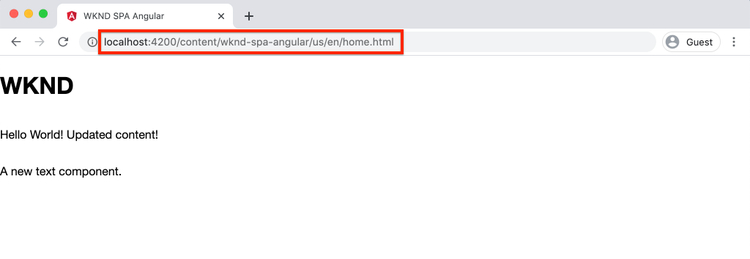
AEM과 동일한 콘텐츠가 표시되지만 작성 기능이 활성화되어 있지 않아야 합니다.
-
IDE로 돌아가서
ui.frontend/src/assets에img(이)라는 새 폴더를 만드십시오. -
다음 WKND 로고를 다운로드하여
img폴더에 추가합니다.
-
ui.frontend/src/app/components/header/header.component.html에서 header.component.html을(를) 열고 로고를 포함하십시오.code language-html <header class="header"> <div class="header-container"> <div class="logo"> <img class="logo-img" src="assets/img/wknd-logo-dk.png" alt="WKND SPA" /> </div> </div> </header>header.component.html의 변경 사항을 저장합니다.
-
브라우저로 돌아갑니다. 앱에 대한 변경 사항이 즉시 반영됩니다.
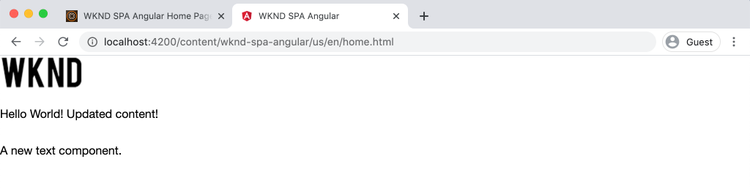
콘텐츠를 프록시하고 있으므로 AEM에서 콘텐츠를 계속 업데이트하고 Webpack 개발 서버에 이를 반영할 수 있습니다. 콘텐츠 변경 내용은 Webpack 개발 서버에서만 볼 수 있습니다.
-
터미널에서
ctrl+c(으)로 로컬 웹 서버를 중지합니다.
Webpack 개발 서버 - 모의 JSON API mock-json
빠른 개발에 대한 또 다른 접근 방식은 정적 JSON 파일을 사용하여 JSON 모델로 작동하는 것입니다. JSON을 "조롱"하여 로컬 AEM 인스턴스에 대한 종속성을 제거합니다. 또한 프론트엔드 개발자는 JSON 모델을 업데이트하여 기능을 테스트하고 나중에 백엔드 개발자가 구현하는 JSON API의 변경 사항을 유도할 수 있습니다.
초기 모의 JSON 설정에는 로컬 AEM 인스턴스가 필요합니다.
-
브라우저에서 http://localhost:4502/content/wknd-spa-angular/us/en.model.json(으)로 이동합니다.
애플리케이션을 구동하는 AEM에서 내보낸 JSON입니다. JSON 출력을 복사합니다.
-
IDE로 돌아가서
ui.frontend/src(으)로 이동하고 다음 폴더 구조와 일치하도록 mocks 및 json(이)라는 새 폴더를 추가하십시오.code language-plain |-- ui.frontend |-- src |-- mocks |-- json -
ui.frontend/public/mocks/json아래에 en.model.json(이)라는 새 파일을 만듭니다. 단계 1의 JSON 출력을 여기에 붙여 넣으십시오.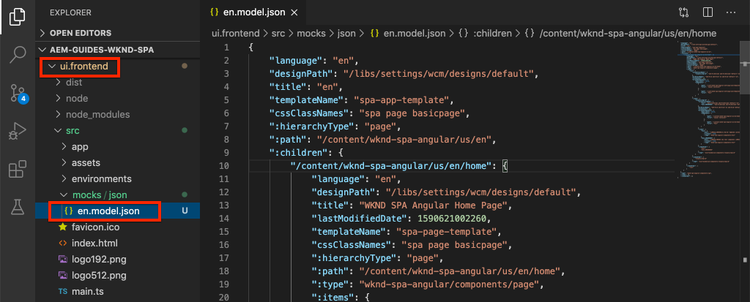
-
ui.frontend아래에 새 파일 proxy.mock.conf.json을(를) 만듭니다. 파일을 다음과 같이 채웁니다.code language-json [ { "context": [ "/content/**/*.model.json" ], "pathRewrite": { "^/content/wknd-spa-angular/us" : "/mocks/json"} , "target": "http://localhost:4200", "logLevel": "debug" } ]이 프록시 구성은
/mocks/json이(가) 있는/content/wknd-spa-angular/us(으)로 시작하는 요청을 다시 작성하고 해당 정적 JSON 파일을 제공합니다. 예를 들면 다음과 같습니다.code language-plain /content/wknd-spa-angular/us/en.model.json -> /mocks/json/en.model.json -
angular.json 파일을 엽니다. 생성된 mock 폴더를 참조하도록 업데이트된 assets 배열로 새 dev 구성을 추가하십시오.
code language-json "dev": { "assets": [ "src/mocks", "src/assets", "src/favicon.ico", "src/logo192.png", "src/logo512.png", "src/manifest.json" ] },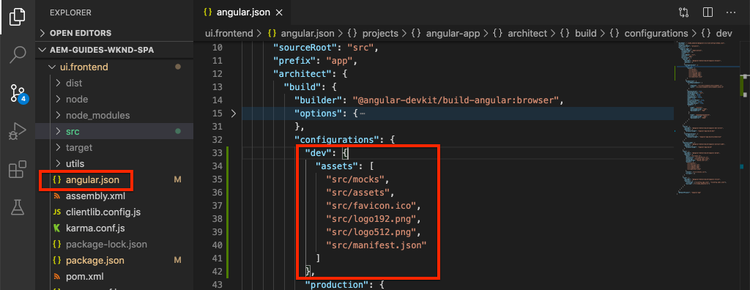
전용 dev 구성을 만들면 mocks 폴더가 개발 중에만 사용되고 프로덕션 빌드의 AEM에 배포되지 않습니다.
-
angular.json 파일에서 다음에 browserTarget 구성을 업데이트하여 새 dev 구성을 사용합니다.
code language-diff ... "serve": { "builder": "@angular-devkit/build-angular:dev-server", "options": { + "browserTarget": "angular-app:build:dev" - "browserTarget": "angular-app:build" }, ...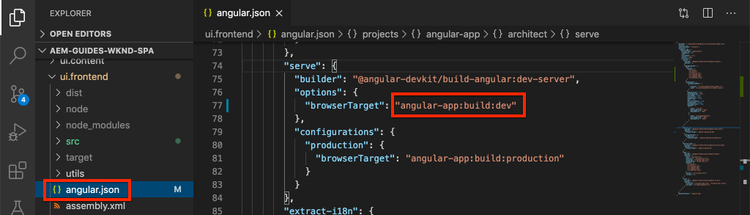
-
ui.frontend/package.json파일을 열고 새 start:mock 명령을 추가하여 proxy.mock.conf.json 파일을 참조합니다.code language-diff "scripts": { "start": "ng serve --open --proxy-config ./proxy.conf.json", + "start:mock": "ng serve --open --proxy-config ./proxy.mock.conf.json", "build": "ng lint && ng build && clientlib", "build:production": "ng lint && ng build --prod && clientlib", "test": "ng test", "sync": "aemsync -d -w ../ui.apps/src/main/content" }새 명령을 추가하면 프록시 구성 간을 쉽게 전환할 수 있습니다.
-
현재 실행 중인 경우 Webpack 개발 서버를 중지하십시오. start:mock 스크립트를 사용하여 Webpack 개발 서버를 시작합니다.
code language-shell $ npm run start:mock > wknd-spa-angular@0.1.0 start:mock /Users/dgordon/Documents/code/aem-guides-wknd-spa/ui.frontend > ng serve --open --proxy-config ./proxy.mock.conf.jsonhttp://localhost:4200/content/wknd-spa-angular/us/en/home.html(으)로 이동하면 동일한 SPA가 표시되지만, 이제 mock JSON 파일에서 콘텐츠를 가져옵니다.
-
이전에 만든 en.model.json 파일을 약간 변경합니다. 업데이트된 콘텐츠는 즉시 Webpack 개발 서버에 반영되어야 합니다.
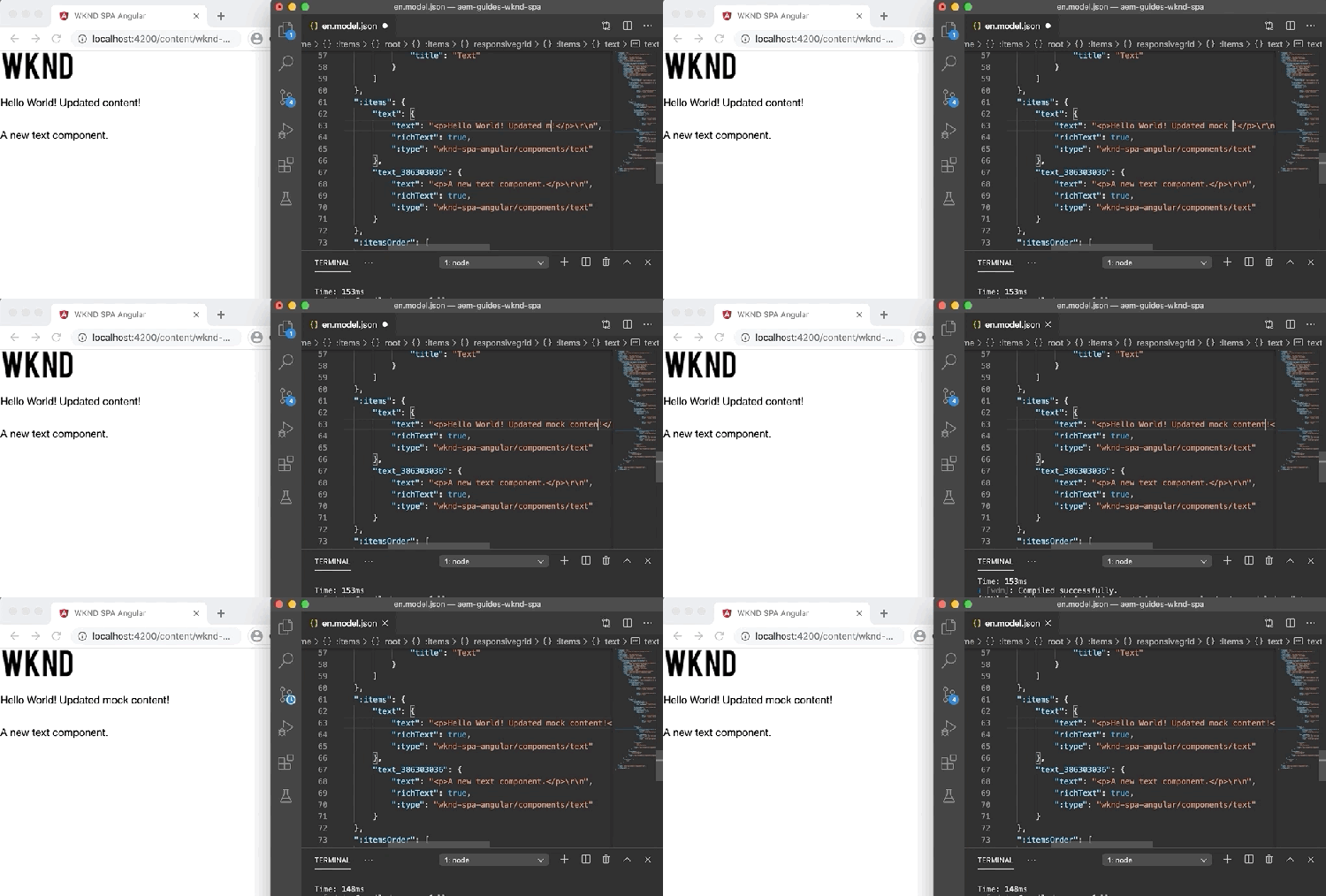
JSON 모델을 조작하고 라이브 SPA에서 효과를 확인할 수 있으므로 개발자가 JSON 모델 API를 이해하는 데 도움이 될 수 있습니다. 또한 프론트엔드 및 백엔드 개발을 동시에 수행할 수 있습니다.
Sass로 스타일 추가
그런 다음 업데이트된 일부 스타일이 프로젝트에 추가됩니다. 이 프로젝트에서는 변수와 같은 몇 가지 유용한 기능에 대한 Sass 지원을 추가합니다.
-
터미널 창을 열고 Webpack 개발 서버를 시작한 경우 중지합니다.
ui.frontend폴더 내에서 다음 명령을 입력하여 .scss 파일을 처리하도록 Angular 앱을 업데이트합니다.code language-shell $ cd ui.frontend $ ng config schematics.@schematics/angular:component.styleext scssangular.json파일이 파일 하단에 새 항목으로 업데이트됩니다.code language-json "schematics": { "@schematics/angular:component": { "styleext": "scss" } } -
normalize-scss을(를) 설치하여 브라우저 간 스타일을 정규화합니다.code language-shell $ npm install normalize-scss --save -
IDE로 돌아가서
ui.frontend/src아래에styles(이)라는 새 폴더를 만듭니다. -
ui.frontend/src/styles아래에 이름이_variables.scss인 새 파일을 만들고 다음 변수로 채웁니다.code language-scss //_variables.scss //== Colors // //## Gray and brand colors for use across theme. $black: #202020; $gray: #696969; $gray-light: #EBEBEB; $gray-lighter: #F7F7F7; $white: #FFFFFF; $yellow: #FFEA00; $blue: #0045FF; //== Typography // //## Font, line-height, and color for body text, headings, and more. $font-family-sans-serif: "Helvetica Neue", Helvetica, Arial, sans-serif; $font-family-serif: Georgia, "Times New Roman", Times, serif; $font-family-base: $font-family-sans-serif; $font-size-base: 18px; $line-height-base: 1.5; $line-height-computed: floor(($font-size-base * $line-height-base)); // Functional Colors $brand-primary: $yellow; $body-bg: $white; $text-color: $black; $text-color-inverse: $gray-light; $link-color: $blue; //Layout $max-width: 1024px; $header-height: 75px; // Spacing $gutter-padding: 12px; -
styles.css 파일의 확장명을
ui.frontend/src/styles.css에서 styles.scss(으)로 다시 지정하십시오. 내용을 다음과 같이 바꿉니다.code language-scss /* styles.scss * / /* Normalize */ @import '~normalize-scss/sass/normalize'; @import './styles/variables'; body { background-color: $body-bg; font-family: $font-family-base; margin: 0; padding: 0; font-size: $font-size-base; text-align: left; color: $text-color; line-height: $line-height-base; } body.page { max-width: $max-width; margin: 0 auto; padding: $gutter-padding; padding-top: $header-height; } -
angular.json을(를) 업데이트하고 style.css에 대한 모든 참조의 이름을 styles.scss(으)로 다시 지정합니다. 3개의 참조가 있어야 합니다.
code language-diff "styles": [ - "src/styles.css" + "src/styles.scss" ],
헤더 스타일 업데이트
그런 다음 Sass를 사용하여 Header 구성 요소에 브랜드별 스타일을 추가하십시오.
-
Webpack 개발 서버를 시작하여 실시간으로 업데이트되는 스타일을 확인합니다.
code language-shell $ npm run start:mock -
ui.frontend/src/app/components/header에서 header.component.css을(를) header.component.scss(으)로 다시 지정합니다. 파일을 다음과 같이 채웁니다.code language-scss @import "~src/styles/variables"; .header { width: 100%; position: fixed; top: 0; left:0; z-index: 99; background-color: $brand-primary; box-shadow: 0px 0px 10px 0px rgba(0, 0, 0, 0.24); } .header-container { display: flex; max-width: $max-width; margin: 0 auto; padding-left: $gutter-padding; padding-right: $gutter-padding; } .logo { z-index: 100; display: flex; padding-top: $gutter-padding; padding-bottom: $gutter-padding; } .logo-img { width: 100px; } -
header.component.scss을(를) 참조하도록 header.component.ts 업데이트:
code language-diff ... @Component({ selector: 'app-header', templateUrl: './header.component.html', - styleUrls: ['./header.component.css'] + styleUrls: ['./header.component.scss'] }) ... -
브라우저 및 Webpack 개발 서버(으)로 돌아가기:
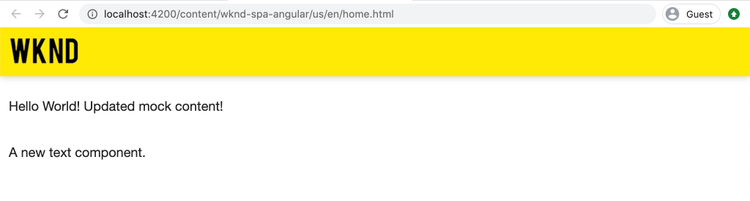
이제 업데이트된 스타일이 Header 구성 요소에 추가됩니다.
AEM에 SPA 업데이트 배포
Header에 대한 변경 내용은 현재 Webpack 개발 서버를 통해서만 볼 수 있습니다. 업데이트된 SPA를 AEM에 배포하여 변경 사항을 확인합니다.
-
Webpack 개발 서버를 중지합니다.
-
/aem-guides-wknd-spa프로젝트의 루트로 이동한 다음 Maven을 사용하여 AEM에 프로젝트를 배포합니다.code language-shell $ cd .. $ mvn clean install -PautoInstallSinglePackage -
http://localhost:4502/editor.html/content/wknd-spa-angular/us/en/home.html(으)로 이동합니다. 로고와 스타일이 적용된 업데이트된 머리글이 표시됩니다.
업데이트된 SPA가 AEM에 있으므로 작성을 계속할 수 있습니다.
축하합니다! congratulations
축하합니다. SPA를 업데이트하고 AEM과의 통합을 살펴보았습니다. 이제 Webpack 개발 서버를 사용하여 AEM JSON 모델 API에 대해 SPA를 개발하는 두 가지 방법을 알게 되었습니다.
GitHub에서 완성된 코드를 항상 보거나 Angular/integrate-spa-solution 분기로 전환하여 로컬에서 코드를 확인할 수 있습니다.
다음 단계 next-steps
AEM 구성 요소에 SPA 구성 요소 매핑 - AEM SPA Editor JS SDK을 사용하여 Angular 구성 요소를 Adobe Experience Manager(AEM) 구성 요소에 매핑하는 방법에 대해 알아봅니다. 구성 요소 매핑을 통해 작성자는 기존 AEM 작성과 유사하게 AEM SPA 편집기 내에서 SPA 구성 요소를 동적으로 업데이트할 수 있습니다.