このページ:クラウドストレージの宛先へのライブ接続を設定して、Journey Optimizer データセットをレポート、アーカイブ、外部データ分析用にエクスポートできるようにします。
Journey Optimizer では、データセットの内容をエクスポートするために、クラウドストレージの場所とのライブ接続を確立できます。
データを定期的にエクスポートすることで、顧客とのやり取りの完全で最新の記録を作成し、レポート、アーカイブ、データ分析の目的で容易に利用できるようにします。
ご利用いただけるクラウドストレージの宛先 destinations
「カタログ」タブの 宛先 メニューからアクセスできる 6 つのクラウドストレージの宛先にデータセットをエクスポートできます。
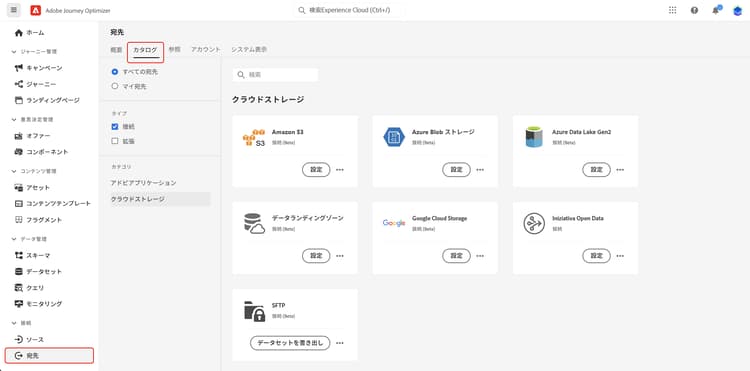
各宛先について詳しくは、Adobe Experience Platform のドキュメントを参照してください。
前提条件 prerequisites
データセットをエクスポートするには、以下に示すアクセス制御権限が必要です。 アクセス制御の概要を参照するか、製品管理者に問い合わせて必要な権限を取得してください。
データセットをエクスポートする主な手順 main-steps
データセットをクラウドストレージの場所にエクスポートする主な手順を以下に示します。

各手順について詳しくは、Adobe Experience Platform ドキュメントを参照してください。
-
クラウドストレージの宛先を設定します。 まだ行っていない場合は、宛先カタログからクラウドストレージの宛先に接続します。 新規宛先接続を作成する方法について詳しくは、Adobe Experience Platform ドキュメントを参照してください。
-
データセットをエクスポートする クラウドストレージの宛先を選択 します。 宛先カタログで、目的のカードにある「データセットをエクスポート」ボタンをクリックし、使用する接続を選択します。
note NOTE Adobe Journey Optimizer をリアルタイム顧客プロファイルと共に使用している場合、宛先カードに**「アクティベート」**ボタンが表示され、有効にした権限に応じて、データセットのエクスポートとこの宛先に対するオーディエンスのアクティベートの両方が可能になります。 -
選択した宛先にエクスポートする データセットを選択 します。 エクスポートに使用できる Journey Optimizer データセットについての詳細情報
-
データセットの エクスポートをスケジュール します。 エクスポートを開始するタイミングと実行する頻度を指定します。
-
設定の最後に表示される概要を確認して、エクスポートをレビューして確認します。
エクスポートが完了すると、設定したスケジュールに従って、データセットの内容がクラウドストレージの宛先に保存されます。 データセットのエクスポートが成功したことを確認する方法の詳細情報
エクスポートに使用できるデータセット datasets
以下の表から、エクスポートする Journey Optimizer データセットについて理解します。
新しいカスタム属性フィールドをオファー項目スキーマに追加した後、これらの新しい属性がデータセットに表示されるまでに最大 1 時間の遅延が発生する場合があります。 潜在的なデータ損失や不整合を回避するために、新しく追加した属性に依存する変更や更新を行う前に、少なくとも 1 時間待機することをお勧めします。
レポートデータセットとペイロードメタデータのマッピング reporting-payload-metadata-mapping
コードベースのエクスペリエンスや決定の応答に関するカスタムレポートの場合は、scopeDetails.correlationID を使用してインタラクションやフィードバックのデータを AJO エンティティデータセットと結合し、キャンペーン、ジャーニー、メッセージのメタデータを取得します。 exdRequestID を使用して、単一の決定リクエストを分析イベントに関連付けます。
correlationID が存在しない場合(例:ホールドアウトオーディエンス)、文書化されていないペイロードフィールドをデコードする代わりに、エクスポートされたデータセットと文書化された結合キーを使用します。 エンティティデータセットのクエリ例では、correlationID での結合方法を示しています。
This section contains structured knowledge intended to support interpretation, retrieval, and question answering related to this topic.
For complete understanding, this information should be combined with the documentation on this page. Neither source is intended to stand alone; the page describes the feature, while this section provides additional context that helps disambiguate terminology, intent, applicability, and constraints.
- TL;DR: This page explains how to set up a live connection to cloud storage destinations so you can export Journey Optimizer datasets for reporting, archival, and external data analysis.
Intents:
- Export Journey Optimizer datasets to a cloud storage destination on a schedule.
- Identify which cloud storage destinations are available.
- Determine which datasets can be exported.
- Obtain the access control permissions required to export datasets.
- Join exported data for custom reporting using documented join keys.
Glossary:
- Dataset export: establishing a live connection with a cloud storage location to export dataset content (product-specific)
- Cloud storage destination: an export target such as Amazon S3, Azure Blob, Azure Data Lake Gen 2, Data Landing Zone, Google Cloud Storage, or SFTP
- AJO Message Export Dataset: stores sent email and SMS message content marked for export; data is retained for seven calendar days from ingestion (product-specific)
scopeDetails.correlationID: used to join interaction or feedback data to the AJO Entity Dataset and retrieve campaign, journey, and message metadata (product-specific)exdRequestID: used to tie a single decision request to analytics events (product-specific)
Guardrails:
- Datasets can be exported to the 6 cloud storage destinations: Amazon S3, Azure Blob, Azure Data Lake Gen 2, Data Landing Zone, Google Cloud Storage, and SFTP.
- Required access control permissions: Manage and Activate Dataset Destinations (Destinations), View Datasets (Data Management), and View Destinations (Destinations).
- AJO Message Export Dataset data is retained for 7 calendar days from ingestion.
- The AJO Message Feedback Event Dataset uses batch ingestion; expect a data latency of up to 2 hours.
- Cloud storage destinations are accessed from the Destinations menu, in the Catalog tab.
Terminology:
- Do not confuse: the Export datasets button (dataset export) ≠ the Activate button (which, when Real-Time Customer profiles are used, exports datasets and activates audiences)
FAQ:
- Q: Which cloud storage destinations can I export to? — Amazon S3, Azure Blob, Azure Data Lake Gen 2, Data Landing Zone, Google Cloud Storage, and SFTP.
- Q: What permissions do I need to export datasets? — Manage and Activate Dataset Destinations, View Datasets, and View Destinations.
- Q: How long is AJO Message Export Dataset data kept? — Seven calendar days from ingestion.
- Q: Where do I start a dataset export? — From the Destinations menu, Catalog tab; select Export datasets on the destination card and choose the connection.
- Q: How do I join exported data for reporting? — Use
scopeDetails.correlationIDto join to the AJO Entity Dataset, andexdRequestIDto tie a single decision request to analytics events.