このページ:以前のオーケストレーションキャンペーンに対する受信者の反応に応じて受信者をフォローアップする、フィードバックベースおよびトラッキングベースのリターゲティングルールの作成方法について説明します。
リターゲティングを使用すると、以前の調整されたキャンペーンに対する受信者の応答方法に基づいて、受信者をフォローアップできます。 例えば、最初のメールを受信したがクリックしなかった受信者に 2 番目のメールを送信できます。
オーケストレーションキャンペーンには、これに対して次の 2 つの主なスキーマがあります。
- メッセージフィードバック:送信済みメッセージ、開封済みメッセージ、バウンスなど、配信に関連するイベントをキャプチャします。
- メールトラッキング:ユーザーのアクション(例:クリックや開封)をキャプチャします。

フィードバックベースのリターゲティングルールの作成 feedback-retarget
フィードバックベースのリターゲティングルールを使用すると、メッセージフィードバックスキーマにキャプチャされたメッセージ配信イベントに基づいて、受信者をリターゲットできます。 これらのイベントには、メッセージの送信済み、開封済み、バウンス済み、スパムとしてマーク済みなどの結果が含まれます。
このデータを使用すると、以前にメッセージを受信した受信者を識別するルールを定義することで、特定の配信ステータスに基づいてフォローアップのコミュニケーションが可能になります。
-
新しい オーケストレーションキャンペーン を作成します。
-
オーディエンスを作成アクティビティを追加し、ターゲティングディメンションを 受信者(caas) に設定します。 「続行」をクリックします。
-
すばやく開始するには、ビルトインの キャンペーンフィードバック フィルターを使用して、メッセージ配信イベントに基づいて受信者をターゲットにすることができます。
accordion 詳細な手順 -
ルールビルダーで、「フィルターを選択または保存」をクリックし、リストから「キャンペーンフィードバック」を選択します。
-
フィルタールールを選択し、送信済みメッセージなど、ターゲットにする 動作 を選択します。
-

-
特定のキャンペーンを選択:リストから特定のキャンペーンを選択して、そのキャンペーンを操作した受信者をリターゲティングします。
-
トランジションからのキャンペーン:オーケストレーションキャンペーンの以前のアクティビティからのキャンペーンを参照します。
-
-
-
または、カスタムルールを手動で作成することもできます。 ルールビルダーで「条件を追加」をクリックし、属性ピッカーから「メッセージフィードバック」を選択します。 「確認」をクリックして、「メッセージフィードバックが存在する」などの条件を作成します。

-
フィードバックステータス属性を選択して、メッセージ配信イベントをターゲットにします。
accordion 詳細な手順 -
メッセージフィードバック属性にリンクされた別の条件を追加します。
-
フィードバックステータス属性を検索して、「確認」をクリックします。

-
カスタム条件メニューの 値 ドロップダウンで、追跡する配信ステータスを選択します。

-
-
オーケストレーションキャンペーン名属性を選択して、特定のオーケストレーションキャンペーンをターゲットにします。
accordion 詳細な手順 -
メッセージフィードバック属性にリンクされた別の条件を追加し、エンティティを検索して、次に移動します。
_experience > CustomerJourneyManagement > Entities > AJO Orchestrated Campaign entity。 -
「オーケストレーションキャンペーン名」を選択します。

-
カスタム条件メニューの「値」フィールドでキャンペーン名を指定します。
-
-
オーケストレーションキャンペーンアクション名属性を選択して、オーケストレーションキャンペーン内の特定のメッセージまたはアクティビティをターゲットにします。
accordion 詳細な手順 -
メッセージフィードバック属性にリンクされた別の条件を追加し、エンティティを検索して、次に移動します。
_experience > CustomerJourneyManagement > Entities > AJO Orchestrated Campaign entity。 -
「オーケストレーションキャンペーンアクション名」を選択します。

-
カスタム条件メニューの「値」フィールドでキャンペーンアクション名を指定します。
アクション名は、アクティビティの「ラベル」フィールドの横にある

-
-
または、キャンペーンのプロパティで見つけることができるキャンペーン ID(UUID)でフィルタリングすることもできます。
これで、送信済み、開封済み、バウンス済み、スパムとしてマーク済みなどの以前のメッセージの配信ステータスに基づいて受信者を識別するフィードバックベースのリターゲティングルールが設定されました。 このオーディエンスを定義すると、フォローアップメールを追加したり、ユーザーインタラクションデータを使用するトラッキングベースのリターゲティングルールを設定してターゲティングをさらに絞り込んだりできます。

トラッキングベースのリターゲティングルールの作成 tracking-based
トラッキングベースのリターゲティングルールでは、メールトラッキングスキーマのデータを使用して、メッセージとのインタラクションに基づいて、受信者をターゲットにします。 メールの開封やリンクのクリックなど、ユーザーのアクションをキャプチャします。
メッセージのインタラクション(例:開く、クリック)に基づいて受信者をリターゲットするには、次のように メールトラッキング エンティティを使用します。
-
新しい オーケストレーションキャンペーン を作成します。
-
オーディエンスを作成アクティビティを追加し、ターゲティングディメンションを 受信者(caas) に設定して、以前のオーケストレーションキャンペーン受信者に焦点を当てます。
-
すばやく開始するには、ビルトインの キャンペーンフィードバック フィルターを使用して、メッセージ配信イベントに基づいて受信者をターゲットにすることができます。
accordion 詳細な手順 -
ルールビルダーで、「フィルターを選択または保存」をクリックし、リストから「キャンペーンフィードバック」を選択します。
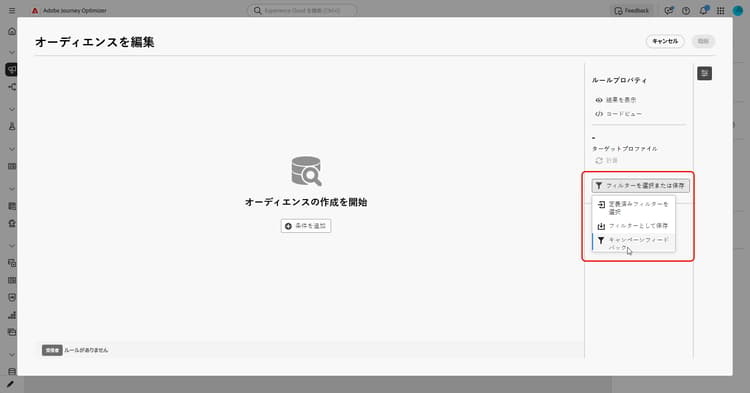
-
フィルタールールを選択し、開封済みメッセージ、クリック済みメッセージなど、ターゲットにする 動作 を選択します。
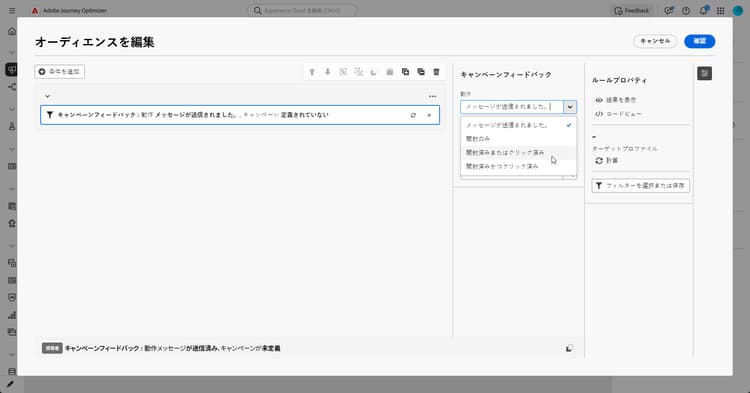
-
-
特定のキャンペーンを選択:リストから特定のキャンペーンを選択して、そのキャンペーンを操作した受信者をリターゲティングします。
-
トランジションからのキャンペーン:オーケストレーションキャンペーンの以前のアクティビティからのキャンペーンを参照します。
-
-
-
または、カスタムルールを手動で作成することもできます。 ルールビルダーで「条件を追加」をクリックし、属性ピッカーから「メールトラッキング」を選択します。
「確認」をクリックして、メールトラッキングが存在するなどの条件を作成します。

-
受信者のメッセージとのインタラクションをターゲットにするには、メールトラッキング属性にリンクされた別の条件を追加し、インタラクションタイプ属性を検索します。

-
カスタム条件オプションから、演算子として 次の値に含まれる を使用し、ユースケース(例:メッセージが開封されたまたはメッセージリンクがクリックされた)に応じて 1 つ以上の値を選択します。

これで、メールトラッキング属性のデータを使用して、メールの開封やリンクのクリックなど、以前のメッセージとのインタラクションに基づいて、受信者をターゲットにするトラッキングベースのリターゲティングルールが設定されました。 このオーディエンスを定義すると、フォローアップアクションを追加したり、フィードバックベースのリターゲティングルールと組み合わせて送信済み、バウンス済み、スパムとしてマーク済みなどのメッセージ結果を含めることで、ターゲティングをさらに絞り込むことができます。

This section contains structured knowledge intended to support interpretation, retrieval, and question answering related to this topic.
For complete understanding, this information should be combined with the documentation on this page. Neither source is intended to stand alone; the page describes the feature, while this section provides additional context that helps disambiguate terminology, intent, applicability, and constraints.
- TL;DR: This page explains how to build feedback-based and tracking-based retargeting rules in an Orchestrated campaign so you can follow up with recipients based on how they responded to a previous Orchestrated campaign.
Intents:
- Create a feedback-based retargeting rule using the Message Feedback schema to target recipients by delivery status (sent, opened, bounced, marked as spam).
- Create a tracking-based retargeting rule using the Email Tracking schema to target recipients by interaction (opens, clicks).
- Use the built-in Campaign feedback filter to quickly target recipients based on message delivery events.
- Target a specific previous campaign by selecting a specific campaign, referencing a campaign from a previous activity (Campaign from transition), or filtering by Campaign ID (UUID).
- Target a specific message or activity within an Orchestrated campaign using the Orchestrated Campaign Action Name attribute.
- Combine a feedback-based retargeting rule with a tracking-based retargeting rule to refine targeting.
Glossary:
- Message Feedback: a schema that captures delivery-related events, such as message sent, opened, bounced, etc. (product-specific)
- Email Tracking: a schema that captures user actions, such as clicks and opens (product-specific)
- Feedback-based retargeting rule: a rule that retargets recipients based on message delivery events captured in the Message Feedback schema (product-specific)
- Tracking-based retargeting rule: a rule that targets recipients based on their interactions with a message, using data from the Email Tracking schema (product-specific)
- Campaign feedback filter: a built-in filter, selectable in the Rule Builder, used to quickly target recipients based on message delivery events by choosing a Behavior (such as Message sent, Message opened, or Message clicked) (product-specific)
- Feedback Status: an attribute of the Message Feedback condition used to target a specific message delivery status (product-specific)
- Interaction Type: an attribute of the Email Tracking condition used to target a specific user interaction, such as Message Opened or Message Link Clicked (product-specific)
- Orchestrated Campaign Name: an attribute used to target a specific Orchestrated campaign by name (product-specific)
- Orchestrated Campaign Action Name: an attribute used to target a specific message or activity within an Orchestrated campaign (product-specific)
Guardrails:
- Feedback-based retargeting rules build custom conditions linked to the Message Feedback attribute; tracking-based retargeting rules build custom conditions linked to the Email Tracking attribute. Both rule types can also use the same built-in Campaign feedback filter as a quick-start option to target recipients based on message delivery events.
- Within the Campaign feedback filter, the Campaign from transition option references a campaign from a previous activity in the same Orchestrated campaign, as an alternative to selecting a specific campaign from the list.
- The Orchestrated Campaign Action Name can also be found by clicking the information icon next to the Label field of the activity.
- The Email Tracking interaction condition uses the “Included in” operator, with one or more values selected depending on the use case.
Terminology:
- Canonical name: Orchestrated campaign retargeting — variants: feedback-based retargeting rule, tracking-based retargeting rule
- Do not confuse: “Message Feedback” (delivery-related events: sent, opened, bounced, spam) ≠ “Email Tracking” (user interaction events: opens, clicks)
- Do not confuse: “Select a specific campaign” (choose a particular campaign from a list) ≠ “Campaign from transition” (reference a campaign from a previous activity in the Orchestrated campaign)
FAQ:
- Q: What is the difference between a feedback-based and a tracking-based retargeting rule? — A feedback-based rule targets recipients using the Message Feedback schema (delivery events such as sent, opened, bounced, or marked as spam); a tracking-based rule targets recipients using the Email Tracking schema (user interactions such as opens and clicks).
- Q: Can I use the same filter to start both types of retargeting rules? — Yes, both rule types can use the built-in Campaign feedback filter to target recipients based on message delivery events, selecting a Behavior such as Message sent, Message opened, or Message clicked.
- Q: How can I target a specific previous campaign? — Select a specific campaign from your list, reference a campaign from a previous activity using Campaign from transition, or filter by Campaign ID (UUID) found in your Campaign properties.
- Q: How do I target a specific message or activity within an Orchestrated campaign? — Use the Orchestrated Campaign Action Name attribute; action names can be found by clicking the information icon next to the Label field of the activity.
- Q: Can I combine feedback-based and tracking-based retargeting rules? — Yes, you can combine a tracking-based retargeting rule with a feedback-based retargeting rule to include message outcomes such as sent, bounced, or marked as spam.
Personas:
- marketer: Can build a feedback-based retargeting rule using the Message Feedback attribute and choose a delivery status to track with the Feedback Status attribute. Can build a tracking-based retargeting rule using the Email Tracking attribute and the Interaction Type attribute with the Included in operator. The page states that a specific campaign can be targeted by selecting a campaign, using Campaign from transition, or filtering by Campaign ID (UUID). Where: “Create a feedback-based retargeting rule”.
Onboarding:
- Level: Intermediate
- First minimal step: Create a new Orchestrated campaign.
- Success check: You have configured a feedback-based retargeting rule to identify recipients by delivery status, such as sent, opened, bounced, or marked as spam.